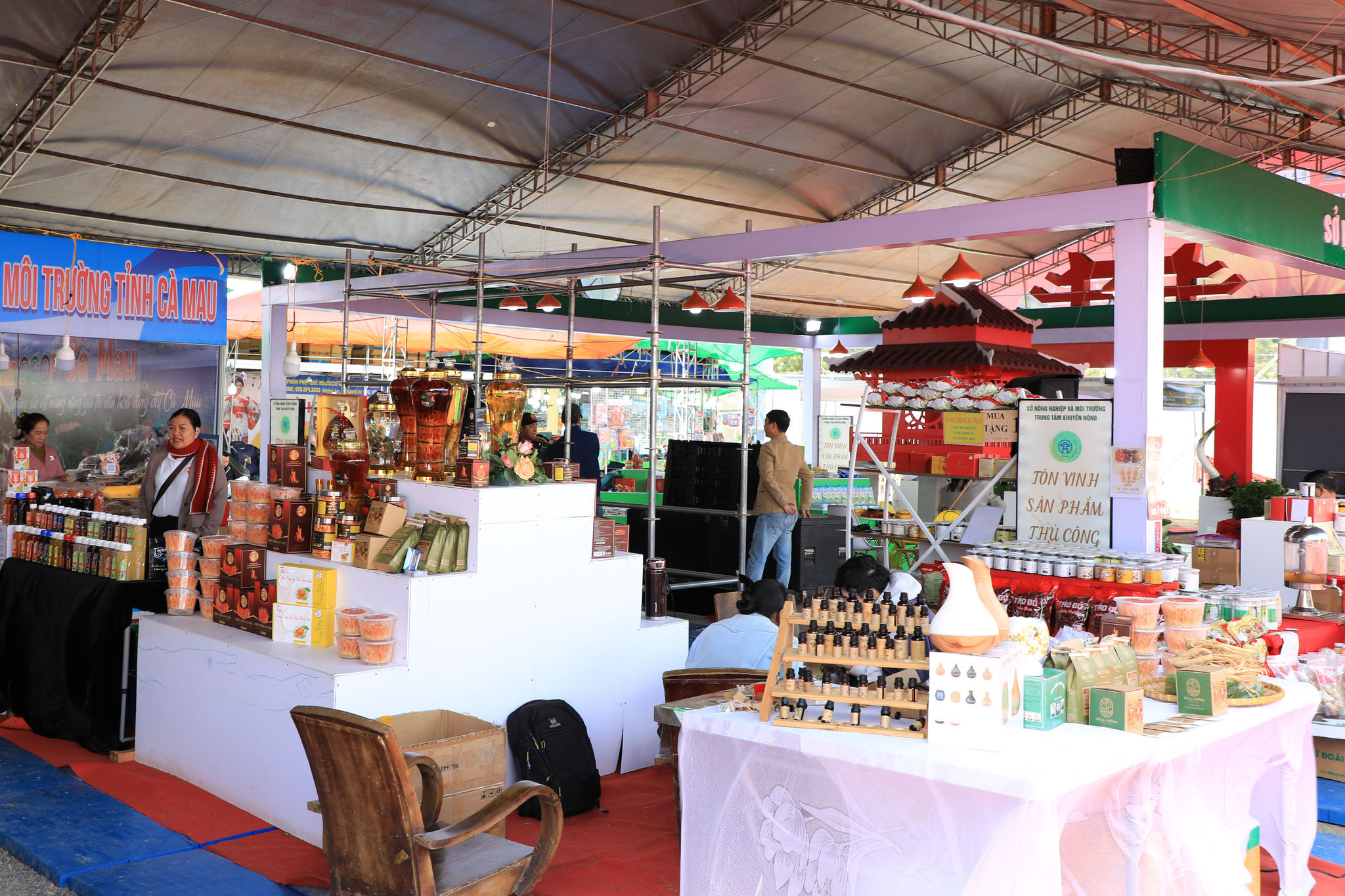

Lam Dong improves OCOP product quality in line with market trends
With 853 OCOP products holding valid certifications, Lam Dong is focusing on improving quality, expanding processing capacity and widening market access to raise product value and support new-style rural development.

Improving quality, raising product value
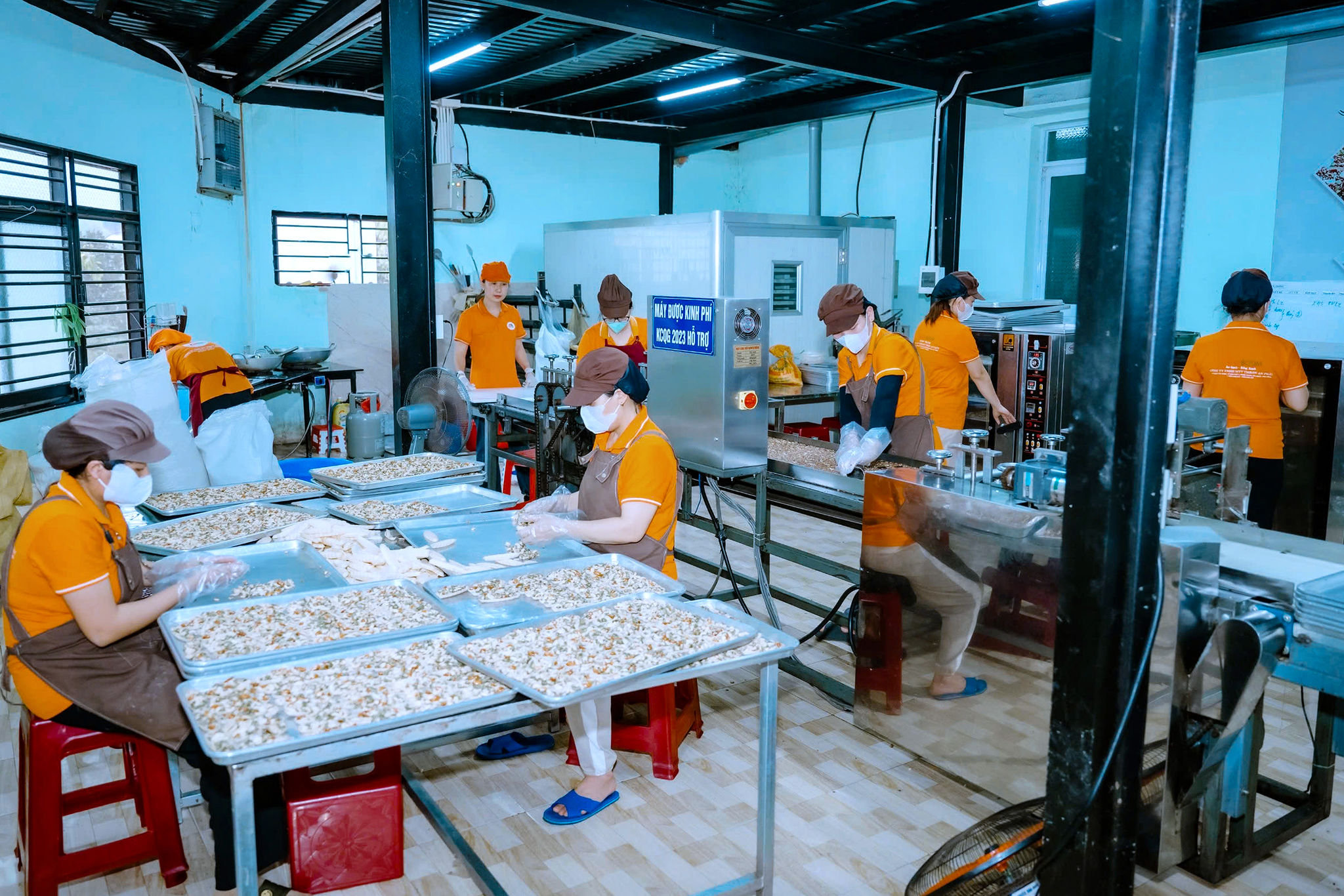
From Da Lat artichokes and highland coffee to mushrooms, macadamia nuts and processed coastal specialties, Lam Dong's OCOP products are becoming increasingly diverse. Producers are not only drawing on local raw materials but are also being encouraged to develop processed products, improve packaging and meet higher quality standards.
In 2026, the Lam Dong Provincial People's Committee issued decisions recognizing 17 three- and four-star OCOP products. Eight received four-star ratings, mainly processed artichoke and herbal products, while nine received three-star ratings in categories including food, mushrooms, coffee, macadamia nuts and other processed products.
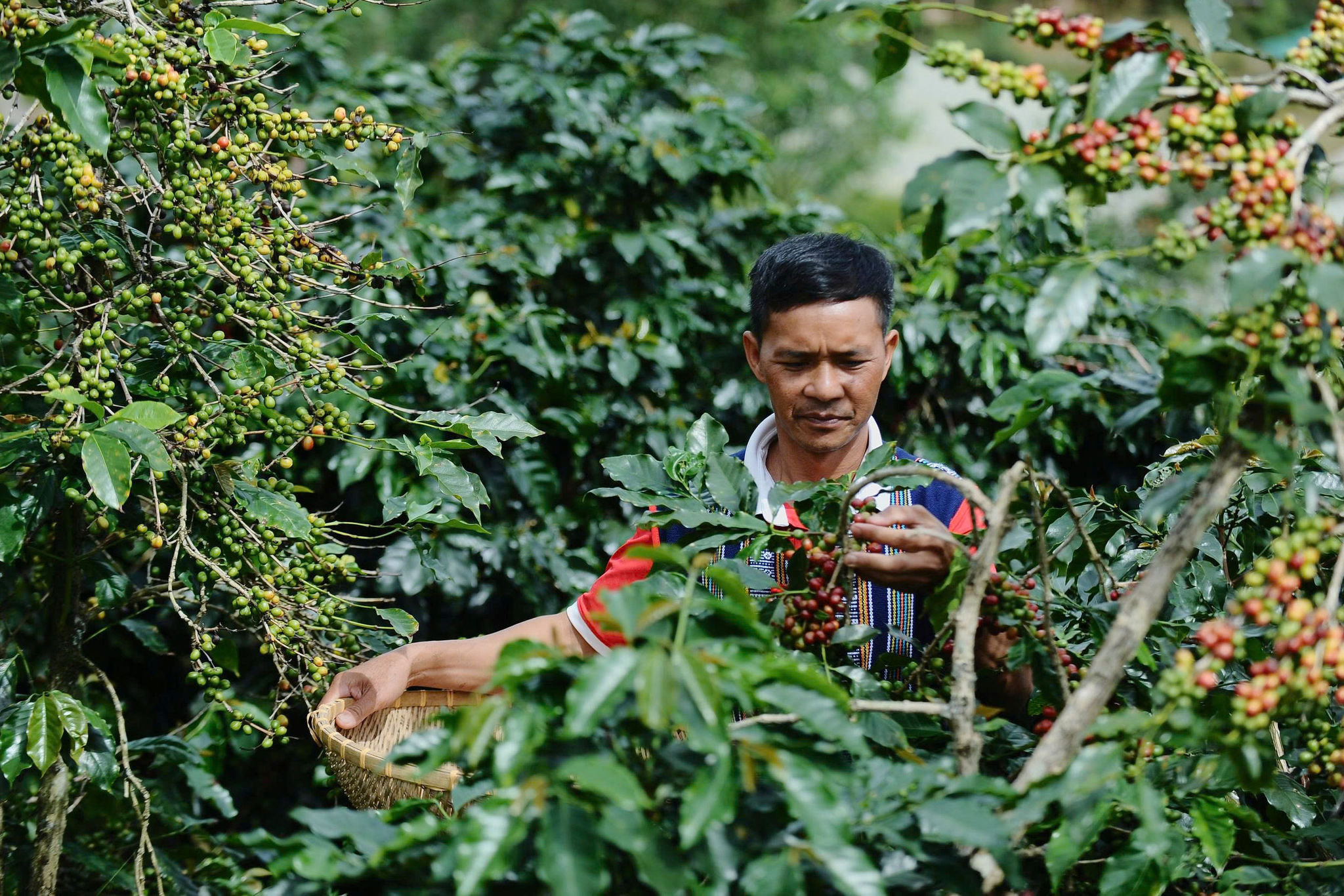
The results reflect the diversity of products and raw-material advantages across the province. From signature agricultural products to processed foods, the OCOP program is helping localities make better use of their strengths and develop products with distinct local identities.
According to the Department of Agriculture and Environment, as of October 30, 2026, Lam Dong had 853 OCOP products with valid certifications, including 88 four-star and 765 three-star products. The program involved 480 entities, including enterprises, cooperatives, cooperative groups, production establishments, individual households and farms.
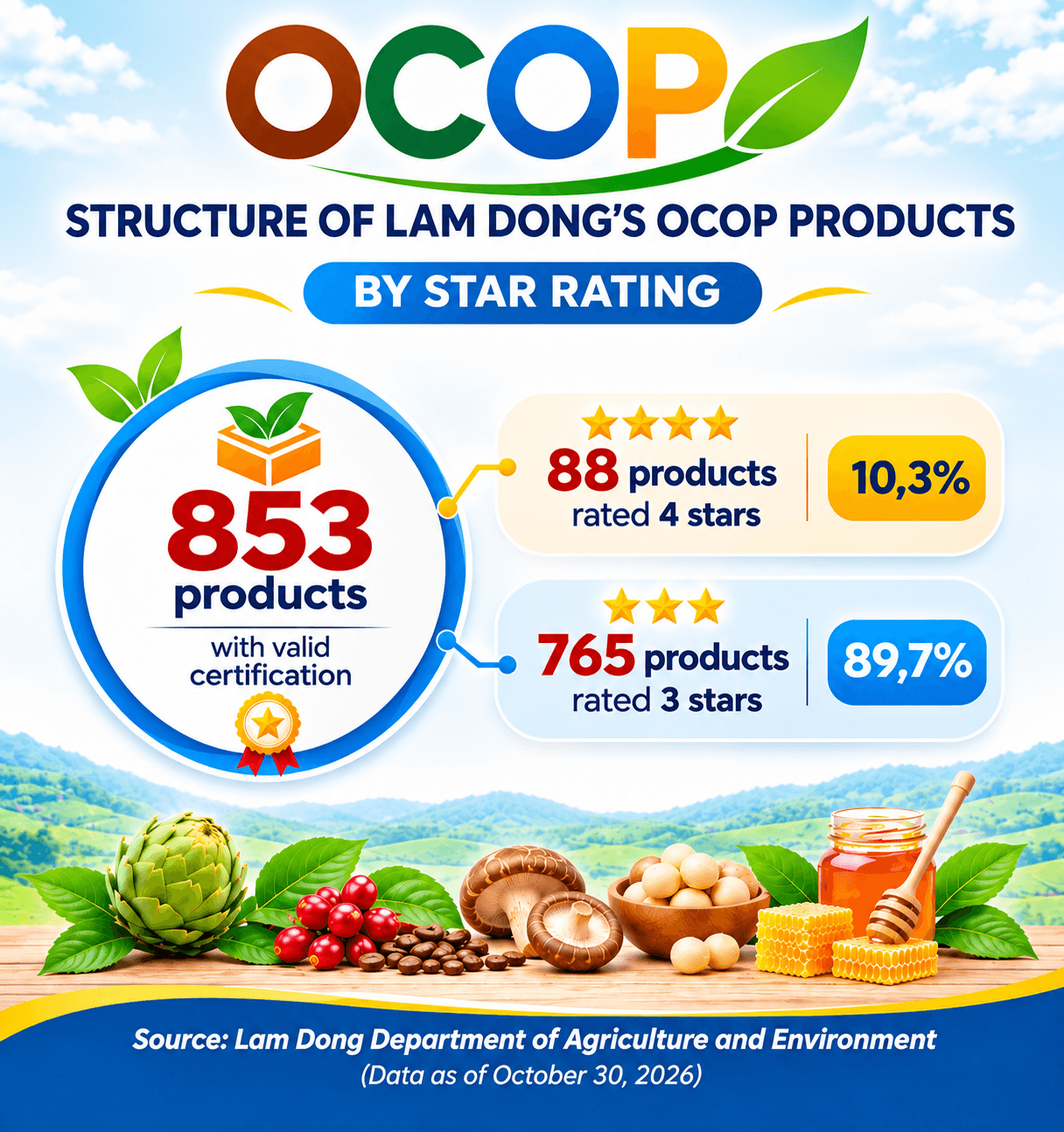
With a large number of certified products, the task is no longer simply to develop new ones, but also to maintain quality, improve packaging and increase commercial value. Three-star products account for nearly 90% of the total, leaving considerable room for producers to improve standards, seek higher ratings and expand market access.
Under its 2026 plan, Lam Dong aims to assess and rate 40-50 new products while reassessing and upgrading another 40-50. The province also plans to support promising products seeking national-level OCOP recognition.
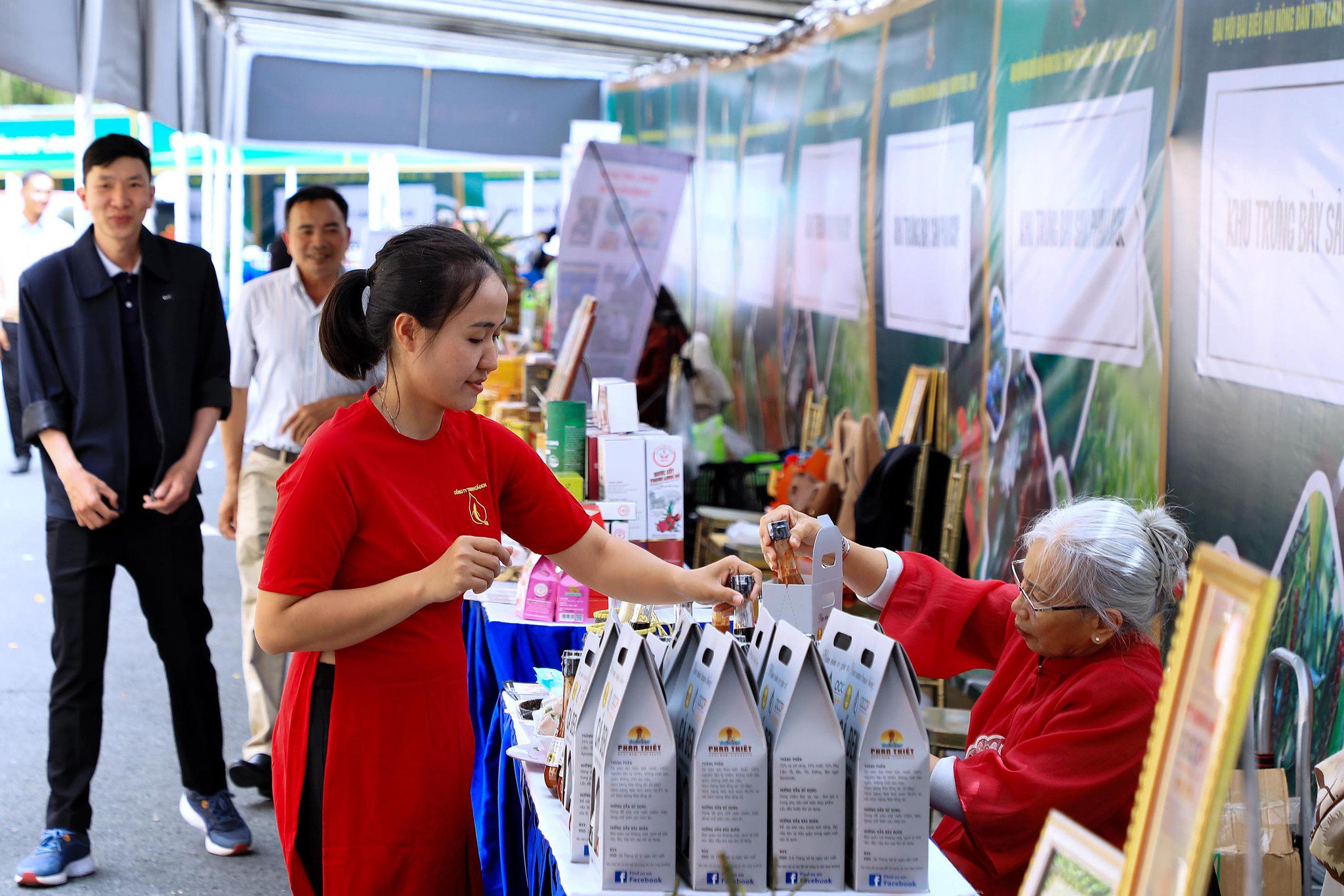
OCOP recognition, however, does not mean the quality improvement process is complete. Producers must maintain production conditions, food safety and traceability, while complying with intellectual property regulations.
Certificates are valid for 36 months, requiring producers to regularly review and improve their operations to continue meeting program criteria.
For small producers, this also creates challenges in investment resources, quality management and production standardization. Supporting producers in building stronger capacity is therefore considered an important part of OCOP implementation alongside new product development.
Expanding markets, increasing rural economic value
Alongside quality improvement, expanding consumer markets is a key focus of Lam Dong's OCOP program in 2026. Certified and rated products need to generate greater economic value through stronger market links, wider distribution channels and improved competitiveness.
Under the Provincial People's Committee's plan, Lam Dong is strengthening trade promotion through supply-demand connections, fairs, product showcases and the development of OCOP retail outlets. These sales and promotional points are also being linked with tourism to introduce local specialties to visitors.
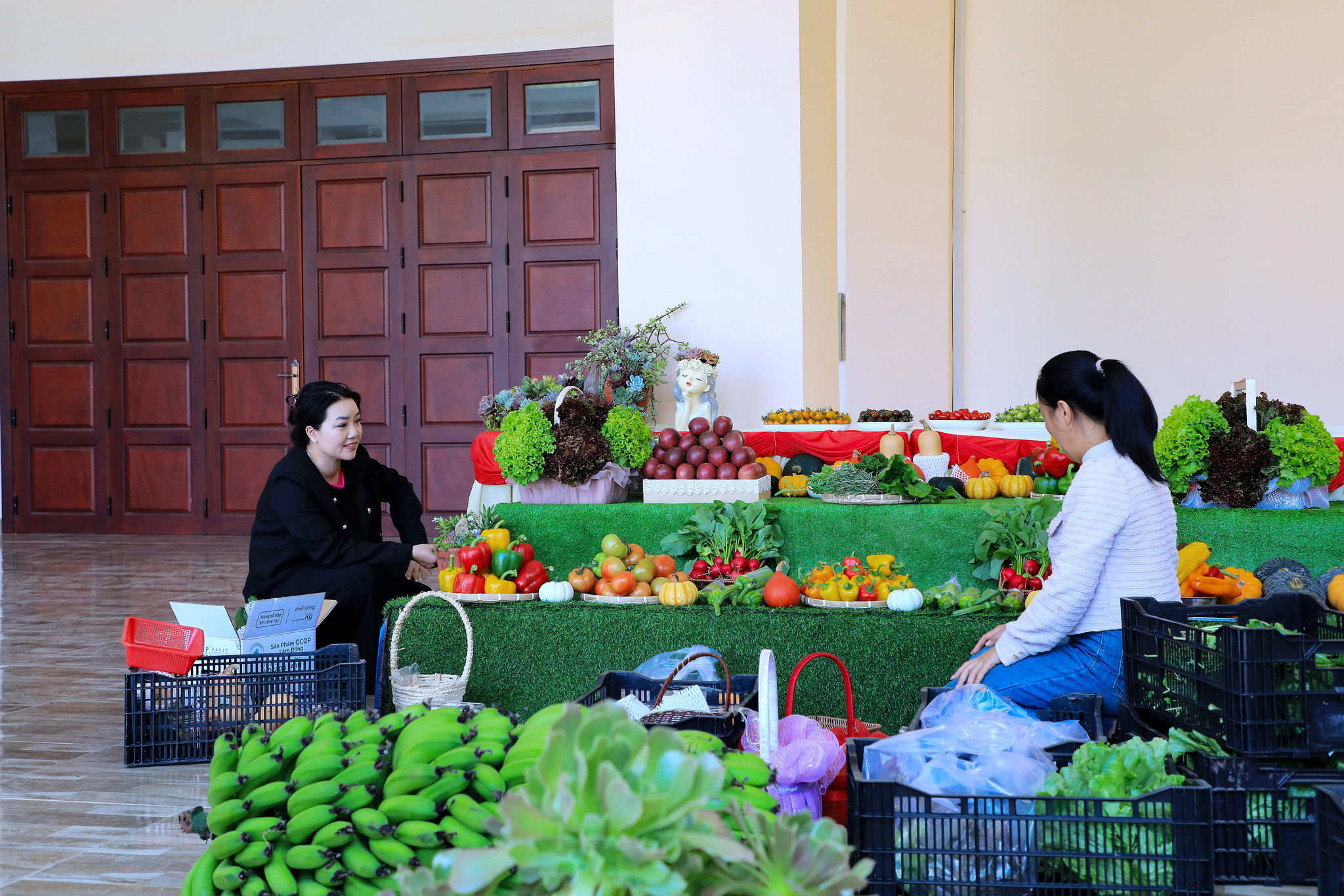
With strengths in both agriculture and tourism, linking OCOP products with the tourism market is considered a suitable development direction. Signature products such as artichokes, coffee, macadamia nuts, mushrooms and processed foods can reach more consumers through distribution networks, speciality stores and tourism service points.
In addition to traditional sales channels, e-commerce is seen as another way to expand markets. Lam Dong aims to place all OCOP products rated three stars or higher on the province's agricultural e-commerce platform while helping producers promote their products and improve online sales skills.

Expanding distribution, however, also requires stable quality, transparent product information, suitable packaging and the capacity to fulfill orders. For cooperatives and small producers, this creates both new opportunities and pressure to improve production and business organization.
According to the Department of Agriculture and Environment, the province's 480 OCOP entities include 173 enterprises, 92 cooperatives, 197 production establishments, individual households and farms, and 18 cooperative groups. Their participation creates opportunities to build stronger linkages from production and processing to distribution.
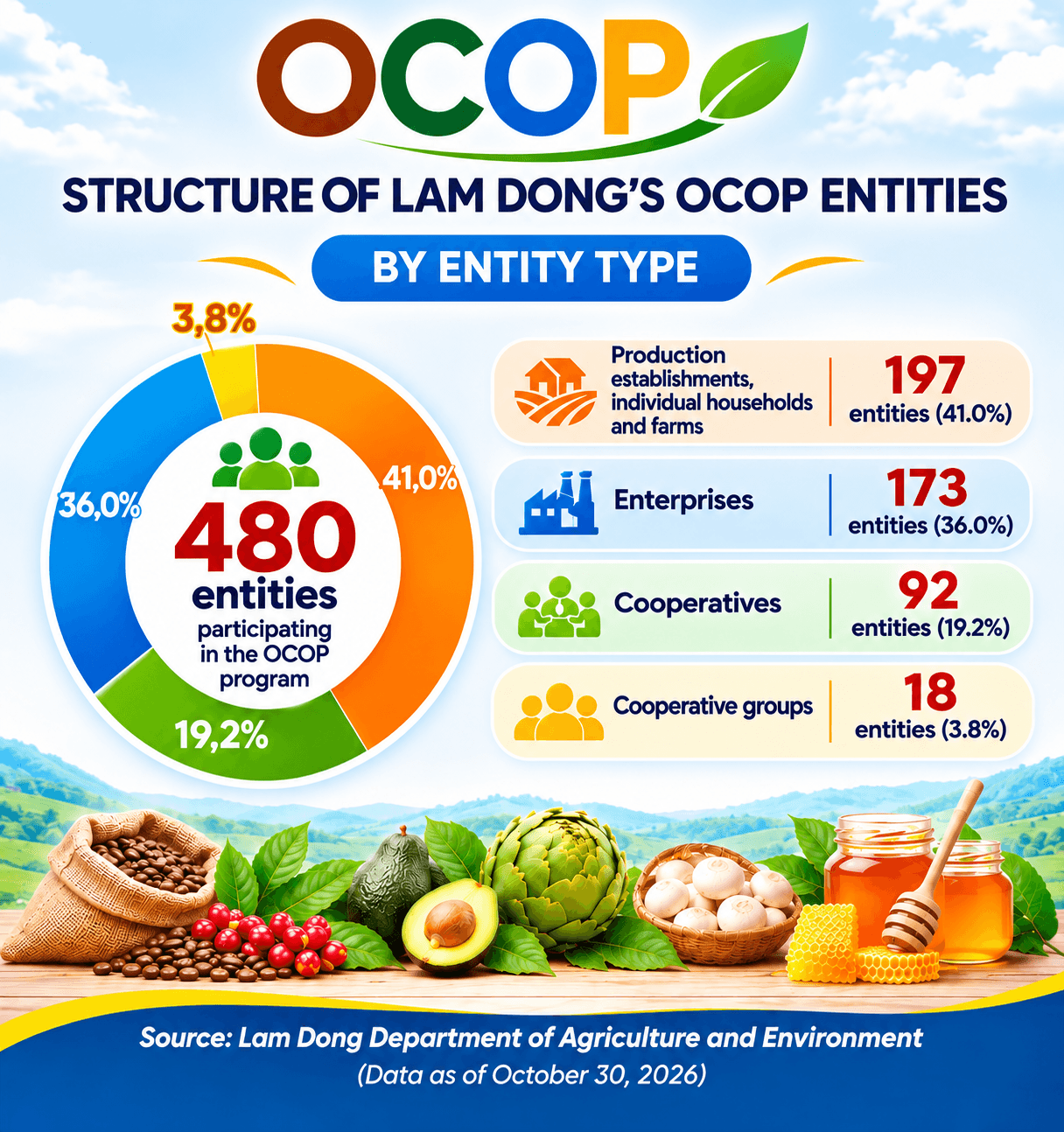
Enterprises and cooperatives play an important role in organizing raw-material areas, investing in processing, building brands and connecting with markets. For small producers, joining supply chains can improve access to technical support, help standardize products and provide more stable outlets.
Lam Dong has also identified value-chain development among OCOP entities as a key task for 2026. Instead of operating separately, producers are being encouraged to strengthen cooperation from raw-material production through processing and distribution, with the goal of achieving consistent quality and better meeting market demand.
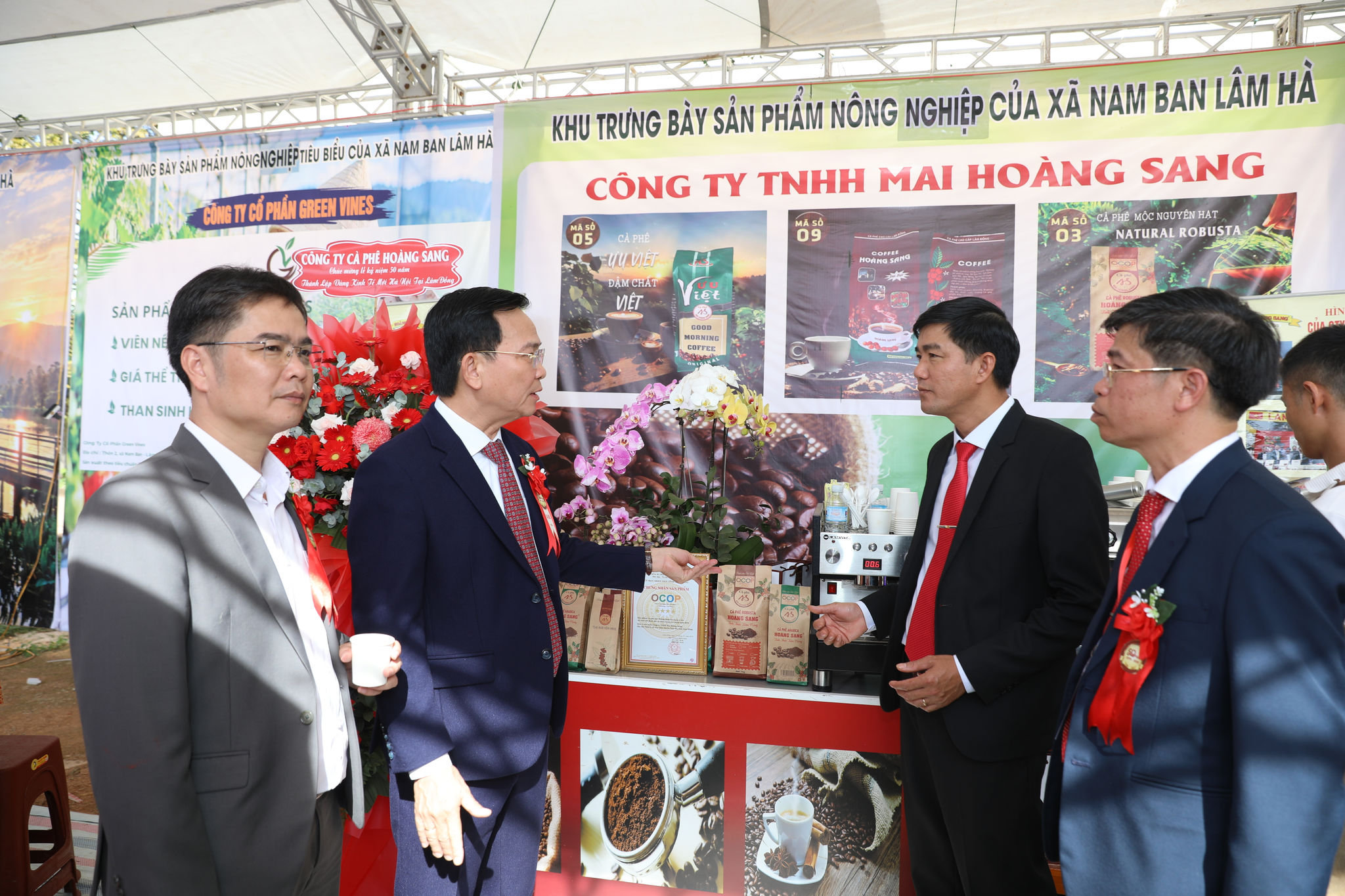
According to the Lam Dong Provincial People's Committee, the OCOP program is closely linked with new-style rural development, particularly rural economic growth and higher household incomes.
Through product standardization, brand development and market expansion, the program aims to create more opportunities for production, employment and higher agricultural value.
In the coming period, the province will continue helping producers improve quality standards, strengthen trade promotion and expand distribution channels. These efforts are intended to make better use of local product strengths, promote the rural economy and contribute to Lam Dong's new-style rural development goals.