

Cho Lau rice paper makers enter peak Tet season
While many trades do not reach peak season until just before Tet, rice paper workshops in Cho Lau, Bac Binh Commune, are already bustling. Local producers say November is when they begin working day and night to prepare enough products for the 2027 Lunar New Year market.
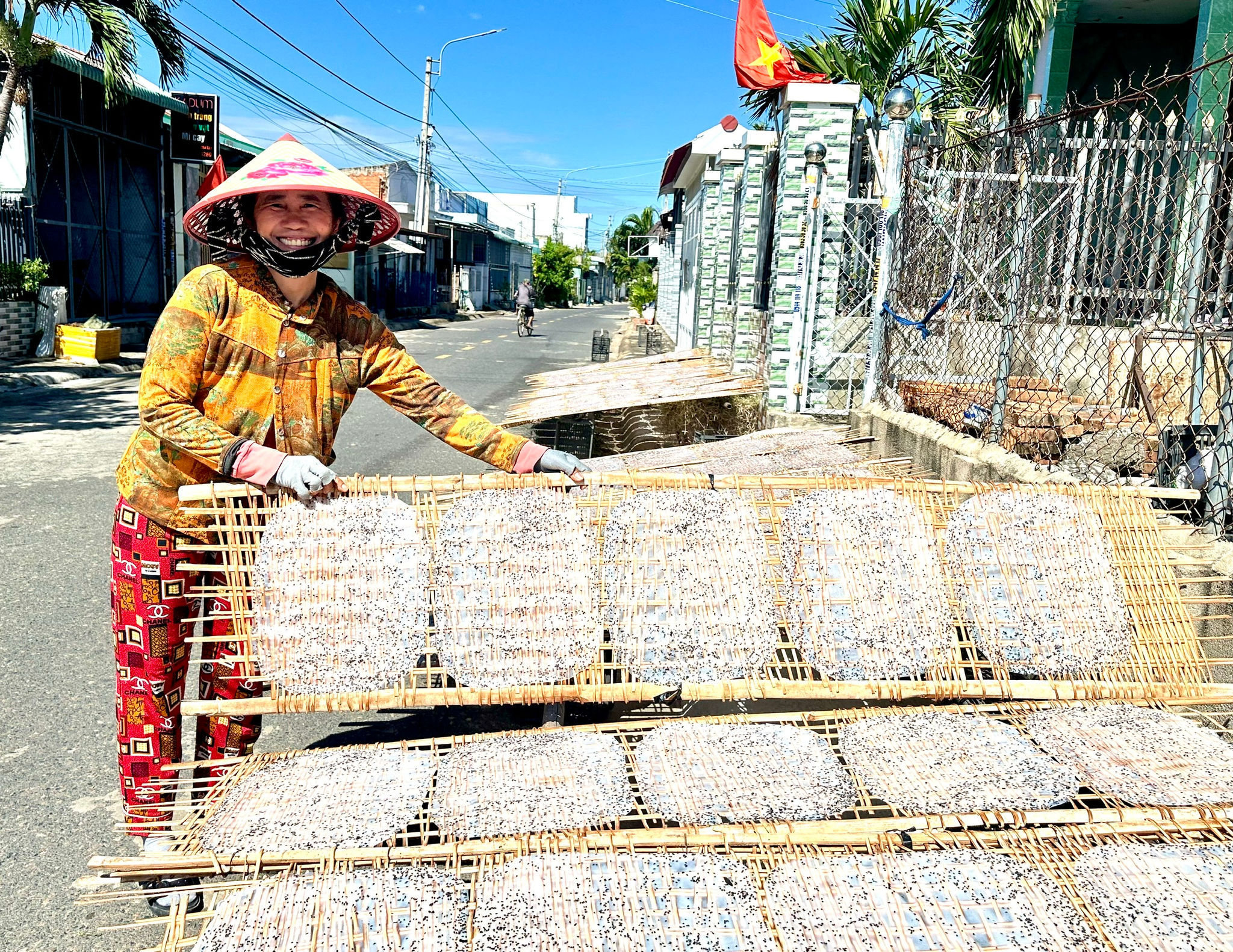
Peak production season begins
With more than three months remaining until the 2027 Lunar New Year, rice paper workshops in Cho Lau have already entered their busiest production season of the year. One of them is the workshop of Le Thi Ngoc Chi in Cho Lau 1 Hamlet, Bac Binh Commune.
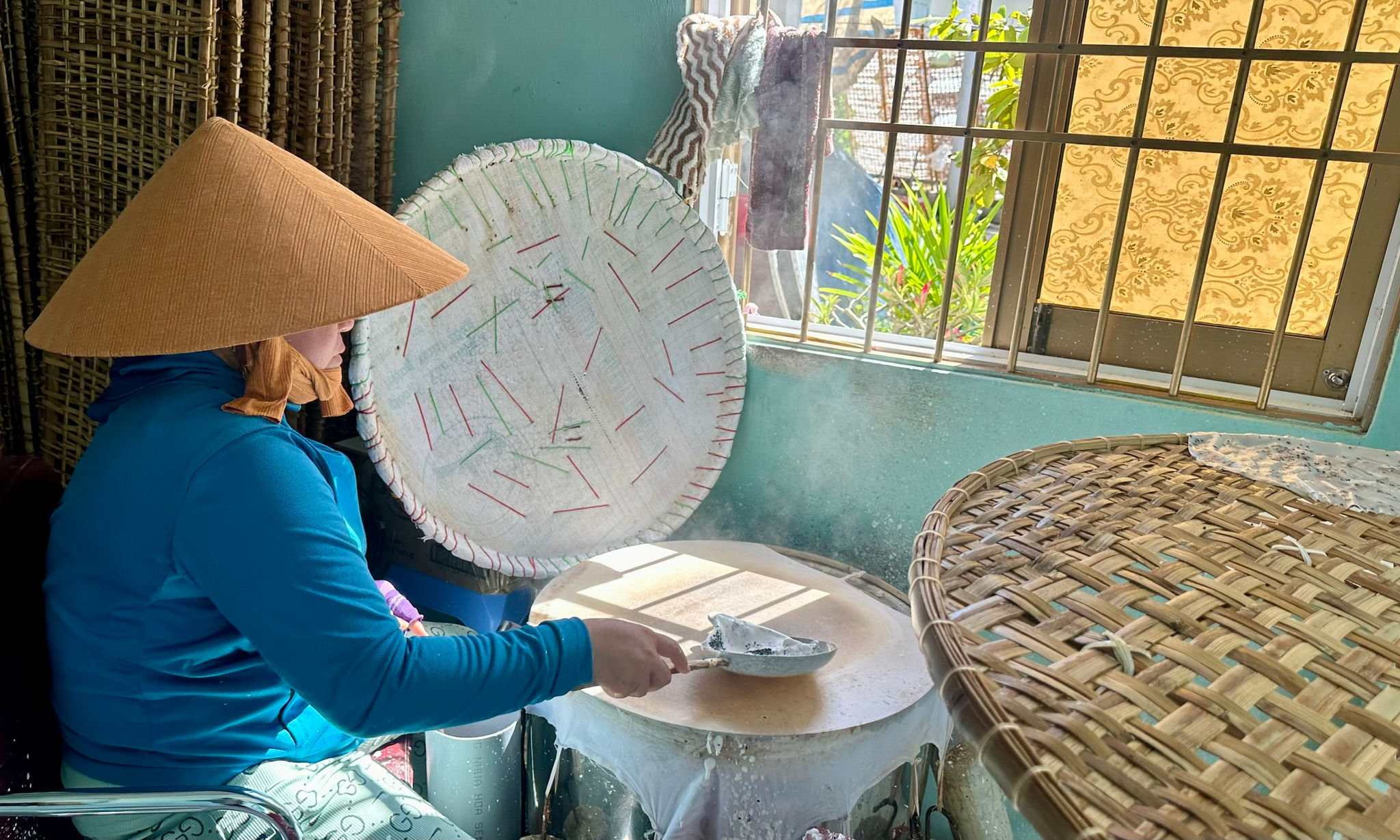
When we visited, Chi was working steadily beside the stove, quickly spreading each batch of rice batter to make the most of the sunshine. She said rice paper making has a long history in the area. More than 20 years ago, she learned the craft from her aunt. Seeing it as part of the community's traditional culinary culture, she decided to continue the trade and preserve it.
Unlike mass-produced industrial rice paper, Cho Lau rice paper requires care and skill at every stage. The key to its quality lies in selecting the right rice. The rice must be of good quality and slightly aged, neither too dry nor too fresh, so that once milled into flour, the finished rice paper has the right elasticity and a mild natural sweetness.
According to Chi, production begins by soaking rice the previous afternoon. Locally grown rice is washed, soaked for about two hours and then finely milled. The flour is left overnight before water is added the next morning for cooking, together with black sesame grown locally. Once dried, the rice paper develops its characteristic nutty flavor and aroma.
Every day, Chi and several workers begin at 6 a.m., working through noon and into the evening. Another worker stays outside to supply materials, tend the stove and take the freshly made rice paper out to dry.
My workshop normally uses 30-35 kilograms of flour a day, producing hundreds of rice papers for the local market. Since early November, however, we have increased production to around 45 kilograms of flour a day, making more than 1,000 pieces to meet market demand.
Le Thi Ngoc Chi
Preserving the craft village brand
Weather plays a decisive role in the quality of traditionally made rice paper. According to experienced producers, on hot sunny days, the rice paper needs just over an hour to dry and achieve the desired crispness. On cloudy, rainy or windy days, drying can take two to three and a half hours, requiring workers to monitor the product closely to prevent cracking or loss of quality.
Once dried, the rice paper is packed in bags of 50 or 100 pieces and sold wholesale and retail both inside and outside the province. Prices average VND 250,000-350,000 per 100 pieces, depending on thickness.
Although many producers have shifted to fully mechanized production to increase output, Chi's workshop and many other households in the commune continue to use traditional manual methods.
This approach not only preserves the distinctive rustic flavor of Cho Lau rice paper but also provides stable jobs for local workers. That traditional quality is also why customers such as Nguyen Thanh from Phu Thuy Ward continue to buy the product.
Thanh said he and his friends enjoy the chewy texture and distinctive flavor of traditional rice paper. Before Tet each year, he orders large quantities of Cho Lau rice paper both for his family and as gifts.
Amid the pace of modern life, traditional rice paper workshops in Cho Lau are once again firing up before dawn and accelerating production, raising hopes for a strong 2027 Lunar New Year season.
According to the Bac Binh Commune People's Committee, local handicrafts and traditional craft villages remain stable. In the Cho Lau rice paper village, 39 of 96 households operate year-round, while the remainder produce seasonally, mainly during the Tet period.