

Making OCOP products a distinctive identity of every region in Lam Dong
Lam Dong is home to more than 800 OCOP-certified products. Beyond their economic value as agricultural goods, each product tells a story about the people, culture and local identity of the province.
Products rooted in fertile lands
In 2017, after recognizing that local coffee production was fragmented and inefficient and that market outlets were unstable, Lang The Thanh of Nam Nung Commune urged local households to form the Thanh Thai Fair Trade Agricultural Cooperative.
The initiative sought to gradually move from traditional farming to commercial production, emphasizing quality and brand development.
Instead of aiming to increase output, cooperative members gradually adopted new farming practices and created standardized production processes.
They established raw-material growing areas certified to 4C and Rainforest Alliance standards, meeting the requirements of several export markets, including Europe and the United States.
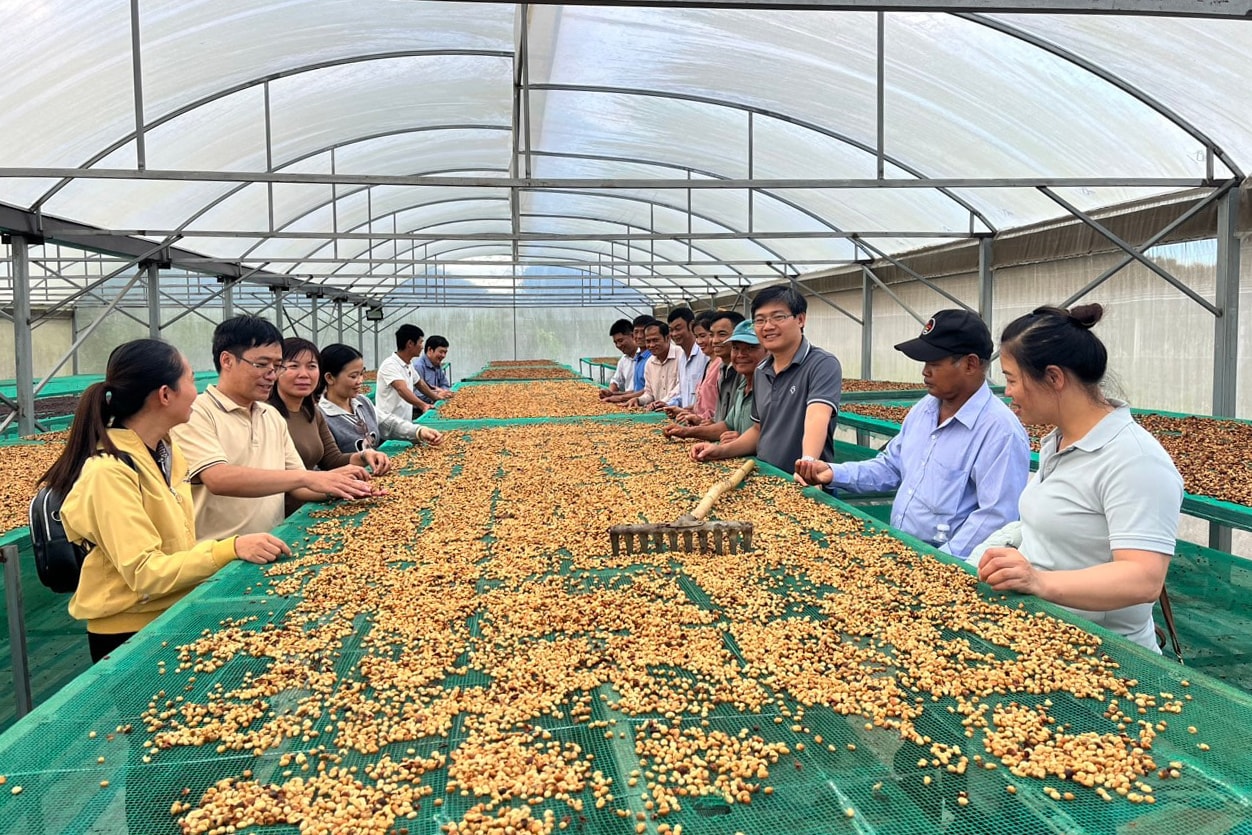
Building on its high-quality raw material areas, the cooperative continued to invest in further processing and promote the brand “Thanh Thai Coffee – The Essence of the Dak Nong Volcanic Land.”
So far, it has developed seven processed products, including roasted and ground coffee, roasted coffee beans, and drip coffee bags; two of these products have received three-star OCOP certification.
According to Lang The Thanh, Director of Thanh Thai Fair Trade Agricultural Cooperative, the OCOP program has helped the cooperative improve product quality and presentation while creating opportunities for its coffee to reach a broader customer base.
"We aim to make our products distinctive local gifts associated with the story of this volcanic land, its people and its culture," Thanh said.
Beyond coffee-growing areas, OCOP products are also capitalizing on natural conditions, soil characteristics and crop restructuring in remote and border areas.
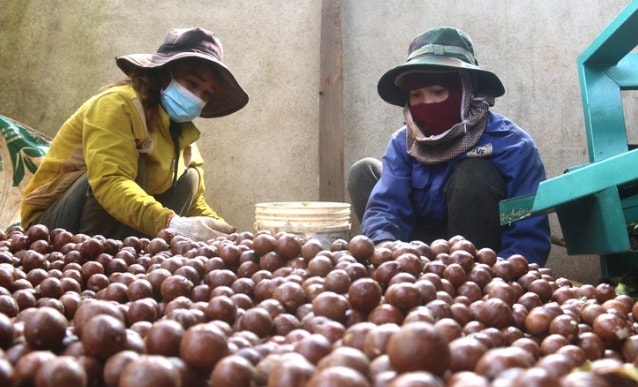
In Quang Truc Commune, macadamia farming has become a key source of income for local residents. The area now has more than 1,350 hectares of macadamia, with many farms intercropped with coffee or planted in place of less productive crops.
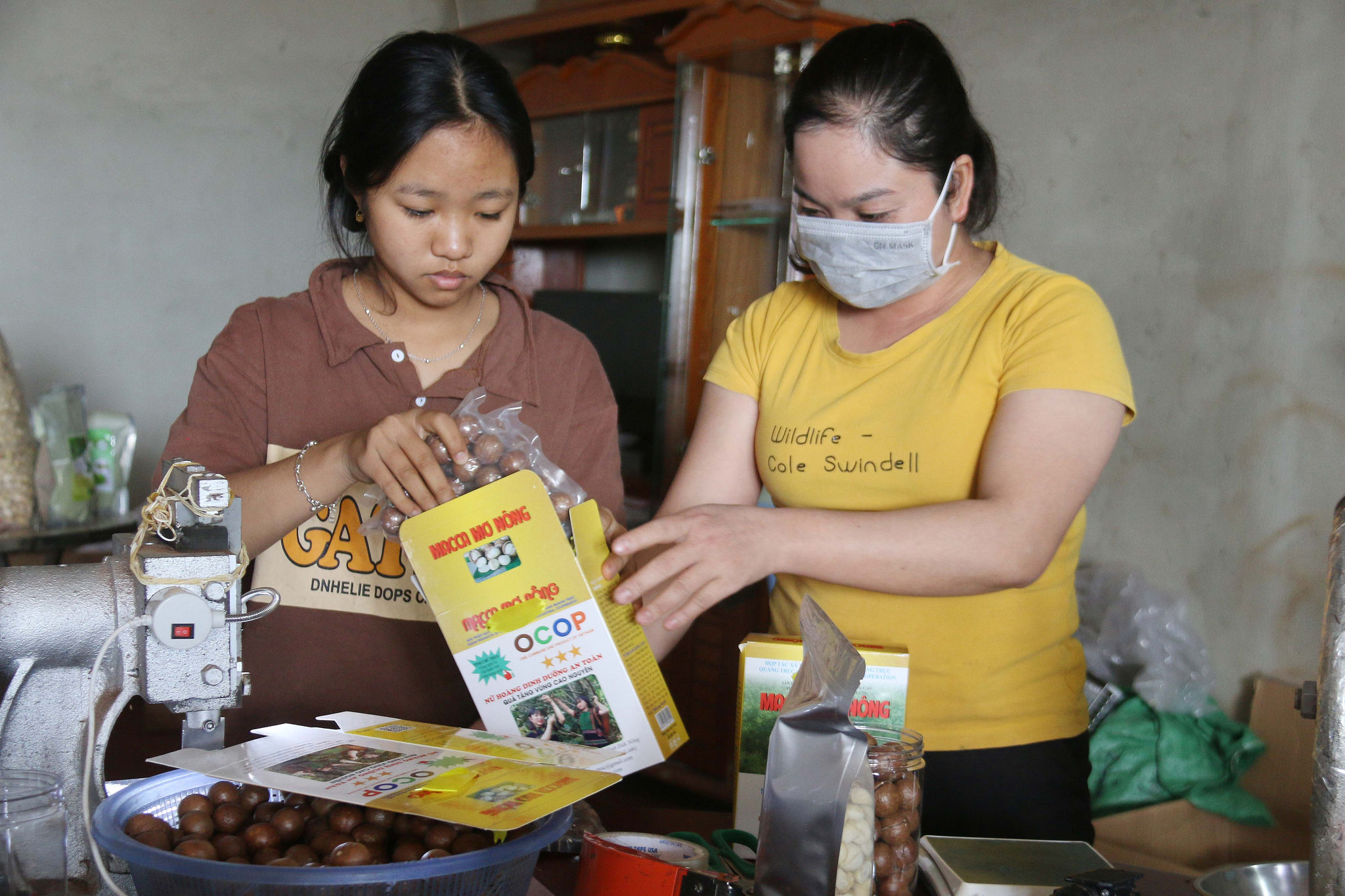
As cultivation expands, the locality is also strengthening production, processing, and marketing partnerships to gradually build a value chain for the product. The Quang Truc Green Agriculture Cooperative and its Mo Nong macadamia nut product are notable examples.
Since 2022, the cooperative, led by Director Nguyen Anh Tuan, has worked with 42 households to grow VietGAP-certified macadamia across about 70 hectares. The area yields 200–250 tonnes of raw nuts each year, which are processed into kernels or sold through channels suited to the market.
Working with local farmers enables the cooperative to secure raw material supplies, control product quality and develop processing and marketing plans more effectively. It also gives farmers greater confidence in production through clearer market outlets, gradually increasing the value of macadamia cultivation.
Nguyen Anh Tuan, Director of the Quang Truc Green Agriculture Cooperative
Challenges in enhancing product value
In practice, the OCOP program has prompted many participating entities to reconsider their production methods, prioritize quality, invest in processing, and build their brands.
These distinctive products create economic value while also telling stories of local landscapes, communities, culture, and farming practices.
Yet the path from earning OCOP certification to securing a lasting place in the market remains challenging.
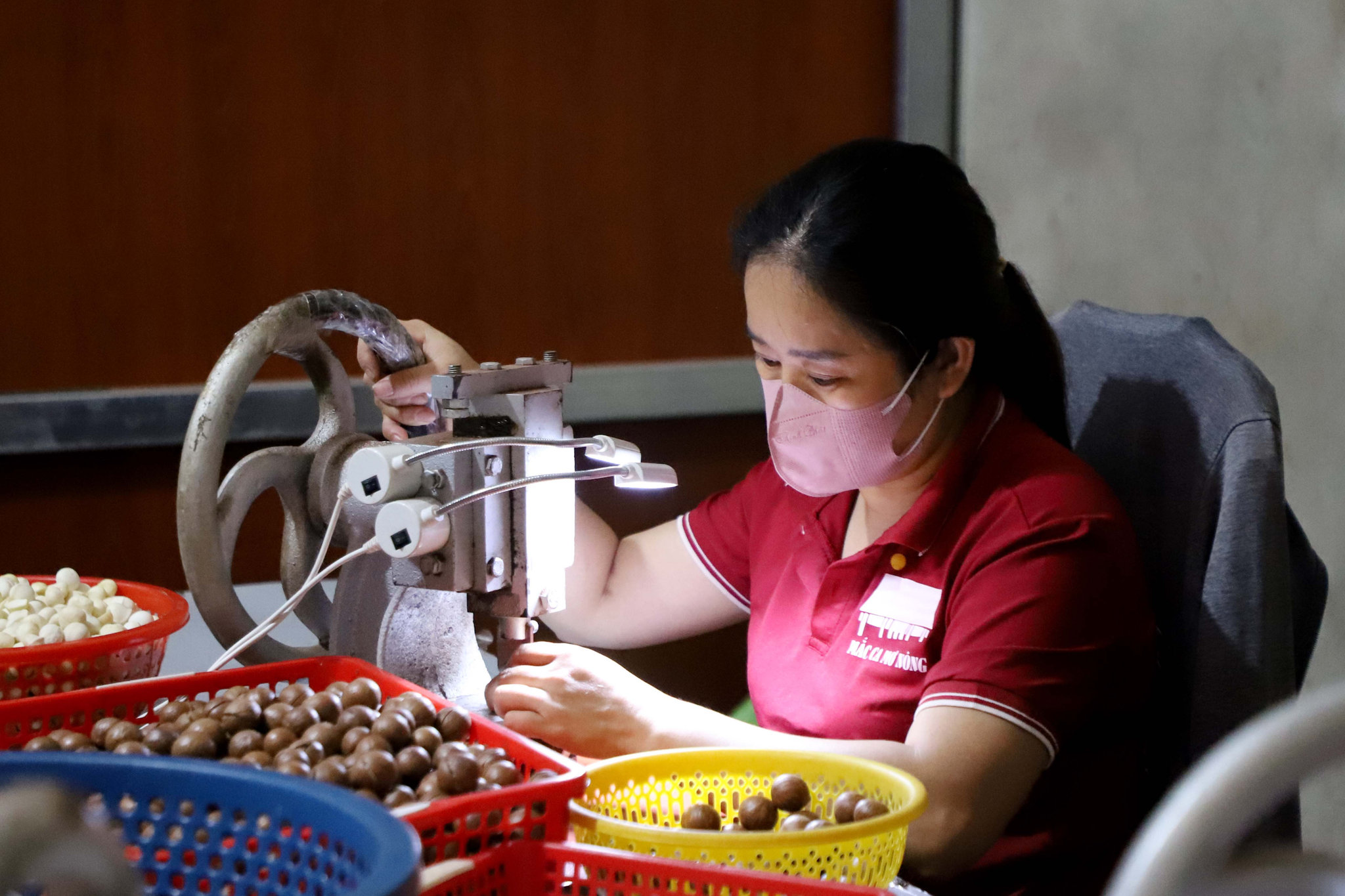
For many OCOP producers, major obstacles persist, including limited capital, low production volumes, processing technology, access to raw materials, and entry to large distribution networks.
At the same time, the market is demanding ever-higher standards for quality, packaging, product traceability, supply reliability, and competitive pricing.
A resident of Nam Da Commune, identified only as Ms. V., said that current challenges go beyond production to encompass promotion, brand protection, and making products more accessible to consumers.
On e-commerce platforms, similar images, names, or product descriptions used to promote other goods have made it harder for producers to safeguard their brand reputation.
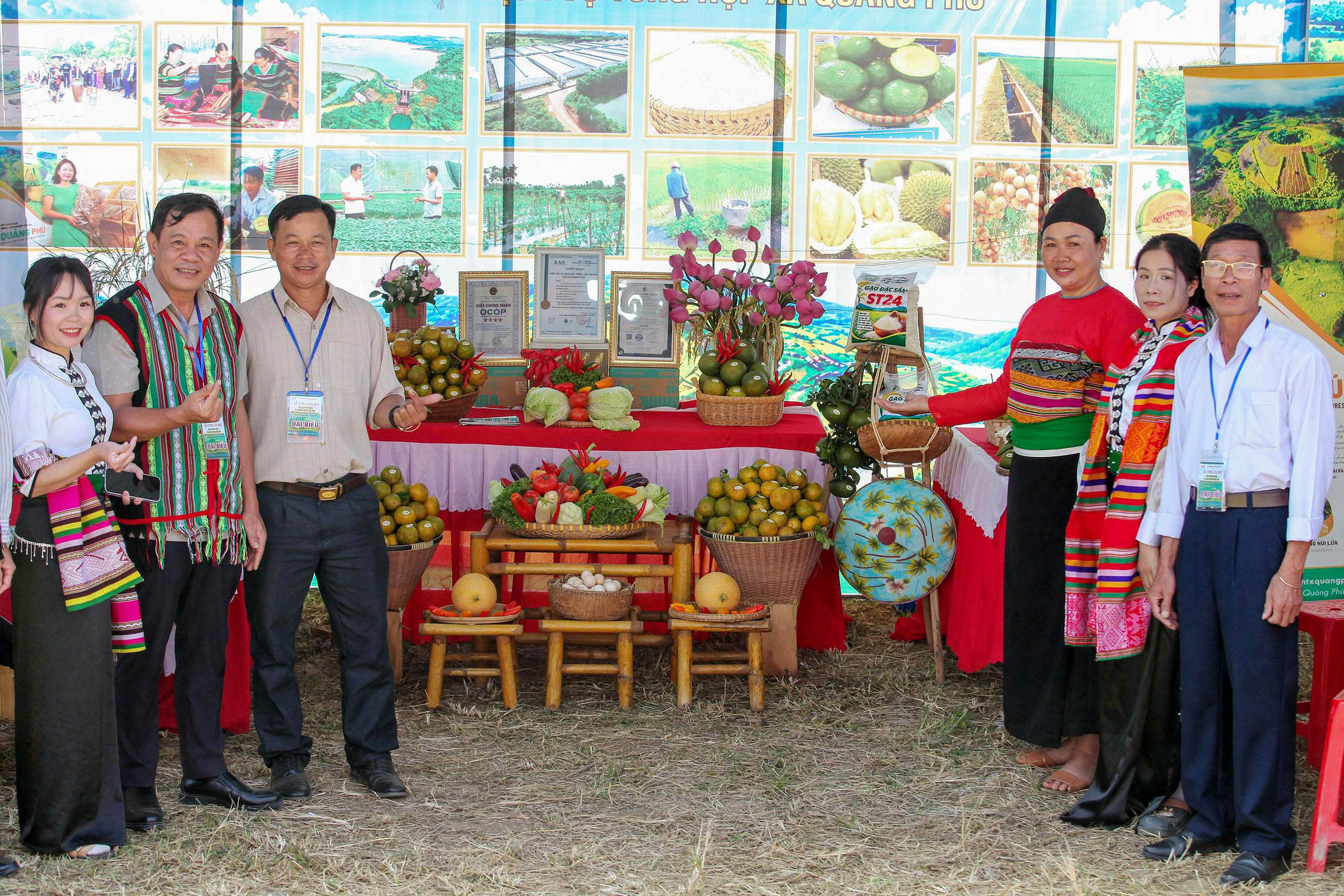
A further challenge is gaining access to digital markets, especially for producers in remote and isolated locations. For small businesses and production facilities, fulfilling these requirements demands time, staffing, and financial investment.
Ms. L., who represents a macadamia-producing business, said that selling through online platforms required far more than merely listing products in an online store. Many production facilities still lack staff dedicated to digital commerce, as well as the necessary experience.
“We hope to see more practical workshops and guidance on how to access and use e-commerce platforms effectively. This would also help local specialty products reach wider markets instead of depending solely on traditional distribution channels,” Ms. L. said.