


Promoting Cashless Hospital Payments
The Lam Dong Department of Health has reviewed cashless hospital fee payments for the 2021–2025 period, finding that significant challenges remain, particularly among patients.
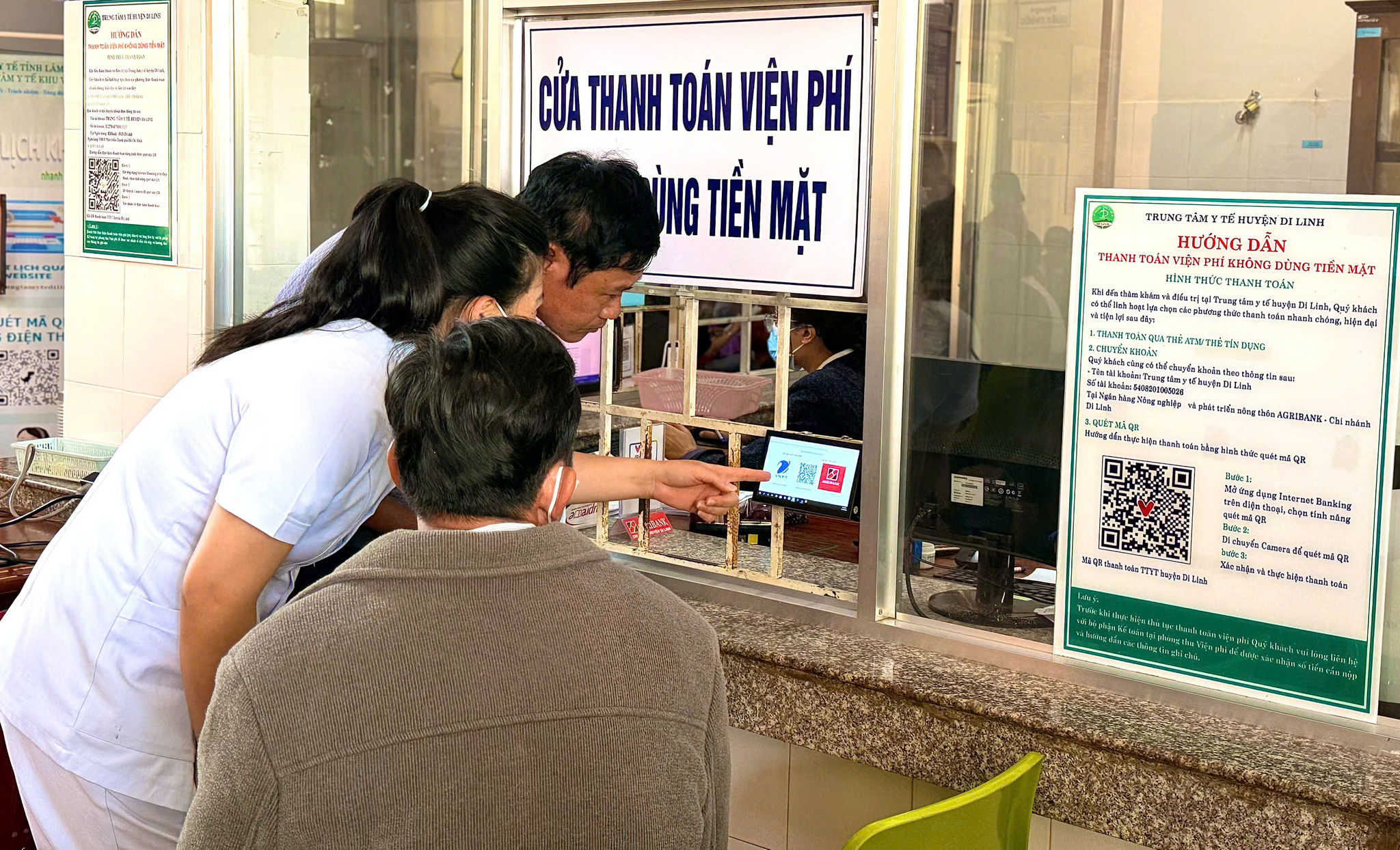
Diversifying electronic payment methods
The Department has issued Plan No. 1163/KH-SYT dated December 31, 2025 on digital transformation in the health sector for 2026, setting a target for cashless payments to account for over 50% of total transaction value at affiliated healthcare facilities.
To date, 100% (40/40) of healthcare facilities have implemented cashless payment systems, with a range of synchronized solutions to better serve patients. All facilities display static QR codes to support transfers via banking applications and e-wallets. Notably, 19 facilities have deployed dynamic QR codes integrated with Hospital Information System (HIS) software, enabling fast and accurate payments without manual data entry.
In addition, 22 facilities have installed POS terminals to support card payments and QR scanning at cashier counters, while seven units have introduced smart kiosks integrated with hospital fee payment functions, helping reduce waiting times and improve service quality.
According to Mr. Huynh Thanh Huynh, Deputy Director of the Department of Health, the proportion of cashless hospital fee payments has nearly doubled over the past five years, rising from 30.5% in 2021 to 56.3% in 2025. The expansion of cashless payment methods has not only made transactions more convenient for patients but also helped reduce risks and minimize errors in cash handling and reconciliation at healthcare facilities.
Addressing existing challenges
According to the provincial Department of Health, cashless payments accounted for more than 50% of total transaction value in 2025. However, the number of cashless transactions remains low at some facilities. This is mainly because many patients—particularly elderly people and ethnic minority residents in remote areas—still prefer cash and are not familiar with smartphones or banking services, making them reluctant to switch to electronic payment methods.
Moreover, network infrastructure at some facilities remains unstable, affecting payment processing and data reconciliation.
In February 2026, the rate of cashless hospital fee payments across the province reached 75.2% of total transaction value and 56% of total transaction volume. However, several facilities still reported low transaction-based rates, including Binh Thuan Lung Hospital (5.2%), Southern Regional General Hospital (3.1%), Northern Binh Thuan Regional General Hospital (1.4%), and a number of district health centers such as Bao Lam (8%), Tuy Phong (4.6%), Ham Thuan Nam (7.1%), Dak Song (7.8%), Krong No (1.6%), and Cu Jut (5.1%).
Despite being a pioneer in digital transformation and electronic medical records, the Dak Mil Regional Medical Center still records a low rate of cashless payments. Dr. Nguyen Dang Trung, Director of the center, attributed this to the public’s limited use of cashless payment methods. Many patients, particularly from ethnic minority groups, do not own smartphones or use banking applications.
Patients also tend to bring cash when seeking medical services due to concerns about transfer errors. In addition, medical service software has not yet been fully integrated with banking payment systems. Moving forward, the center will step up communication efforts to encourage patients to adopt cashless payments and accelerate the integration of medical and banking software systems.
The Department has requested healthcare units to strengthen coordination among billing departments and implement solutions to increase cashless payment rates. At the same time, communication efforts will be intensified through multiple channels, alongside direct guidance for patients at payment counters.
Mr. Huynh Thanh Huynh, Deputy Director of the Department of Health