


Promoting the Strength of OCOP Fishery Products in Lam Dong Province
With the largest natural area in Vietnam, Lam Dong Province possesses diverse advantages in agriculture, forestry, and fisheries. Among these, OCOP products (One Commune One Product) in the fisheries sector have emerged as a key strength and competitive advantage for the locality.
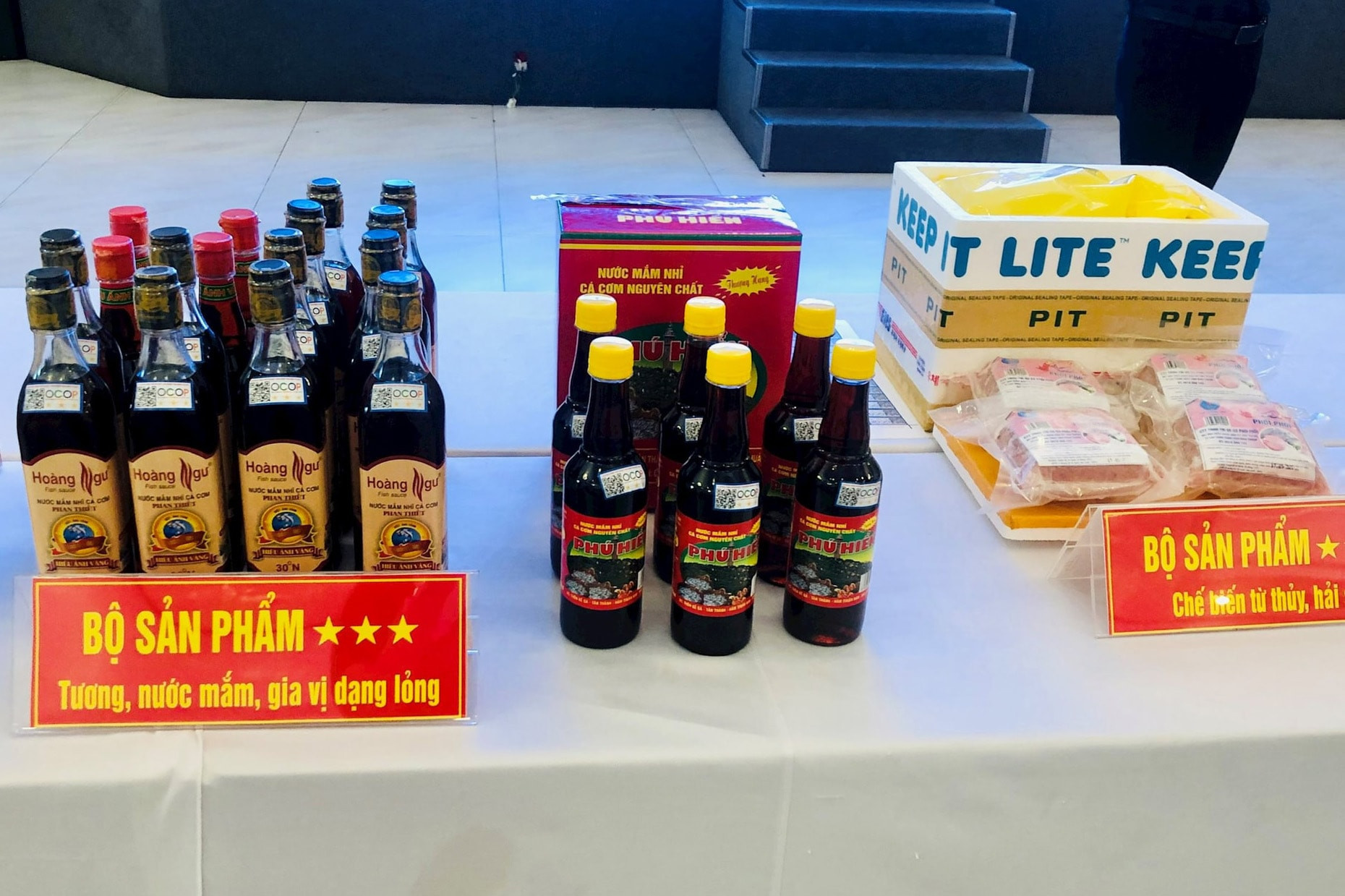
According to the Provincial Sub-Department of Rural Development, Lam Dong’s OCOP products are now available in numerous supermarkets, specialty stores, and trade fairs within and outside the province. In the fisheries sector alone, Lam Dong benefits from a 192-kilometer coastline and an average annual seafood output of over 230,000 tons, providing a stable supply of raw materials for local processing and export enterprises.
Building on these advantages, several localities and businesses in the southeastern region of the province have developed a variety of distinctive products such as fish sauce, anchovy paste, dried and frozen seafood, sun-dried sturgeon, sun-dried squid, garlic-butter squid, tamarind-simmered squid, garlic-fried sciaenid fish, grilled goby, marinated anchovies with lime or Thai sauce, tamarind-simmered filefish, and crispy kimchi anchovies.
Additionally, many other potential marine products — including dried fish, fish cakes, snails, shrimp, crab, and sea cucumbers — could be further developed under the OCOP program.
Provincial agricultural authorities noted that OCOP initiatives have significantly improved product quality, branding, and market competitiveness. These efforts have helped expand consumer markets, raise the average income of OCOP producers by 15–20% annually, and create more rural jobs. OCOP products have gradually gained recognition for their quality and reliability, contributing positively to rural economic development and the modernization of local agriculture.
Moving forward, Lam Dong Province aims to focus on developing OCOP products with strong local identity and high competitiveness. Enterprises and cooperatives are encouraged to invest in research, technological innovation, and advanced processing to enhance product quality and diversify OCOP offerings. Support will also be provided to help producers adopt modern standards, regulations, and production processes.
The province’s agricultural sector is also orienting the development of OCOP products along value chains that align with local advantages and conditions. This includes building an extensive distribution network, expanding access to modern retail channels, and promoting OCOP products through e-commerce platforms. Lam Dong also plans to establish dedicated OCOP showrooms and gift-product lines linked to tourism routes and local specialties.
The Provincial Sub-Department of Rural Development has outlined a roadmap for OCOP development in general and for fisheries products in particular. This includes conducting surveys and data collection to assess the economic potential of processed fishery products and identify value-added opportunities. The province aims to strengthen value chains for key fishery products tied to processing and export, improve state management, and promote the application of science, technology, and digital transformation in OCOP production, management, and sales — as part of the restructuring plan for Lam Dong’s fishery sector for the 2026–2030 period, with a vision toward 2035.