


Purple Blossoms Lingering Through Spring
If cherry blossoms signal the arrival of spring, the purple flamboyant whispers its farewell. While the former bursts into bloom with vibrant energy, the soft cascade of purple petals evokes a deep sense of nostalgia—gentle, lingering, and quietly moving.
A Season Stirred by Jacaranda Purple
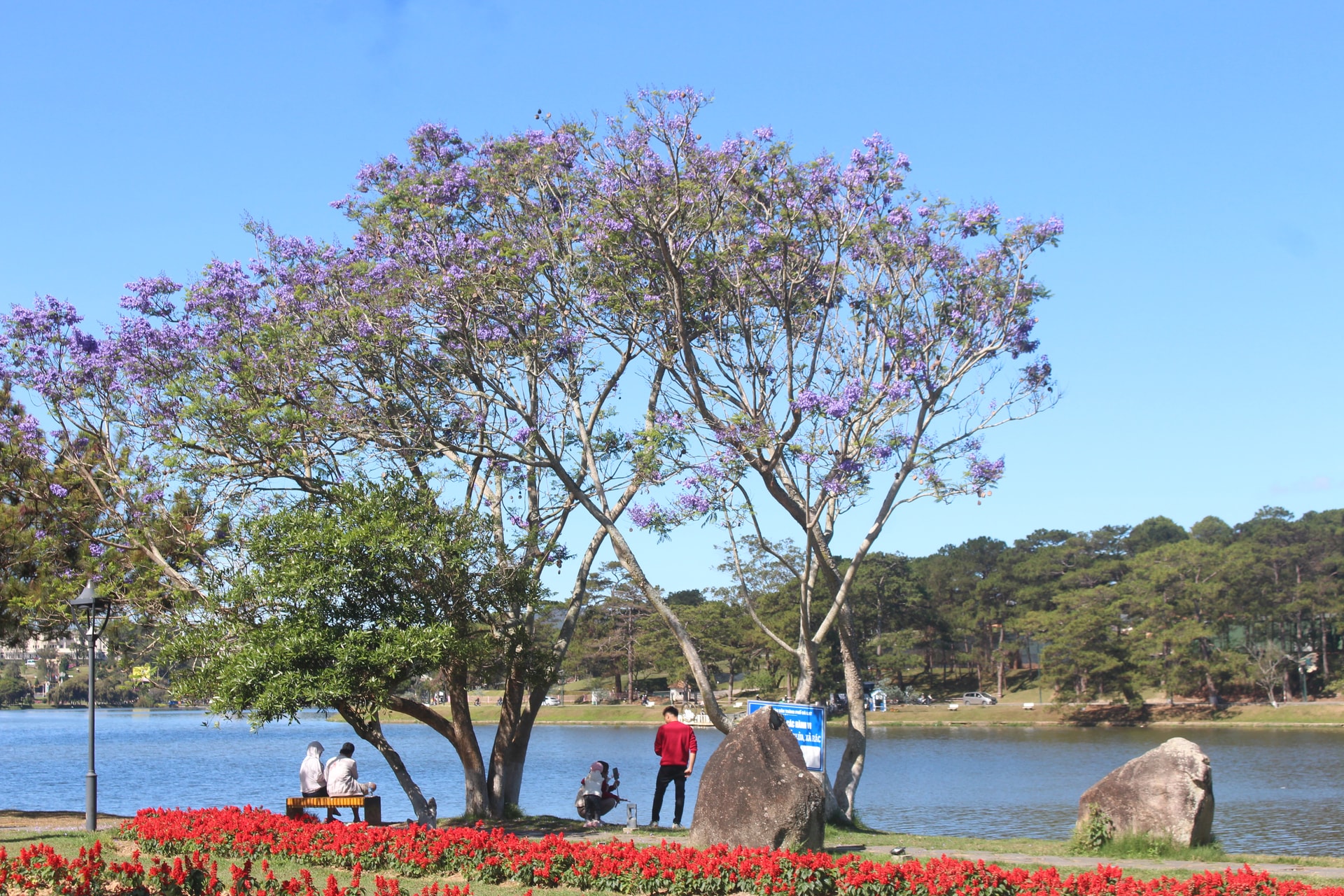
As the cherry blossom season fades, March arrives in Da Lat at the peak of the dry season. Under golden sunlight, the jacaranda trees begin to reveal its delicate hues. Unlike the simultaneous bloom of cherry blossoms, each cluster, each branch, each tree unfolds gradually. This unhurried rhythm prolongs the season, with shades of purple lingering across Da Lat throughout spring.
The shade of the jacaranda is unlike any other. It is not quite the lavender of wildflowers, nor the pale hue of chinaberry blossoms, nor the deep tones of “sim” flowers. It seems to gather all those purples into a singular, captivating shade. The harsher the sunlight, the more vibrant the blooms become. Against a clear blue sky, clusters of bell-shaped flowers hang in delicate layers, bathing the horizon in a soft purple glow.
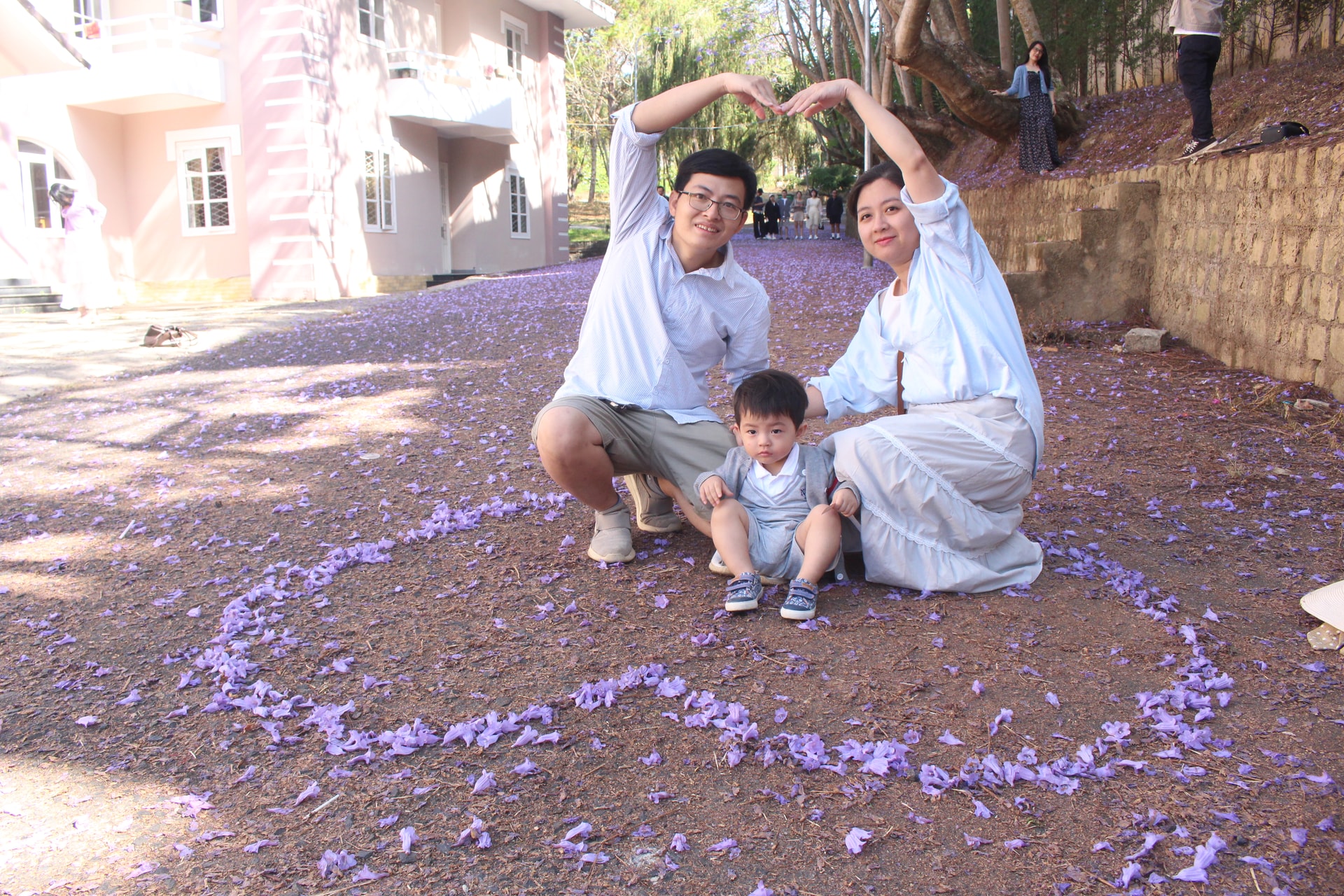
With every passing breeze, the early blooms descend gently, making way for those yet to unfurl. Petals drift through the air, alighting on hair and shoulders so softly that one is tempted to reach out and catch them.
Even as they fall, the flowers retain their beauty. Rather than scattering into separate petals, they keep their form, forming soft purple carpets beneath the trees—on rooftops, along pathways, across grassy patches—inviting passersby to tread lightly.
I had heard about this flower for a long time, but seeing it in person is truly overwhelming. It makes me want to stand still and admire it for as long as possible. Somehow, the harsh dry-season sun feels gentler under this shade of purple. I’m lucky to arrive when the flowers are both in full bloom on the trees and scattered beautifully on the ground.
Ms Hoang Lan, a visitor from Can Tho city
The Allure of the Season
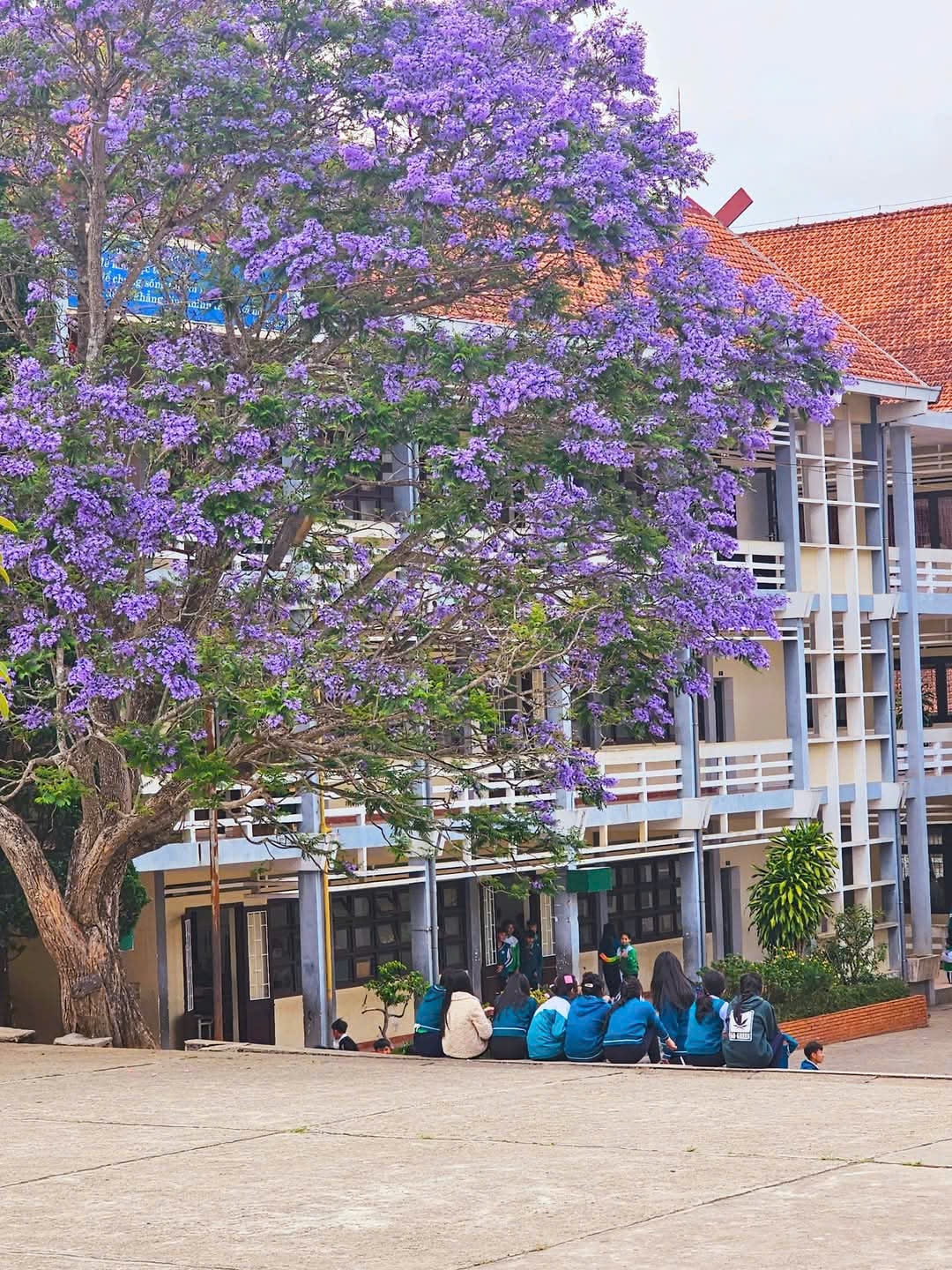
These days, the purple hue can be seen across Da Lat—from the lakeside Trade Union Hotel near Xuan Huong Lake, to Nguyen Van Cu Street through Anh Sang Hamlet, Nguyen Thi Minh Khai Street leading to Da Lat Market, the grounds of Herman Gmeiner School and SOS Children’s Village, to slopes along Ho Tung Mau, Nguyen Du Park, Tran Hung Dao Park, and streets such as Quang Trung, Hung Vuong and Tran Phu. Along hillsides, beside old villas or at quiet street corners, the purple blossoms add a subtle charm to Da Lat.
Each tree carries its own character. Some rise tall, requiring an upward gaze to fully appreciate their beauty; others are lower, with wide canopies and blossoms within reach. Some trees are covered entirely in purple, without a single leaf, while others blend fresh green shoots with blossoms, creating a gentle contrast. A lone tree on a street corner can stand out in quiet elegance, while rows of trees form dreamy purple avenues that invite anyone passing by to pause.
Ms Hoa, a local resident in Lam Vien - Da Lat Ward, shared while selling flowers near a jacaranda tree: “Every year, when this season comes, I never tire of looking at these flowers. Perhaps they resemble the people of Da Lat—quiet, unassuming, yet deeply captivating. Once you fall in love with them, it lasts a long time.”
The jacaranda season lasts around three months, from March to May—arguably the most beautiful time in Da Lat. Before the rains arrive, the sky remains clear and the sunlight golden, forming the perfect backdrop for the blossoms to stand out. And when the last petals fall, one knows that spring has truly passed.
Extending the Seasons of Purple
Known scientifically as Jacaranda mimosifolia (family Bignoniaceae), the jacaranda tree originates from South America. It was introduced to Vietnam in the 1960s by engineer Luong Van Sau, who brought it to Da Lat for trial cultivation. Thanks to the city’s cool climate and suitable highland soil, the tree quickly adapted and has since graced Da Lat with nearly six decades of blooming seasons.
Today, many newly planted trees grow tall with upright trunks, making them difficult to shape attractively. Older trees often have wide canopies and abundant blossoms, but their height makes it challenging for visitors to fully appreciate or photograph the flowers. Low-growing trees with wide, blossom-filled canopies remain rare.
To create more accessible and visually appealing purple seasons, greater attention should be paid to selecting and cultivating varieties of moderate height with broader canopies, better suited to urban spaces. Rows of lower, spreading trees could form floral arches at eye level, enriching the visitor experience.
Additionally, thoughtful planning—such as planting clusters along streets or within designated floral spaces—could create signature “purple avenues” or jacaranda parks. Combined with landscape elements like benches, walking paths and rest stops, these spaces would allow visitors to fully immerse themselves in the beauty of the season.
In doing so, the gentle purple of the jacaranda tree may continue to define a unique charm—one that quietly lingers in the hearts of those who visit Da Lat.