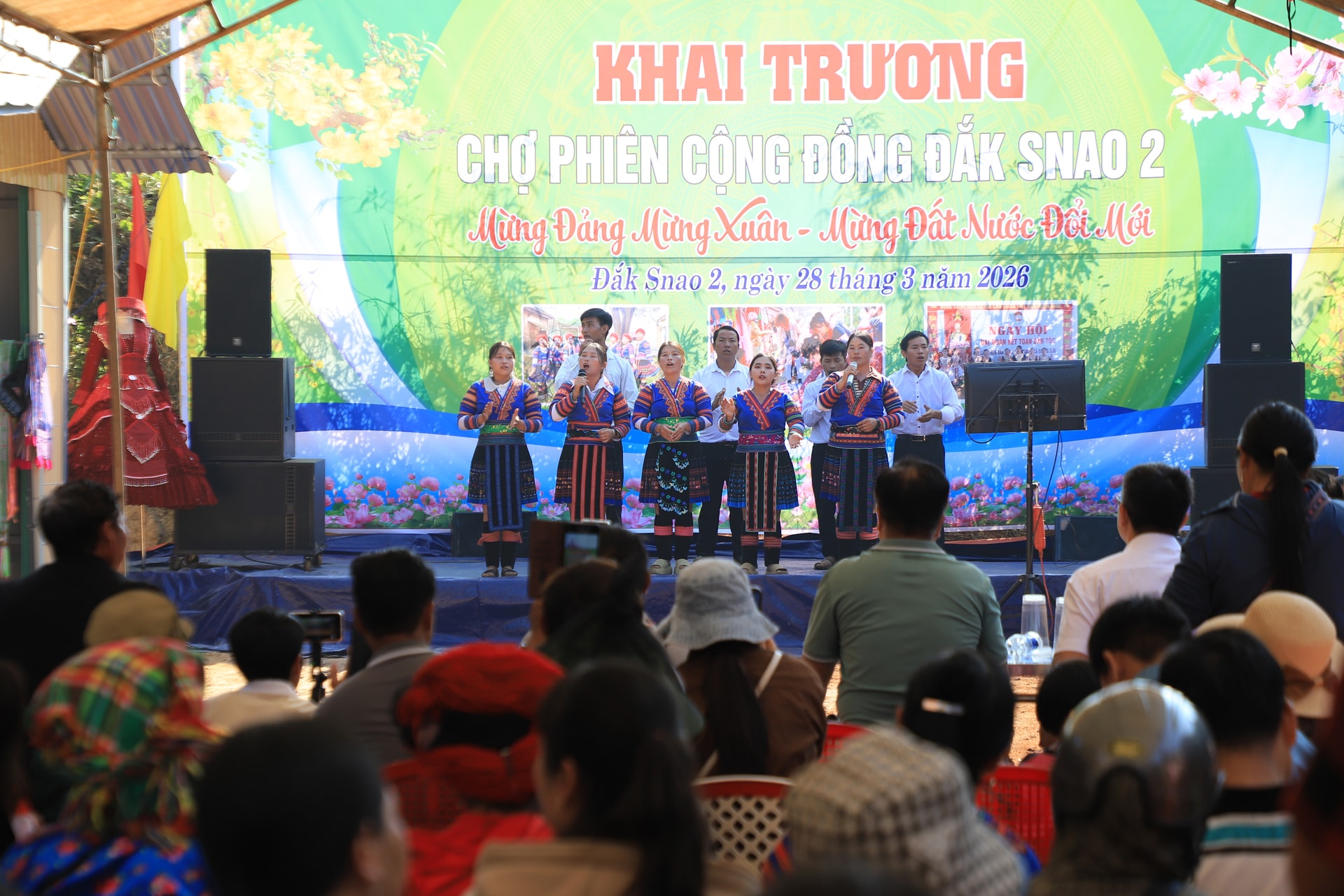
The vibrant flared skirts, steaming pots of “thang co” served alongside cups of corn wine—distinctive elements of Mong culture brought to Lam Dong by migrant communities —are now vividly recreated at a highland market in Quang Son Commune.
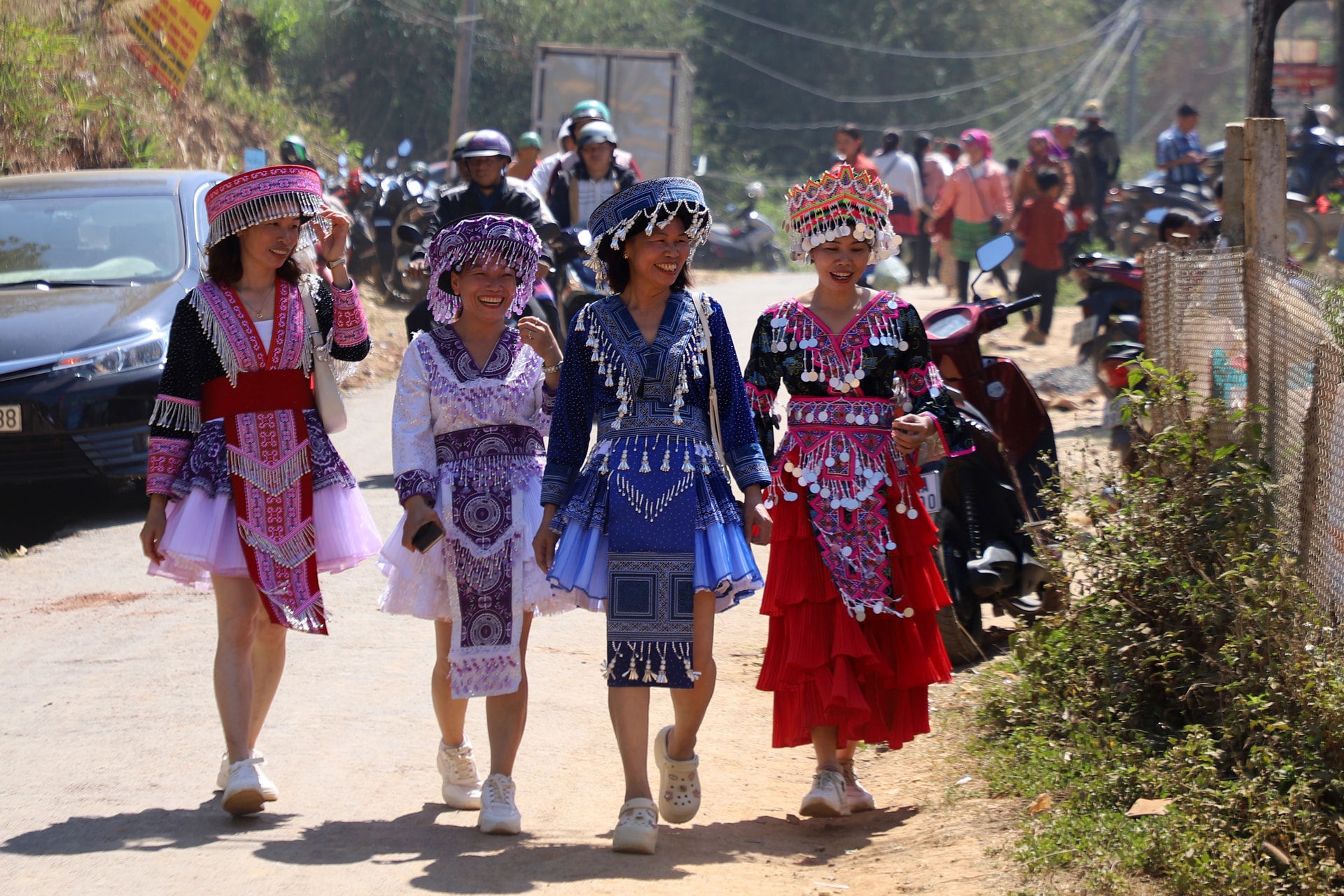
Mong women in traditional attire gather at the market for social activities
From early morning, people from across Dak Snao 2 Hamlet gather at the community market. Since March 2026, the market has become a cultural hub for exchange, trade and social interaction, creating a lively and colorful atmosphere every market day.
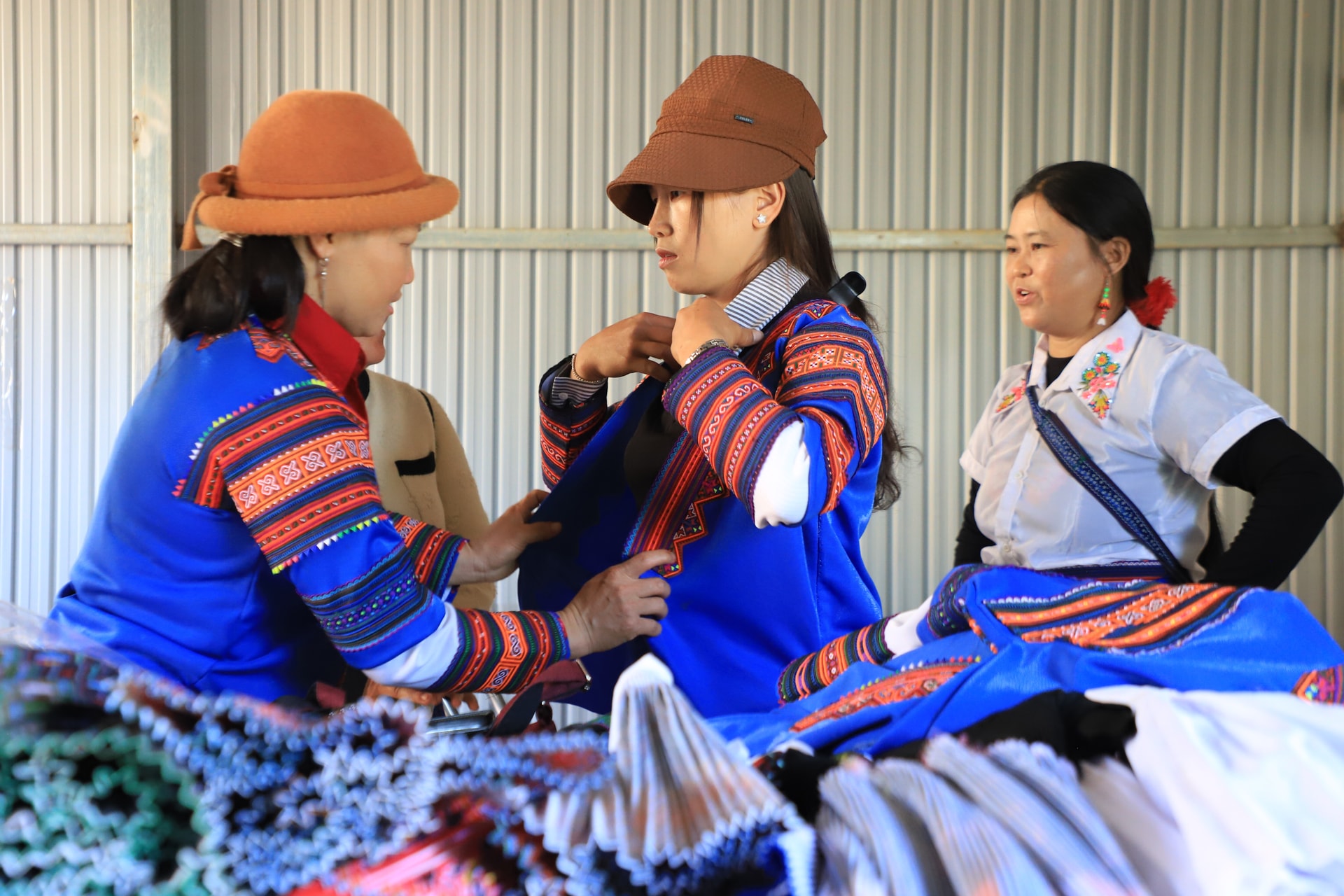
A wide range of products typical of northern mountainous regions are available, including traditional clothing, medicinal herbs, farming tools and local cuisine. Among them, brocade garments remain the most prominent, attracting both locals and visitors.
Stalls selling traditional garments attract visitors and shoppers
Lieu Thi Xa, a local vendor, said her family relocated their business to the market when it was established. She noted that for the Mong community, markets are not merely for trade but also for social connection, making profit a secondary concern.
“Even if we sell only a few garments per session, we are happy. If not today, we will sell them at the next market,” she said.
In practice, many visitors come not primarily to shop, but to enjoy the atmosphere, reconnect with friends and unwind after a week of hard work.
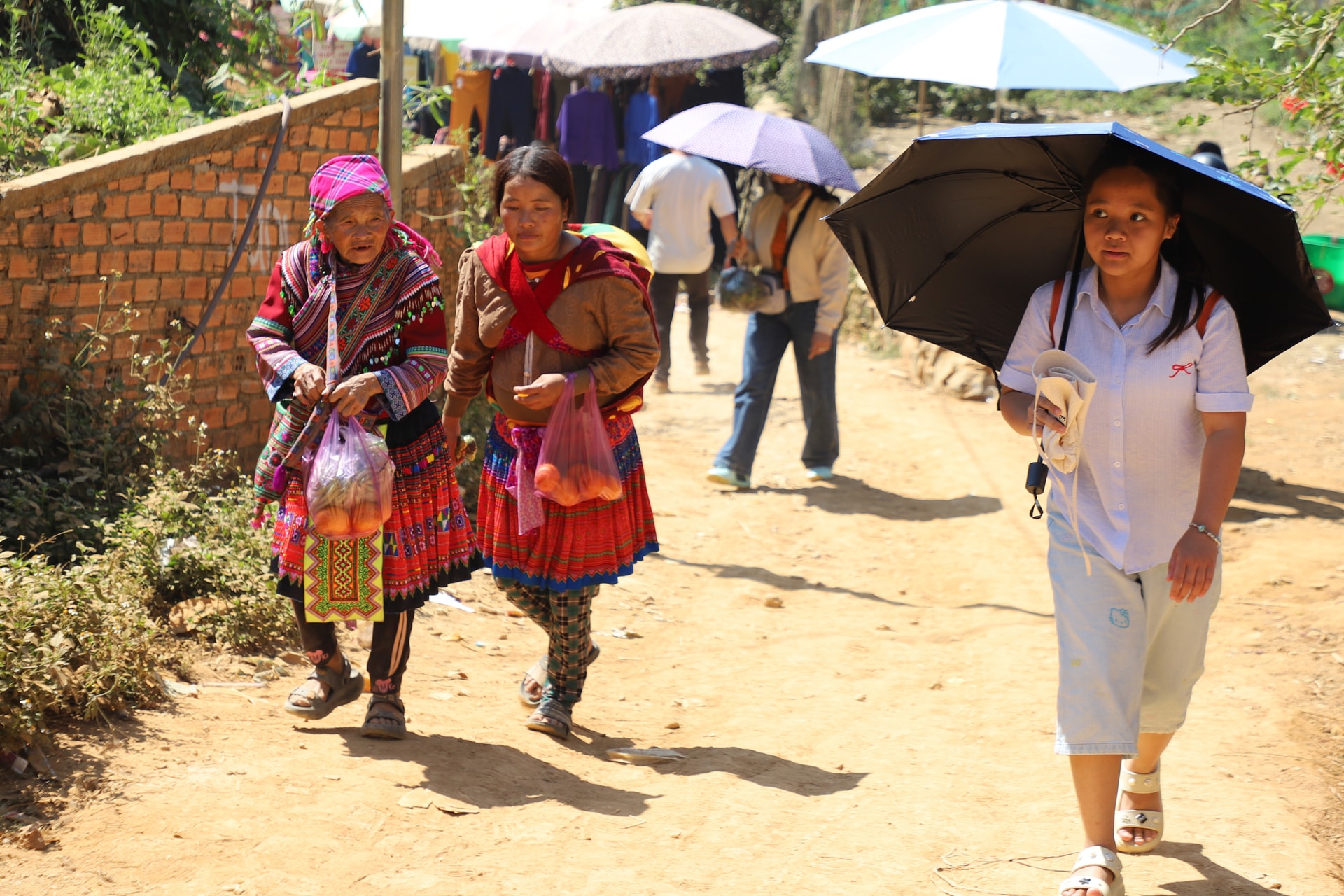
Agricultural products on display, including “dua meo,” a staple in Mong cuisine
Thao A De, a local resident, said that despite living in the area for many years, the community has preserved its cultural identity, including the tradition of periodic markets. “Mong people often work in distant fields, sometimes staying overnight there, but they always return on market days. Some even travel all day just to attend,” he noted.
Towards a Distinctive Tourism Product
Across western Lam Dong, several Mong community markets are now held regularly on weekends, including those in Dak Nang, Dak R’mang (Ta Dung Commune) and Dak Snao 2.
“
The establishment of the Dak Snao 2 community market has received strong support and broad consensus from local residents.
Giang A Ly, a respected figure in Dak Snao 2 Hamlet
Giang A Ly, a respected figure in Dak Snao 2 Hamlet, said most residents originally came from Lai Chau Province. Despite having lived there for decades, they previously had to rely on markets elsewhere. As a result, the establishment of their own community market has been widely supported.
The Dak Snao 2 community market is expected to become a tourism product
With approval from local authorities, residents selected an open area to build the market. Households registered for stalls through a lottery system and constructed kiosks based on a unified design, tailored to cultural traditions.
The market currently features 36 main stalls for local residents, along with a designated trading area for vendors from neighboring areas.
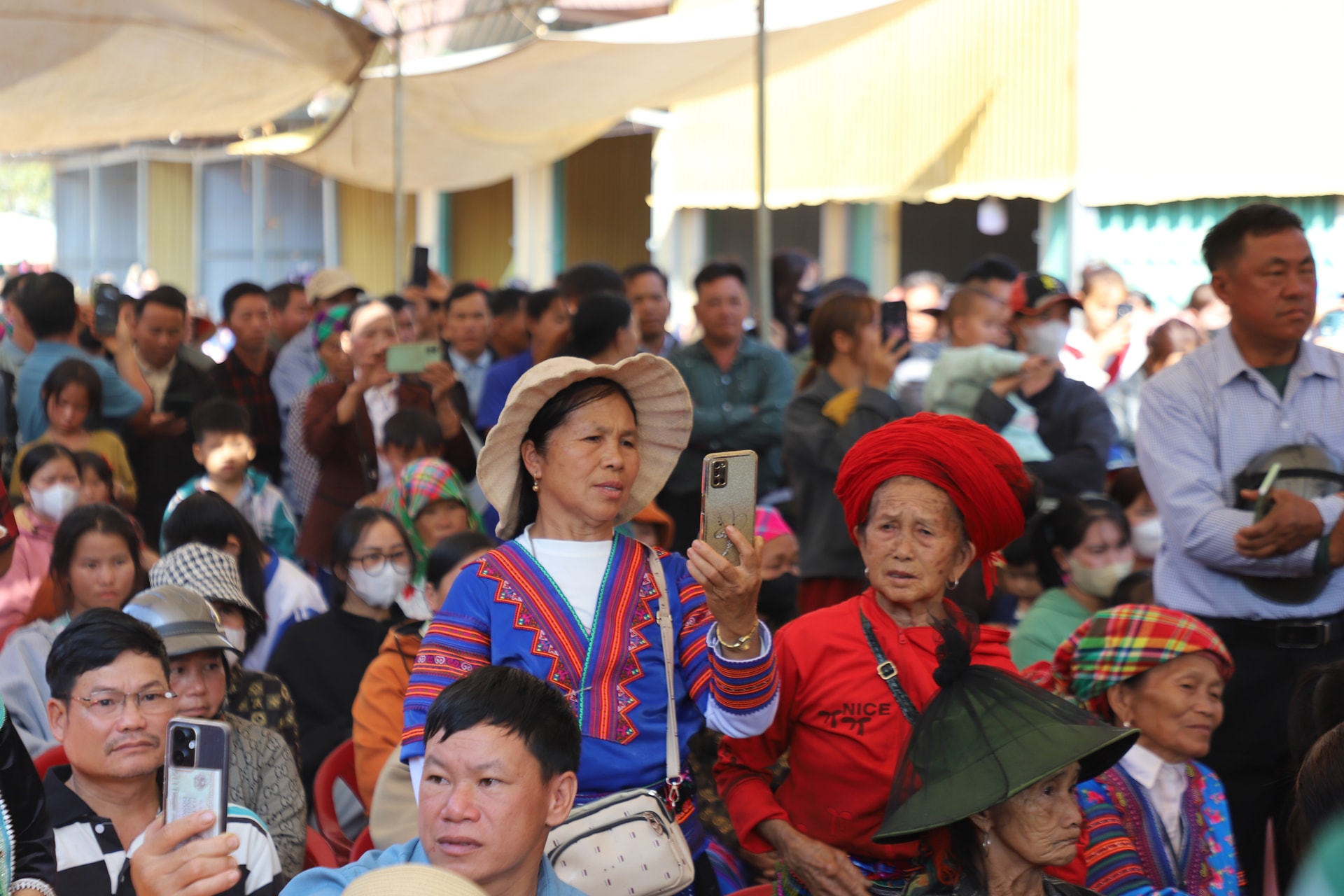
Large crowds of locals and visitors attend the market
Beyond commerce, the market also serves as a social space for young men and women to meet. While traditional marriage customs such as bride capture are no longer practiced, the sound of the Mong flute continues to foster connections, with many relationships blossoming through repeated market encounters.
In addition to preserving cultural heritage, the Dak Snao 2 community market is expected to evolve into a unique tourism product, offering visitors a “Northwest cultural space in the Central Highlands,” thereby contributing to local socio-economic development.
Mong people gather to socialize and share meals after a week of work
“
Authorities are promoting experiential activities such as brocade weaving demonstrations, traditional food preparation, and Mong flute performances to make the market more attractive to visitors. Plans are also underway to connect nearby markets into a broader tourism network.
Pham Tien Duan, Vice Chairman of the Quang Son Commune People’s Committee



.jpg)
.jpg)