

Reaping Sweet Success on Lam Dong’s Volcanic Soil
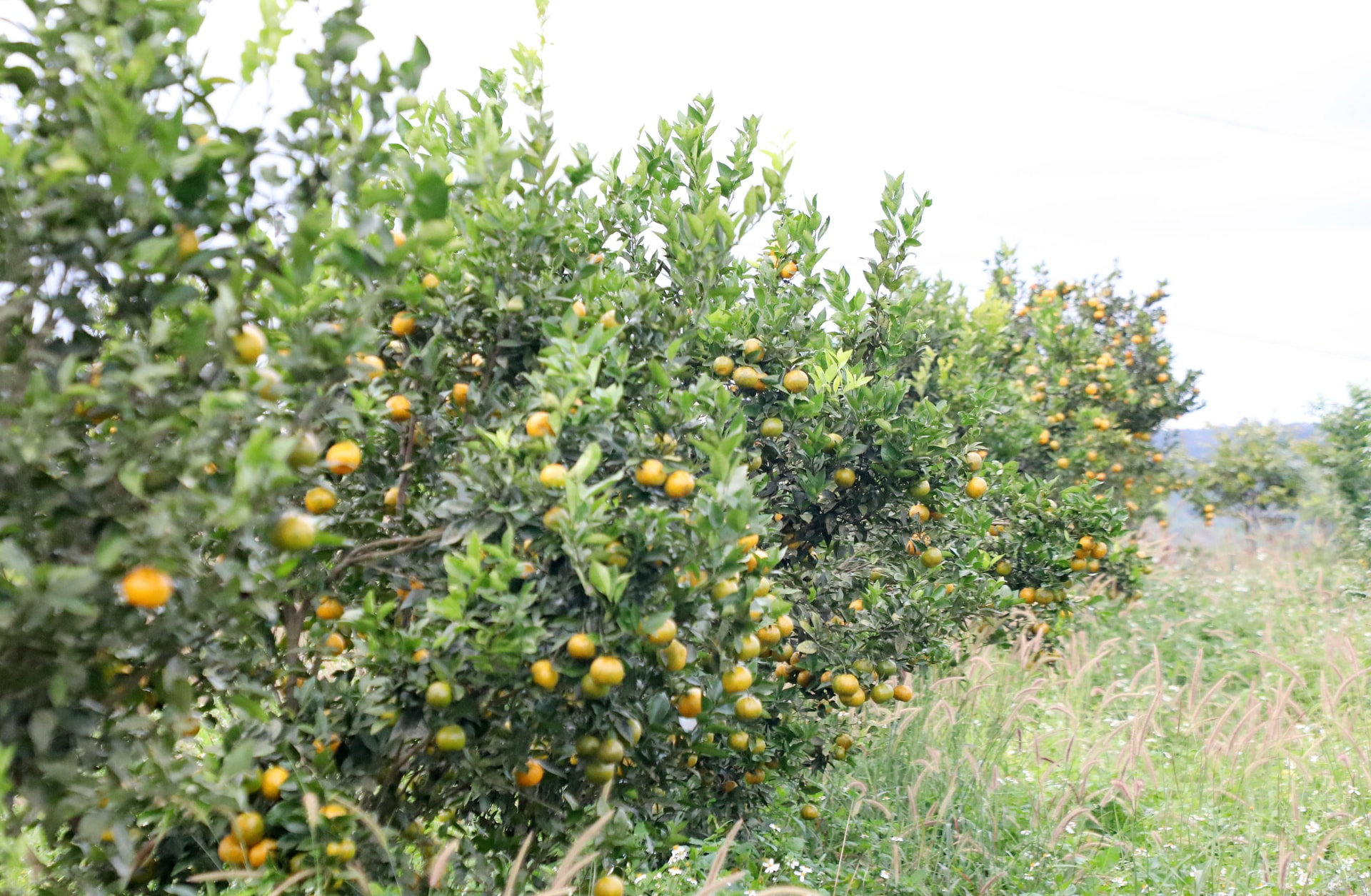
A sudden setback once left Nguyen Thi Mai (Quang Phu commune, Lam Dong Province) with nothing after her orchard was taken back. Yet only 3 years later, the barren volcanic land has been revived with lush, fruit-laden orange and mandarin trees.
Farming Behind Closed Gates
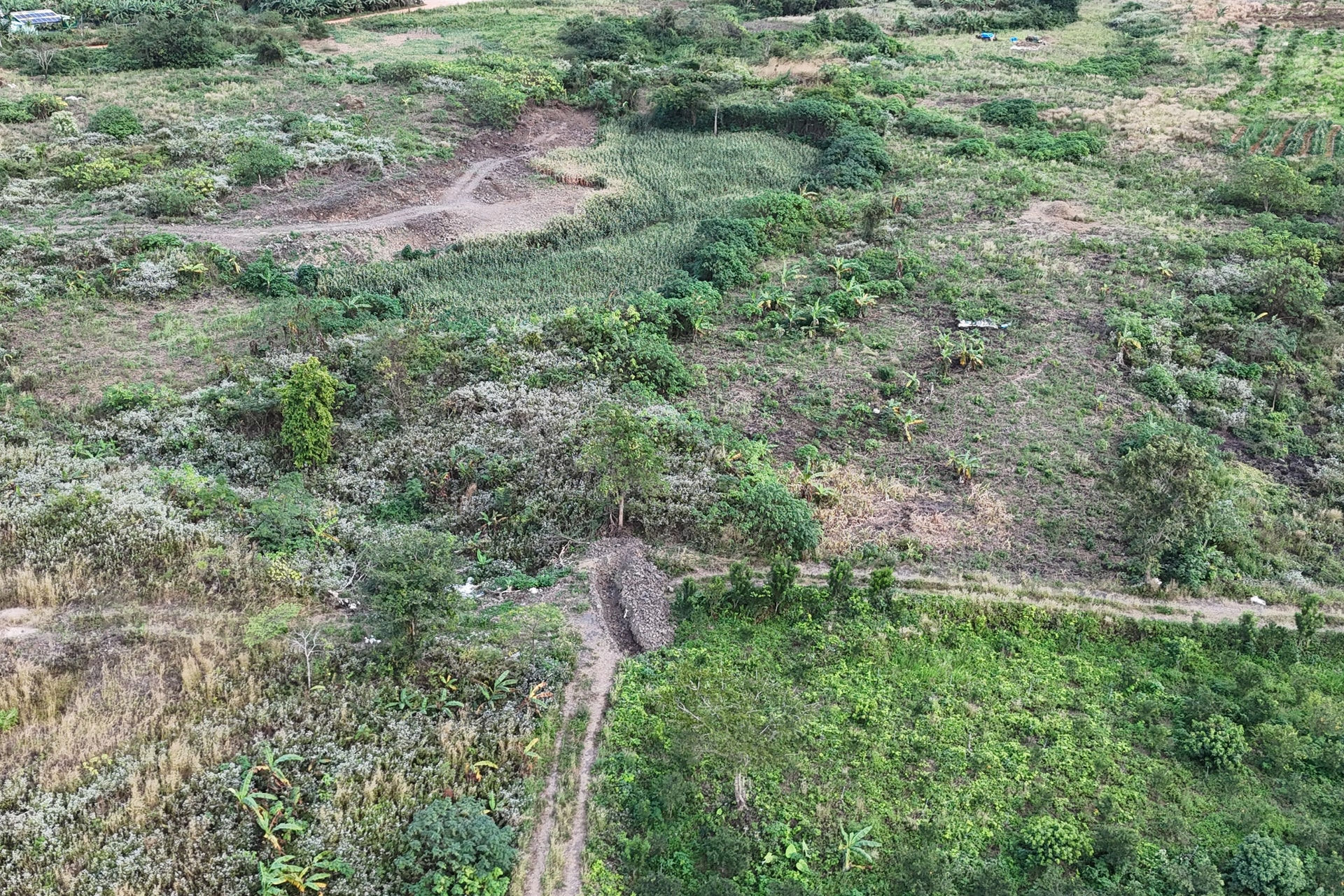
At the foot of the Nam Kar volcano, the land is harsh and sun-scorched, with laterite covering hundreds of hectares. Local farmers here can usually grow only one crop of corn or beans once the rainy season begins. For more than 6 months of the year, most fields dry out and remain abandoned.
8 years ago, Mrs. Mai planted her first orange and mandarin trees. Her plan puzzled many, as very few crops were able to survive on this unforgiving volcanic terrain.
When people heard I was planting oranges and mandarins, many advised me to choose different crops. But I ignored it all and worked alone. Sometimes I even closed the garden gate just to keep myself from wavering
Nguyen Thi Mai recalled
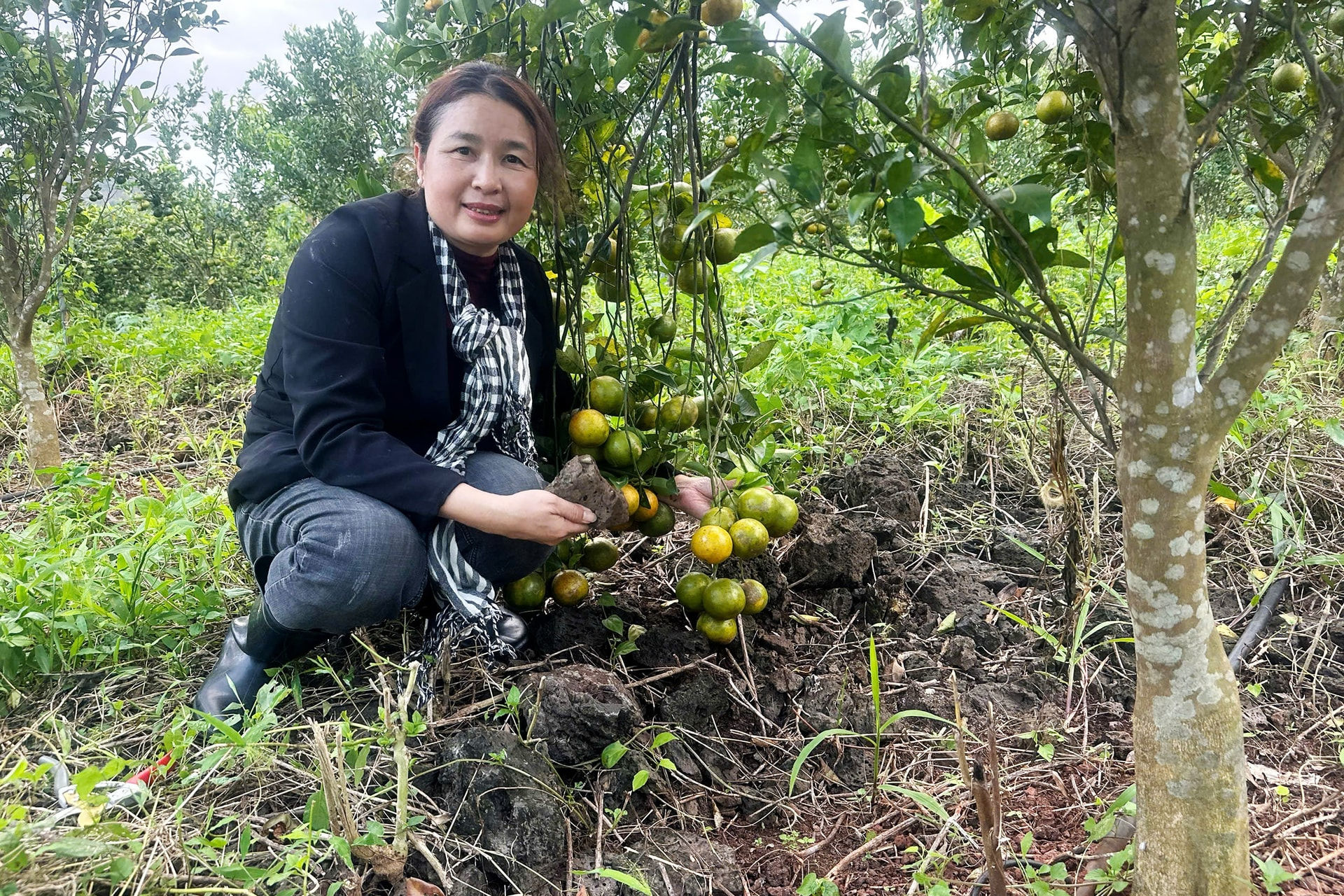
The volcanic lava of Nam Kar forms a dense laterite layer. With such a thick crust, the soil becomes scorching in the dry season, and aside from wild grass and lone banana plants, almost nothing can grow normally.
In the early days, she dug holes into the rocky soil to plant her trees, but there wasn’t enough earth for them to take root. She eventually devised a solution: creating a natural vegetation cover and enriching the soil with organic matter every year.
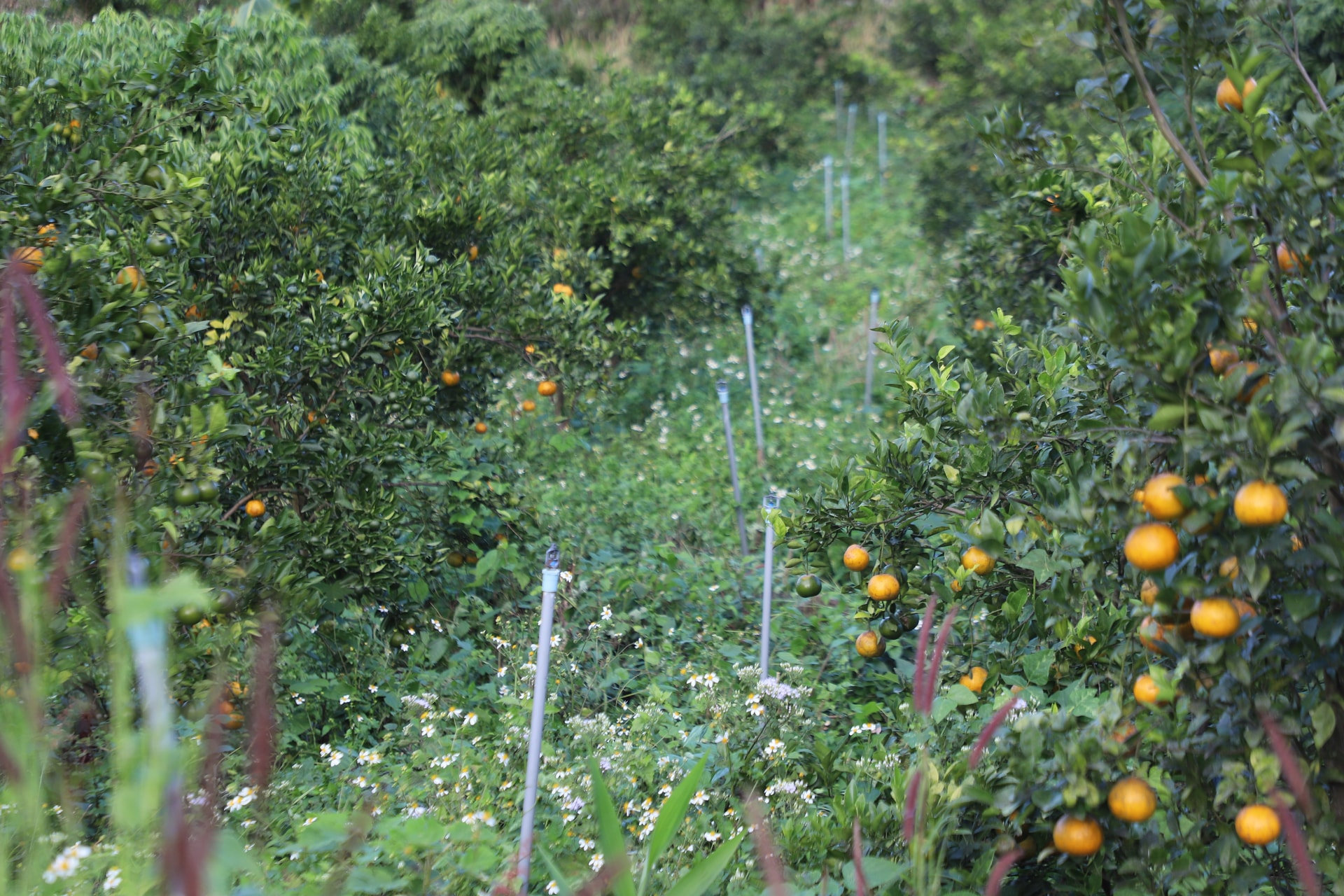
“I cleared the laterite only at planting spots and added fertile soil for the trees. Around them, I let grass grow naturally. When the grass grew too tall, I cut it and left it to decompose right there. This helped shade the soil, reduce evaporation, and gradually build a layer of humus,” she explained.
3 years after planting the first seedlings, the initial harvest of oranges and mandarins arrived, an affirmation of persistence after years of trial and hardship.
A New Direction for Agriculture
In the early years, Mrs. Mai’s orchard produced around 150 tons of fruit. Oranges and mandarins grown on volcanic soil carry a distinct flavor, sweet, juicy, and with extended shelf life. They became a special gift of the land beneath Nam Kar.
But just as the orchard entered peak harvest season, disaster struck. The landowner reclaimed the plot, wiping out all her efforts. Within a year, the entire orchard withered and died.
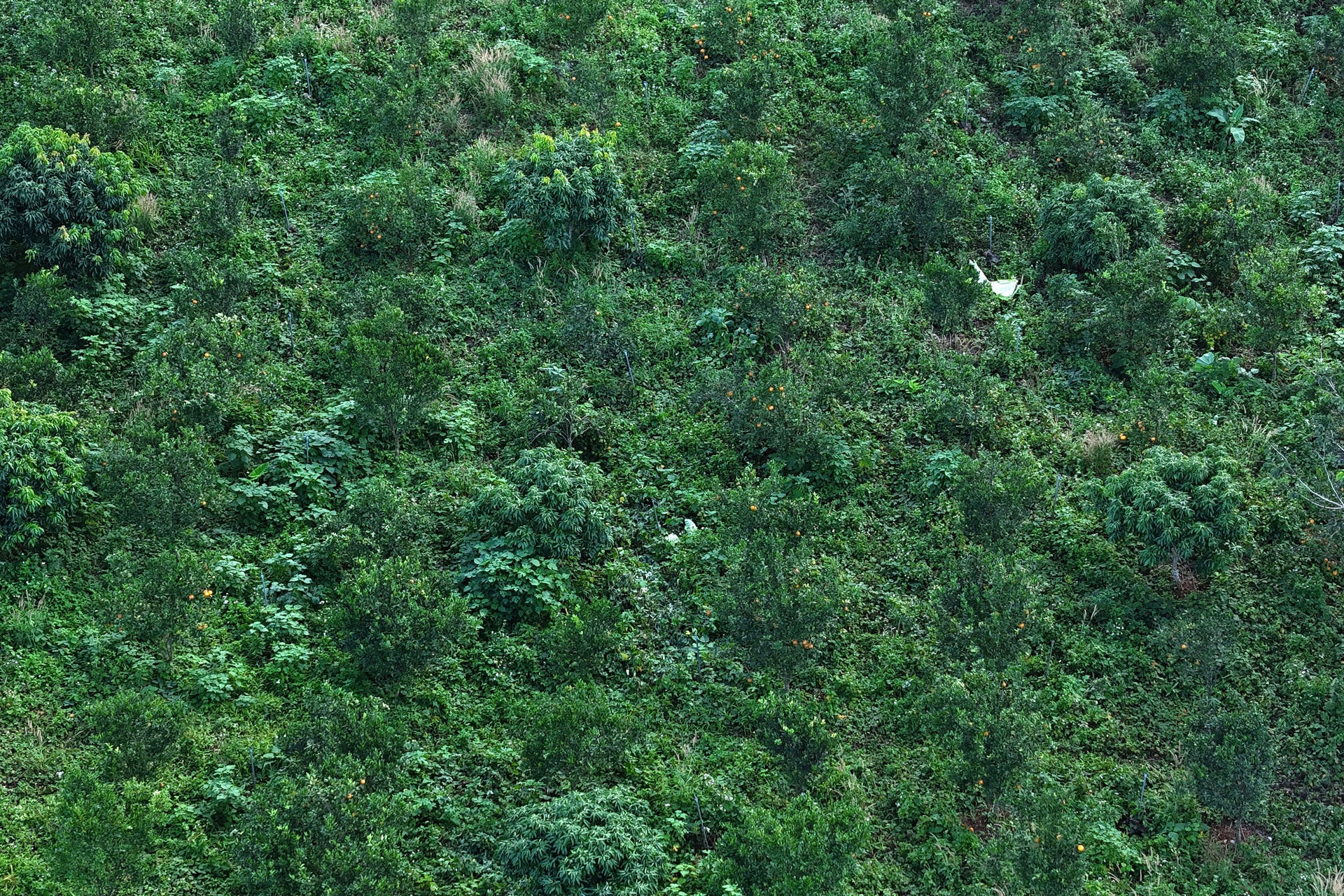
Undeterred, Mrs. Mai began again, this time armed with experience. She established a new orchard not far from the old one.
“Growing mandarins on volcanic soil requires a specific approach,” she said. “The soil is loose but full of rocks; without proper treatment, water and nutrients are easily lost.”
From the start, she prioritized soil improvement by using decomposed manure, biofertilizers, and organic treatments to increase humus and moisture retention capacity.
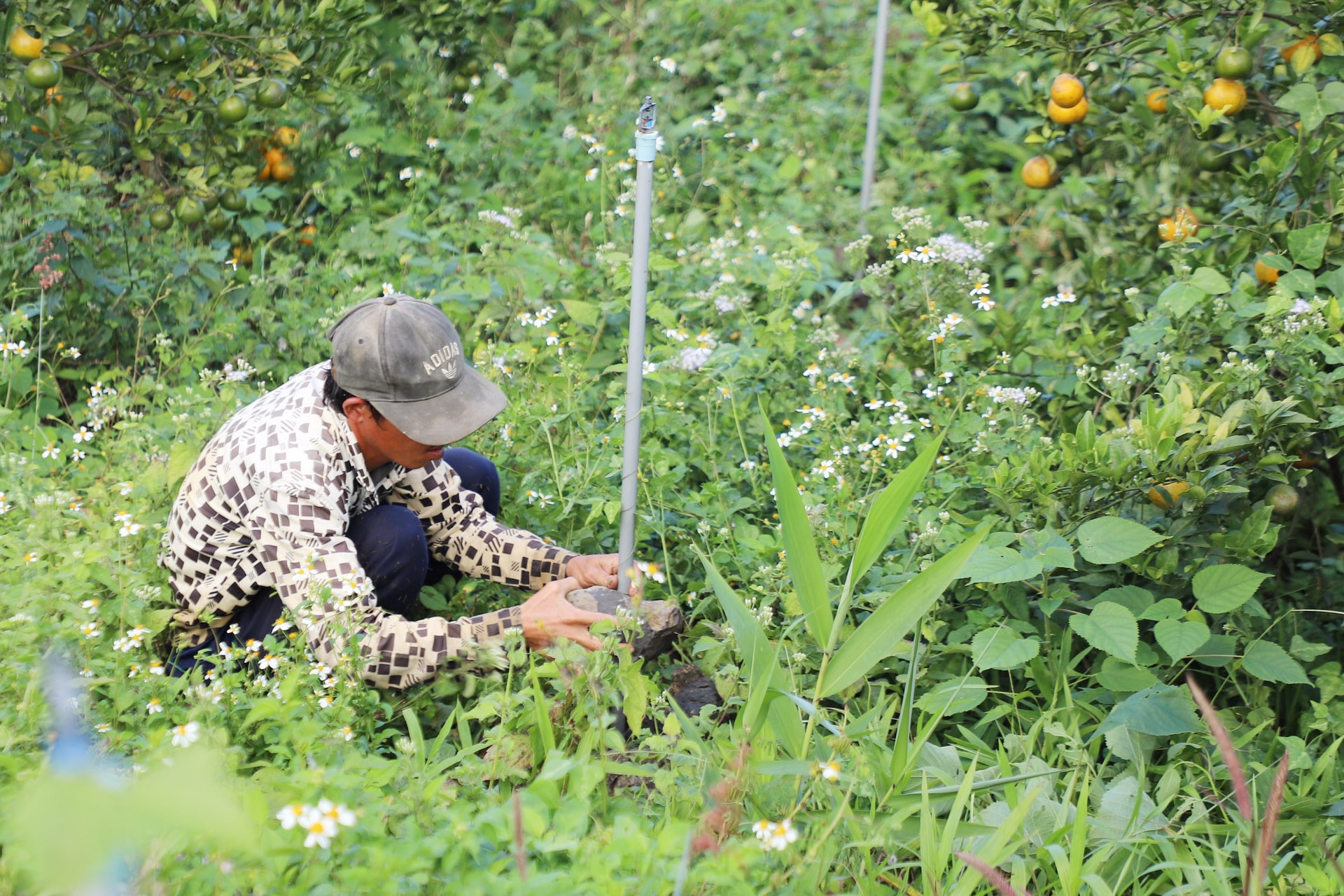
To install an irrigation system on rocky ground, she repurposed laterite stones to support the pipes. This helped stabilize the system and keep moisture near the roots. Watering is carefully calculated based on each growth stage to avoid leaching nutrients.
In 2025, Mrs. Mai’s orchard produced around 100 tons of fruit, with wholesale prices ranging from 42,000 to 50,000 VND per kilogram.
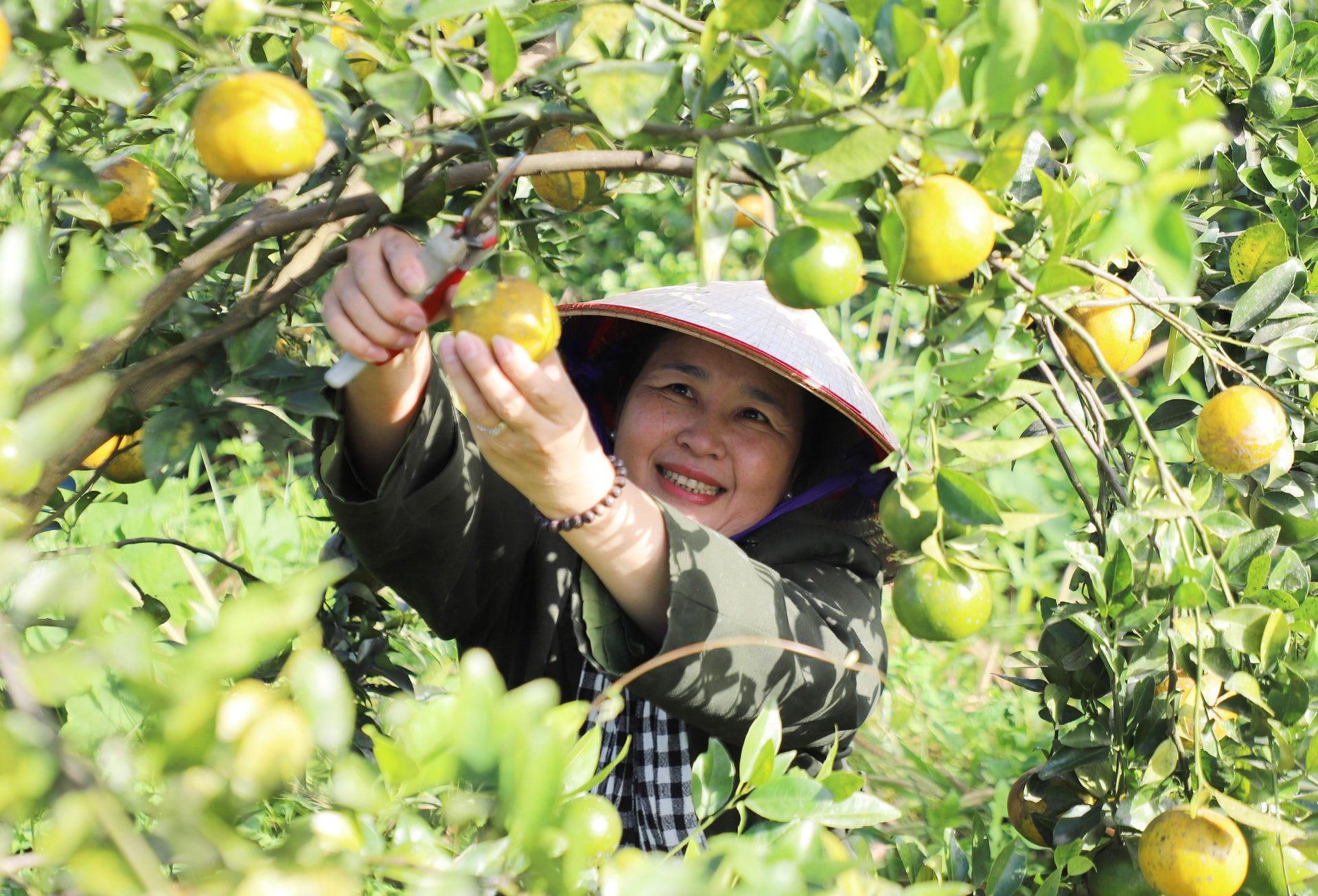
More importantly, the success of her farm has allowed Mai to collaborate with neighboring households and create jobs for many local workers, each earning about 10 million VND per month.
Vice Chairman of Quang Phu Commune People’s Committee, Ngan Thanh Hai, affirmed that citrus crops are highly suitable for the volcanic terrain and soil conditions of the region.
The natural farming model for oranges and mandarins on Nam Kar’s volcanic soil not only brings economic value but also opens a sustainable direction for local agriculture. The commune is working to develop citrus grown on volcanic soil into a signature product
Vice Chairman of the Quang Phu Commune People’s Committee Ngan Thanh Hai