


Restoring the Green Cover of the Nam Nung Highlands
From once-barren and degraded landscapes, the Nam Nung Nature Reserve is steadily restoring its terrain. Newly established forest plantations are taking shape, marking a strong recovery for the local ecosystem.
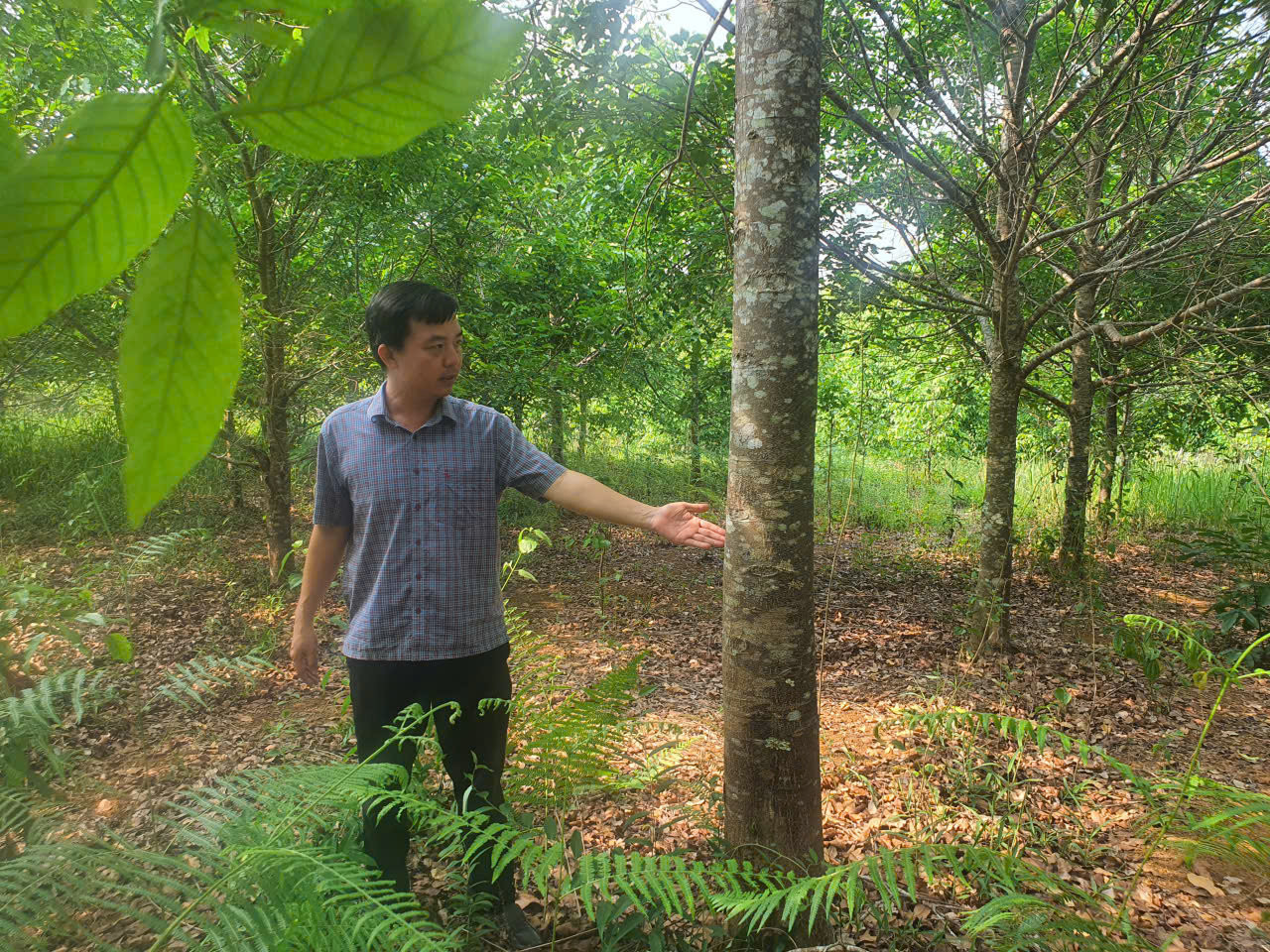
Accompanying officers from the Nam Nung Nature Reserve into Sub-zone 1657, we came upon a planted fores where Hopea odorata trees rise tall, their straight trunks supporting interlocking canopies. An officer paused and pointed to a sturdy trunk: “This area used to be completely bare; now, it’s a forest.” His brief statement captures the long and persistent journey of restoring the reserve’s green cover.
Looking at the neatly aligned rows of Hopea odorata, it is difficult to imagine that this was once barren, degraded land left behind by deforestation. From the first seedlings to today’s closed canopy, the forest has undergone years of meticulous care and protection. It now provides coverage, retains water, enriches the soil, and attracts wildlife back to the area. Undergrowth such as ferns and wild grasses has also begun to flourish, helping create a relatively stable ecosystem.
A Decade of Persistence
According to the Nam Nung Nature Reserve Management Board, this restoration journey began more than a decade ago. To date, the unit has afforested more than 107 hectares, of which over 93 hectares have met the criteria to be officially classified as forest—a remarkably high success rate.
This is a significant achievement, as reforestation often faces major challenges, including adverse weather, pests and human encroachment. Growing a forest until it becomes fully established is a long and arduous process. The 2016 reforestation project, in particular, provided many hard-earned lessons.
While more than 16 hectares successfully met forest criteria, over 10 hectares failed due mainly to localized vandalism immediately after planting, followed by waterlogging and insect infestations in subsequent years. These setbacks prompted the unit to rethink its strategy.
Commitment to Long-Term Protection
Since 2017, the unit’s afforestation efficiency has improved markedly. In 2017, more than 7 of the 9 hectares planted successfully met forest classification criteria. Results in 2018 were even more impressive, with many areas recording near-perfect success rates. In the first phase alone, over 55 of the 56 hectares planted qualified as forest.
The main species selected for planting include Hopea odorata, hybrid acacia, Litsea glutinosa and Pinus kesiya. Among them, Hopea odorata serves as the flagship species, as it is well suited to local ecological conditions and has strong growth potential and long-term value. Intercropping different species has helped strengthen biodiversity, reduce pest risks and improve the overall effectiveness of forest restoration.
Nguyen Van Manh, Director of the Nam Nung Nature Reserve Management Board, said: “For these plantations to achieve their current results, the most critical factors are care and protection. We must closely monitor the plots, carry out enrichment planting, remove weeds, control pests and, most importantly, protect the forest from encroachment.”
According to Manh, extending the maintenance period for areas that have not yet met forest criteria is essential. The Provincial People's Committee has authorized the unit to continue care through the end of 2026 for certain areas to ensure stable growth and proper forest formation.
Beyond maintenance, the management board has intensified patrols and coordination with relevant authorities and local residents to prevent forest violations, giving these plantations the opportunity to develop into true, self-sustaining forests.
The Nam Nung Nature Reserve covers more than 23,000 hectares and is home to 881 plant species, 75 of which are listed as rare in the Vietnam Red Data Book and the IUCN Red List. It also hosts 58 mammal species, including 24 endangered species requiring urgent conservation, as well as 173 bird species, 66 fish species, and 37 reptile species.