


Safeguarding Bidoup Forest: When Technology Joins Hands with the communities
Beyond its role as a vital “green lung” of the southern Central Highlands, Bidoup – Nui Ba National Park has strengthened its forest protection efforts through a combination of community-based policies, digital technology and international scientific cooperation. These efforts led to a remarkable 80 percent drop in forestry violations in 2025.
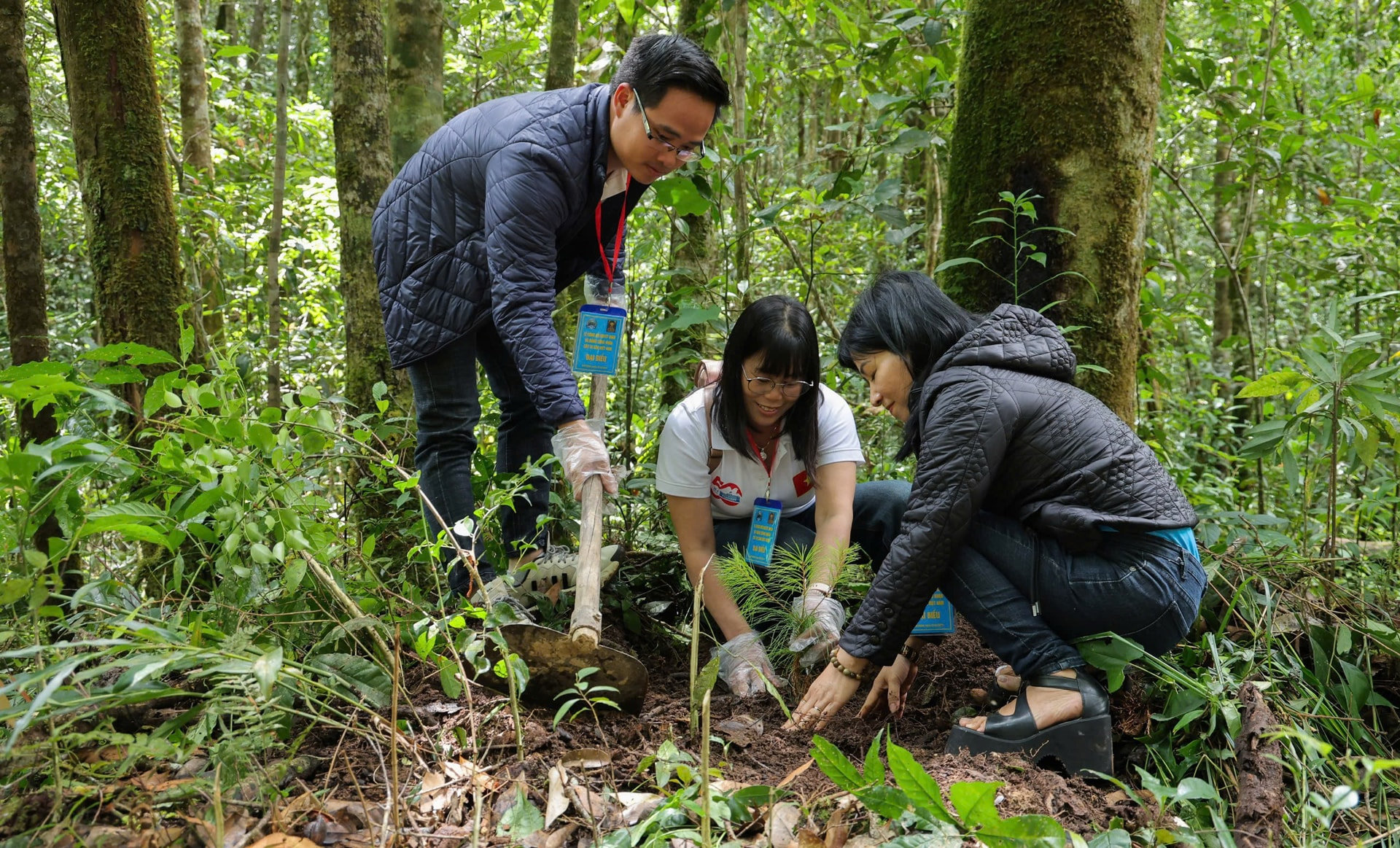
Communities as Forest Stewards
A key success has been the effective implementation of the Forest Environmental Services Payment (PFES) policy. Park managers recognize that forests are only truly secure when the livelihoods of buffer-zone residents are ensured.
The total PFES area now reaches 66,987.02 hectares. Instead of strictly closing the forest, the park has allocated protection contracts on a large scale: more than 45,896 hectares to 1,548 households and community groups, over 1,218 hectares to three organizations, while nearly 19,872 hectares remain under direct management.
This model has transformed local awareness. Rather than depending on forest exploitation, residents now earn a stable and legitimate income from protecting the forest, effectively becoming on-site forest rangers and forming a strong protection network.
Digital Monitoring and Stronger Enforcement
If community engagement provides the foundation, technology serves as the extended arm of forest rangers. In 2025, the park expanded the application of GIS, drones, GPS devices, data loggers and SMART patrol management software.
Forest protection teams conducted 890 SMART mobile patrols, covering more than 59,247 kilometers. Smartphones were used 14,061 times across 1,977 patrol routes. The results are clear: forestry violations dropped by 80 percent year-on-year, and no land encroachment cases were recorded.
Ecological Restoration and Research
In parallel with protection efforts, the park restored degraded areas by planting 4,178 trees over 25,061 square meters. At 13 sites previously affected by encroachment, 2,830 three-needle pine trees were replanted across 12,870 square meters, helping rebuild vegetation structure and reduce soil erosion.
Scientifically, Bidoup – Nui Ba National Park has established itself as a major biodiversity research center within the Langbiang Biosphere Reserve. Research programs cover biodiversity monitoring, forest fire ecology, and surveys of birds, amphibians, reptiles, bats, freshwater fish and insects. The park has also preserved genetic resources from 45 families of native and rare plant species, with findings published in international journals.
Established in 2004, the park now manages 69,662.57 hectares of forest in the core zone of the Langbiang Biosphere Reserve. It remains a vital ecological stronghold, protecting biodiversity and water resources for the entire region.