


Safeguarding Forests During Spring in Southern Lam Dong
As villages across the region celebrate Tet with vibrant colors and traditional offerings, deep within the vast forests of southern Lam Dong Province, quiet footsteps continue to tread mountain trails—a silent dedication to duty during the early days of the Lunar New Year.
They are forest rangers, local militia members, grassroots officials, and contracted forest protectors. For them, Tet is not only a time of reunion, but also a peak season for safeguarding the forests.

Silent Guardians During the Lunar New Year
Da Teh Commune is home to a large forested and forestry land area totaling 7,958.8 hectares, including 5,385.6 hectares of natural forest and 2,469.24 hectares of planted forest.
For many years, forest protection has been identified as a core, long-term task. In the days leading up to Tet and throughout the holiday period, patrols and forest surveillance are significantly intensified. This period coincides with the onset of the dry season, when dry weather and thick undergrowth greatly increase the risk of forest fires. At the same time, some individuals may take advantage of the holiday to illegally log timber, harvest bamboo shoots, collect honey, or hunt wildlife.

In response, duty rosters are maintained throughout the holiday. Patrols begin early in the morning and often extend into the evening. Each team typically includes local forest rangers, militia members, and representatives of commune and village authorities, trekking through key areas, border zones, and previous violation hotspots to detect and prevent incidents at an early stage.
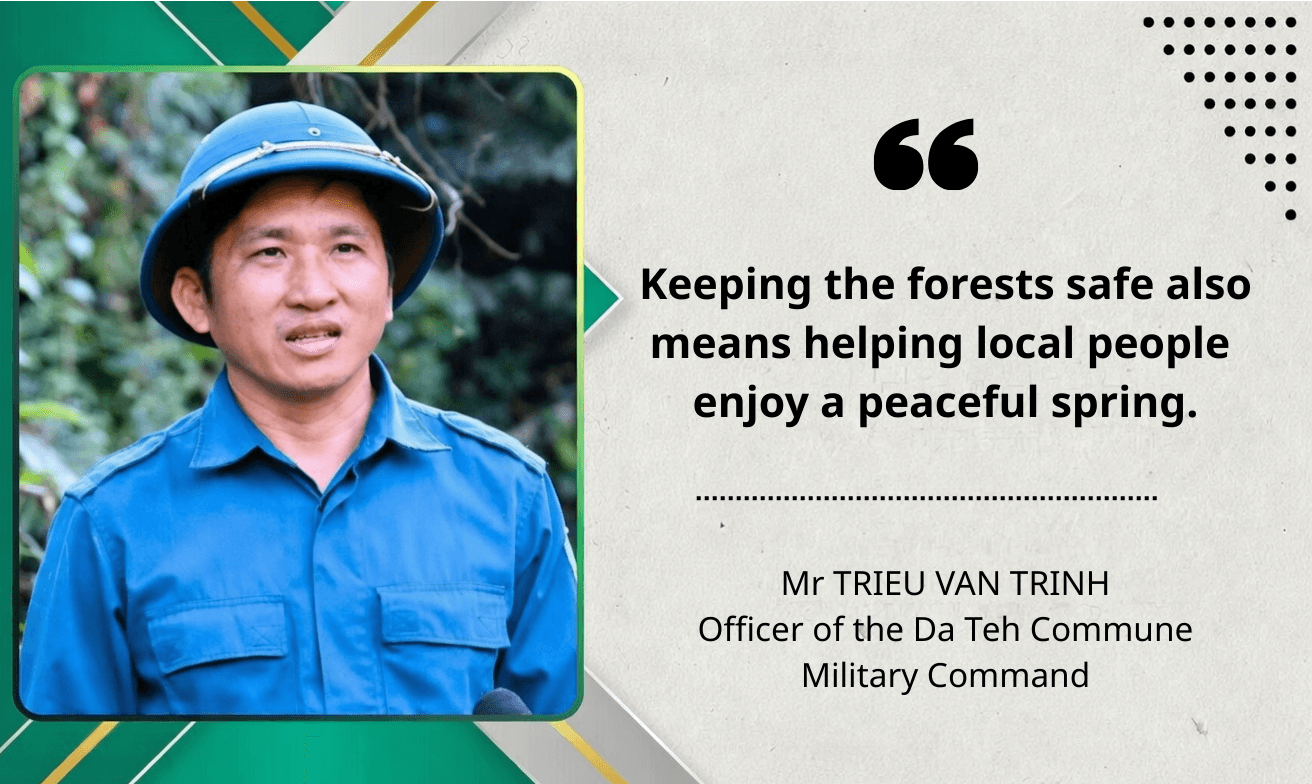
Trieu Van Trinh, an officer of the Da Teh Commune Military Command, said that ahead of the dry season, the locality proactively developed patrol and forest fire prevention plans. “Our shared commitment is to be ready for duty at any time, including during Tet,” he noted.
Forest protection in Da Teh does not rely solely on specialized forces. The commune authorities regularly coordinate with the Forest Protection Unit, forest owners such as Da Teh Forestry One-Member Limited Liability Company, Cat Tien National Park, and other forest-assigned enterprises to agree on protection plans. Forest management and fire prevention checkpoints are established at strategic locations to control access and respond promptly to emergencies.
Public awareness campaigns also play a crucial role. Messages on forest protection and fire prevention are broadcast regularly over the commune’s public address system throughout the dry season. In forest-adjacent villages, forest rangers and mass organizations visit households to disseminate forestry laws and encourage residents to sign non-violation commitments. Themed outreach sessions are also organized for households living near forests, wildlife breeding facilities, restaurant owners, and ornamental animal traders to enhance their awareness of nature conservation.
The movement “No Hunting – No Consumption – Protect Wildlife, Migratory Birds, and Aquatic Resources” has gradually become a shared norm among local residents. Many people now proactively report unusual signs in the forest, contributing to more effective forest governance.
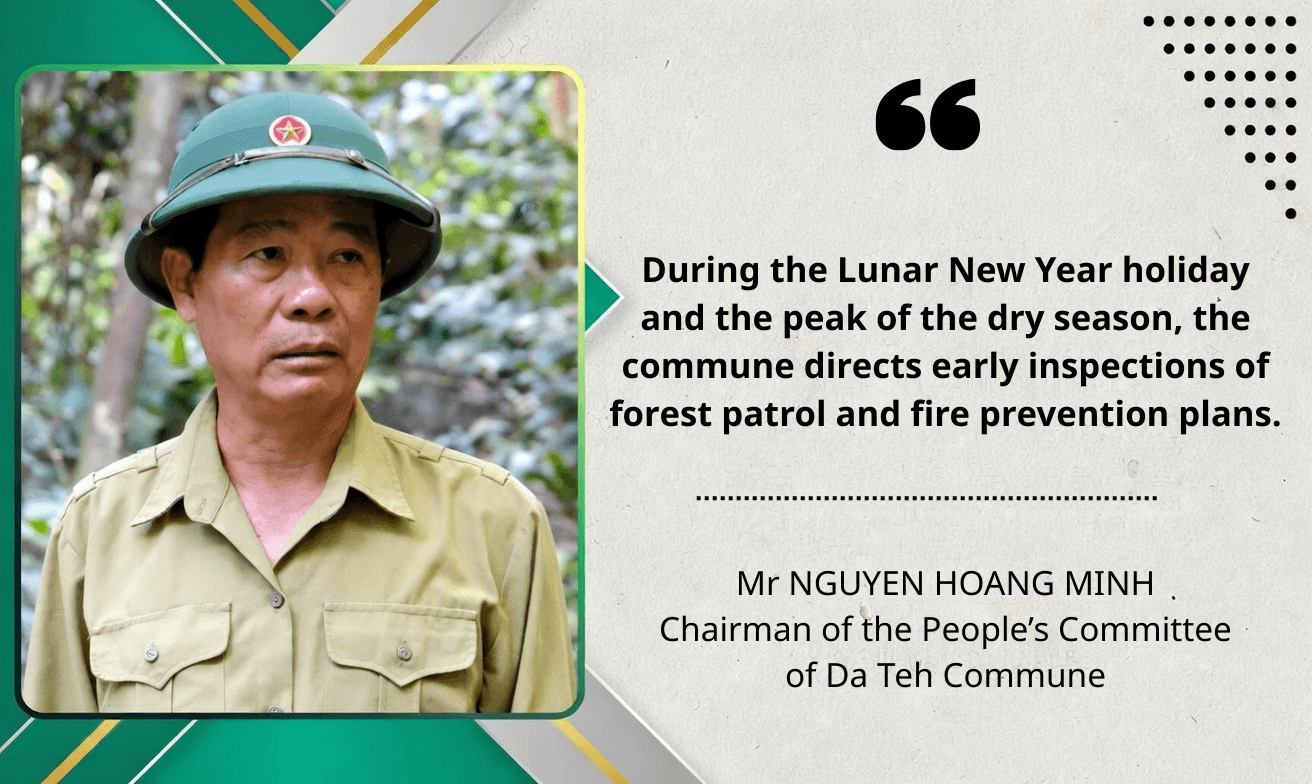
Mr Nguyen Hoang Minh, Chairman of the People’s Committee of Da Teh Commune, said that forest fire prevention teams have been consolidated, with equipment and tools thoroughly inspected and prepared. Special attention is paid to border areas vulnerable to encroachment, while communication efforts encourage forest users to avoid carrying fire sources and refrain from indiscriminate land clearing.
Joining Hands to Keep Forests Green
Across southern Lam Dong, communes share similar characteristics: large forest areas interspersed with agricultural land and residential zones, creating significant pressure on forest resources. In recent years, alongside socio-economic development, growing demand for land, forest products, and eco-tourism has required forest management to become more rigorous and adaptive.

A notable development is the application of technology in forest protection. In Da Teh Commune, forest protection checkpoints have begun using drones to conduct patrols, capture images, and store data to monitor forest changes. This enables quicker inspections of remote and rugged areas while reducing labor demands and enhancing oversight efficiency.
Payments for forest environmental services have also helped create livelihoods and incentives for local communities to protect forests. The commune coordinates with the provincial Forest Protection and Development Fund to ensure timely and transparent payments, assisting households with documentation and bank account setup. When forests generate legitimate income, public commitment to conservation grows stronger.

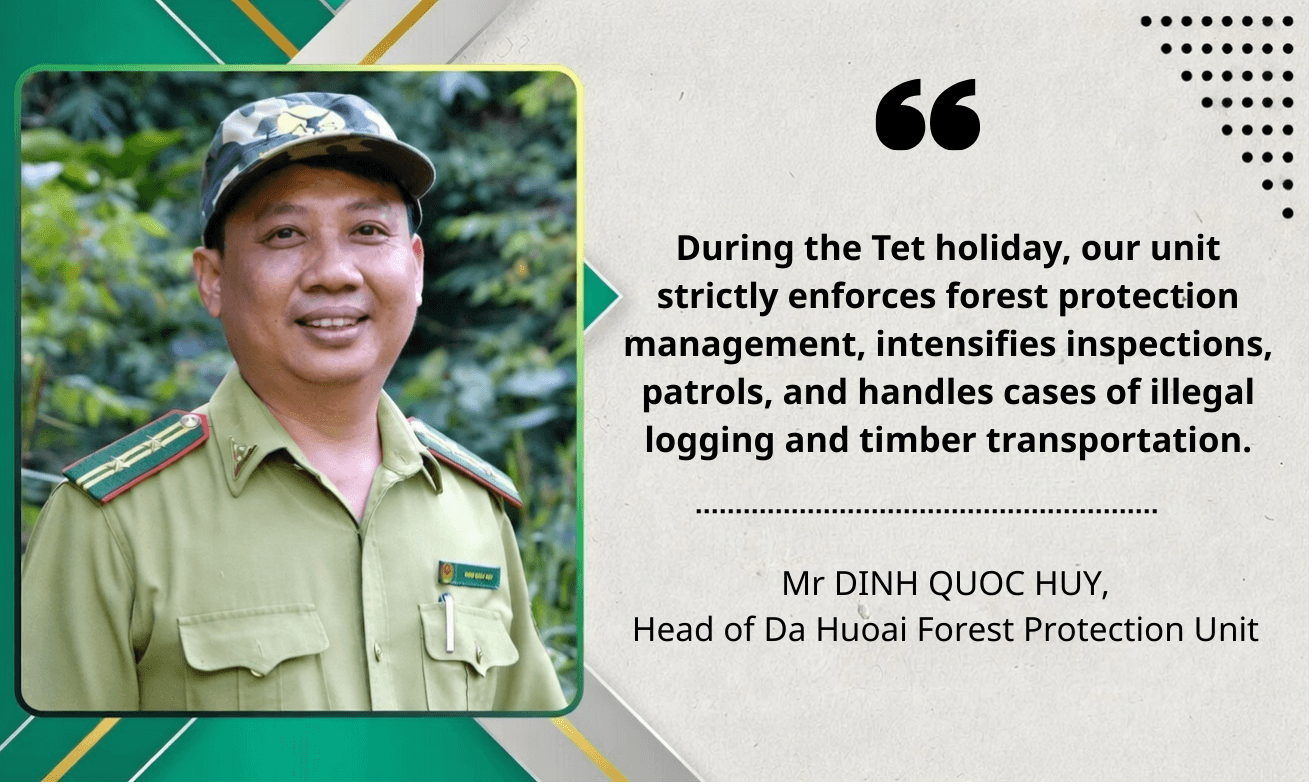
Dinh Quoc Huy, Head of the Da Huoai Forest Protection Unit, emphasized that the unit strictly enforces forest management regulations, intensifying inspections, crackdowns, and penalties against illegal logging and timber transportation. Encroachment and re-encroachment on forestry land are promptly addressed, creating a deterrent effect and helping stabilize forest areas.
Spring in the forests of southern Lam Dong carries a distinctive beauty: tender green leaves, birds calling in flocks, and clear streams flowing beneath ancient canopies. Few realize that preserving this tranquility requires countless silent footsteps. Some forest guardians welcome the New Year at remote checkpoints; others set out on patrols on the first day of Tet, carrying simple meals and sharing warm tea in the forest.
For them, the greatest joy is seeing the dry season pass safely—without major fires or forest loss. This is also a meaningful spring gift to the community, as forests are not owned by any individual alone; they are green lungs, water sources, livelihoods, and the foundation of sustainable futures.

Amid modern life’s rapid pace, the story of springtime forest protection in Da Teh and across southern Lam Dong serves as a reminder of the value of quiet dedication. When individuals raise awareness and localities strengthen resolve, the green forests will endure—so that each spring, the forests remain lush and peace continues to prevail.