


Scaling Up New Agricultural Extension Models in Lam Dong
Lam Dong’s agricultural sector is continuing to develop, transfer and scale up new agricultural extension models aimed at strengthening market linkages for agricultural, forestry and aquatic products, while achieving an average annual growth rate of 5–5.5%. These efforts are expected to create stable and sustainable livelihoods for farmers across the province, particularly in disadvantaged areas.
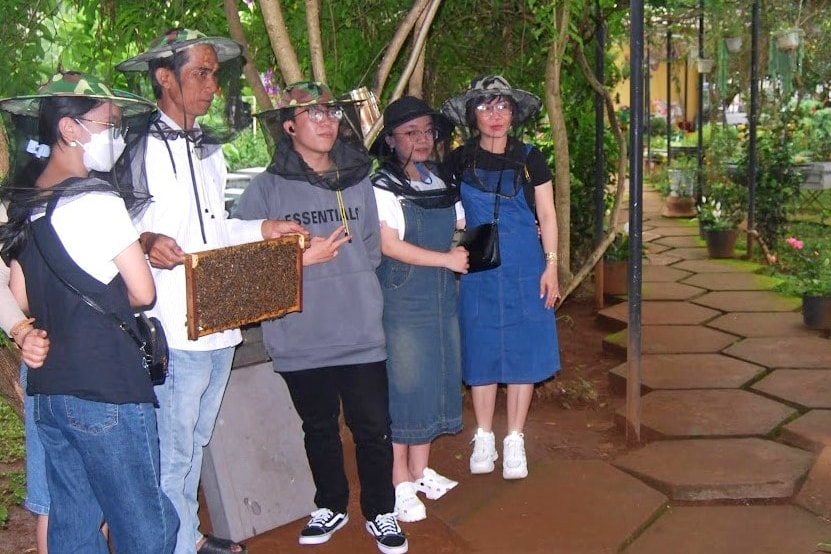
Integrated application of advanced technologies
The Agricultural Extension Program for 2026–2030, recently approved by the provincial People’s Committee, includes 12 key models, comprising six crop and forestry models and six livestock and aquaculture models.
A flagship initiative covers 4,000 hectares of perennial industrial crops adapted to climate change and aligned with green growth goals. The model focuses on reducing chemical fertilizers and pesticides, replacing them with organic inputs and biological products, while applying IoT-based agriculture, water-saving irrigation, automated fertilization, drones for crop protection and AI-based pest forecasting. The program aims to improve soil health management, ensure sustainable crop development and enhance the competitiveness of Lam Dong’s agricultural brands, with economic efficiency expected to increase by at least 15% compared to conventional production.
Another model spans 600 hectares of staple and short-term crops, integrating high-tech, smart and digital solutions, renewable energy and comprehensive mechanization to boost productivity, improve quality and reduce production costs. Compared to traditional methods, the model is projected to increase yields by over 10% and incomes by more than 15%, while reducing greenhouse gas emissions and ensuring food safety.
Similarly, a 500-hectare intensive fruit production model following VietGAP, GlobalGAP and organic standards, with full product traceability, is being implemented in key agricultural zones linked to ecotourism. The initiative aims to raise awareness among producers, consumers and visitors about environmental protection and sustainable development, with economic returns expected to exceed 15% over conventional practices.
Expanding models under an agricultural economic mindset
According to Mr Nguyen Van Chuong, Director of the Lam Dong Agricultural Extension Center, the province is also developing specialty crops, spices and medicinal plants into raw material zones covering more than 50 hectares, closely linked to product consumption in domestic and export markets. These models help create jobs, increase incomes, preserve indigenous genetic resources and support sustainable commodity-based agriculture and value chain development.
On a similar scale, intercropping forestry species on agricultural land, along with the cultivation of non-timber forest products, medicinal plants and mushrooms under forest canopies, is being promoted to enhance productivity and economic value. Experts believe these models will help improve microclimates, protect water resources, increase forest cover, conserve biodiversity and strengthen resilience to natural disasters, drought and soil erosion.
In coastal areas and Phu Quy special zone, agricultural extension units are implementing and scaling up around 25 marine and brackish-water aquaculture models and 10 models applying advanced technologies and mechanization on fishing vessels. These initiatives cover more than 10 hectares and 10,000 cubic meters of cages, with expected economic efficiency gains of over 15%. Meanwhile, across rivers, streams, reservoirs and hydropower lakes totaling more than 50 hectares, the province plans to expand around 50 freshwater aquaculture models. These also target efficiency increases of at least 15%, supplying high-quality products for both domestic consumption and export.
In addition, Lam Dong is prioritizing the development of dozens of safe, multi-value livestock models through 2030, involving approximately 250,000 head of livestock and poultry, more than 2,500 indigenous animals, and raw material zones linked to ecotourism.
According to Mr Nguyen Hoang Phuc, Deputy Director of the Department of Agriculture and Environment, the overarching goal is to expand agricultural extension models based on an agricultural economic mindset, aligned with market demand and value chain-based production. Grounded in science and technology, innovation and digital transformation, these efforts aim to create breakthroughs in productivity and quality, ensure food safety, promote ecological agriculture, modern rural development and climate change adaptation, while improving farmers’ material and spiritual well-being.