


Shifting Industrial Production into Lam Dong
Choosing Lam Dong Province — specifically its southeastern area of the province — helps ease pressure on traditional industrial hubs in the Southeast region, while fostering satellite industrial clusters to support inter-regional supply chains. This is considered the most strategic and efficient approach to industrial development.

A “multi-colored” labor market
By the end of 2025, the labor market in Lam Dong had become truly vibrant as demand for workers surged across sectors. Enterprises required large numbers of seasonal workers to meet year-end production and business targets. Farmers also needed manpower to restore crops after late floods and prepare for Tet holiday. At the same time, several companies nearing the completion of new factories began proactive recruitment to ensure a seamless transition into operation.
At Ham Kiem II Industrial Park (Ham Kiem Commune), Neotek Industrial Co., Ltd. is building a factory producing vehicle brake discs with a capacity of 12 million units per year. Scheduled to commence operations at the end of Q1/2026, the company has announced recruitment of 300 employees across various positions, despite the use of robots in some stages. Selected workers will be sent for training in Taiwan prior to commissioning.
Meanwhile, at Nam Ha Industrial Cluster (Tra Tan Commune), Nam Ha Vietnam Footwear Co., Ltd. has recruited an additional 1,200 workers since October to operate the final sewing lines of phase one, bringing total factory employment to approximately 5,000 people. Nearby, at Nam Ha 2 Industrial Cluster, BHT Group — specializing in electrical equipment — is also recruiting 1,000 workers ahead of operations planned for Q1/2026.
These developments reflect strong momentum, particularly in processing and manufacturing. According to provincial statistics, the labor utilization index in industrial enterprises in November 2025 increased 1.84% over the previous month and 5.31% year-on-year. Processing and manufacturing grew 6.24%; cumulatively for 11 months, the sector increased 5.21%. By ownership type, private domestic enterprises rose 6.95%, while FDI enterprises increased 5.39% year-on-year.
“The rise in the labor utilization index, surpassing the 11-month average, indicates improving recruitment demand, especially to support year-end production. Manufacturing continues to gain momentum, and the labor market outlook for the sector remains positive,” the provincial Statistics Office assessed.
Notably, the region is attracting a wave of skilled laborers returning from industrial zones in Dong Nai and Ho Chi Minh City, as they find returning to their home region increasingly advantageous. Furthermore, with enterprises transferring experienced personnel to oversee and train staff at new facilities, the area is benefiting from a significant inflow of high-quality human capital.
Welcoming the production shift
Labor mobility reflects a broader relocation trend of industrial production from the Southern Key Economic Region — such as Ho Chi Minh City and Dong Nai — to Lam Dong, particularly the southeastern area. Although this shift began one to two years ago, it has become more evident through new project groundbreakings and rising occupancy rates in industrial parks and clusters.
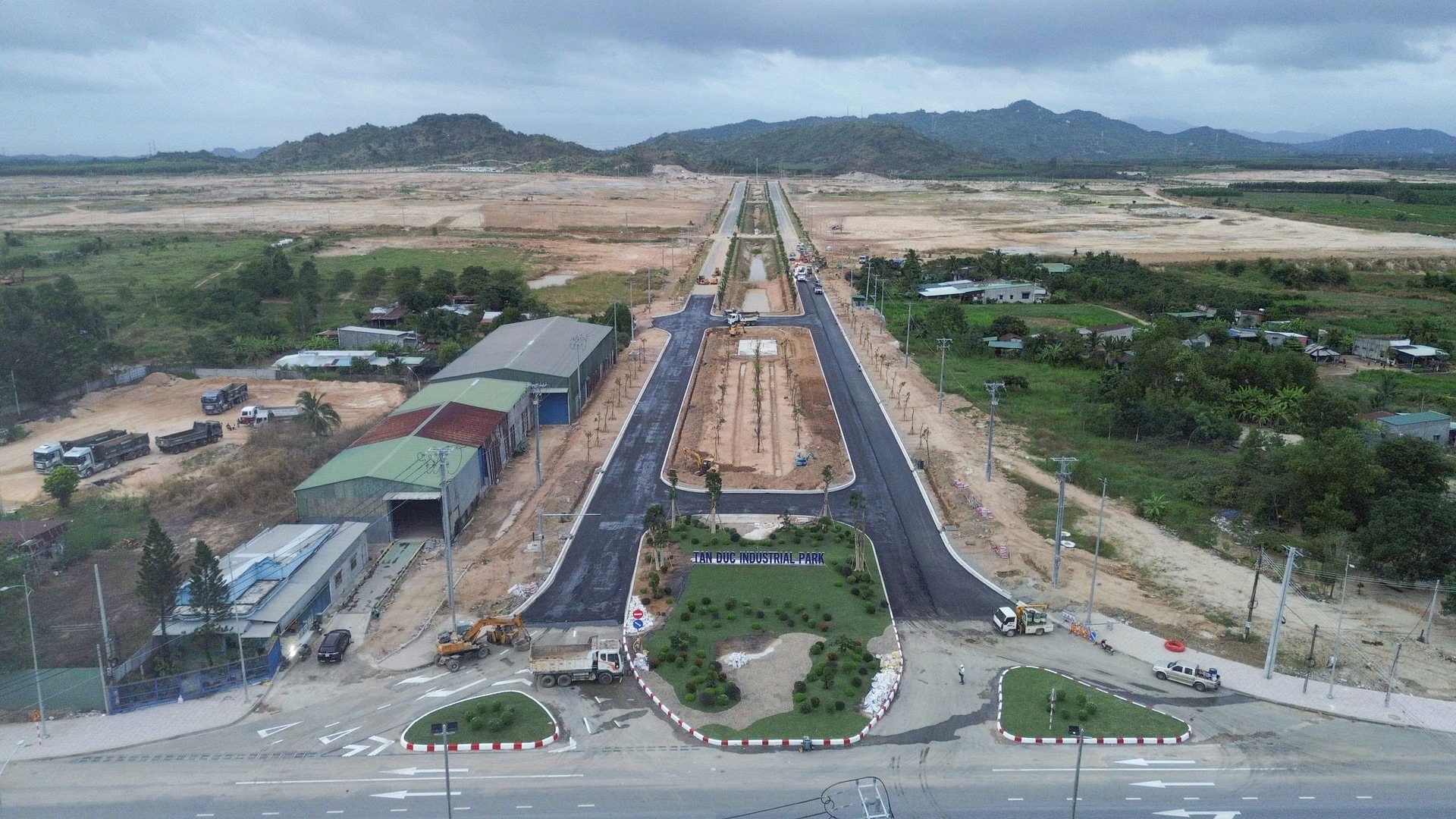
Most recently, Tan Duc Industrial Park held its inauguration ceremony in late December with strong expectations. Secondary investors have already leased 30% of commercial land — equivalent to 62/210 hectares — and several major lease proposals are under negotiation, signaling quick occupancy ahead. At the ceremony, Sonadezi Binh Thuan committed: “In the first half of 2026, we will coordinate closely with authorities to complete site clearance for the remaining 7 hectares, finish infrastructure, and accelerate investment attraction to increase occupancy as soon as possible.”
This momentum is also driving strong demand for ready-built warehouses and factories, particularly in areas with advantageous transport, utilities, telecommunications, and labor supply. Consequently, investment flows are spreading to neighboring regions with development potential such as Lam Dong.
Following administrative consolidation, Lam Dong has emerged the largest province by area nationwide. Strategically located in the Southern Central Highlands, it serves as a bridge between the Highlands and the Southeast — Vietnam’s most dynamic industrial and logistics corridor. Therefore, choosing Lam Dong, especially its southeastern zone, satisfies two critical objectives: reducing pressure on existing industrial centers while developing satellite industrial parks and clusters to strengthen inter-regional supply chains. This is regarded as the optimal, fastest industrial development strategy.
In practice, many FDI investors now favor ready-built factory models due to their flexibility, rapid implementation and scalability. This explains why secondary developers in Lam Dong’s industrial parks and clusters are leasing large land parcels to deploy such investments.