


Silkworm Farming Revives as Cocoon Prices Surge
Silkworm farming is making a strong comeback in many parts of Lam Dong Province as cocoon prices reach record highs, stable demand returns, and farmers adopt new mulberry varieties and modern cultivation techniques.
A traditional industry regains momentum
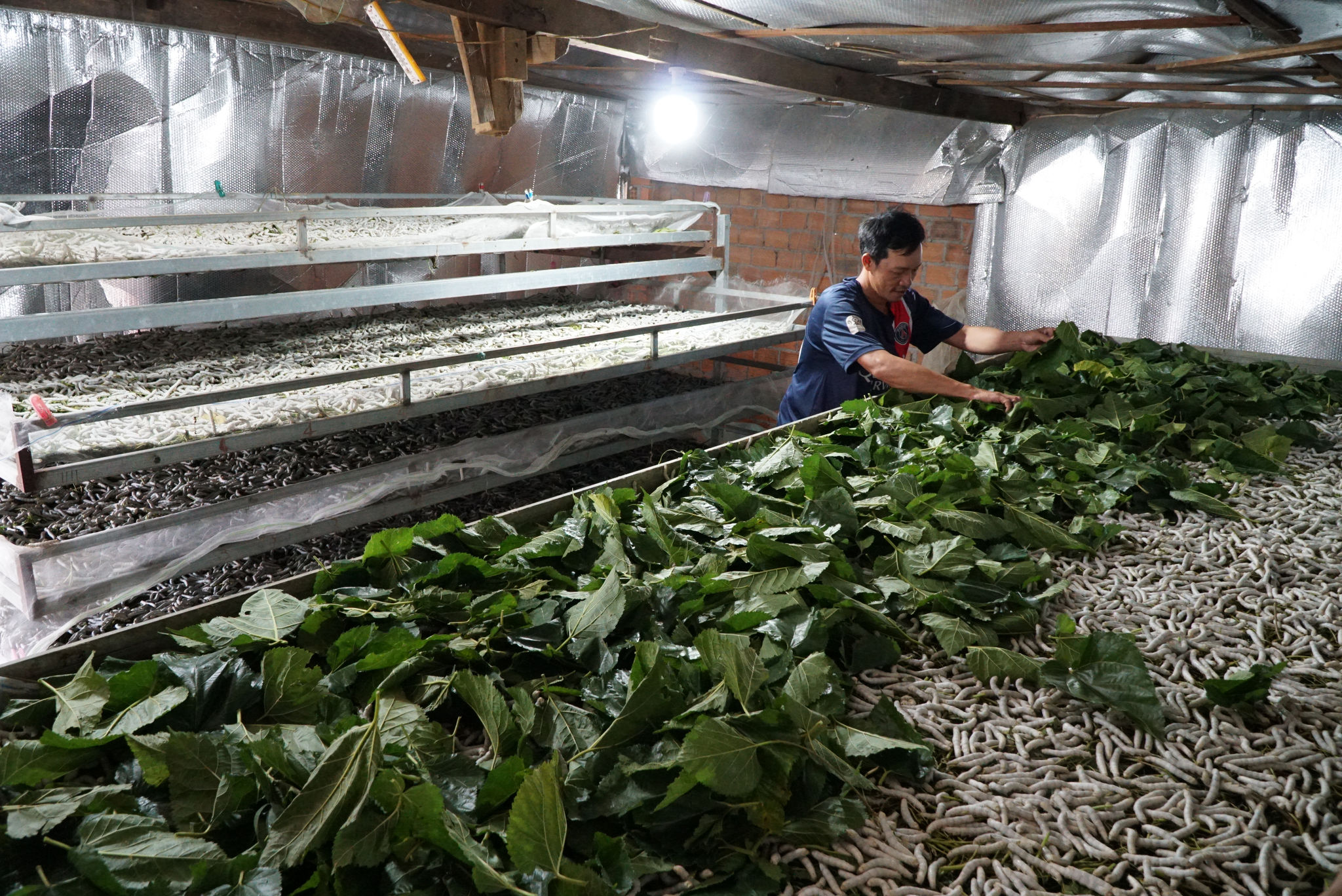
In Ta Nang Commune, farmers are once again busy tending trays of silkworms and harvesting fresh mulberry leaves. After years of decline, the industry is regaining momentum as market demand strengthens and prices remain consistently high.
Nguyen Thi Thu Hang, a local farmer who has raised silkworms since 2014, said the current market conditions are the best she has seen in years. Her family grows mulberry trees on about 0.9 hectares, providing enough leaves to maintain silkworm cycles year-round.
Using a staggered farming model—raising successive batches of silkworms—her family maximizes both mulberry supply and production time.
“With experience, one box of silkworm eggs can produce 50–60 kilograms of cocoons,” Hang explained. “After about 17 days, the cocoons are ready to harvest.”
Currently, cocoon prices range from VND 220,000 to 240,000 per kilogram, the highest level recorded so far.
“At this price, farmers can earn a stable income if they manage their mulberry fields well. What’s even better is that prices have stayed high for months,” she added.
The optimism is shared by many farmers in Ta Nang. Ho Thi Ngoc Loan, who has worked in silkworm farming for over a decade, now maintains about one hectare of mulberry trees.
Each cycle, she raises more than 1.5 boxes of silkworm eggs, producing roughly 50–60 kilograms of cocoons per batch.
With prices around VND 240,000 per kilogram, it’s the highest level we’ve seen and the cocoons sell easily,” Loan said. “Farmers are very encouraged.
Ho Thi Ngoc Loan
Several years ago, falling cocoon prices forced many households to abandon silkworm farming or switch to other crops. But with recovering demand and rising prices in recent years, farmers are returning to the industry.
One key advantage of silkworm farming is its short production cycle and quick cash turnover. With proper care and a reliable mulberry supply, farmers can harvest one to two batches per month.
Technology and new varieties drive growth
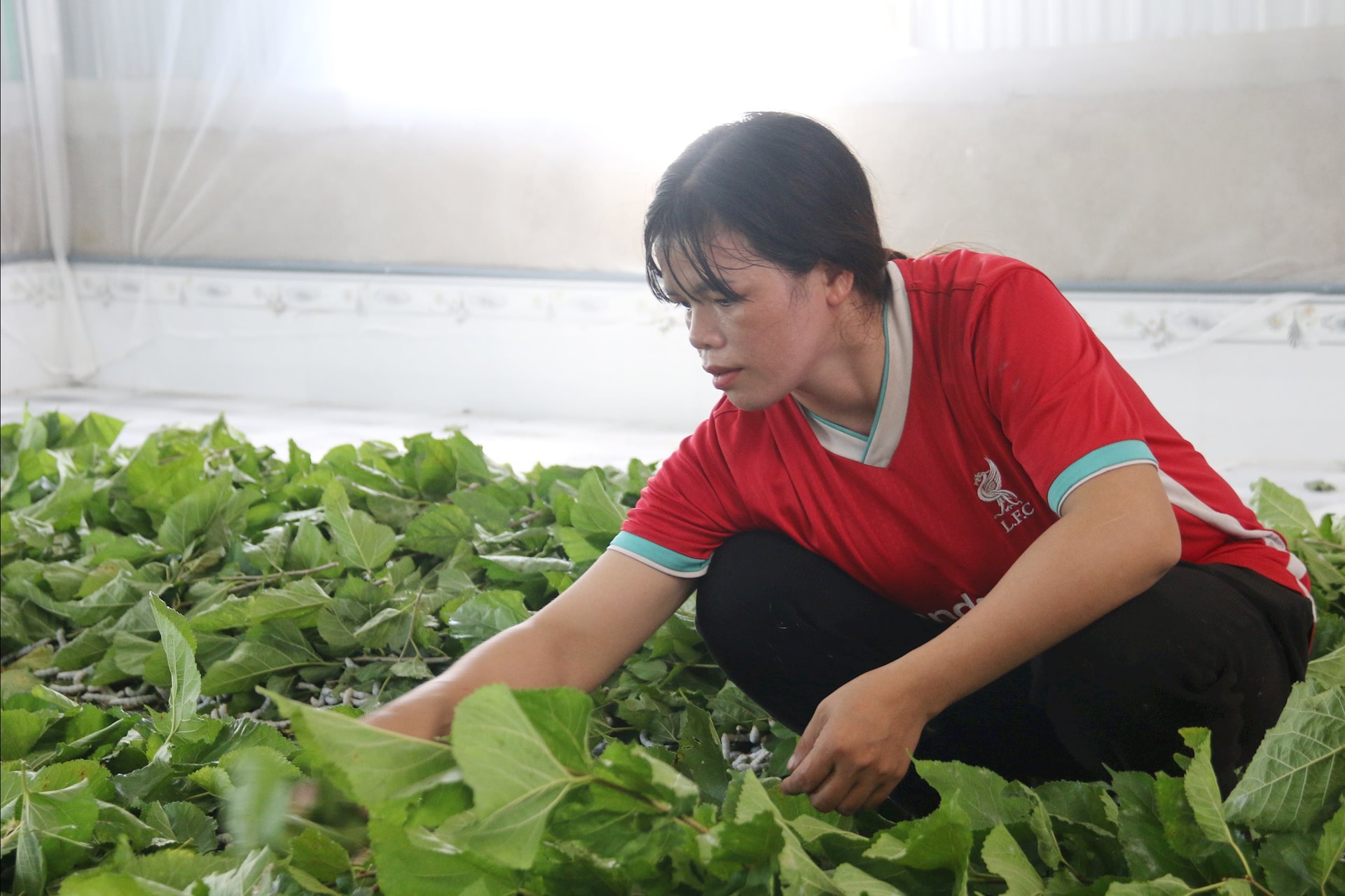
The recovery is not limited to a few villages. Across Lam Dong Province, mulberry cultivation and silkworm farming are expanding again.
According to local agricultural statistics, the province now has about 11,230 hectares of mulberry plantations, up 4.1% from last year.
The growth is driven not only by higher cocoon prices but also by the adoption of new high-yield mulberry varieties such as VA-201, S7-CB, TPL-03 and TPL-05. These varieties produce more leaves, offer better pest resistance, and are well suited to local soil conditions.
With improved mulberry supply, farmers can raise silkworms more efficiently while reducing production costs.
At the same time, many households are adopting modern silkworm-rearing techniques, upgrading breeding facilities, improving hygiene standards, and strengthening disease prevention measures.
Combined with staggered production cycles, these innovations allow farmers to increase output and stabilize income, signaling a promising future for one of Lam Dong’s traditional agricultural industries.