


Smart Farming Drives Breakthroughs in Ka Do Commune
Through its high-tech, smart farming models, Ka Do Commune (Lam Dong) is demonstrating that rural areas prosper most when agriculture is transformed through innovative thinking. Smart agriculture has helped this purely farming community gain control over production, stabilize markets, and steadily build sustainable livelihoods.
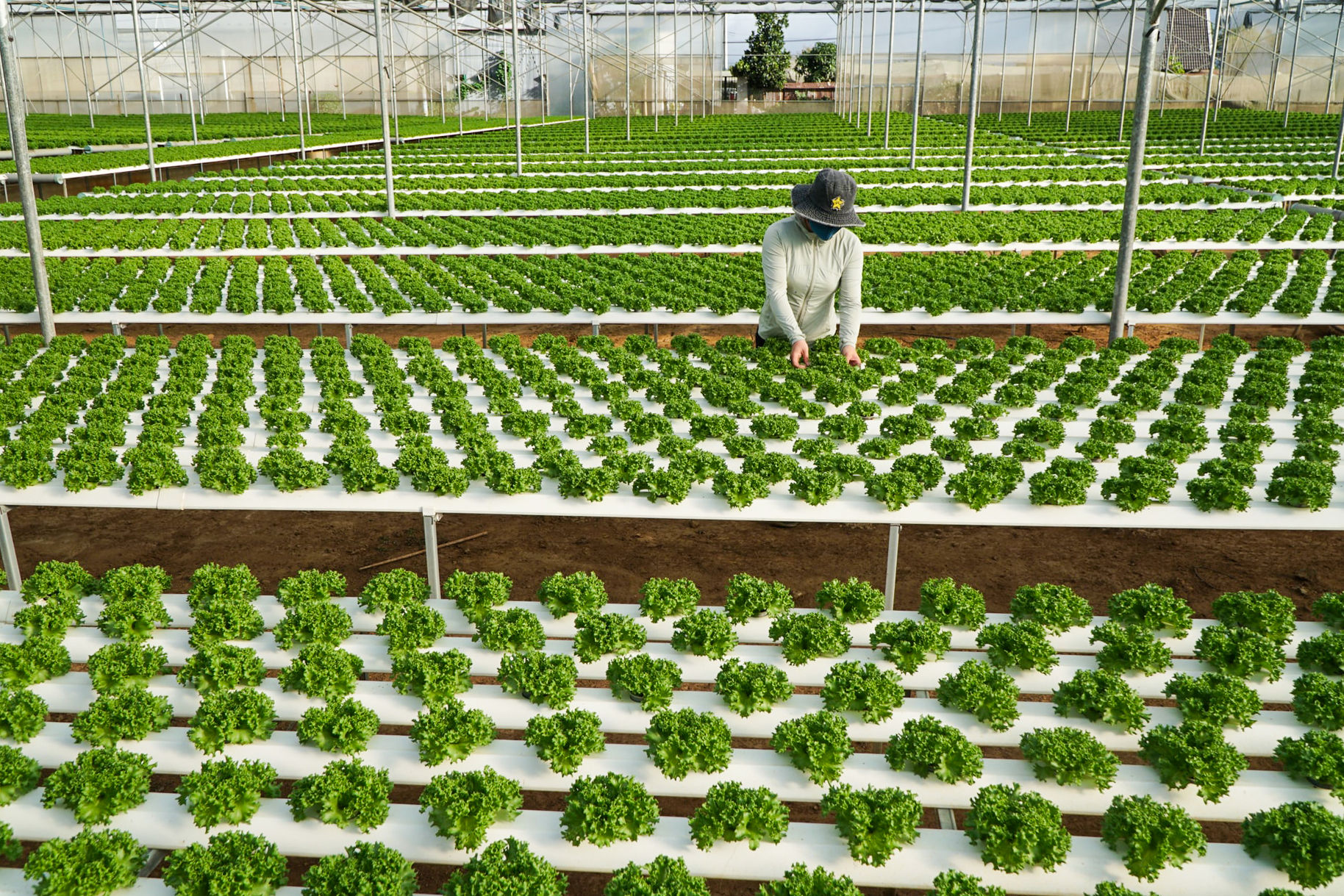
Farms worth billions of dong
At dawn in Ka Do, when mist still lingers over the greenhouses, farmer Nguyen Cong Minh is already working in his family’s hydroponic vegetable garden. Rows of lettuce grow neatly in nutrient solution, without soil or mud, accompanied only by the sound of circulating water and the quiet rhythm of modern farm work.
Since 2020, Nguyen Cong Minh has used 5,000 m² for hydroponic cultivation. Despite initial skepticism regarding high investment costs and technical complexity, he remained confident in his chosen model. His vegetables follow a closed production process that meets VietGAP standards, and are linked with wholesale markets, thereby ensuring a stable output.
The farm produces six crops a year, yielding around 60 tons. Prices range from VND 20,000–50,000 per kilogram depending on the season. Buyers collect produce directly at the farm. Minh shared that although hydroponics requires significant upfront investment, it allows full control of quality and consistency, ensuring clean produce and reliable income.
Nearby, farmer Trinh Cong Tuan operates four hectares of greenhouses on his five-hectare property, specializing in tomatoes and cucumbers. He grows two to three crops annually, with average revenue of VND 2 billion per hectare and profit exceeding VND 1 billion per hectare.
Inside the greenhouses, drip-irrigation systems and automated fertigation ensure optimal growth. “This year’s Tet crop covers 1.6 hectares of tomatoes. If weather conditions remain favorable, harvesting during Tet usually brings better prices,” Tuan said.
High-value farms like those of Minh and Tuan are becoming increasingly common. Importantly, these models are not spontaneous; they align with the commune’s strategic direction toward market-oriented, high-tech and smart agriculture.
No more poor households in a farming commune
In 2025, Ka Do’s agricultural area totaled 7,105 hectares, more than 6,407 hectares of which were vegetables. Notably, about 85 percent of production now applies high-tech or smart farming solutions, including 530 hectares of greenhouses and net houses — a crucial foundation for productivity, quality, and value growth.
By embracing science and technology, yields and output have increased. As incomes rise, living standards have improved markedly. In 2025, Ka Do reported no poor households, only 27 near-poor households, and no cases of returning to poverty. Average per-capita income reached VND 85 million per year, among the highest levels in rural areas of the province.
According to Nguyen Van Hop, Vice Chairman of the Ka Do Commune People’s Committee, the commune recognized early that income growth required reorganizing production into commodity-based, concentrated farming zones for key crops such as vegetables and flowers. Land-use planning, investment incentives for greenhouses and technology, and tight linkage with markets helped farmers secure stable raw-material zones and rising incomes.
Beyond agriculture, Ka Do now hosts three foreign-invested enterprises, the Ka Do Industrial Cluster, 95 businesses and cooperatives, and more than 800 household businesses in trade and services — forming a dynamic, multi-pillar rural economy.