


Spring Comes to the Cham Lands
Spring in the Cham region of southeastern Lam Dong Province brings positive changes shaped by the new rural development program. Here, cultural identity is carefully preserved, while trust in the Party and the State continues to grow through concrete, practical actions.
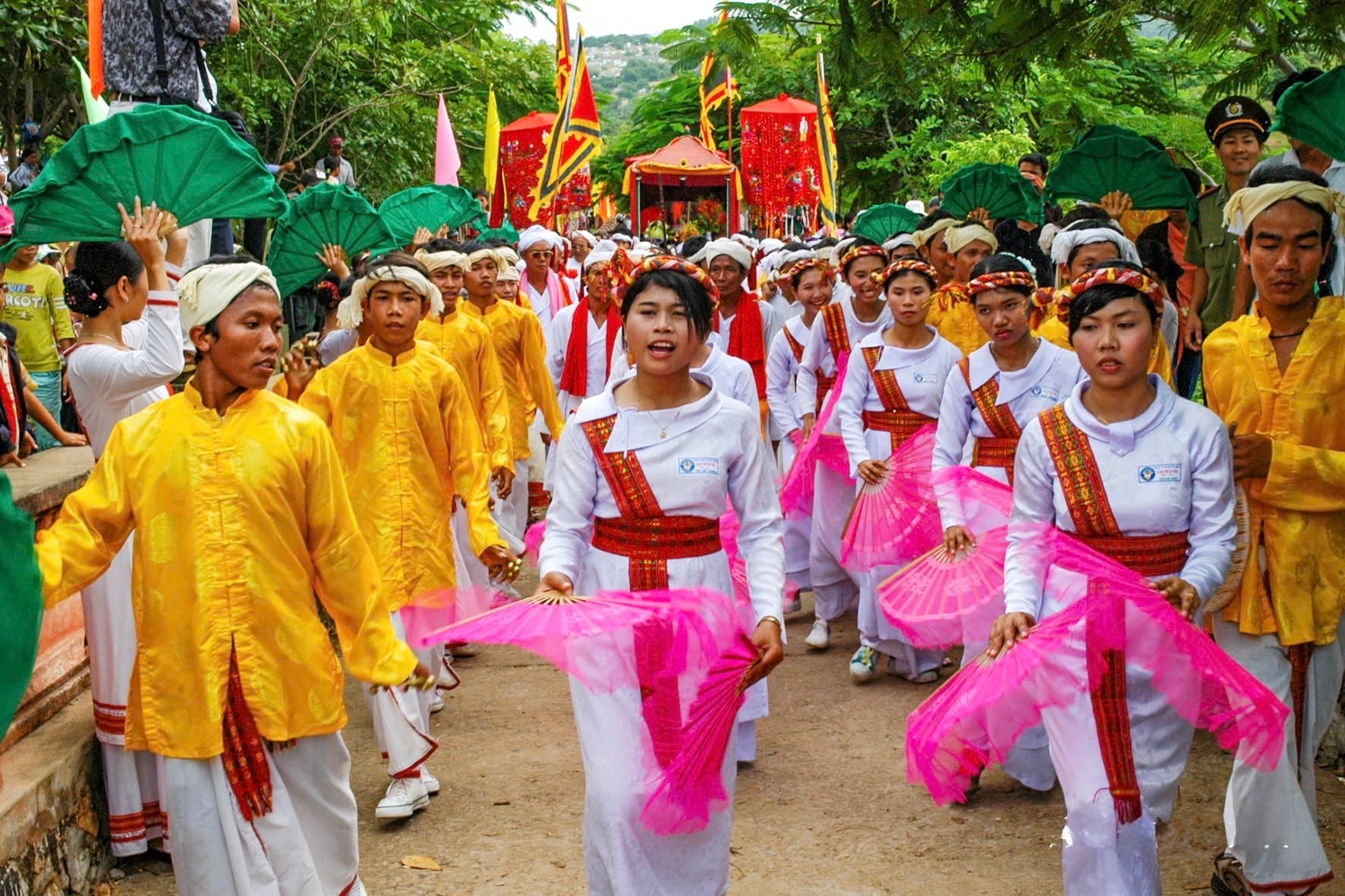
Spring in Cham Village of southeastern Lam Dong Province is not as lively as the urban areas. It comes peacefully, mirroring the unhurried rhythm of life in a community deeply rooted in this land for generations. Newly built concrete roads now run through the villages, bringing once-distant Cham homes closer together.
In recent years, thanks to the attention of the Party and the State, along with the coordinated efforts of Party committees and authorities at all levels, the appearance of the Cham-inhabited areas here has undergone clear and positive changes.
Today, amid the fresh colors of spring, poverty and backwardness are gradually being pushed back, giving way to a revitalized rural area where both the material and spiritual lives of the people are steadily improving. In this broader picture, Bac Binh Commune stands out as a locality where change is clearly visible in every home and along every road. The commune is home to nearly 19,000 Cham people, accounting for about 37% of the population, concentrated in six villages formed by merging the Phan Hiep and Phan Hoa communes.
Nguyen Quoc Thang, Secretary of the Bac Binh Commune Party Committee, shared that during the 2020–2025 period, the commune implemented more than 30 rural infrastructure projects with a total investment of nearly VND 30 billion. What is particularly meaningful is that many of these projects were built through residents' voluntary contributions of labor and funds.
Beyond infrastructure improvements, local livelihoods have also become more stable. In Bac Binh, facilities producing rice paper, vermicelli, and banh hoi, as well as rice-milling services and household carpentry, remain active year-round. Each facility employs many local workers. Notably, the traditional Cham pottery craft has been preserved almost intact. Without modern machinery or industrial kilns, artisans still shape pottery by hand and fire it using straw and dry wood. This seemingly slow and simple process is, in fact, the enduring rhythm of Cham cultural life.
In the days leading up to Tet, the courtyard of Ms. Luong Thi Hoa's residence in Binh Tien Village is always busy with pottery-making activities. According to Ms. Hoa, the key element in creating decorative pottery is maintaining the “soul” of Cham culture. Consequently, these products are typically small to medium-sized, making them ideal souvenirs for visitors. Because of its unique character, Cham decorative pottery from Binh Duc has become increasingly sought after by tourists during their spring visits.
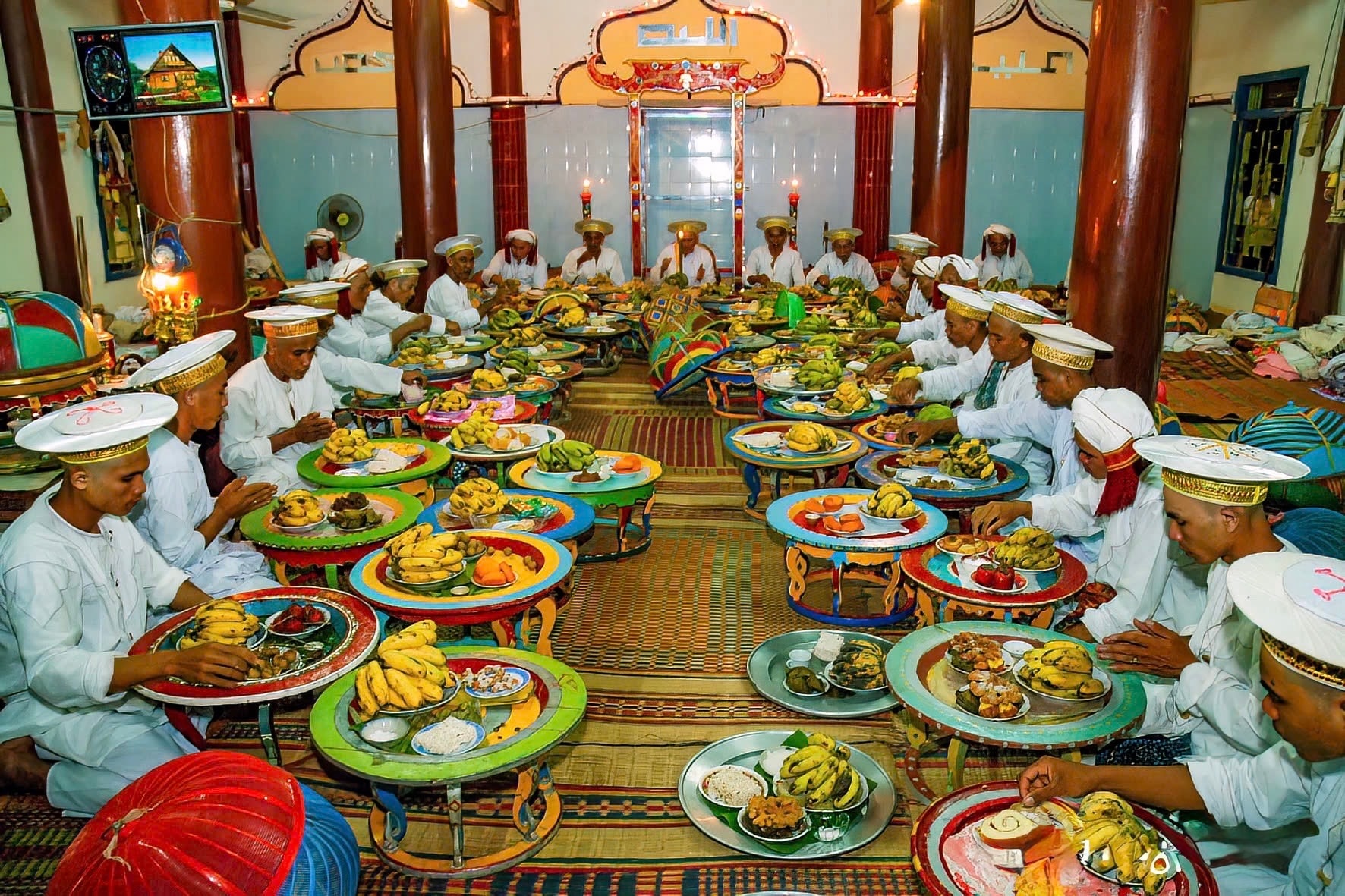
Lam Dong is home to 49 ethnic groups, with ethnic minorities accounting for approximately 17.6% of the total population. The Cham community, located primarily in the southeastern region of the province, comprises over 41,000 individuals residing mainly in the communes of Bac Binh, Tuy Phong, Hong Thai, and Ham Thuan Bac. The Cham people not only maintain their unique cultural identity but also contribute significantly to the cultural diversity of the newly established Lam Dong Province.
The effort to preserve and promote Cham cultural identity has consistently been acknowledged as a long-term endeavor. For millennia, the Cham people have established a distinctive and rich cultural landscape, evident in their temple architecture, sculptures, customs and traditions, language and writing system, beliefs, rituals, and folk music, all handed down through generations. Numerous Cham cultural heritage sites have received formal recognition from the State, including the Po Sah Inu tower complex, the Po Dam towers, the Po Klong Monai temple, the Cham Royal Heritage collection, the traditional pottery-making craft, the Kate festival, and the National Treasure of the Golden Linga.
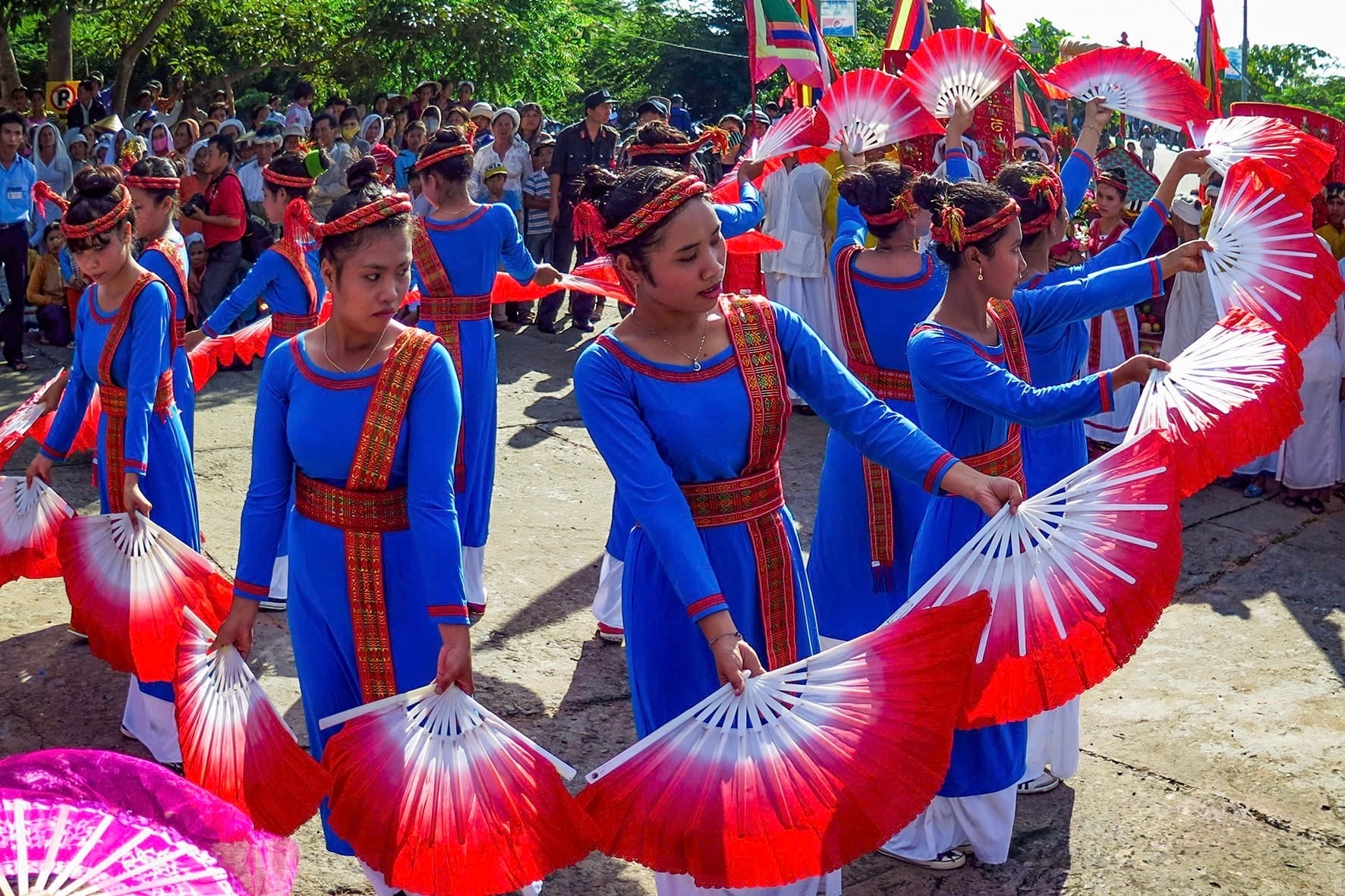
The Cham community in the southeastern region of Lam Dong Province primarily practices Balamon Hinduism and Bani Islam, upholding a matriarchal system and maintaining a rich cultural heritage. Communal houses and temples are vital venues for cultural and religious events, strengthening community ties.
In Bac Binh Commune, numerous relics have received official recognition, including the Xuan Hoi and Xuan An communal houses (national relics), the Hoa Thuan communal house (provincial relic), the National Historical Site Dong An Temple, and the Po Nit Temple—a national relic that holds significant importance in the spiritual life of the Cham people. Each relic serves as a "page of memory," safeguarding tales of origins and spiritual beliefs passed down through generations.
Lam Dong has continually recognized the advancement of ethnic minority regions as a holistic endeavor. Simultaneously, honoring, safeguarding, and enhancing the cultural distinctiveness of each ethnic group—such as the Cham community—is crucial to fostering sustainable livelihoods and improving living standards for the population.
Nguyen Minh Tan, Deputy Director of the Lam Dong Department of Ethnic and Religious Affairs
In the ethnic minority regions of southeastern Lam Dong Province, various ethnic policies and programs have been effectively executed in recent years. A wide range of infrastructure projects, new rural development programs, and initiatives to support livelihoods and education have yielded significant results, enhancing living conditions, safeguarding traditional cultural values, and fostering sustainable development within the Cham community.
Springtime in the Cham region of southeastern Lam Dong is not just a season filled with celebrations; it is also a time of confidence—faith in the care and dedication of the Party and the State, trust in the continued support of local authorities, and belief in the community’s resilience. Built on unity, collective responsibility, and a determination to advance, the Cham people in this area are collaborating to create a homeland that is becoming increasingly stable and sustainably developed. In the rhythm of spring, the land is steadily growing stronger—lasting and nurturing, like the ever-burning kiln fire present in every Cham village.