


Spring Stories: Echoes from Ancient Artifacts
To celebrate the Lunar New Year, the Provincial Museum hosted an art exhibition alongside a display of historical artifacts, offering a unique cultural space for the residents and visitors to explore and appreciate. The event enriches spiritual life while honoring and promoting the locality's enduring historical and cultural values.
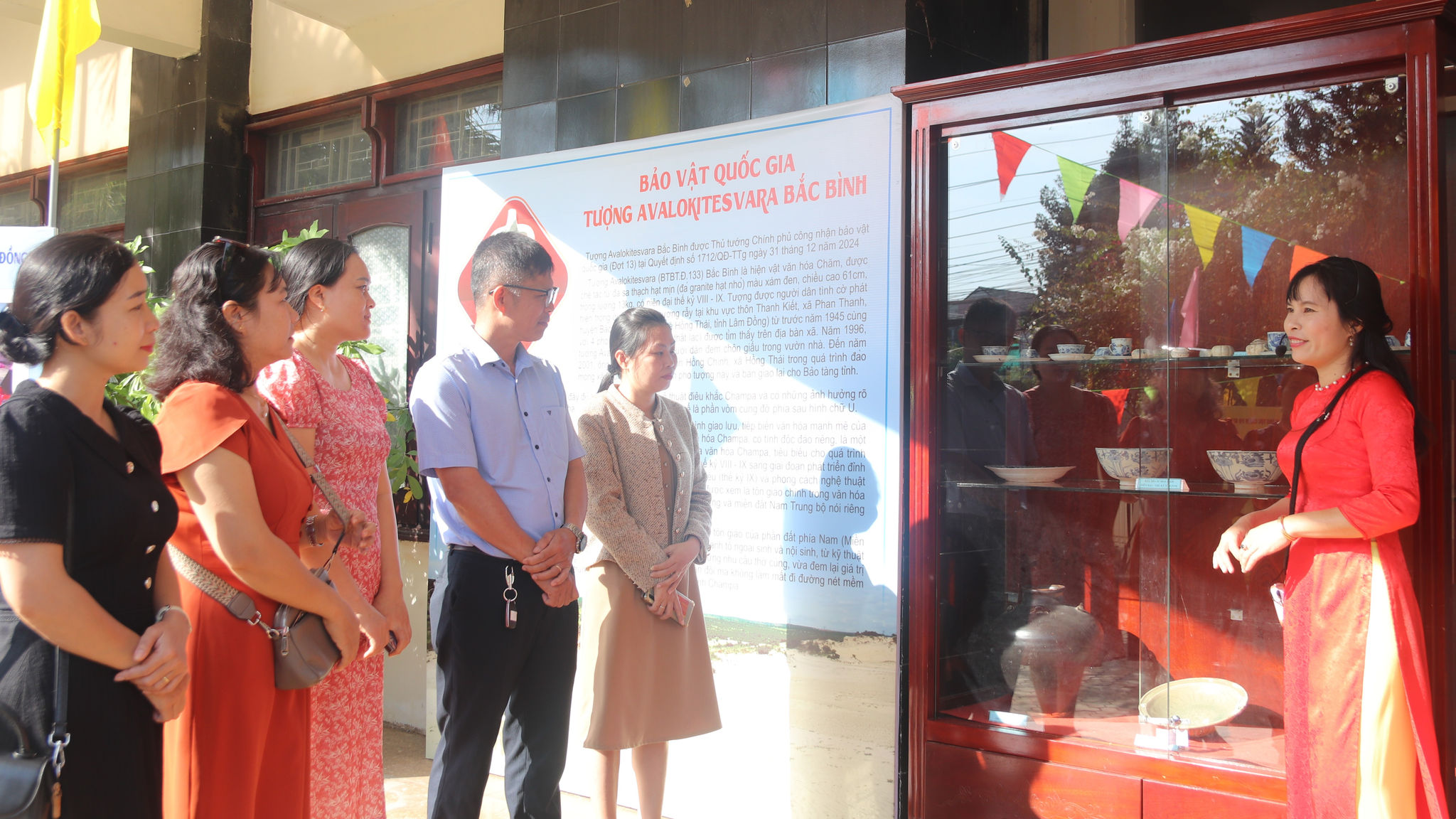
A Space Filled with the Colors of Spring
As the Lunar New Year approached, the grounds of the Department of Culture, Sports and Tourism on Tran Hung Dao Street in Phan Thiet Ward grew noticeably more vibrant. Streams of visitors—families, students, and tourists alike—came to explore the exhibition. Inside, the spirit of spring was delicately expressed through a warm and elegant arrangement, blending ancient artifacts with photographic works that vividly capture the beauty of Lam Dong’s homeland.
The exhibition area showcases numerous large-format banners systematically displayed, each providing sophisticated insights into traditional cultural values and everyday life. The presentations highlight artifacts and archaeological findings from the Da Kai Stone Age site (currently located in Nam Thanh Commune), along with items related to the Sa Huynh culture in the southeastern region of the province during 1923–1925, when the French developed interprovincial roads. Notable elements of the Sa Huynh culture discovered in this area include egg-shaped jar burials, a variety of jewelry, pot burials, spindle whorls, bronze axes, and, significantly, the initial discovery of an eight-piece lithophone set.
Furthermore, the exhibition highlights the unique characteristics of Cham culture, represented by a vibrant community of over 40,000 residents in the province. By displaying images of festivals, Cham royal heritage, and traditional craft villages, the exhibition embodies the spirit of unity and cohesion within Vietnam’s diverse yet unified culture. Of particular significance are two national treasures—the Po Dam Gold Linga and the Bac Binh Avalokitesvara statue—which serve as important scientific resources for research into the archaeology, history, culture, fine arts, religion, and metallurgical techniques of the Cham community in earlier times.
Preserving and Promoting Heritage Values
A highlight of this exhibition is the display of numerous rare artifacts of outstanding historical and cultural value, dating back hundreds of years. Mr. Doan Van Thuan, Deputy Director of the Provincial Museum, stated: “The exhibition of artifacts on the occasion of the Lunar New Year, under the theme ‘Artifacts and the Colors of Spring’, is organized to serve the public’s cultural enjoyment.”
On this occasion, the Provincial Museum introduced 56 antiquities recovered from shipwrecks along the province's southeastern coast, as well as relics discovered and salvaged by fishermen from La Gi Ward in the waters off Ca Mau. These items are brown-glazed ceramics from the Ming Dynasty of China, dating from the 16th to the 17th centuries, and relics from the Ca Mau shipwreck collection, dating to the reign of Emperor Yongzheng (1723–1735) of the Qing Dynasty. Notable examples include blue-and-white porcelain cups, plates, teacups, and bowls; polychrome-glazed plates; and multicolored painted teapots.
Through seemingly silent artifacts and engaging stories shared by museum guides, history comes to life, allowing visitors to gain a richer insight into the vibrant maritime trade routes Vietnam had in earlier centuries.
Lam Dong is celebrated not just for its stunning natural scenery but also for its rich cultural heritage. The various exhibition events have helped establish the museum as an attractive destination for people during their spring travels. In doing so, they foster a greater appreciation for the homeland and raise awareness of the importance of preserving the community's national cultural identity, ensuring that spring is not just a time of happiness but also one of deep spiritual reflection.