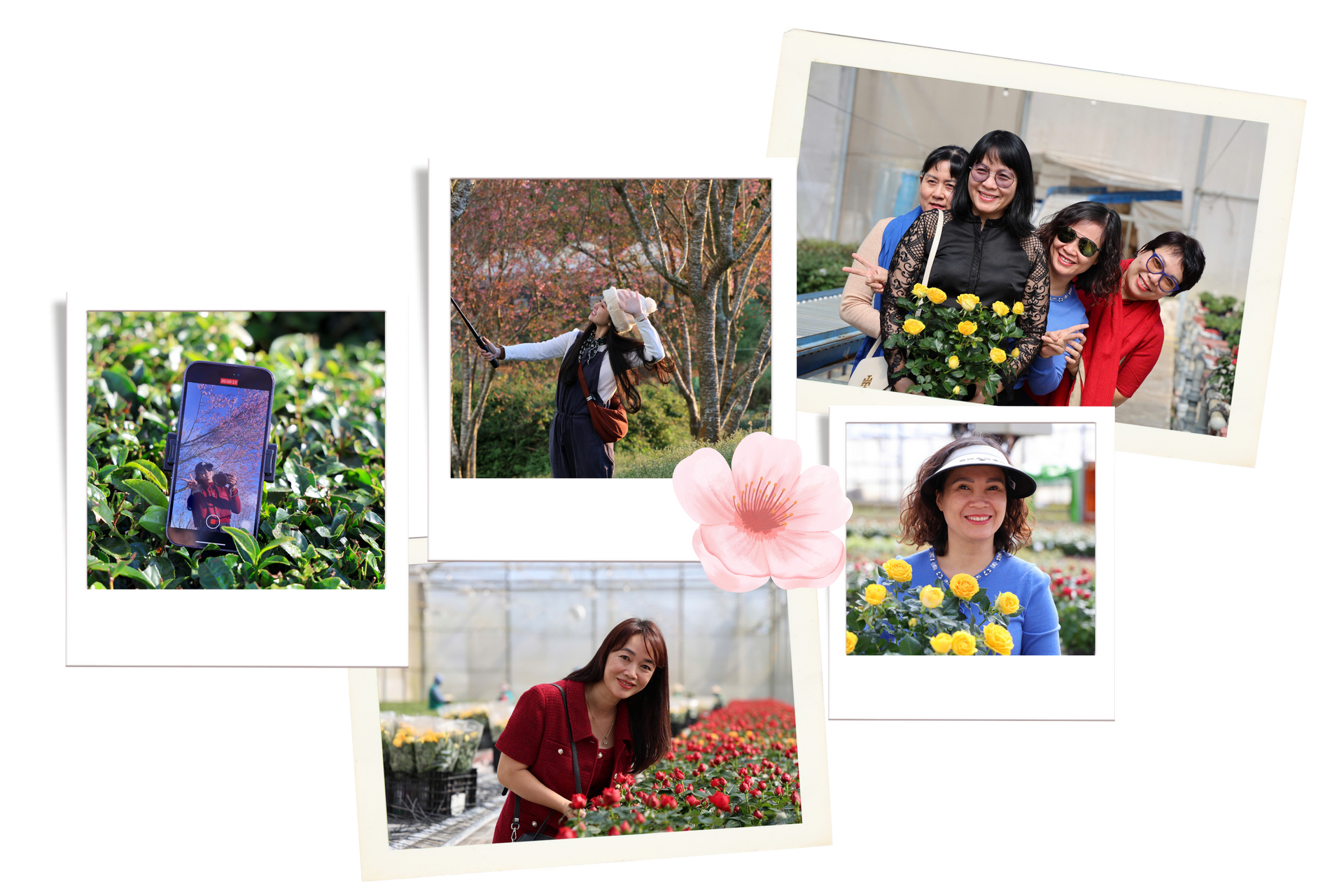


Spring Touches the Highlands – When Flowers Bloom with Da Lat’s Rhythm
Spring arrives softly on the Central Highlands. Amid the winding hills, flowers bloom on cue, locals work diligently, and travelers pause to take in the scenery. It is a slow yet resilient spring, full of life—where people and nature move in quiet harmony.
.jpg)
Cau Dat at Dawn: Tea Hills and Cherry Blossoms
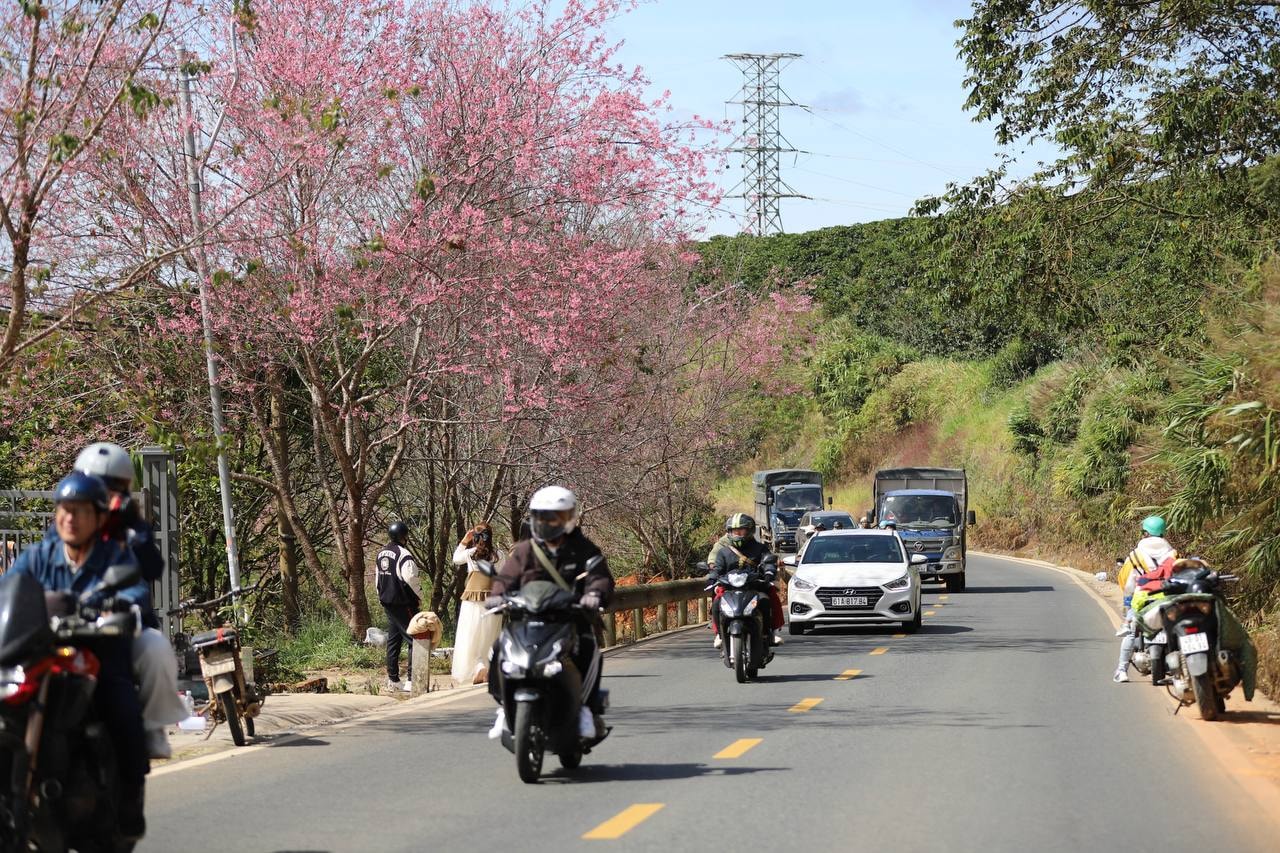
We left central Da Lat early in the morning, heading toward the Cau Dat tea hills in the crisp chill of early 2026. Across the rolling green tea plantations, cherry blossoms burst into bloom, painting the highlands in gentle shades of pink—both vibrant and serene.
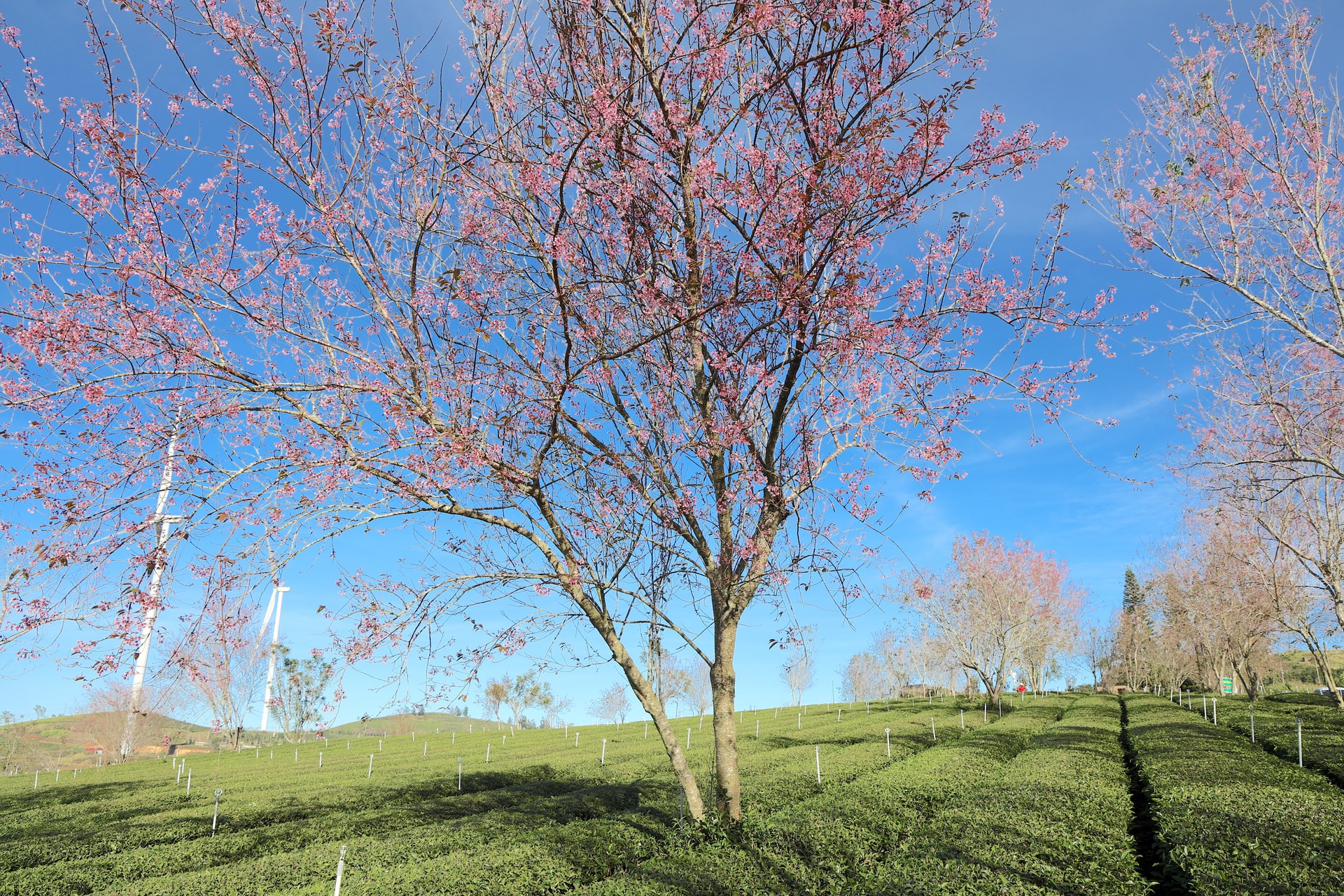
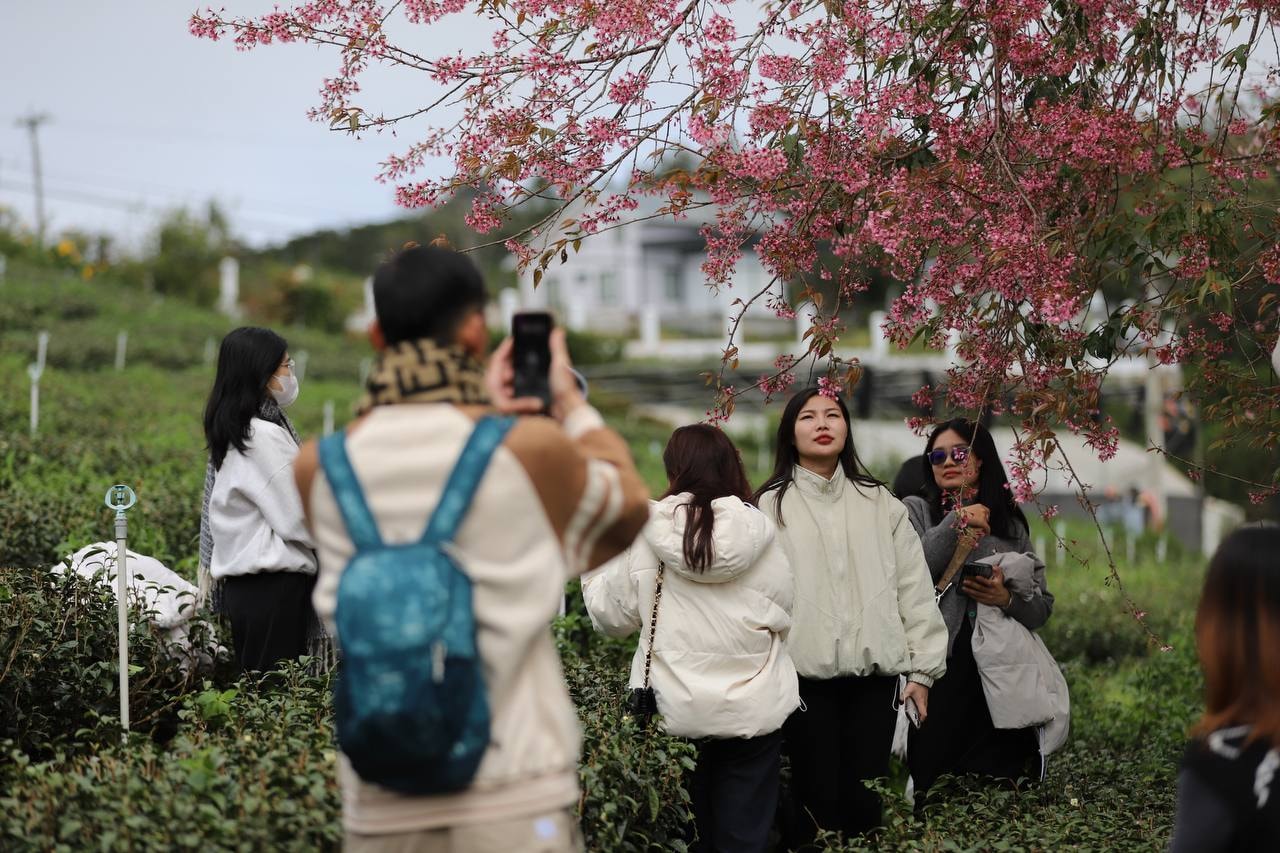
The small road leading into Cau Dat feels livelier than usual. Highland winds carry the scent of fresh tea leaves and damp red basalt soil. Delicate cherry blossom petals drift in the breeze, brushing against the stillness of the tea hills. Tourists stop to take photos, locals pass by at an unhurried pace, and soft laughter blends with the rustling sound of tea leaves.
.png)
Cherry blossoms in Cau Dat do not bloom ostentatiously. Their pale pink hue is understated, quietly accompanying the steady, hardworking rhythm of life among local residents.
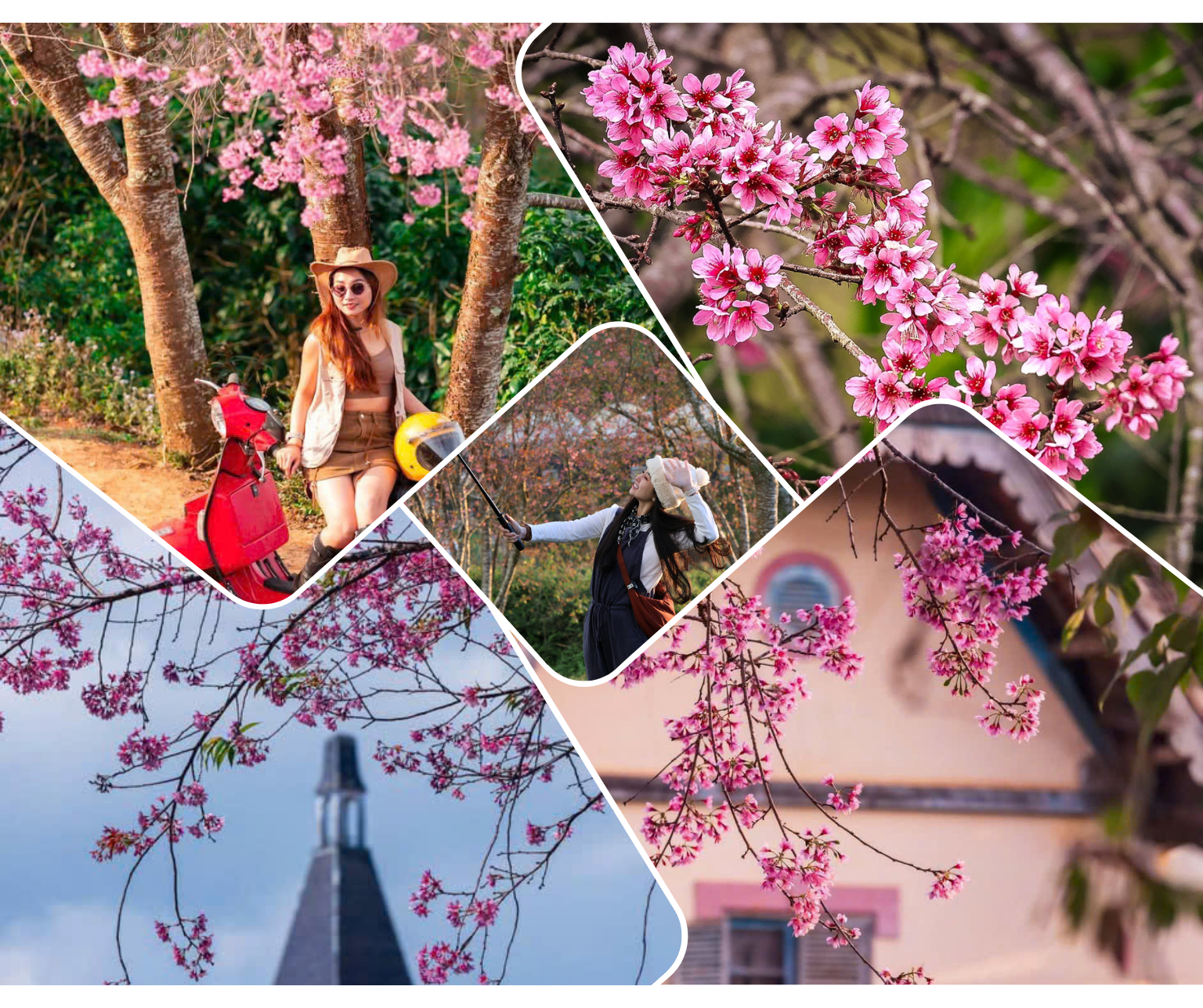
In the distance, at the far end of the hill, Nguyen Thi Lan— a Cau Dat local—moves swiftly as she plucks tender tea buds. Wrapped in a thick sweater and scarf, her gentle smile stands out in the morning cold.
“The blossoms are especially beautiful this year,” she says. “The weather has been just right—cold enough, little rain—so the trees bloom evenly. With more visitors coming, the tea hills feel livelier.”
Lan explains that many cherry blossom trees in Cau Dat date back to the French colonial period, growing quietly alongside tea plantations and generations of residents. Each blooming season subtly changes daily life: roadside stalls become busier, and after morning tea harvesting, some locals sell drinks to passing visitors for extra income. Flowers do more than beautify the land—they quietly warm people’s hearts.
Returning to the City in Morning Mist
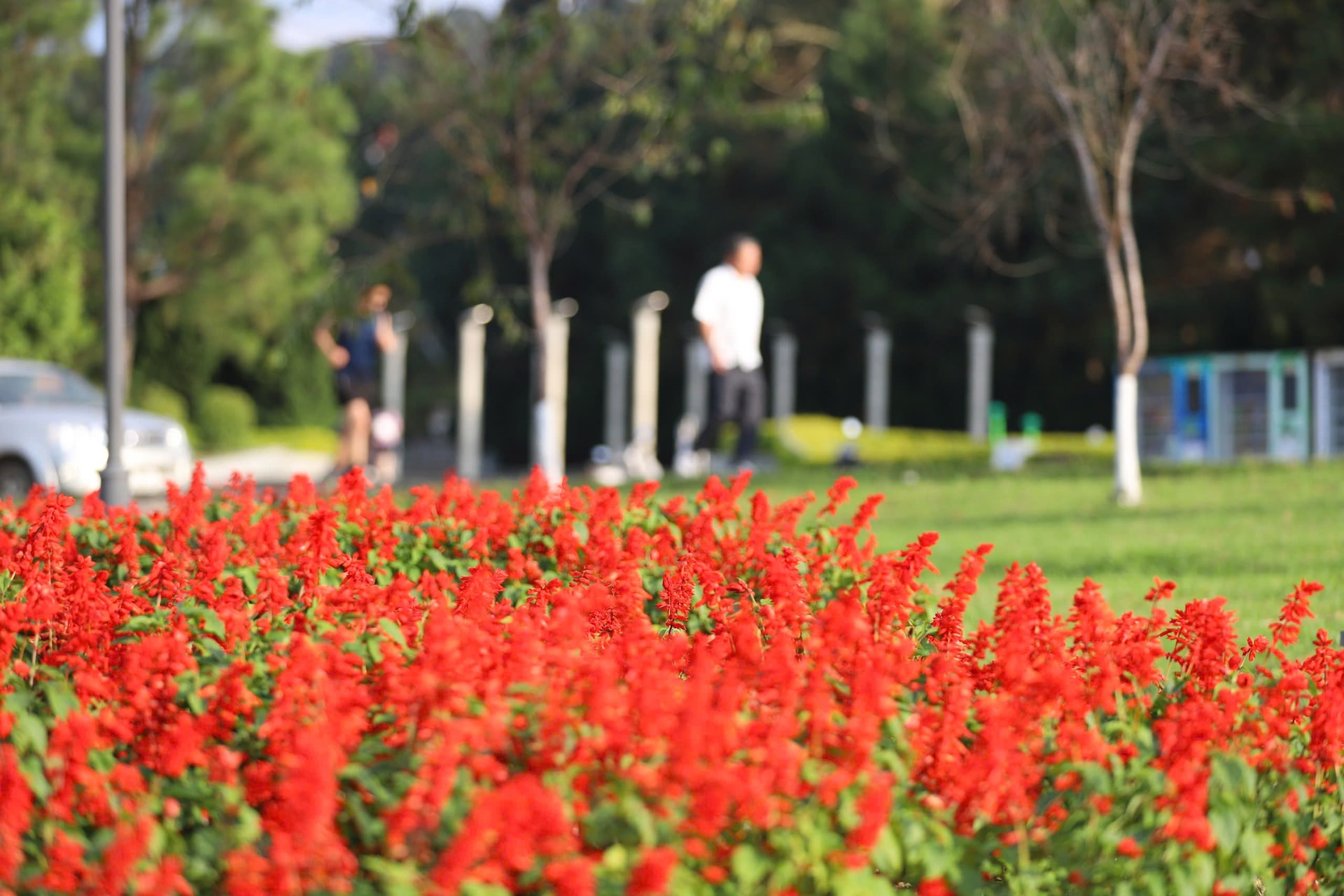
Leaving Cau Dat as the mist still lingers, we return to the city. Flowers appear everywhere—unassuming yet persistent, woven naturally into urban life.
.jpg)
Stopping by the roadside, Le Thi Thao, a visitor from Ho Chi Minh City, lowers her camera and shares:
“You rarely find this atmosphere in a bustling city. I came here at the start of the year not just to see cherry blossoms, but to slow down. Even a short stay makes you feel lighter—daily worries seem to fade away.”
Around Xuan Huong Lake and Lam Vien Square, the city center remains wrapped in early mist. Greenery workers have already begun their day. Wearing green uniforms and conical hats, hoses slung over their shoulders, they quietly tend to each flowerbed with care.
“We start work at 5 a.m.,” says Ms. Hanh, watering flowers with hands reddened by the cold. “During Tet, visitors come in large numbers. If the flowers aren’t fresh, it feels sad.”
Flowers as a Way of Life
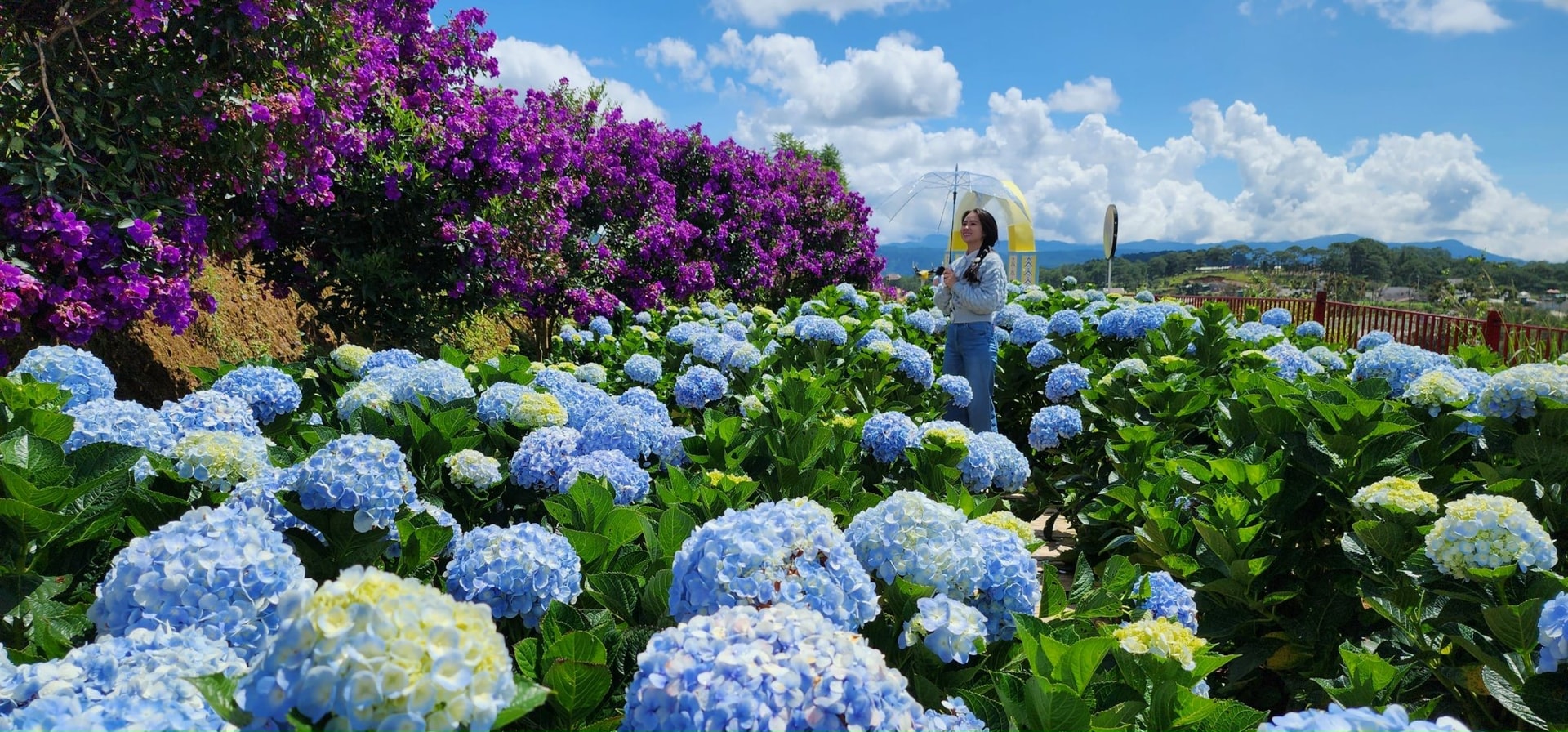
In Da Lat, flowers are not only for admiration—they are a livelihood. From mist-covered valleys to rows of greenhouses on the outskirts, flower growers rise before dawn, when the ground is still cold with dew. Each flower bed represents sweat, a year’s capital, and hopes for a stable harvest.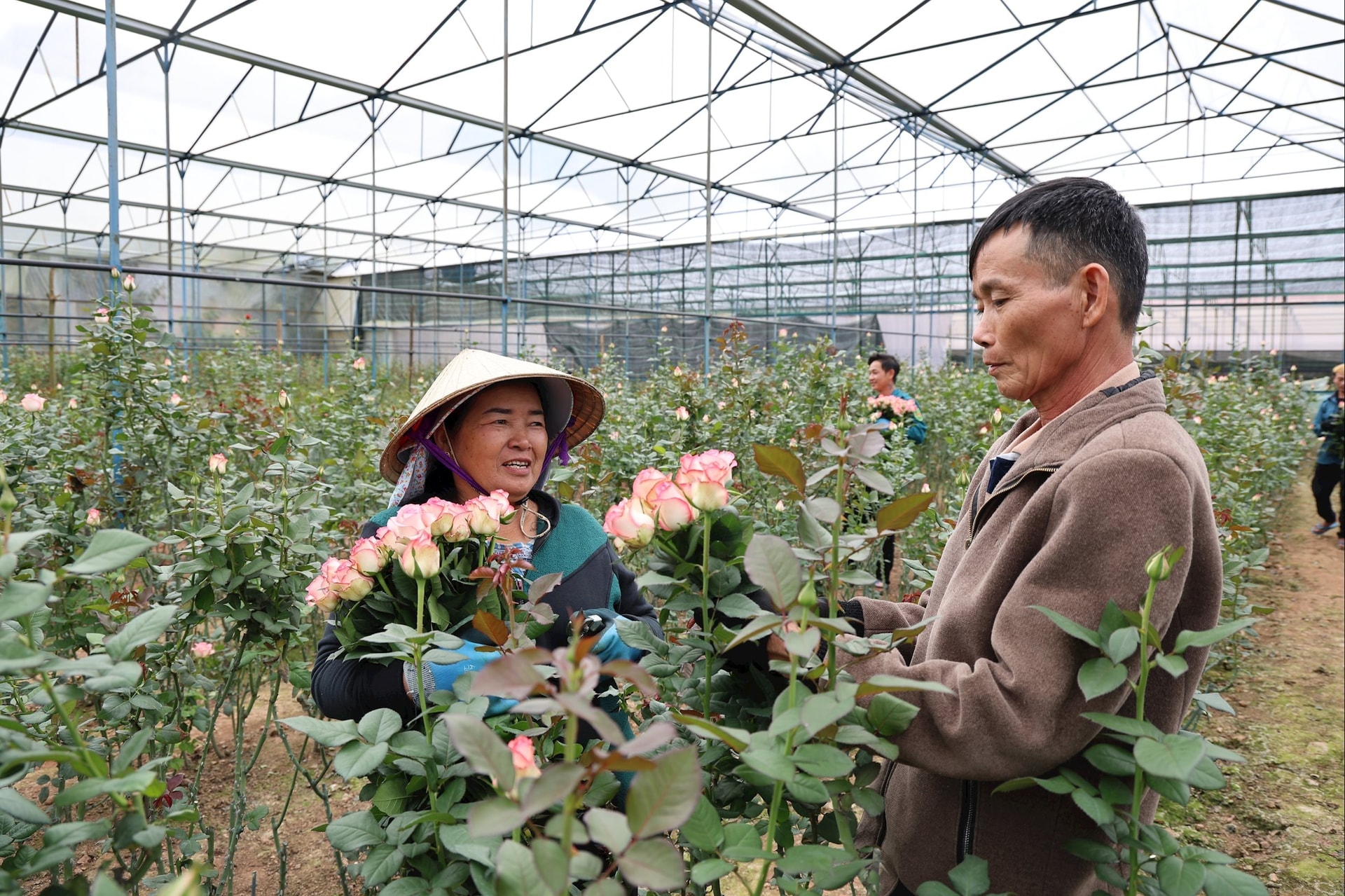
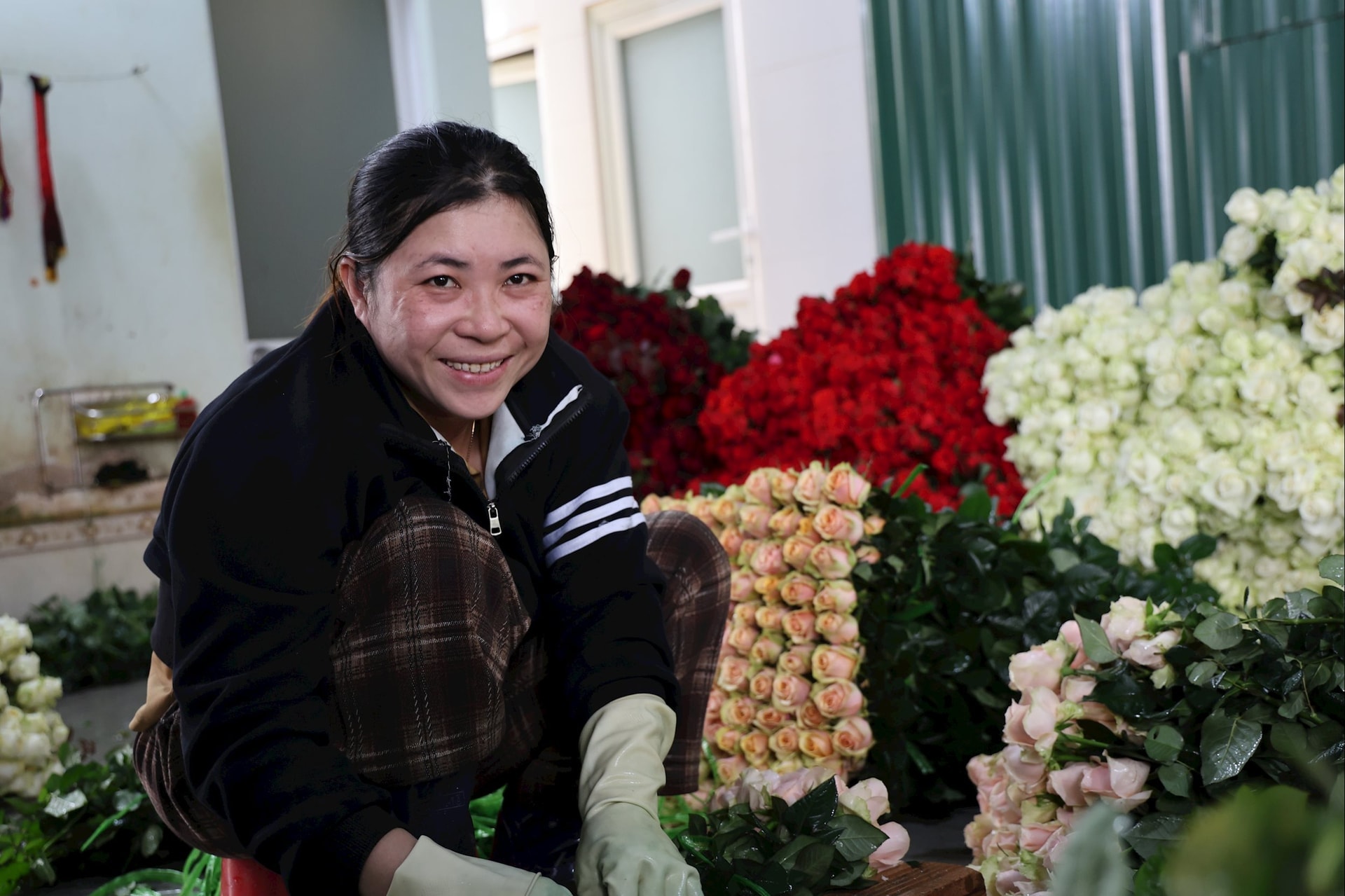
Flowers leave the valleys, enter the city, and travel far with people—still carrying the cool mist and gentle breath of the highlands.
“Flower growers here aren’t wealthy, but they rarely feel deprived—especially spiritually,” says Lan, a local flower vendor, tying bouquets with practiced hands and a warm smile. “Seeing people cherish the flowers we grow makes the whole day worthwhile.”
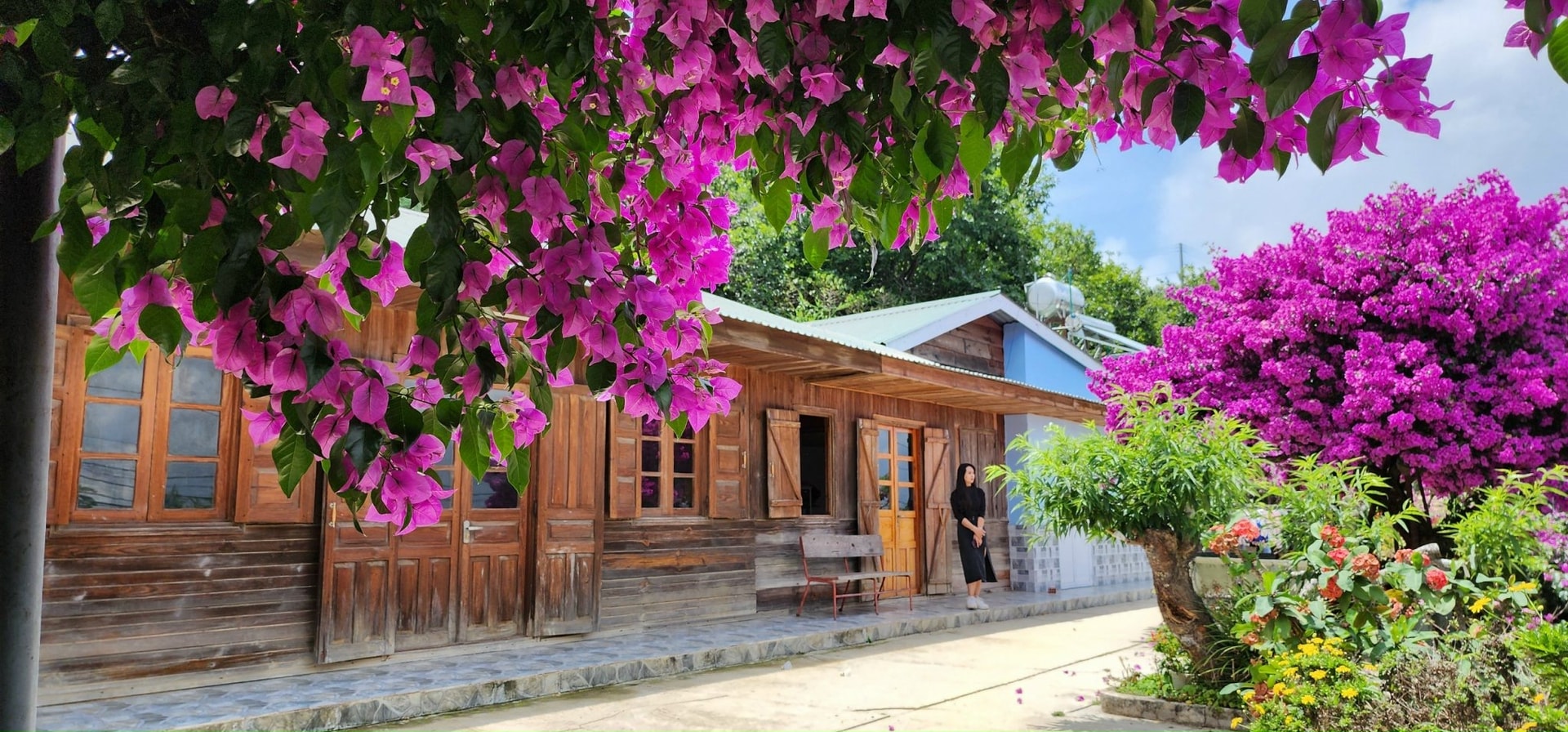
The most beautiful flowers are often found not in crowded places, but in familiar corners—by doorsteps, on balconies, along low fences.
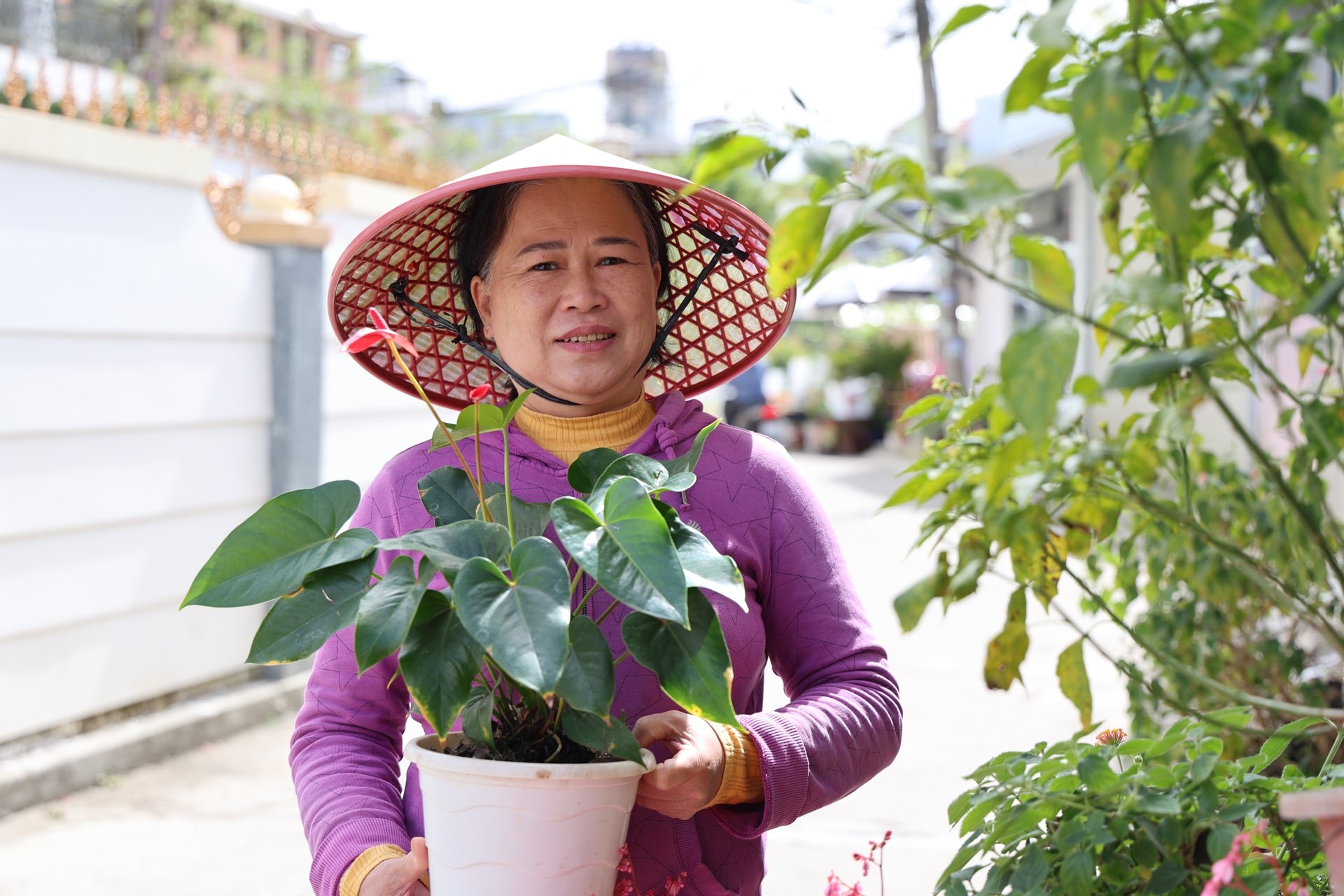
Ms. Nghiem Thi Xuyen of Xuan Huong Ward bends down to adjust a flower pot in front of her home.
“I don’t grow flowers for praise,” she says softly. “I grow them so that every morning, stepping outside feels lighter.”
More Than a Season
As evening falls, the highland wind grows stronger, the chill brushing gently against the skin. Beneath old pine trees, a few late-season wild sunflowers still glow yellow, while wild roses quietly bloom along the roadside—unassuming yet enduring, much like life here.
The city lights come on. Warm golden reflections shimmer across Xuan Huong Lake. Flowers along the shore continue to glow in the night—small but persistent, like stars drawn closer to the earth.
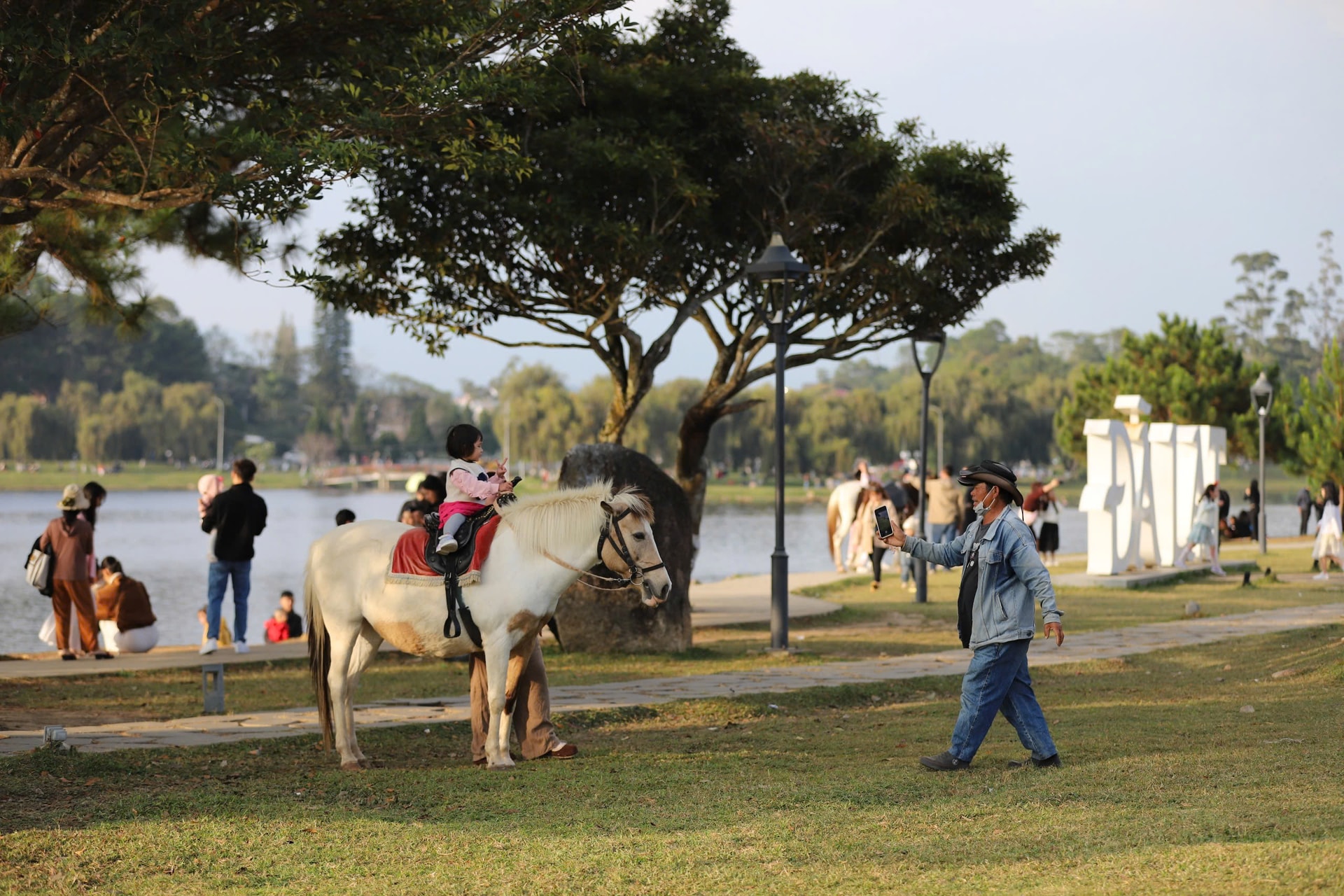
In Da Lat, flowers do not merely bloom by season. They have become part of daily life, a source of livelihood, and a gentle way of thinking preserved across generations.