


Staggering Dragon Fruit Production to Reduce Risks
At present, off-season dragon fruit prices in Lam Dong remain low, while frequent rainfall has increased the risk of pests and diseases. Many growers are therefore proactively pruning branches and removing buds to strengthen the plants, stagger production and prepare for the upcoming artificial-lighting crop, in hopes of achieving better economic returns.
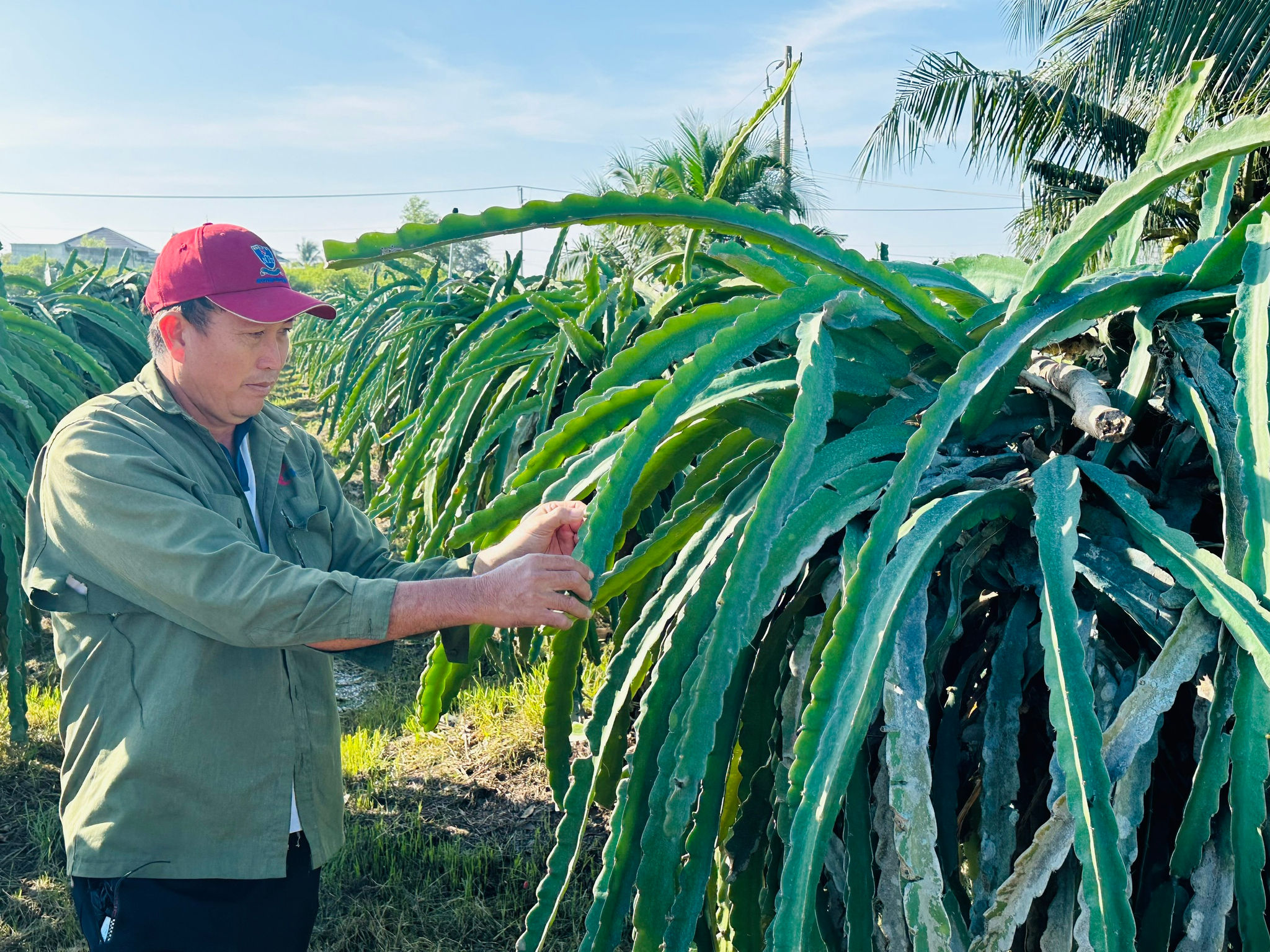
Farmers Proactively Stagger Production
As the main dragon fruit season nears its end, heavy rainfall has become more frequent. This has caused pest and disease problems in several dragon fruit cultivation regions in the southeastern part of the province, leading to a decline in both fruit quality and prices.
Le Trung Thanh, a farmer from Kim Binh Residential Area in Ham Thang Ward, stated: “My family has 600 dragon fruit plants, and we have removed buds from 50% of the growing area. Recently, I sold one batch for only VND 2,000 per kilogram due to the fruit failing to meet quality standards. There is currently another batch with green fruit that will be ready for harvest in about 10 days, while a third batch is flowering."
In dragon fruit growing areas, including communes such as Ham Kiem, Ham Thuan Nam, and Ham Thanh, the plants are thriving under favorable weather conditions. However, growers are not allowing all the flowers to develop into fruit; rather, they are actively removing excess buds and flowers, keeping only the ones that are likely to yield the best profits.
According to dragon fruit farmers and traders, during mid-August 2026, the price for the main-season dragon fruit ranged from VND 3,000 to 11,000 per kilogram for both red-fleshed and white-fleshed varieties, depending on quality.
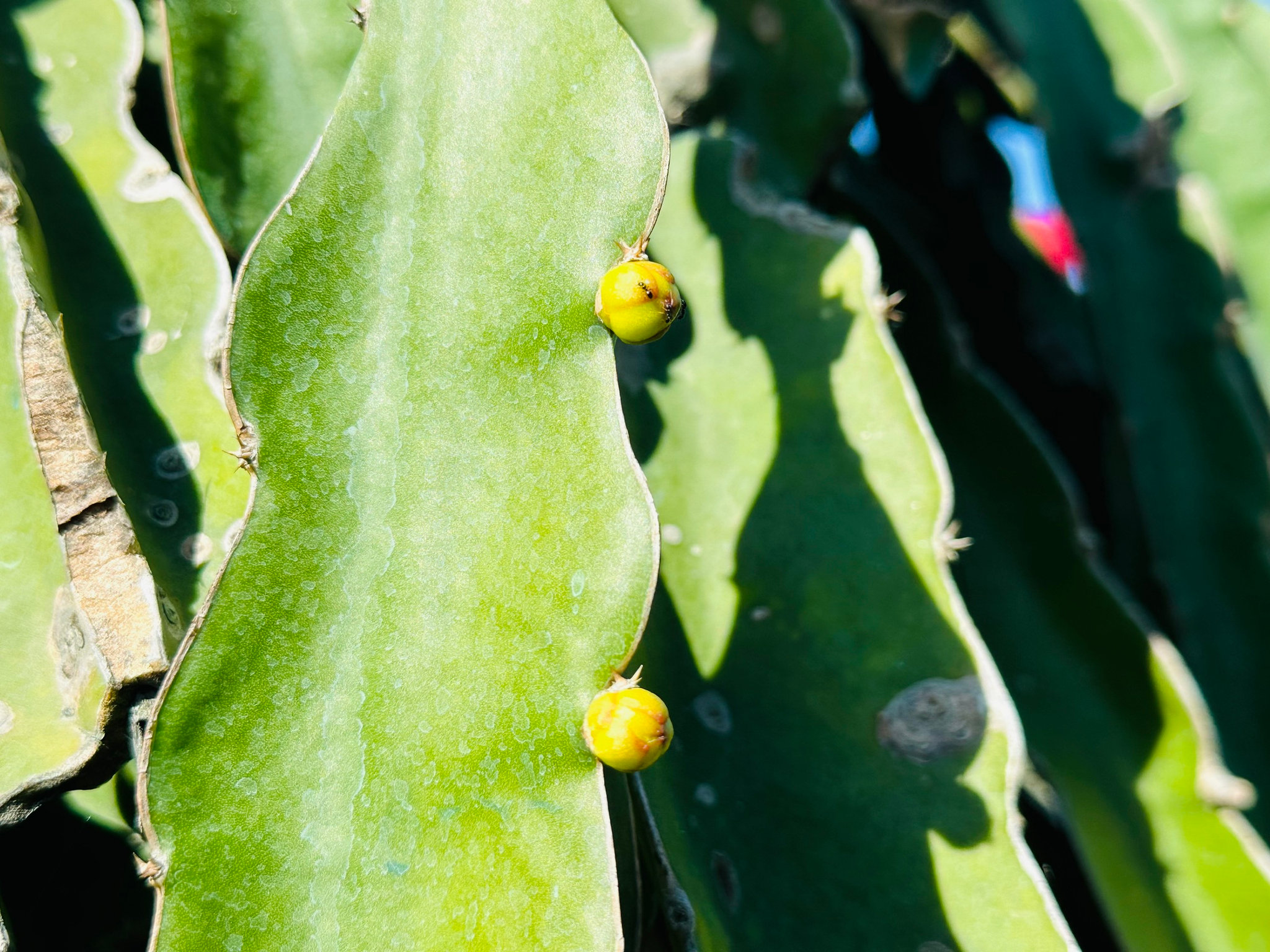
According to Nguyen Van Han, a dragon fruit farmer in Dang Thanh Hamlet, Ham Kiem Commune, he keeps batches with abundant, evenly developed fruit to sell to exporters. Batches with fewer or unevenly developed fruit are removed while the buds are still young. This approach allows the plants to concentrate nutrients, limits fungal diseases during the rainy season, improves fruit quality and increases production value.
Proper Dragon Fruit Care to Prevent Pests and Diseases
The Lam Dong Department of Agriculture and Environment reported that the province has over 25,800 hectares dedicated to dragon fruit cultivation. The crop is experiencing stable growth, with more than 29,000 tonnes harvested in July.
Nonetheless, nearly 700 hectares are currently impacted by brown spot disease, while 160 hectares are facing issues with root rot and stem dieback. Additionally, snails have caused damage to around 300 hectares in communes such as Bac Binh, Ham Thuan Bac, Ham Thuan Nam, Tan Lap, and Tan Thanh.
Le Cong Hoang, MSc, Deputy Head of the Plant Protection Division at the provincial Crop Production and Plant Protection Sub-Department, said that under typical weather conditions, dragon fruit flowers simultaneously during the main season, often resulting in abundant supplies and lower prices.
Moreover, managing a large number of fruiting plants incurs higher costs and complicates care, prompting farmers to prune buds to focus resources and better control fungal diseases.
Despite being the peak season, many growers continue to utilize artificial lighting throughout the year to strategically stagger production and enhance economic viability.
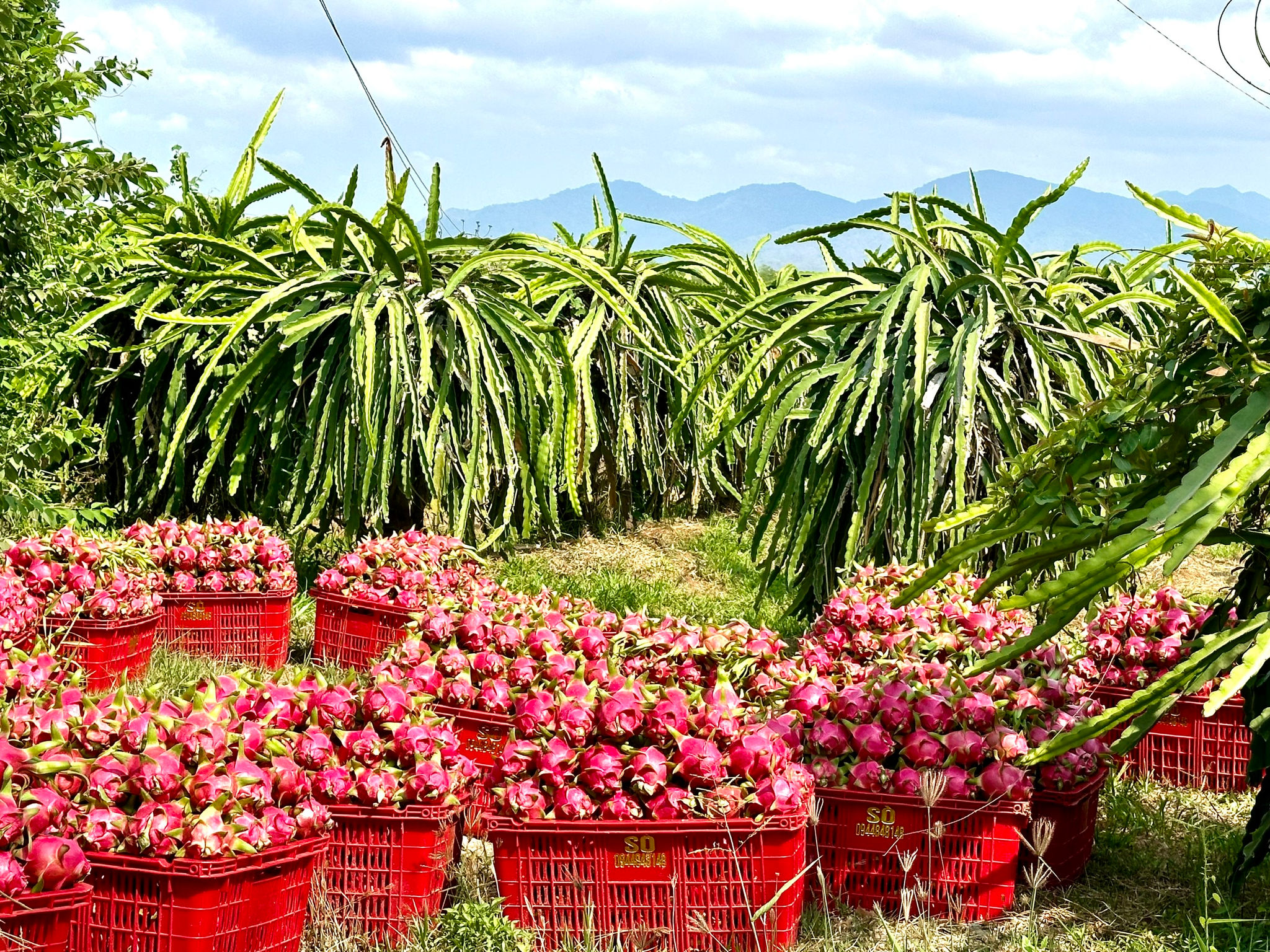
Le Cong Hoang also recommended that farmers remove remaining buds from their fields after pruning to help prevent disease outbreaks. These agricultural by-products can be utilized as feed for livestock or converted into organic fertilizer through composting.
In light of a dragon fruit market that has not yet rebounded as anticipated, producers are continuing to manage staggered harvesting. Each dragon fruit bud removed reflects a careful decision made by farmers after years of experiencing the cycle of “abundant harvests leading to low prices — high prices followed by poor yields.”
Rather than simply pursuing higher output, many growers are now taking a more proactive approach: choosing when to produce fruit, selecting which crops to retain and identifying suitable markets. This is also a way for farmers to adapt to market conditions, reduce risks and prepare for the off-season dragon fruit crop with greater expectations.
Although fertilizer costs have increased and low selling prices have resulted in losses, my family is still focusing on maintaining and strengthening the plants. We are preparing for the artificial-lighting crop starting in early September, with hopes of achieving better returns.
Le Trung Thanh, a resident of Kim Binh Residential Area, Ham Thang Ward