


Summer comes alive at ancient Po Sah Inu Cham Towers
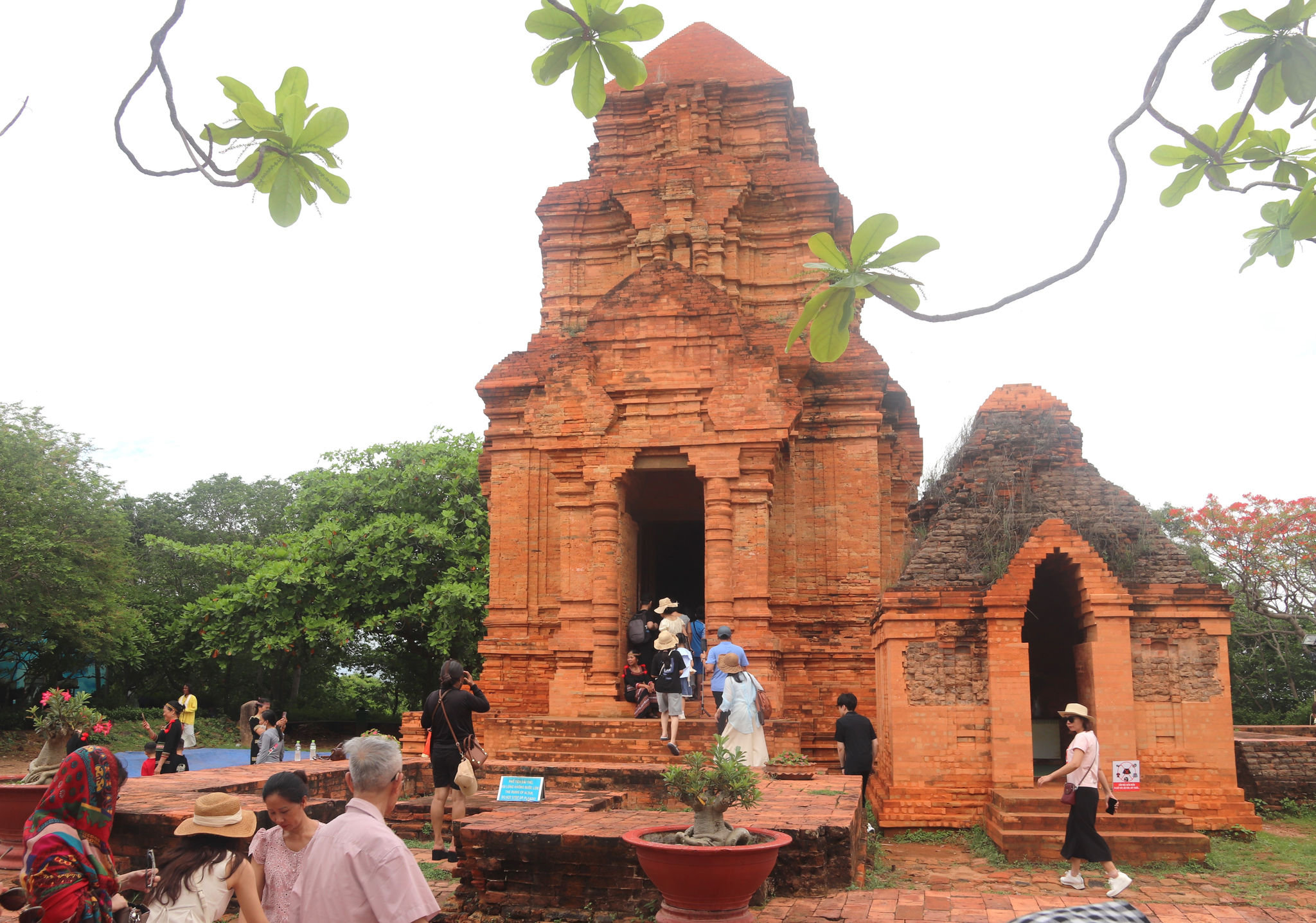
During the summer months, as golden sunlight bathes Ba Nai Hill in Phu Thuy Ward, the ancient Po Sah Inu Cham Towers has emerged as a major destination drawing both domestic and international tourists. Beyond exploring a millennia-old architectural marvel of the Champa civilization, visitors are increasingly immersing themselves in the distinctive traditional art and folklore of the Cham community within Lam Dong Province.
Reimagining the Visitor Experience
Convoys of tour buses have been lining up at the gates of the Po Sah Inu historical site since the early hours of the morning. As visitors pass through the entrance and make their way up to the towers, the oppressive heat of early summer gives way to an immediate sense of cultural immersion. Dozens of artistic paintings have been curated into an expansive, open-air exhibition route spanning the hillside. This specific curation transforms the ascent into a continuous journey of discovery designed to heighten engagement and emotional resonance.
Tran Duc Dung, head of the management board of the Po Sah Inu Cham Towers relic site, noted that the exhibition was purposefully designed to leave a lasting impression on visitors.
To support this initiative, the Lam Dong Province Museum curated and displayed more than 40 photographs highlighting the landmarks, scenic landscapes, traditional craft villages, and distinctive cultural festivals of the province.
The primary innovation lies in the structural layout, which converts the path leading to the towers into an open art corridor. This allows travelers to walk at leisure while simultaneously discovering the regional landscape and local culture.
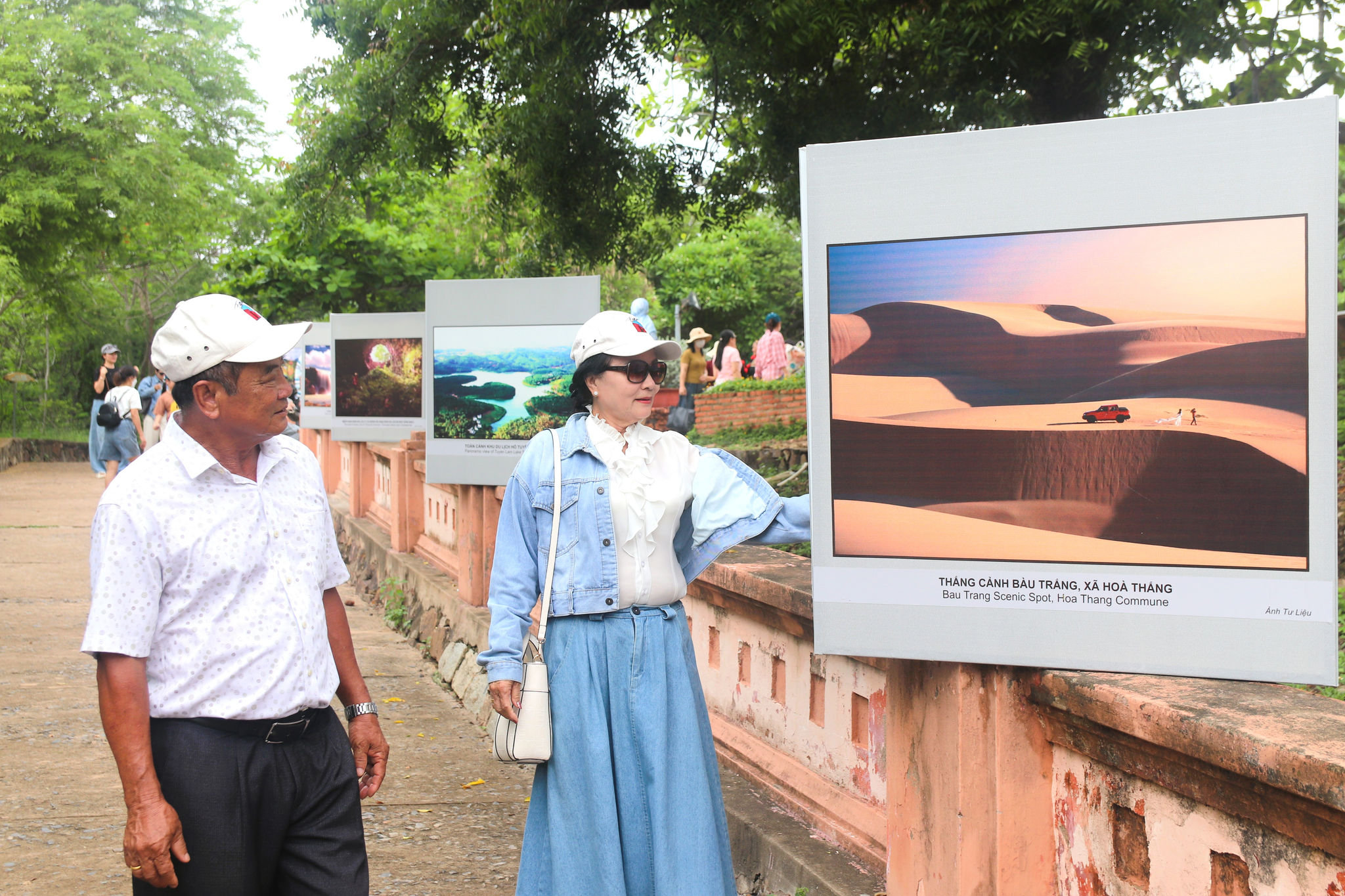
As a result of these adjustments, a tour once limited to observing ancient architecture now integrates art, culture, and history. The shift has diversified the educational value of the site, particularly for student groups and multi-generational families.
Trinh Thi Yen, a tourist from Ho Chi Minh City, observed that the layout of the installations provides an effective narrative flow. She stated that the visual elements go beyond merely showcasing landscapes to tell cohesive stories, highlighting depictions of Cham women at weaving looms, artisans shaping pottery by hand, the echo of gong music across mountainous areas, and the daily routines of coastal fishermen in Lam Dong Province.

Deepening Connections Through Cultural Heritage
Following the art exhibition, visitors move toward the base of the ancient towers to attend live performances of traditional Cham folklore. The courtyard surrounding the historic stone structures serves as a central stage, animated by the rhythmic cadence of Ginang drums and the piercing, resonant melodies of the Saranai clarinet carried on the wind.
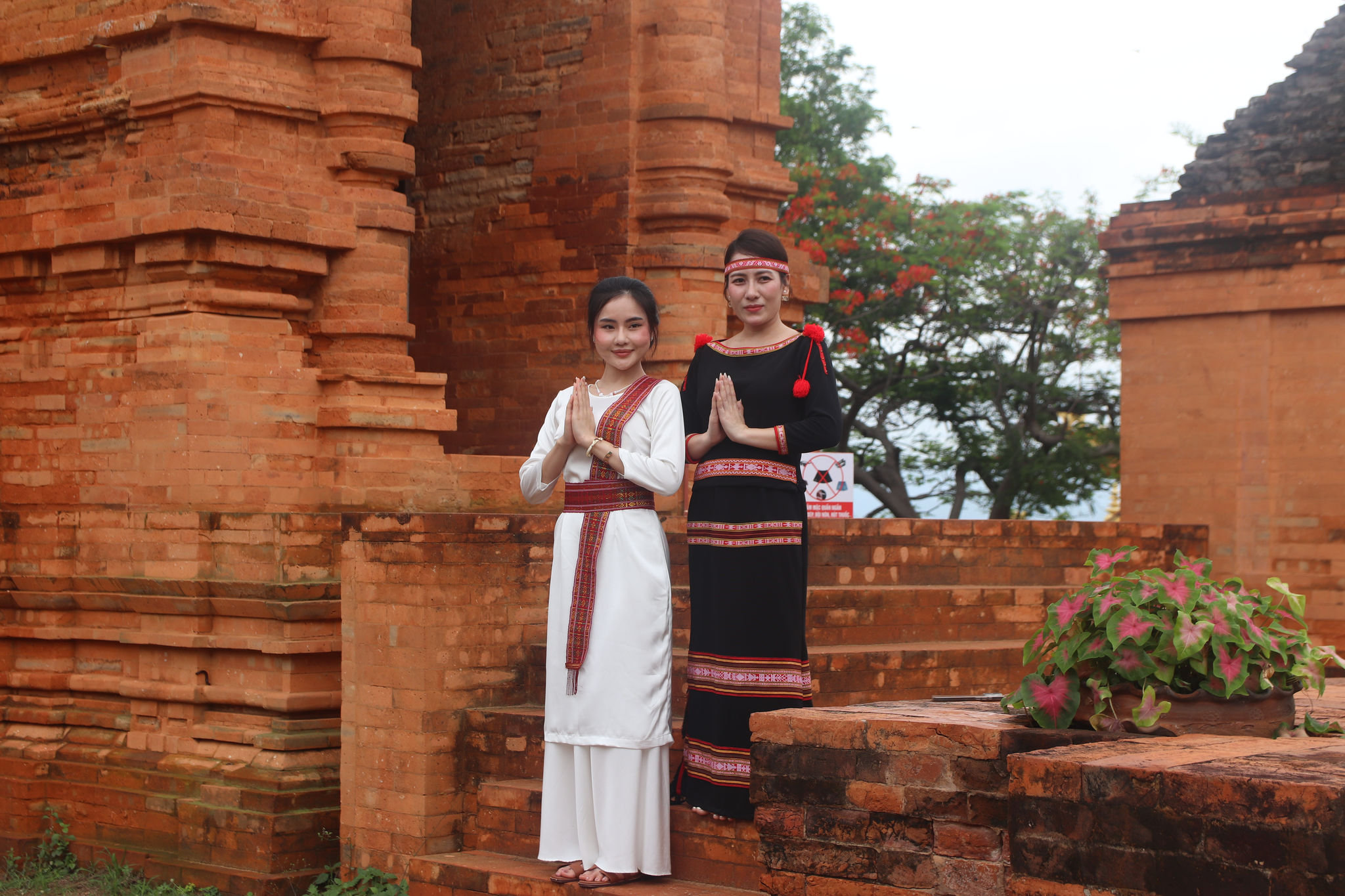
Set against the backdrop of the centuries-old sacred site, Cham dancers execute traditional choreography characterized by fluid, precise movements. These heritage dances transcend artistic display, serving as historical records that convey tales of manual labor, spiritual beliefs, sacred rituals, and the enduring aspirations of the Cham community across generations.
Onlookers routinely document the performances on mobile devices, with several individuals frequently joining the performers to engage directly with the artisans. This interactive element effectively bridges the gap between historical scholarship and lived reality, rendering Cham culture accessible and immediate.
Ba Sinh Ty, a veteran performer with the Cham folklore ensemble at the Po Sah Inu site, expressed deep pride in his work. He remarked that each performance staged at the base of the ancient towers offers an invaluable opportunity to preserve and introduce the refined cultural elements of the Cham people to a global audience.
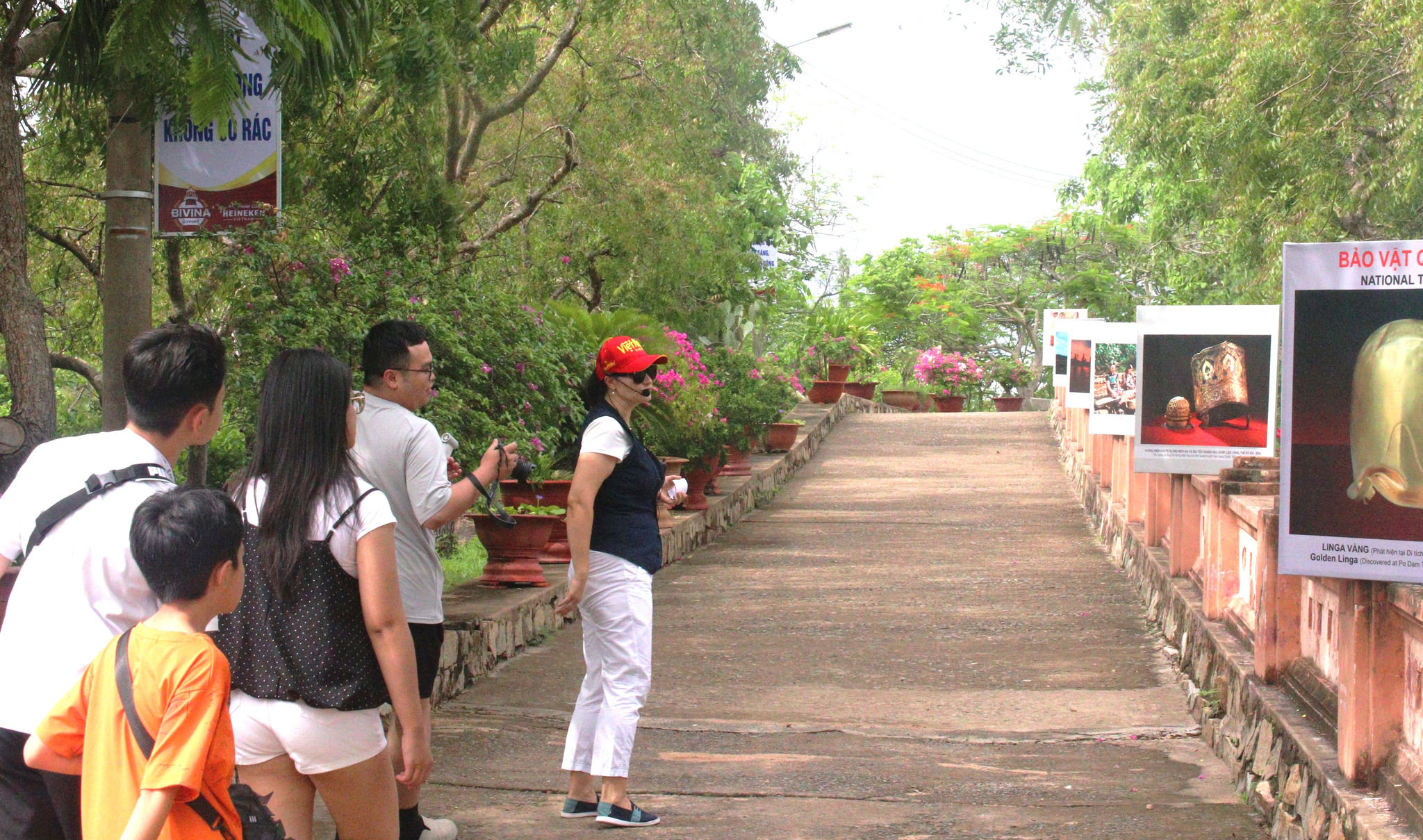
The Po Sah Inu Cham Towers site is executing a transition from a static historical-architectural monument into a dynamic, open-air cultural hub. This model enables visitors to study history, experience performing arts, and engage with local identity in an integrated environment.
The institutional willingness to modernize curation and performance styles serves a dual purpose: it drives seasonal tourism traffic during the summer months and establishes a sustainable framework for heritage preservation. Consequently, this strategy positions the monument as a critical cultural anchor along the broader travel corridor leading to the Mui Ne National Tourism Area and other regional explorations.
Architecturally and artistically, the Po Sah Inu Cham Towers represent a primary physical manifestation of the historical depth of local Cham culture. The defining characteristic of the site remains the parallel coexistence of oral folklore traditions alongside verified archaeological data. This intersection of historical mysticism and physical evidence continues to sustain the long-term vitality and relevance of the heritage site.