


Supply Chain to Value Chain: A Strategic Transformation
Under its strategy to develop modern agriculture in the coming period, Lam Dong Province is focusing on transforming crop production from a supply chain to an industry value chain model, aiming to drive competitiveness and farmer profitability.
Boosting Science and Technology Transfer
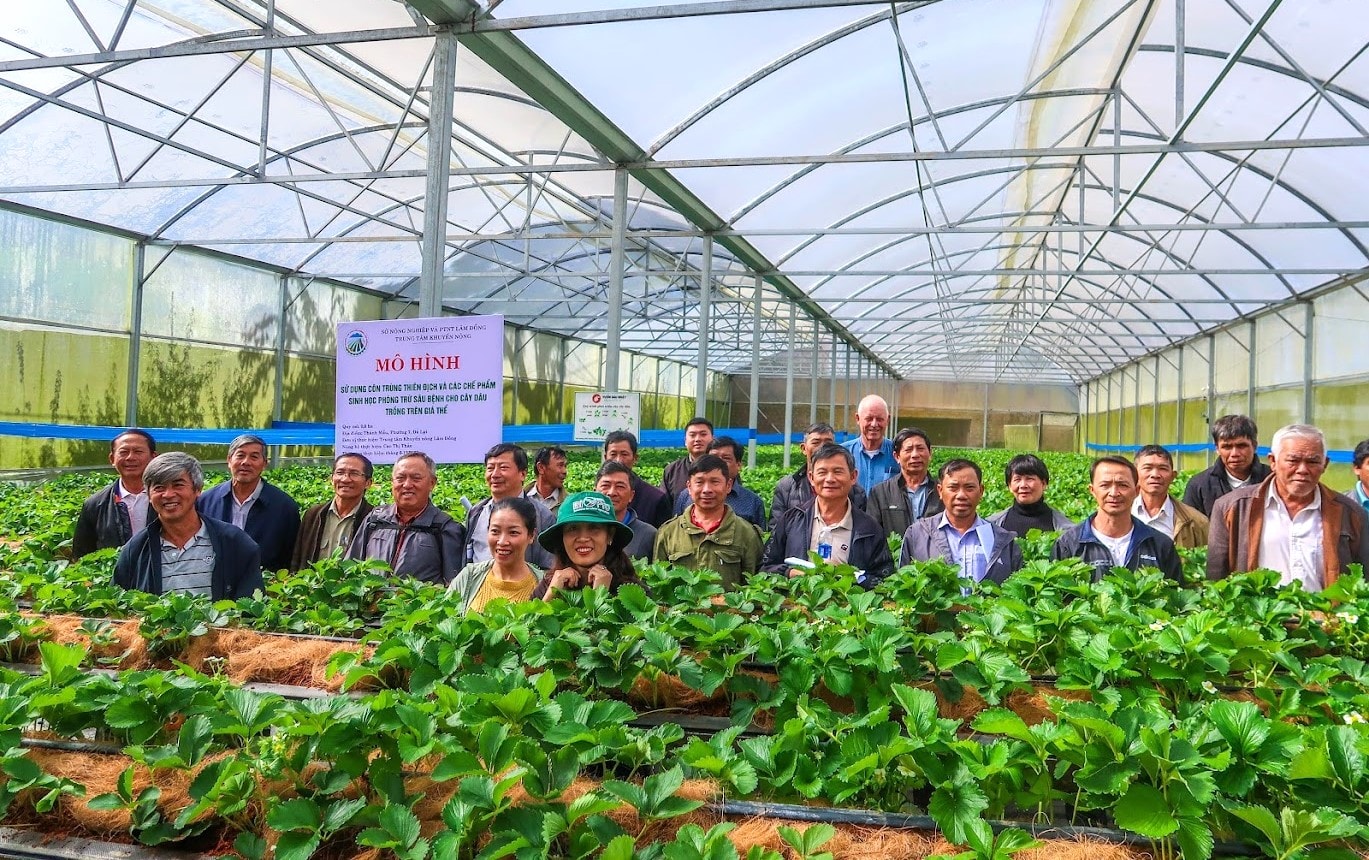
In 2025, Lam Dong implemented 26 models for transferring scientific and technical advances in crop cultivation, delivering tangible economic benefits. These models included producing new rice seed varieties, reducing seeding rates from 250–300 kg per hectare to 120 kg per hectare, applying advanced irrigation technologies, optimizing fertilization, lowering costs, and improving both yields and product quality.
The province also organized 83 technology transfer training courses, focusing on key crops such as VietGAP-certified macadamia, as well as sustainable coffee and durian production aligned with net-zero emission objectives.
As a result, by early 2026, Lam Dong’s high-tech agricultural production area reached 107,306 hectares, accounting for 10% of the province’s total cultivated area. Of this, 16 high-tech agricultural zones and nine high-tech agricultural enterprises were officially recognized, while smart agriculture covered approximately 1,200 hectares.
The province currently has more than 153,000 hectares certified for safe and sustainable production, including 23,489 hectares of VietGAP-certified vegetables, 126,278 hectares of 4C- and UTZ-certified coffee, and 4,024 hectares of organic vegetables. At the same time, 5,500 hectares of low-efficiency rice land have been converted to higher-value crops.
Mr. Phan Nguyen Hoang Tan, Director of the Lam Dong Department of Agriculture and Environment, added that the province has been granted 963 export-oriented planting area codes, covering a total area of 39,363.3 hectares. Specifically, there are 587 codes for dragon fruit (26,032 hectares) and 337 codes for durian (13,127 hectares), accounting for 97.6% and 59.5% of the total cultivated area and the commercial production area, respectively.
In addition, 338 packing facility codes have been issued for exports to major markets such as China, Australia, New Zealand, the United States, the European Union, Switzerland, South Korea, and Japan. Meanwhile, 271 domestic planting area codes have been granted, covering 2,638 hectares of various crops, including vegetables, rice, durian, pomelo, longan, mango, melon, apple, jackfruit, grapes, dragon fruit, cashew, coconut, and spice crops.
Linking Processing to Key Markets
The Huynh Thi Thom agricultural value chain in Duc Trong Commune is a typical example of production under VietGAP and GlobalGAP standards, featuring standardized pre-processing and processing procedures that comply with HACCP requirements and TCVN 11892-1:2017.
With exports accounting for around 90% of total output, the value chain has stabilized annual consumption of thousands of tonnes of fresh and processed agricultural products—including frozen and dried goods—across key international markets after more than a decade of development.
To create raw material zones based on agricultural value chains under VietGAP and GlobalGAP standards, the chain has connected hundreds of farming households and cooperatives. These zones include 80 hectares of watermelon (250 tonnes/year), 70 hectares of passion fruit (300 tonnes/year), 50 hectares of dragon fruit (150 tonnes/year), 30 hectares of pineapple (500 tonnes/year), and 20 hectares of durian (150 tonnes/year).
Provincial data show that Lam Dong currently has more than 508 establishments involved in linked chains for processing, packing, and preliminary processing of agricultural products, with a total annual output exceeding 1.5 million tonnes. Approximately 10% is exported, while the remaining 90% serves major domestic markets.
According to the Department of Agriculture and Environment, as of early 2026, the province boasts 900 entities listing 2,072 products on the e-commerce portal www.nongsandalatlamdong.vn. Furthermore, the province continues to support enterprises in expanding their reach onto global e-commerce platforms such as Alibaba, Tridge, and Gobiz. These initiatives aim to diversify distribution channels and elevate the brand recognition of Lam Dong’s agricultural products across key domestic and international markets.