


Sustainable Coffee Farming Helps Lam Dong Maintain Access to the EU Market
Faced with increasingly stringent market requirements, particularly the European Union Deforestation Regulation (EUDR), Lam Dong Province is stepping up sustainable coffee farming, with tens of thousands of farming households joining efforts to maintain the province’s access to key export markets.
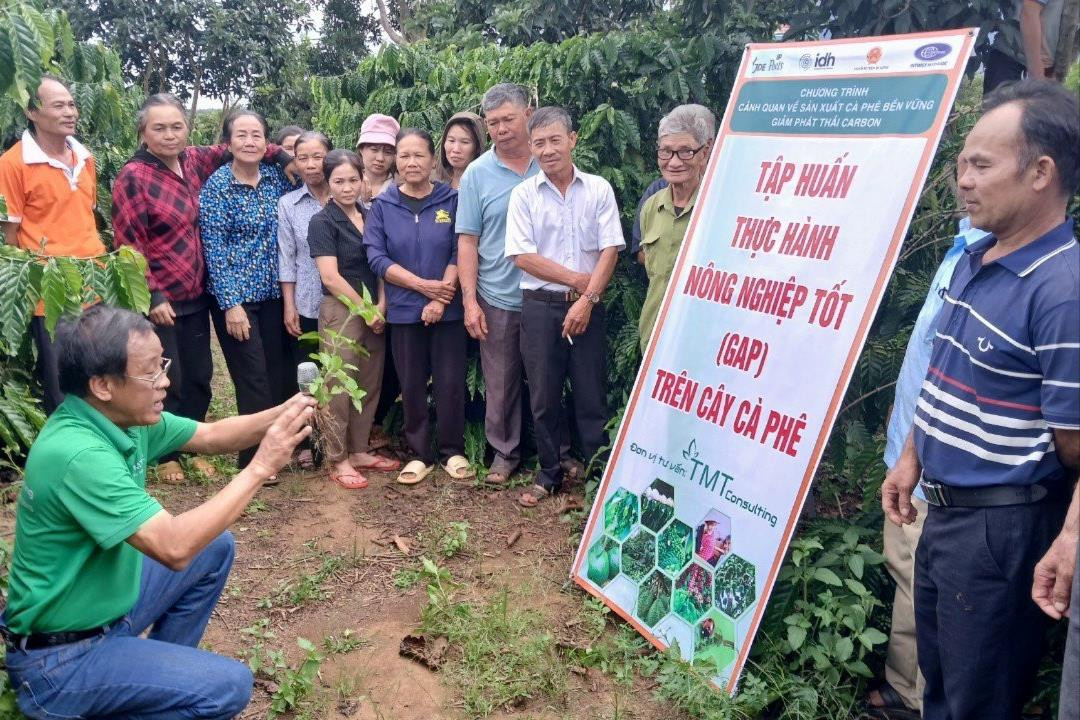
Adapting to Protect Export Market Access
In recent years, Lam Dong’s coffee industry has faced numerous challenges amid increasingly stringent market requirements, most notably the EU Deforestation Regulation (EUDR). The regulation requires exporters to prove that their products are not linked to deforestation after 2020.
In response, the province’s agricultural sector has worked with enterprises to implement sustainable production programs, including a flagship low-emission coffee production project designed to meet EUDR standards, with the participation of about 10,000 households.
At the recent “Coffee Farmers’ Festival” in Quang Son Commune, K’Mbai, a resident of Bon N’ting, said: “Since attending the training sessions, I have learned how to balance nutrients and practice intercropping with shade trees. As a result, my coffee yields have stabilized, and production costs have fallen significantly.” Previously, relying solely on traditional experience was costly and inefficient.
Now, with 1.5 hectares of coffee, his family has escaped poverty and is gradually achieving prosperity. According to Nguyen Thanh Tam, Director of TMT Consulting JSC, the EUDR is not merely a technical barrier but also an opportunity to restructure the coffee industry. When farmers change their production practices and meet requirements for traceability and forest protection, the value of their products can be enhanced.
In practice, participation in the supply chain provides farmers with technical support and secure market outlets. Many enterprises have committed to purchasing certified products at premium prices, creating strong incentives for local farmers to maintain sustainable production.
New farming models, including intercropping, the use of organic fertilizers, and Integrated Pest Management (IPM), have also helped reduce input costs by 15–20% while increasing yields by 10–15%. These outcomes are important factors in giving farmers greater confidence to continue sustainable production.
An Inevitable Path for the Coffee Industry
According to a representative from the Department of Agriculture and Environment, compliance with the EUDR has become an inevitable global trend. In recent times, the sector has worked with enterprises and consultancy firms to organize training sessions, helping farmers adopt sustainable cultivation techniques while developing a database of cultivation areas to support traceability.
To date, hundreds of models have been implemented, with sustainable practices adopted on about 800 hectares and another 600 hectares transitioning to new standards. These efforts have helped increase incomes by 15–20% and cut emissions by 10%. The initiative has also provided seedlings for 600 hectares and established eight common-interest groups, collaborative groups, and cooperatives.
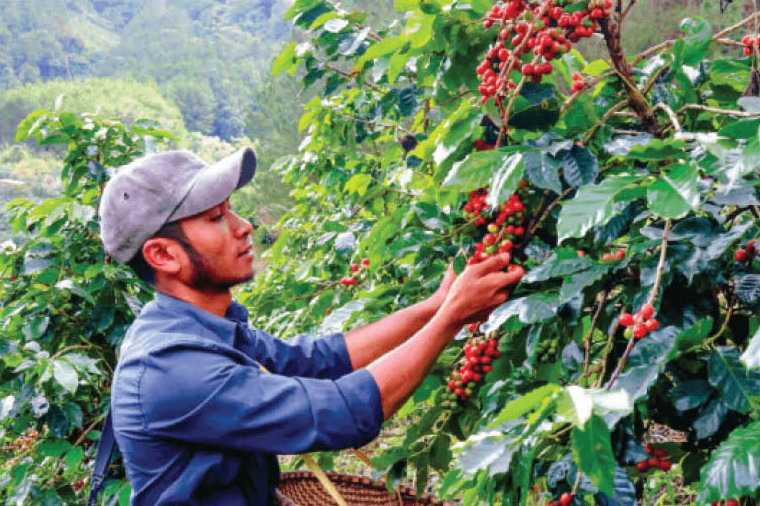
In regions such as Nam Ban, Di Linh, Nam Nung, Quang Phu, and Quang Son, farmers are shifting their focus toward improving productivity and quality rather than expanding cultivation areas, helping reduce pressure on forest resources.
According to Nguyen Van Chương, Director of the Lam Dong Agricultural Extension Center, various coffee certification programs—including Rainforest Alliance, UTZ, Fair Trade, and Organic—have been introduced in coffee-growing regions in recent years, helping farmers improve production efficiency while protecting the environment.
Producing coffee that is not linked to deforestation is not merely an immediate response to market regulations but also a long-term strategic direction. This approach allows Lam Dong’s coffee industry to develop sustainably by balancing economic growth with the preservation of forest resources.
Lam Dong currently has 327,000 hectares under coffee cultivation, accounting for 45.02% of the country’s total coffee area. Coffee output in 2025 is estimated to exceed 1 million tons, contributing 50.49% of Vietnam’s total coffee production. The province also has six recognized high-tech agricultural zones for coffee production, covering more than 2,268 hectares and involving partnerships with 1,404 households.