


Sustainable Macadamia and Coffee Intercropping
Farmers in the coffee-growing region of Di Linh are gradually shifting from traditional production to organic-oriented cultivation. Support from scientists is helping farming households gain better access to sustainable cultivation techniques.
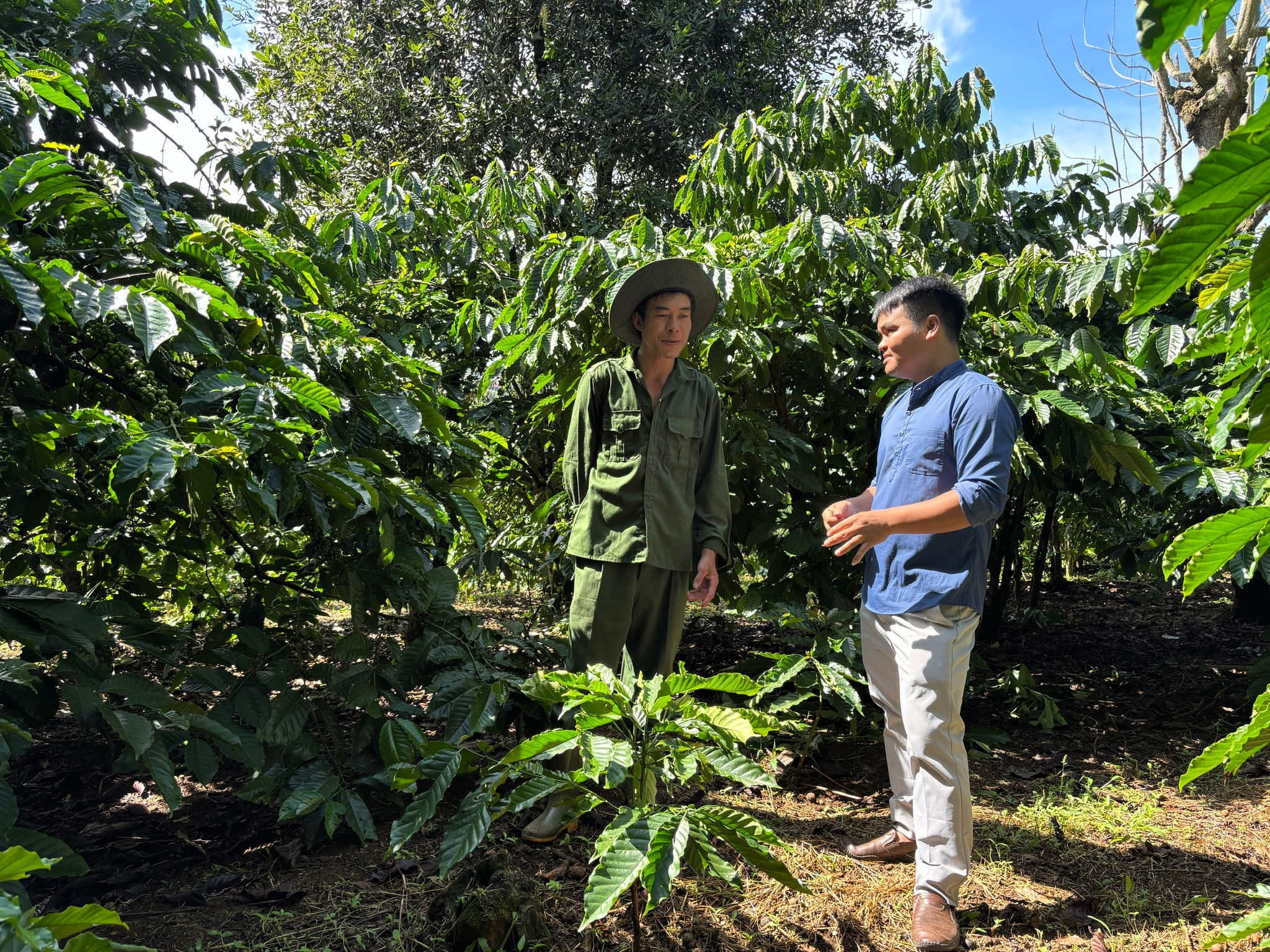
Vong Vinh Duc, a farmer in Lien Dam 3 Village, Di Linh Commune, owns a coffee orchard established before 2000. Among the coffee trees, Duc has planted dozens of macadamia trees—a high-value crop that also provides effective shade and protection from wind. "I am participating in the project on growing and caring for organic macadamia organized by the commune. I have also attended many training sessions, where technical officers provided guidance on caring for, fertilizing and pruning macadamia trees as well as tending to the intercropped coffee plants to ensure good yields and quality," Duc said. He added that his macadamia trees were planted in 2010, are now 16 years old, provide very good shade for the coffee orchard, and produce annual harvests.
K'Minh, Vice Chairman of the Farmers' Association of Di Linh Commune, said farmers in the commune's villages are participating in a project titled "Building a macadamia production model according to organic standards associated with a consumption linkage chain in the area," implemented by the Lam Dong Agricultural and Forestry Experimental Research Center under the Tay Nguyen Institute for Agricultural and Forestry Sciences and the provincial Department of Science and Technology. Alongside macadamia cultivation following organic standards, coffee cultivation using organic practices is also being promoted. According to K'Minh, farmers in Di Linh Commune usually do not grow macadamia separately but intercrop it in coffee orchards, using it to provide shade and diversify crops and sources of income.
"Farmers' feedback on sustainable macadamia and coffee intercropping is very positive. This practice both reduces the amount of fertilizer needed and creates a suitable growing environment for coffee plants. Coffee plants prefer diffuse light and can be severely affected by strong winds. Growing macadamia creates shade, reduces weeds, and acts as an effective windbreak. Farmers also have an additional source of income during the year, no longer depending solely on coffee," said Doan Van Duan, former regional agricultural extension officer in Lien Dam.
According to Duan, Di Linh farmers have recognized the effectiveness of intercropping macadamia with coffee, especially in creating a suitable growing environment for coffee plants to develop sustainably. Vong Vinh Duc's family not only cultivates macadamia and coffee but also owns equipment for cracking and drying macadamia nuts for sale. Carrying out production, harvesting and processing locally helps ensure a stable market for macadamia nuts.
Dr. Le Quy Tuy, Director of the Lam Dong Agricultural and Forestry Experimental Research Center, said: "Di Linh is an important coffee-growing region. We are implementing an organic macadamia cultivation project in cooperation with the Department of Science and Technology to help farmers develop another economically viable intercrop. Macadamia trees have grown well in Di Linh for many years, and guiding farmers in organic macadamia and coffee cultivation will help Di Linh's coffee region develop sustainably, generate long-term economic benefits for farmers and enhance the local landscape."
Dr. Le Quy Tuy also stated that in addition to implementing the model in several orchards, technical officers are providing training to many farmers so that they can grow coffee and macadamia sustainably over the long term.