


Tay and Nung People Preserve the Soul of Their Traditional Cuisine
In Quang Son Commune, Lam Dong province, for generations, the Tay and Nung ethnic communities have persistently preserved their traditional cuisine, viewing it not only as a cultural hallmark but also as a bond that connects the community and strengthens neighborhood ties.
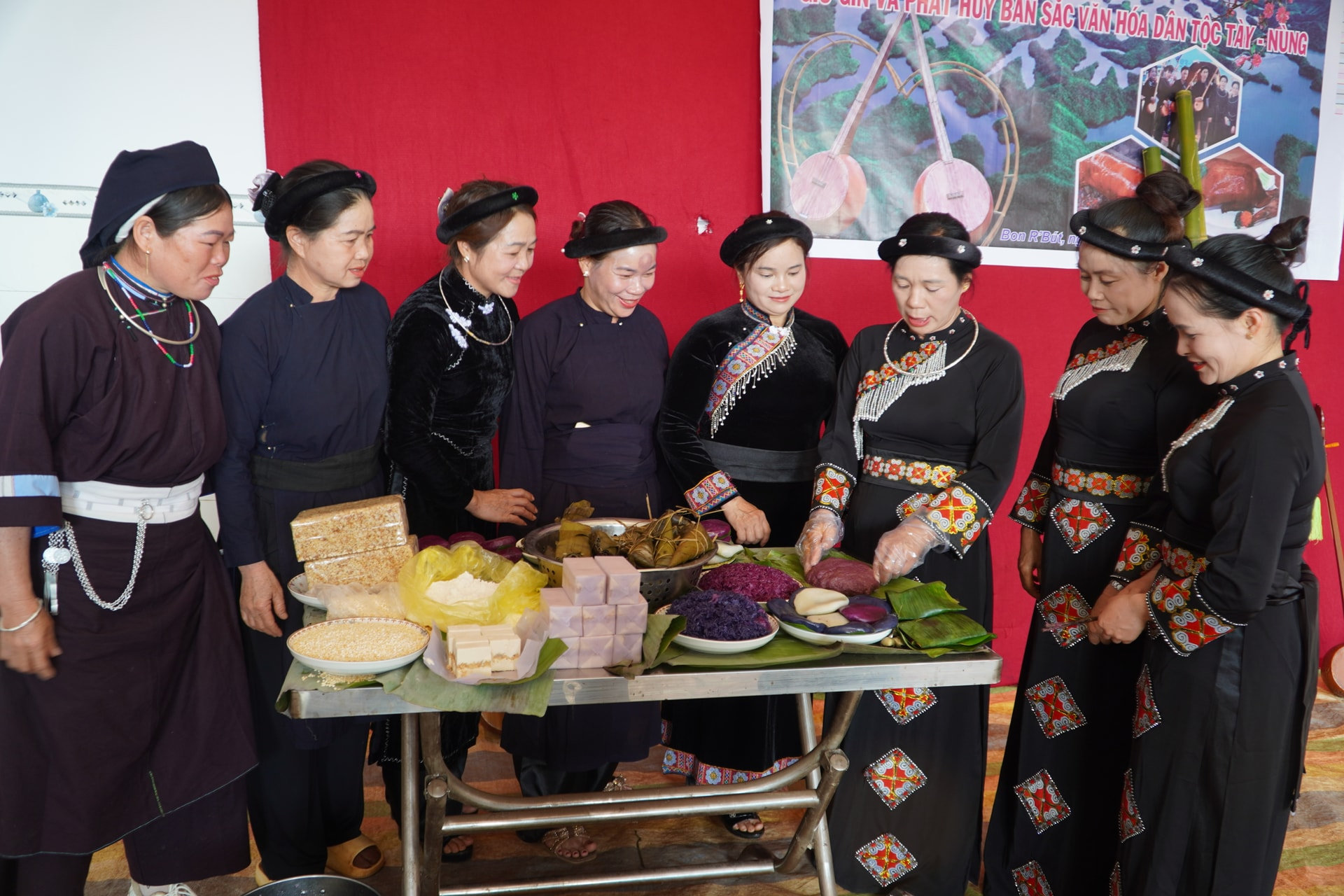
R’but hamlet has long been home to many Tay and Nung families. During festivals, Tet, or significant community events, villagers gather to prepare ceremonial trays, recreating a vibrant culinary space rich in ethnic identity. On the occasion of the Lunar New Year of the Horse 2026, the atmosphere in the hamlet became even more lively as people of all ages joined hands in making traditional cakes and preparing offerings.
From washing glutinous rice leaves, grinding beans, roasting sesame seeds to pounding sticky rice cakes, every step is carried out with care, like a ritual passed down through generations. According to Ms. Be Thi Luan, preparing the ceremonial trays together is not only for offering to ancestors but also an opportunity to strengthen community bonds and remind younger generations of their roots.
On the ceremonial trays of the Tay and Nung people in R’but, traditional cakes such as banh khao, banh it la gai (ramie leaf cake), banh giay (glutinous rice cake), horn-shaped cakes and khau si are indispensable. The ingredients are simple and familiar, including glutinous rice, ramie leaves, mung beans, black sesame, peanuts and purple sticky rice leaves.
Through the skillful hands of local women, each cake takes on a distinctive flavor of its own. While banh it la gai is often used in the seventh lunar month ceremony to show respect to ancestors, banh giay appears at weddings, full-month and first-birthday celebrations, symbolizing fullness and completeness. Horn-shaped cakes are associated with milestones in a child’s early life, while banh khao is an essential offering during Tet, expressing wishes for a peaceful and prosperous new year. “Each cake carries its own meaning, linked to specific rituals in spiritual and community life,” Ms. Luan said.
Beyond cakes, festive meals of the Tay and Nung in R’but are also rich with traditional dishes such as khau nhuc (braised pork), roast pork, roast duck, chicken and purple sticky rice. Ms. Vi Thi Dich shared that khau nhuc is the most elaborate dish, requiring a full day and night of preparation, reflecting the host’s hospitality. Each dish represents a combination of experience, refinement and the heartfelt care of the cook.
Notably, these culinary values are not only preserved within families but are also naturally passed down to younger generations. Through making cakes and preparing meals together, children learn cooking skills while also gaining a deeper understanding of customs, traditions and their ethnic roots. In this way, cuisine becomes a “soft thread” connecting generations and helping cultural identity endure over time.
Amid the rapid changes of modern life, the fact that the Tay and Nung people in R’but continue to preserve the soul of their traditional cuisine stands as vivid evidence of the enduring vitality of ethnic culture, contributing to the rich and diverse cultural landscape of Quang Son today.