
Technology Touching Everyday Life
With the largest natural area in the country and a population ranking 12th nationwide, Lam Dong has emerged as a dynamic “living laboratory” for applying science, technology and innovation. In recent years, the province has mobilized intellectual resources to address challenges unique to its diverse geography, spanning highlands, mountains, coastal plains and island areas.

Practical breakthroughs taking shape
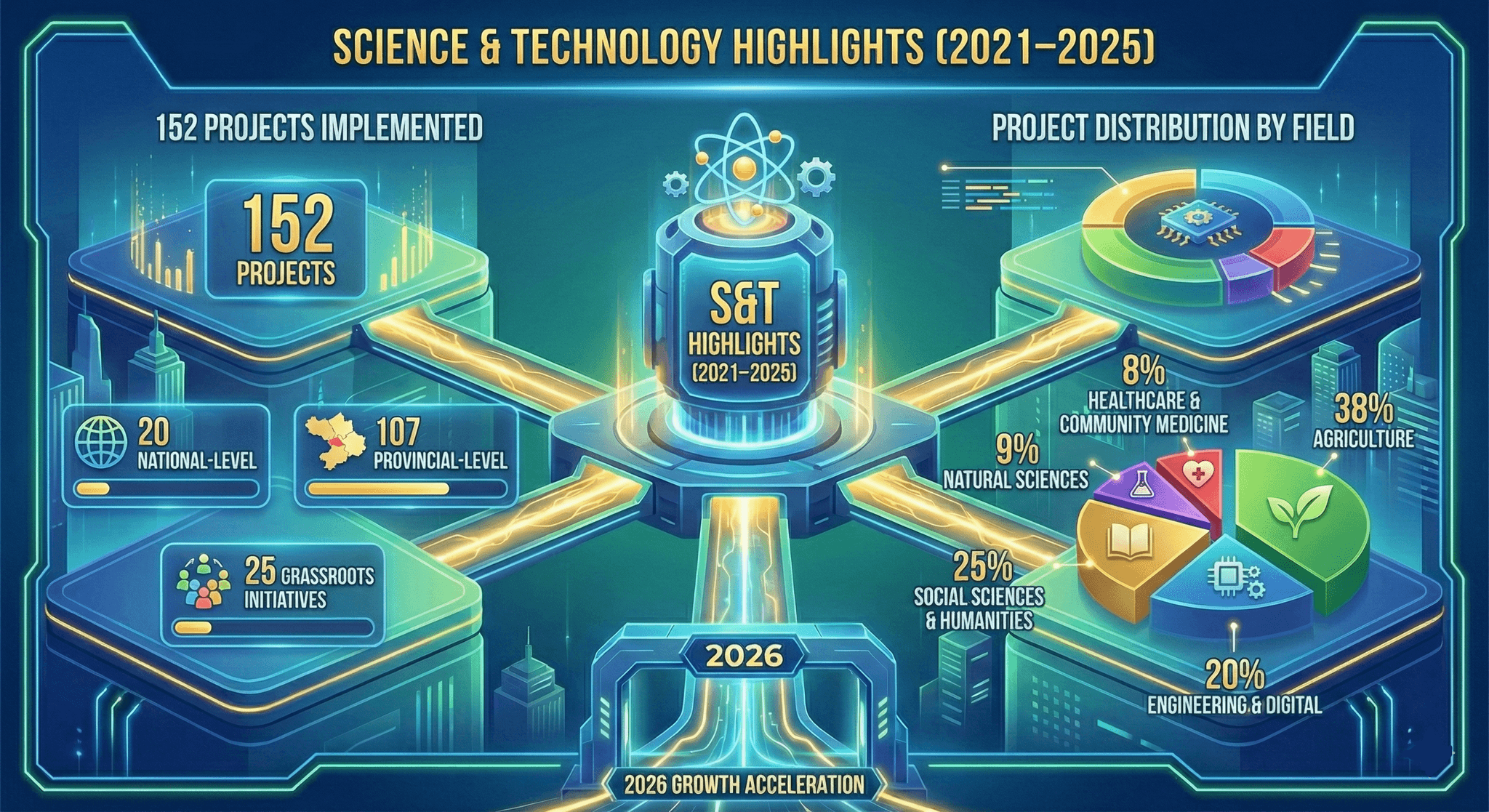
According to Nguyen Hoai Trung, Deputy Director of the Department of Science and Technology, scientific and technological advances have become visible across many aspects of daily life over the past five years. A total of 152 research projects — including 20 at the national level — have helped form a multidisciplinary innovation ecosystem. Agriculture accounts for 38% of these initiatives, reflecting a shift from traditional production toward a sustainable agricultural economy. High-tech models such as organic Laba banana cultivation in Lam Dong and intensive apple, grape and aloe farming in Binh Thuan have demonstrated strong efficiency in resource optimization and value creation.
The application of geospatial technology to develop risk zoning maps for coffee-growing areas has also become a strategic tool, enabling local agricultural products to meet strict European Union Deforestation Regulation (EUDR) requirements and access demanding export markets.
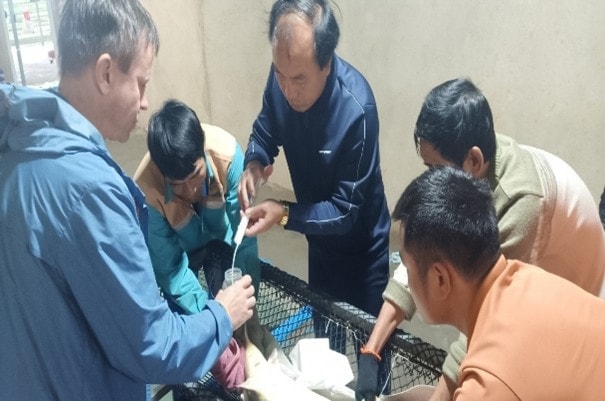
Advances in livestock and aquaculture have been driven by the integration of modern technology with indigenous genetic resources. Mastering cryopreservation techniques for Russian and Siberian sturgeon sperm, alongside freshwater pearl farming models, has opened new economic prospects for marine and inland water sectors. Meanwhile, beef cattle farms are adopting closed housing systems with full automation — from feeding to waste treatment — forming a circular production model that enhances environmental sustainability.
Beyond economic sectors, social sciences and humanities have played a crucial role in preserving cultural heritage. The application of 4.0 and 3D technologies at Lam Dong Museum and the Cat Tien Archaeological Site has transformed static artifacts into interactive experiences, attracting visitors.
Cooperation between the Dak Nong UNESCO Global Geopark and the Vietnam Academy of Social Sciences further illustrates how scientific research supports community-based tourism linked to geological conservation. At the same time, the certification trademark “Da Lat – A Miraculous Crystallization from Good Land” has been registered in demanding markets such as Japan and South Korea, reinforcing the province’s global brand identity.
In healthcare, research into indigenous medicinal resources — including Ta Dung lingzhi mushrooms, pain-relief vines, and plants such as tongkat ali and curculigo — has been standardized for cultivation and processing into health-support products aimed at chronic disease management.
.jpg)
Driving transformation through digital technology
Despite these achievements, the Department of Science and Technology acknowledges several bottlenecks during the 2021–2025 period. While the number of projects is significant, truly transformative breakthroughs capable of reshaping the regional economic structure remain limited.
The adoption of AI and IoT technologies is still fragmented, with applications yet to cover the full value chain from production to consumption. Commercialization of research outcomes remains challenging, partly due to weak coordination among government agencies, scientists and businesses. Investment capital for large-scale infrastructure solutions — such as coastal erosion prevention or clinical trials for medicinal products — has not met actual demand, leaving many studies at the pilot stage.
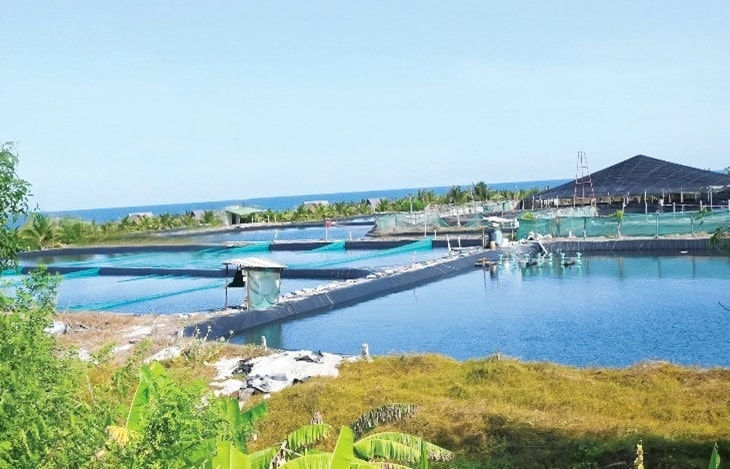
Looking ahead, Lam Dong has identified science, technology and digital transformation as core drivers of sustainable socio-economic development in a new era. The province plans to refine legal frameworks, particularly by localizing the 2025 Law on Science, Technology and Digital Transformation.
A key breakthrough lies in establishing venture capital mechanisms to support bold startup ideas, alongside the development of specialized innovation centers focusing on high-tech agriculture and tourism digitalization. Research priorities will be defined across agriculture, engineering and technology, natural sciences, healthcare, and social sciences and humanities.