


Technology Transfer Boosts Agricultural Processing and Preservation in Lam Dong
The southeastern region of Lam Dong Province is home to numerous farms, cooperatives, and households producing a wide variety of agricultural products each year.
.jpg)
Enhancing the value of these products through modern processing and preservation technologies has become a growing focus for local producers. Recently, the Provincial Center for Science and Technology Application held a conference introducing new technologies and equipment for agricultural and food processing—providing farmers and cooperatives with valuable updates and practical solutions.
At the event, Dr. Tran Chi Thanh from Sac Moc Tinh Co., Ltd. (Ho Chi Minh City) shared innovative and cost-effective technologies for processing agricultural products and by-products. He explained the scientific principles behind these techniques, including the alkaline pH neutralization of bitter or astringent components in fruit peels such as jackfruit latex, orange, tangerine, apple, and pear skins. The process applies enzyme-based treatment at 100°C for 1–5 minutes, followed by rapid cooling, drying, and sun exposure, effectively removing microorganisms and preventing mold growth.
Solar Drying Technology with Automatic Heat Compensation
To ensure consistency, the new technology integrates solar-powered drying houses with automatic electric heat compensation and moisture separation systems. The design features solar heat traps placed above dryers or on factory rooftops, incorporating UVC sterilization and automated control systems for temperature regulation and hygiene assurance.
A 60-square-meter drying house can process up to 200 kilograms per batch, maintaining nutritional content while ensuring uniform drying. This multi-purpose solar drying system is energy-efficient, reduces emissions, and delivers products that retain their natural shape, color, and flavor, while ensuring food safety, longer shelf life, and lower labor costs.
Compared to traditional methods—such as open-air sun drying (requiring large areas and vulnerable to weather and contamination), energy-intensive freezing, or fuel-based heating—the new system is faster, cleaner, and more sustainable.
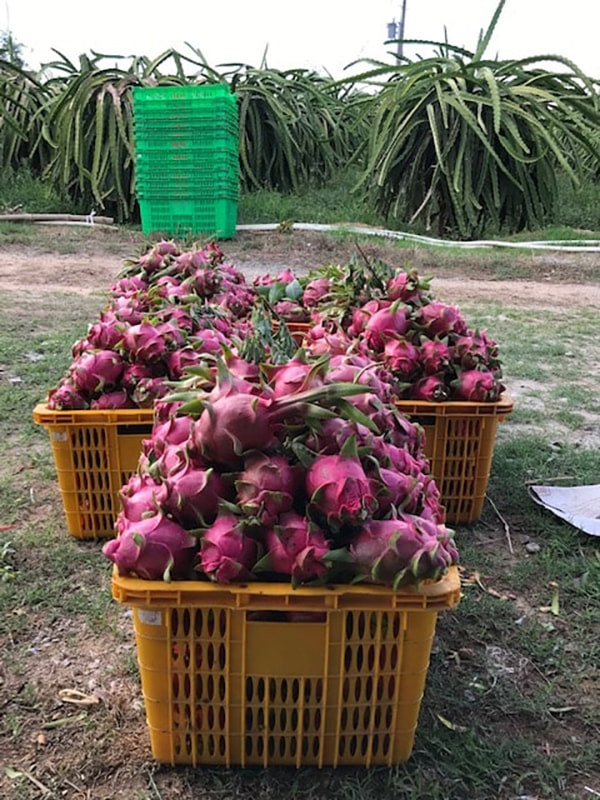
According to Dr. Thanh, “The solar-powered drying houses with automatic heat regulation are ideal for processing a range of products in southeastern Lam Dong—such as candied dragon fruit peel, pomelo peel, dried mango and longan, cashew nuts, and processed goods like winter melon tea and white dried young jackfruit. Additionally, the bio-lipid coating technology, combined with nano-silver sterilization, reduces oxygen and cold exposure, allowing fresh fruit to be preserved for 1–3 months at 4°C.”
Recently, through an order from the Suoi Da Organic Dragon Fruit Cooperative (Ham Thuan Bac), Sac Moc Tinh Co., Ltd. successfully transferred and installed a 100-ton capacity cool storage system for dragon fruit, facilitating exports to China.
The introduction and transfer of advanced technologies in agricultural and food processing play a vital role in improving post-harvest quality, expanding production of key local products, diversifying goods for both domestic and export markets, and ultimately raising farmers’ incomes while promoting sustainable agricultural development in Lam Dong.
Nguyen Van Trung, Deputy Director of the Provincial Center for Science and Technology Application