


The Appeal of a Miniature Central Highlands
After more than three years of renovation, the Central Highlands Biological Museum reopens with a modern display space showcasing a miniature highland world.
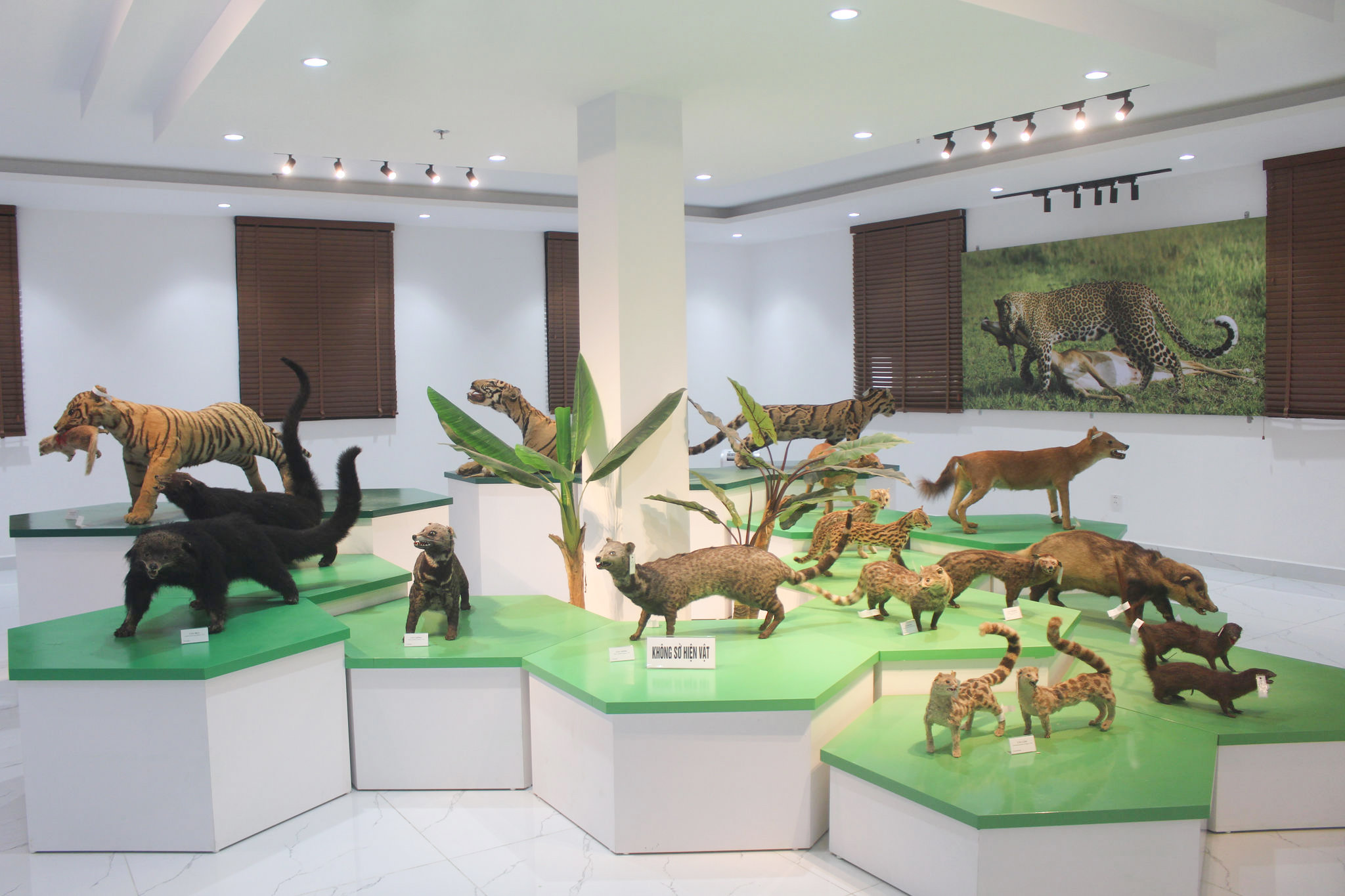
Bringing science closer to the community
Located on Tung Lam Hill in Lang Biang - Da Lat Ward, the Central Highlands Biological Museum, under the Institute of Life Sciences of the Vietnam Academy of Science and Technology, stands out with its historic stone architecture built by the French in the 1940s.
Established in 1990, the Central Highlands Biological Museum conducts research, collects, preserves and displays specimens of organisms and natural resources. It also carries out basic surveys, conservation, technology application and transfer, science and technology consultancy, and human resource training.
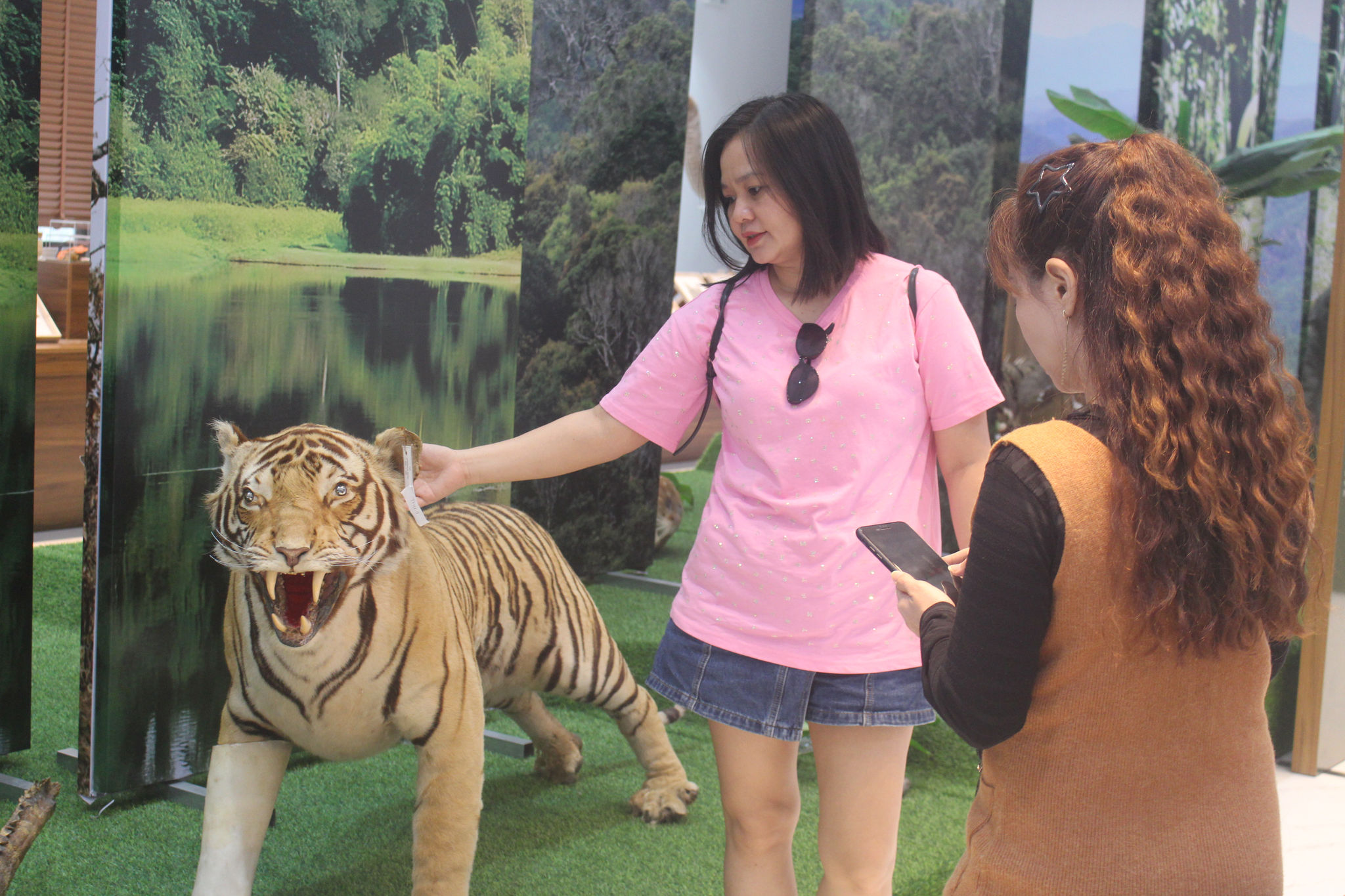
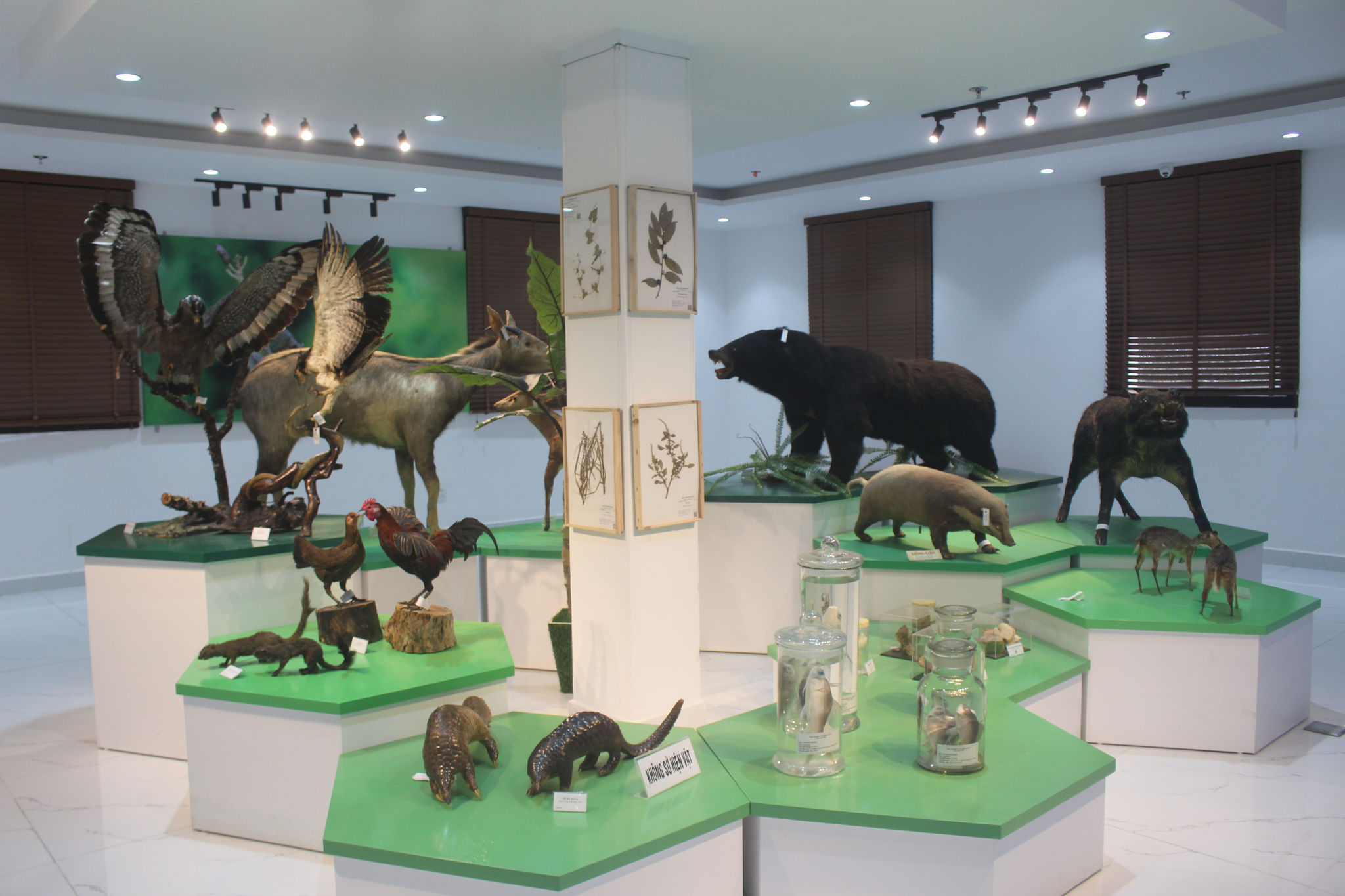
After suspending operations in 2022 for repairs, upgrades and the reorganization of its specimen collection, the museum has now reopened with a new appearance. More than 10,000 original specimens of mammals, birds, reptiles, insects, fish, amphibians, plants and fungi represent the results of years of research, collection, preservation and supplementation by scientists. Among them are 2,160 newly added biological specimens characteristic of the Central Highlands, creating a “treasure trove” of biodiversity.
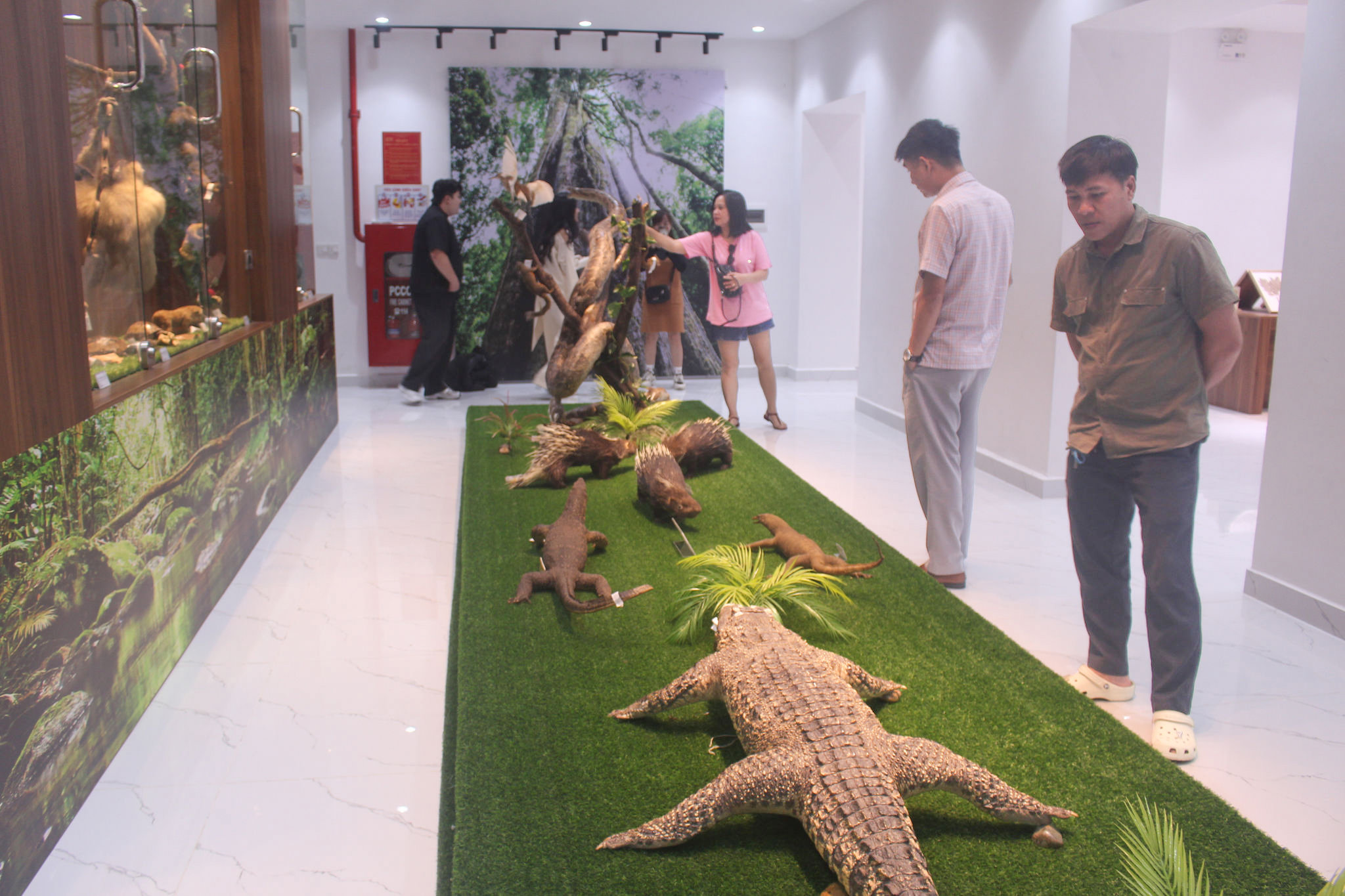
Walking into the museum, visitors may feel as if they are entering miniature forests. From giant elephants, tigers, deer, pythons and clouded leopards to plants, fungi and birds, from dried leaves and flowers arranged in display frames to tree bark and wood grain, each specimen is positioned within an overall setting that evokes its natural habitat.
The appeal of a miniature highland world
The exhibition space is divided into five areas: Central Highlands, Mountains, Forests, People and Life. Each area helps visitors explore the natural world of the Central Highlands through its landscapes, terrain, ecosystems, local life and the relationship between people and nature.
The Central Highlands area presents an overall picture of the region’s landscapes, climate and ecosystems through a wide range of animal and plant specimens.
-68797e9fe2bc36fe36bd2e4b0180de8f.jpg)
Native birds, forest animals, flowers and plants, together with other specimens, take visitors deeper into the natural world. The highly visual arrangement means the specimens are no longer simply objects on display but become “characters” within the highland setting.
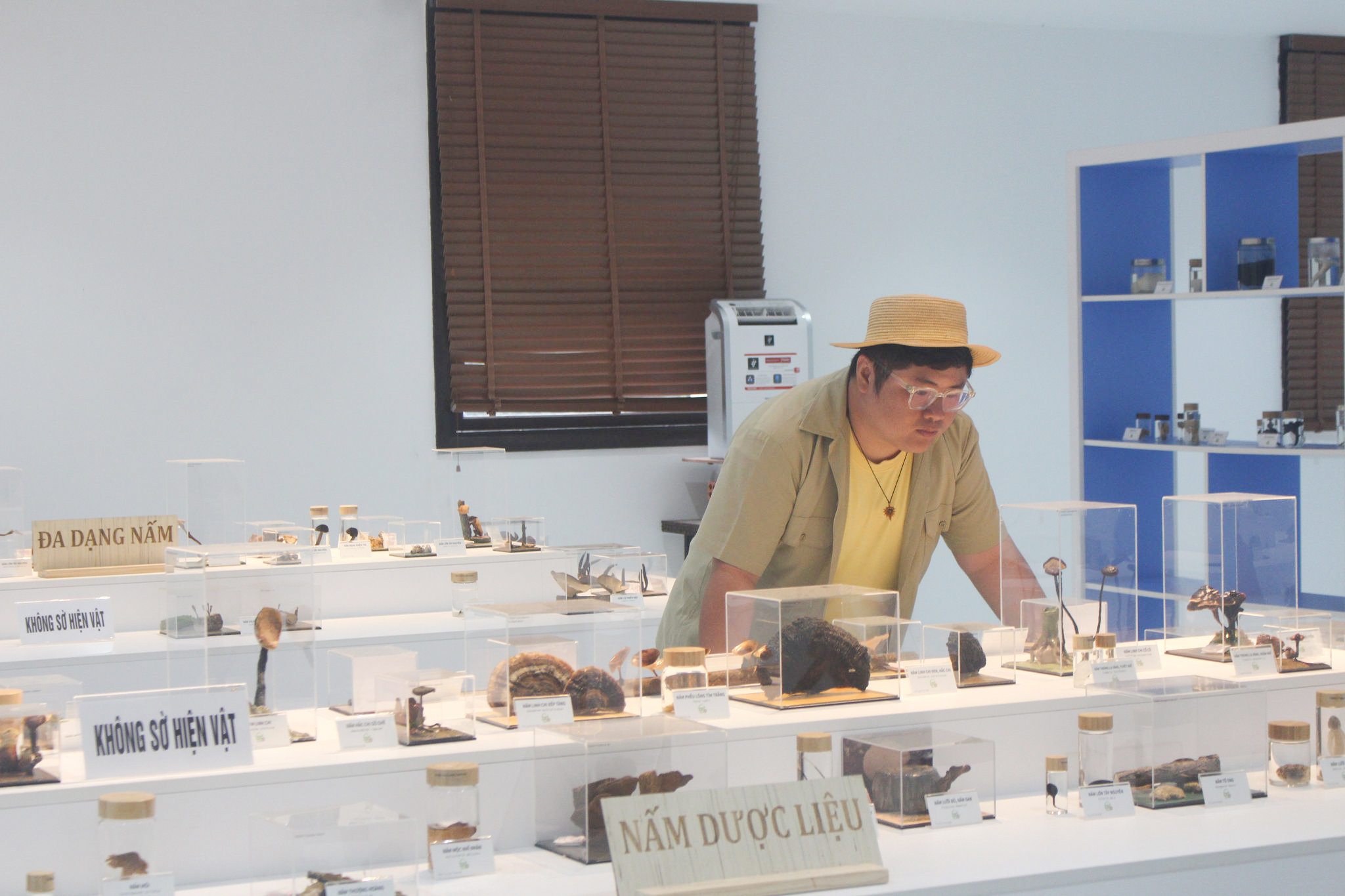
The “Mountains” area highlights the distinctive terrain that contributes to the Central Highlands’ unique climate and ecosystems. It shows how animal and plant species adapt to challenging natural conditions.
The “Forests” area presents distinct layers of ecosystems. At elevations above 1,500 meters are coniferous forests featuring species such as Podocarpus and two-leaved pine. Between 800 and 1,500 meters are evergreen broadleaf forests and open coniferous forests, home to valuable timber species such as Dillenia, Dialium, Aglaia and Parashorea. At lower elevations below 800 meters are deciduous dipterocarp forests, together with species from the dipterocarp family and red sến trees that can withstand harsh climatic conditions.
Changes in altitude are reflected in the selection and arrangement of specimens. The Central Highlands is therefore presented not as a single ecosystem, but as a multi-layered natural world in which each elevation and forest type creates its own community of organisms.
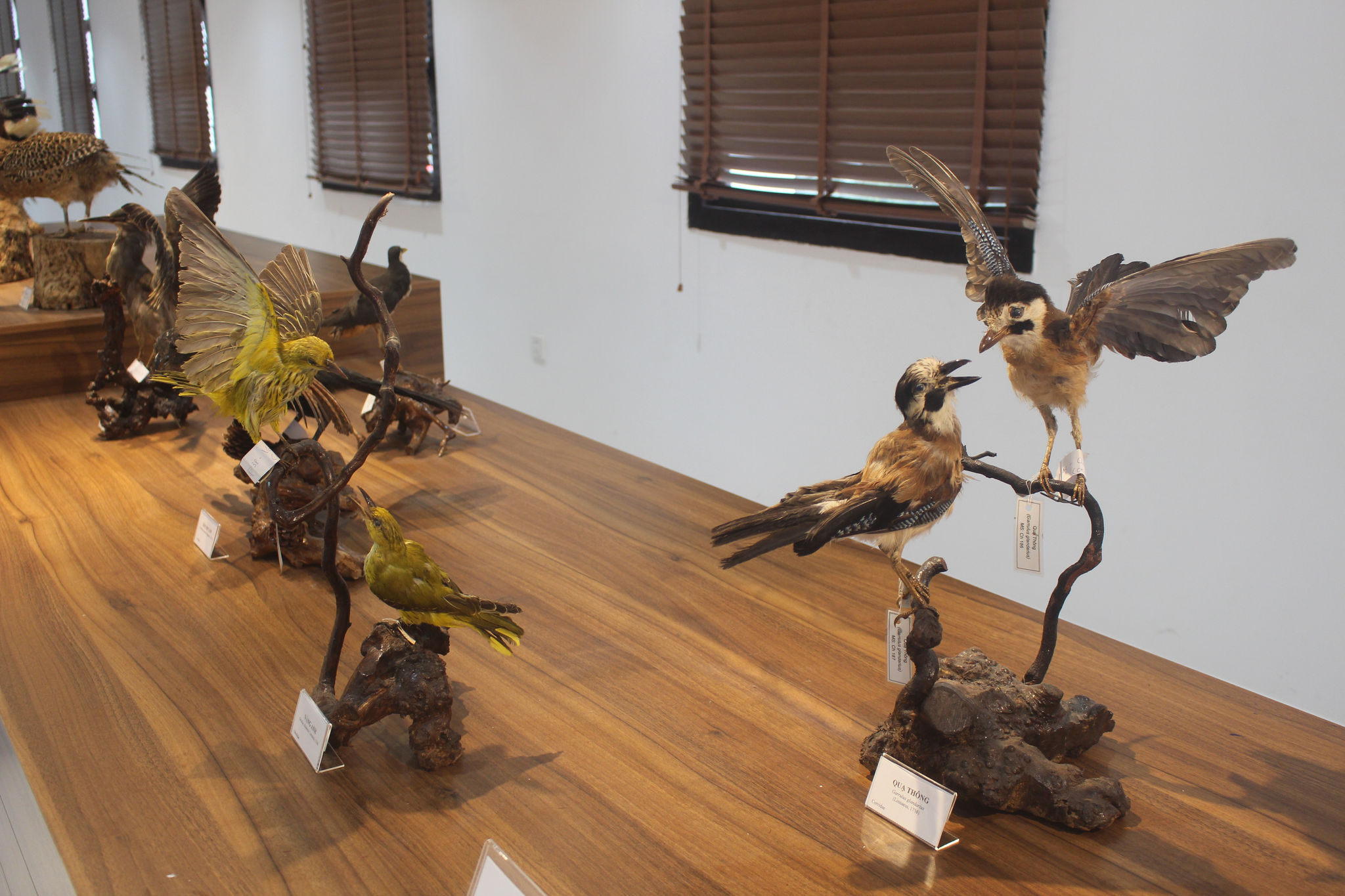
In the “People” area, communities from the Central Highlands are portrayed as an inseparable part of the region’s majestic natural environment and rich biodiversity. With distinctive cultural traditions and extensive indigenous knowledge, people who live with and depend on the forests are now working to protect them.
In the “Life” area, visitors continue to explore the diversity of life in the Central Highlands and learn how species interact and evolve. Food chains are recreated from plants and herbivores to omnivores, carnivores and decomposers. Models of animal and plant cells, bacteria and microscopes make abstract biological knowledge more accessible.
Films on evolution, evolutionary trees of native species and animal classification activities turn the exhibition into an interactive learning space where visitors can gain biological knowledge through observation and experience.
Inspiring greater love for forests
What makes the museum particularly engaging is that science is not presented in a rigid manner. Pressed and shaped leaves, collections of fungi in different forms and colors, and animal specimens arranged in simulated natural settings turn each exhibition area into an art installation.
Nguyen Hoang Hoa, a visitor from Can Tho, said she had been looking forward to the museum’s reopening for a long time.
I am very impressed by the animal and plant specimens characteristic of Central Highlands forests, including many rare and endangered species. There are many forest animals and birds that, as someone from the delta, I have seen for the first time. Visiting the museum has helped me visualize a majestic natural world. I feel a greater love for the green forests that shelter wildlife, and I realize even more clearly how important it is to conserve animal and plant species.
Nguyen Hoang Hoa, a visitor from Can Tho
Prof. Dr. Tran Tuan Anh, Vice President of the Vietnam Academy of Science and Technology, said bringing the museum back into operation helps connect scientific research with community education, thereby raising awareness of biodiversity and inspiring greater love for nature, particularly among young people.
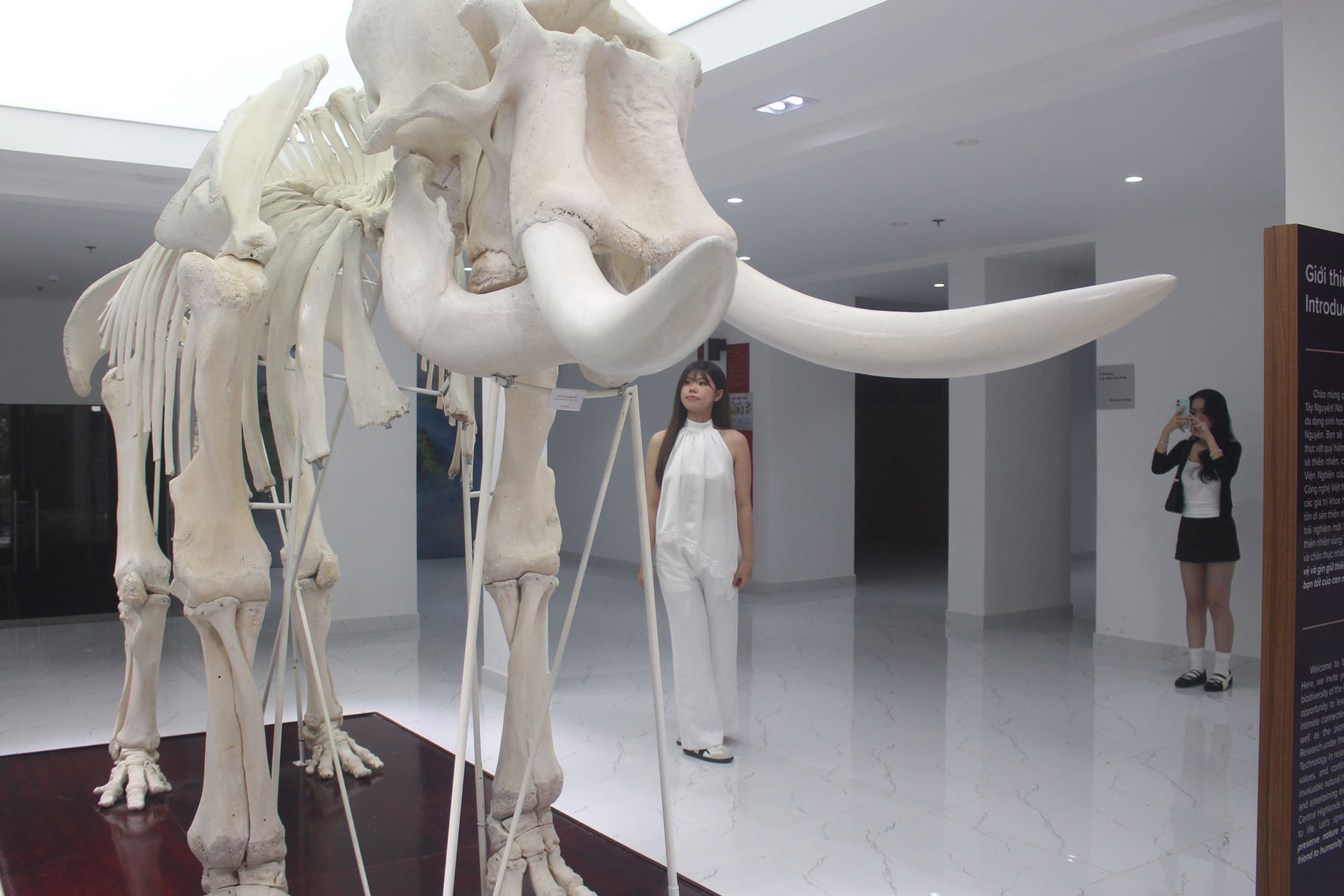
According to Ha Thanh Tung, Deputy Director in charge of the Central Highlands Biological Museum, the museum has attracted many visitors in the first two months since reopening, most of them young people.
The museum aims not only to showcase the richness of natural resources but also to help the community better understand the value of each species and the ecosystems to which they belong. From there, it seeks to foster awareness of environmental protection and the conservation of natural resources and forest ecosystems, encouraging collective action to keep the Central Highlands green for generations to come.