


The “Bridges” Preserving the Soul of Cham Culture
Amid the fast pace of modern life, as traditional values are increasingly at risk of fading, some individuals continue to quietly preserve the cultural identity of the Cham ethnic community.
.jpg)
With devotion, faith, and deep respect, these steadfast “bridges” are helping Cham culture remain vibrant and alive today.
More Than Two Decades Preserving a Traditional Craft
In the Cham village of Lam Thuan Hamlet, Ham Thuan Bac Commune, Lam Dong Province, the story of artisan Dong Gat stands as a vivid example of this enduring journey — a journey spanning more than two decades of creating products deeply rooted in Cham cultural identity.
.jpg)
For 25 years, Dong Gat’s weathered hands have not only produced ceremonial trays serving the spiritual life of the Cham people, but have also helped preserve traditional cultural symbols within the community’s sacred space. To him, each product is not merely an object, but a symbol of reverence and wholehearted devotion to the divine.
Though seemingly simple, the ceremonial tray carries profound spiritual meaning in Cham culture. It serves not only as a vessel for offerings, but also as a symbol of solemnity and reverence toward the divine.
Creating a single tray requires meticulous craftsmanship, patience, and absolute precision, especially during festival seasons when demand increases significantly.
Dong Gat shared that his passion for the craft began in childhood through observing elders in the village making ceremonial trays. What started as curiosity gradually became experience, helping him refine his skills and create increasingly sophisticated products.
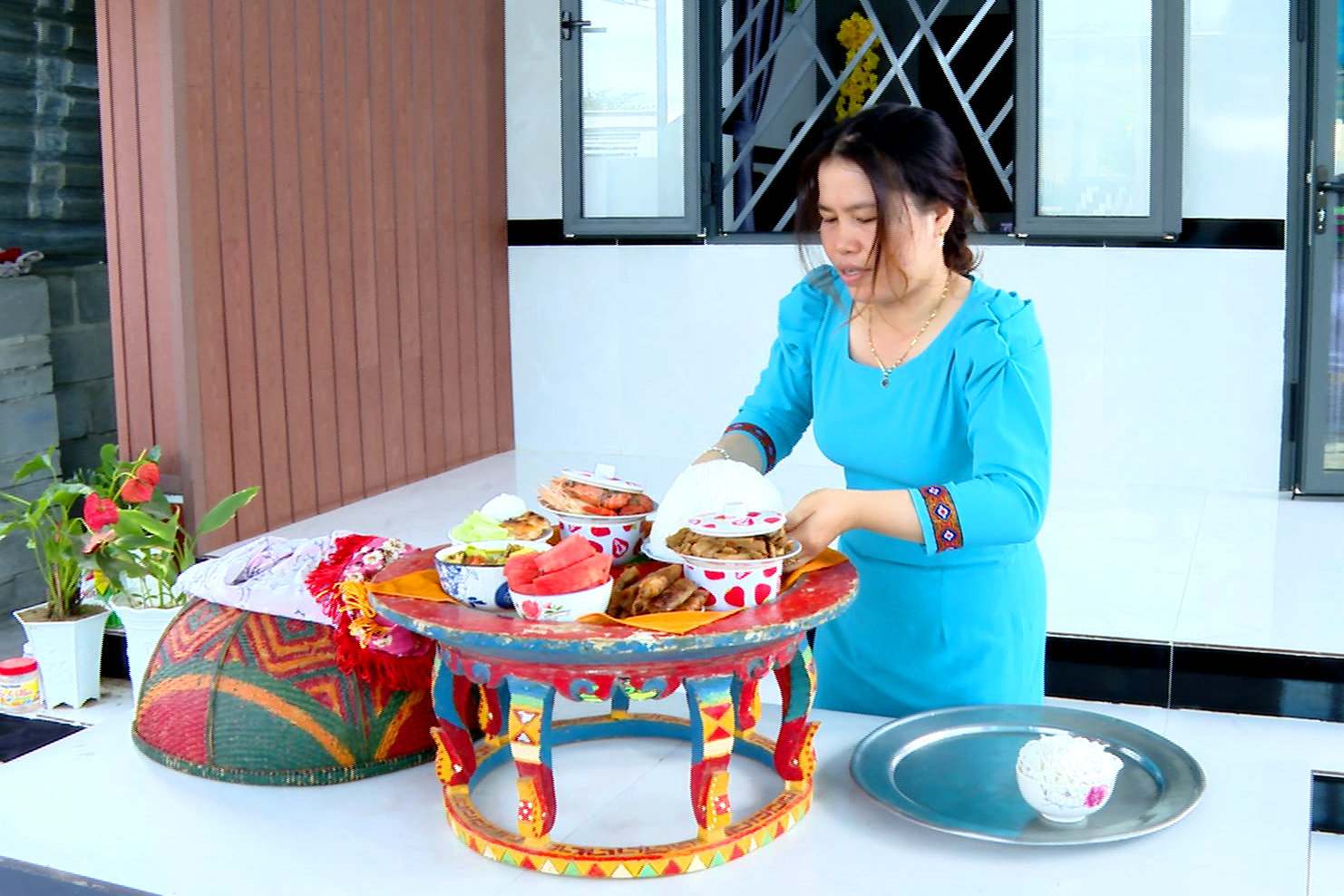
Beyond selling his products, Dong Gat also dedicates many ceremonial trays to Cham temples and towers as offerings, expressing gratitude and praying for health and inspiration to continue his work.
The Younger Generation Continues the Cultural Legacy
The effort to preserve traditional crafts does not stop with older generations. In Lam Thuan Cham village today, young people are also gradually carrying on family traditions and contributing to the preservation of their ethnic identity.
Thong Thi Toa Dam, a member of Dong Gat’s family, said she participates in the production process by painting decorative patterns on the trays. For her, it is not only a way to help the family, but also a source of pride in maintaining a craft that has been part of their family for more than 20 years.
.jpg)
The continuity between generations is the key factor helping traditional crafts survive sustainably. In Dong Gat’s family, tray-making not only provides a stable income but also serves as a bond connecting family members to their cultural roots.
Since I was a child, my grandfather and father have taught me how to paint patterns on ceremonial trays. That is why I deeply understand the value of our traditional craft. I hope young Cham people will continue preserving these cultural beauties so they will never fade over time.
Thong Thi Toa Dam, Lam Thuan Hamlet, Ham Thuan Bac Commune
Dong Cuoi, Dong Gat’s son and successor, said he continues learning and refining the craft with the hope of passing it on to future generations and preventing it from disappearing.
Preserving the “Spiritual Essentials” of the Community
Beyond ceremonial trays, the spiritual life of the Cham community also includes many meaningful sacred items such as the Kalak hat and Kadung bag used by religious dignitaries.
These items are considered indispensable “spiritual essentials” during important rituals. Every detail and decorative pattern carries deep cultural and religious significance preserved across generations.
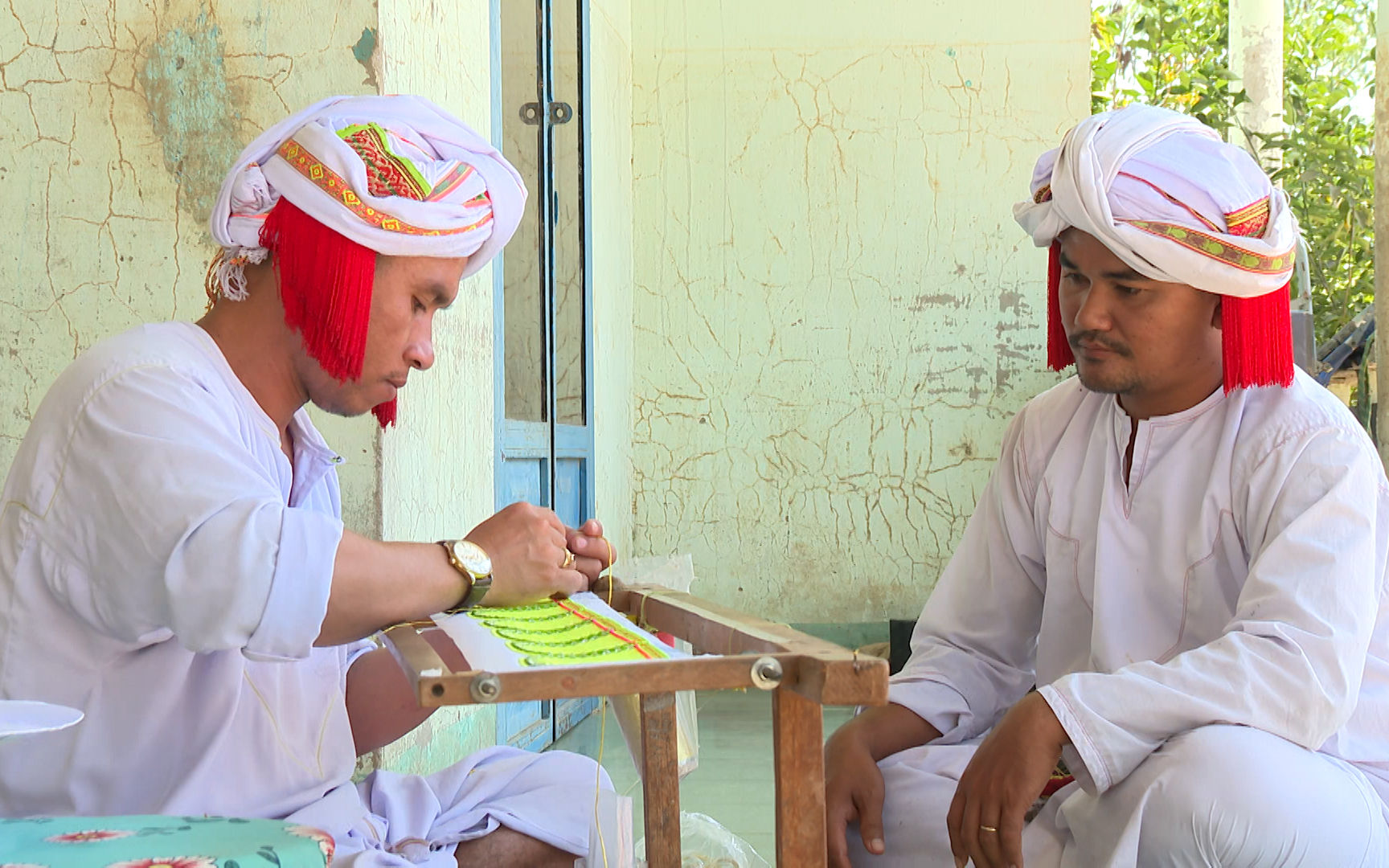
Few people know that behind these sacred objects are individuals who quietly taught themselves the craft through passion and responsibility. Po Achar Nguyen Ngoc Quang from Lam Giang Cham village, Ham Thuan Bac Commune, is one such person.
Without formal training, the young religious dignitary learned by dismantling and studying old items passed down from previous generations before gradually mastering the techniques.
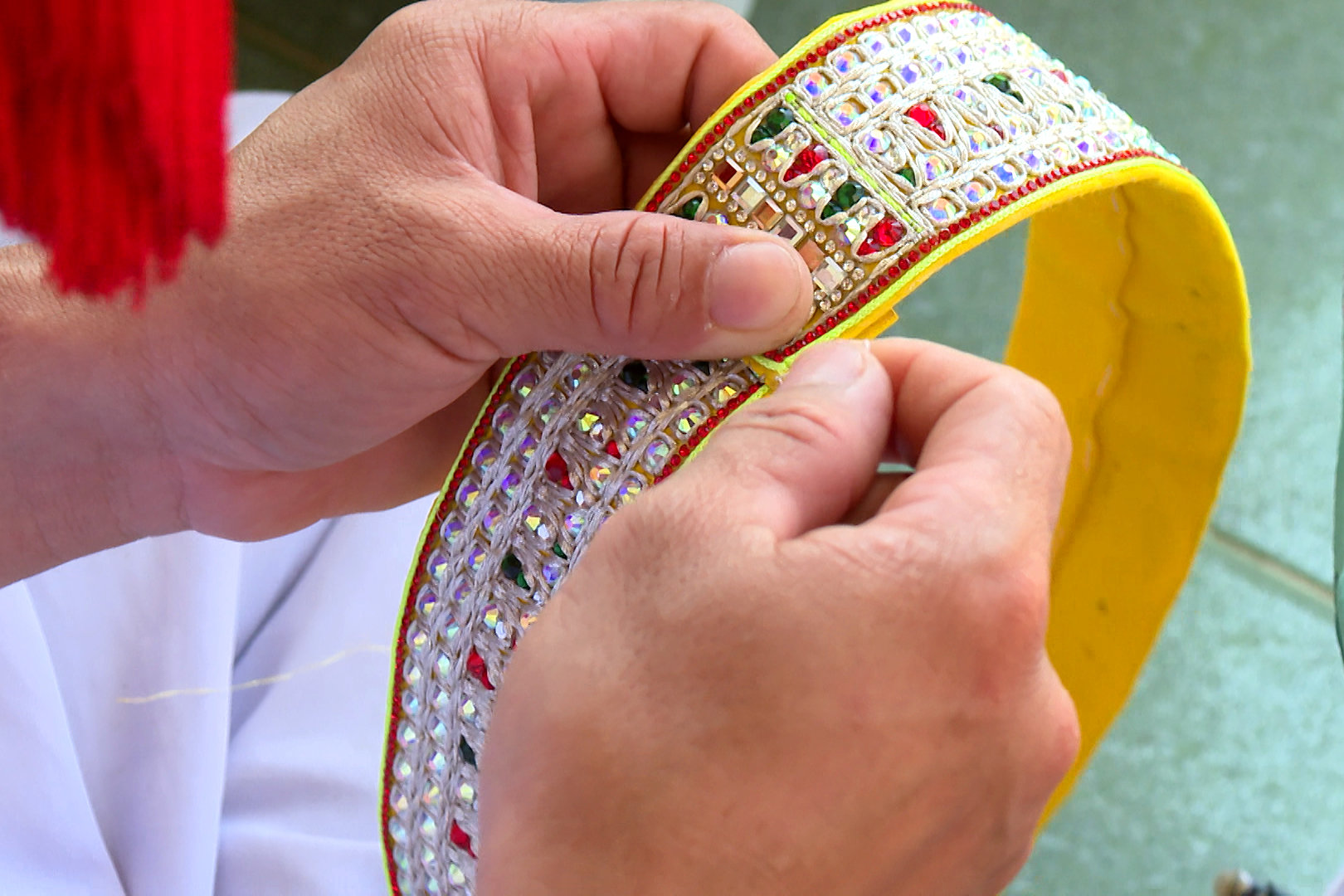
During important occasions such as the Ramuwan festival, Quang becomes especially busy fulfilling orders from religious dignitaries across the region.
To him, creating these sacred objects is not only a way to meet spiritual needs, but also a means of preserving the cultural values of the Cham people. He is willing to pass on his knowledge to anyone eager to learn, hoping that the traditional craft will continue to thrive.
People like Dong Gat, Thong Thi Toa Dam, and Po Achar Nguyen Ngoc Quang may work in different fields, but they all share one thing in common: they are “bridges” connecting the past with the present, tradition with the future. Through their dedication, Cham cultural values continue to be preserved and protected from fading away.
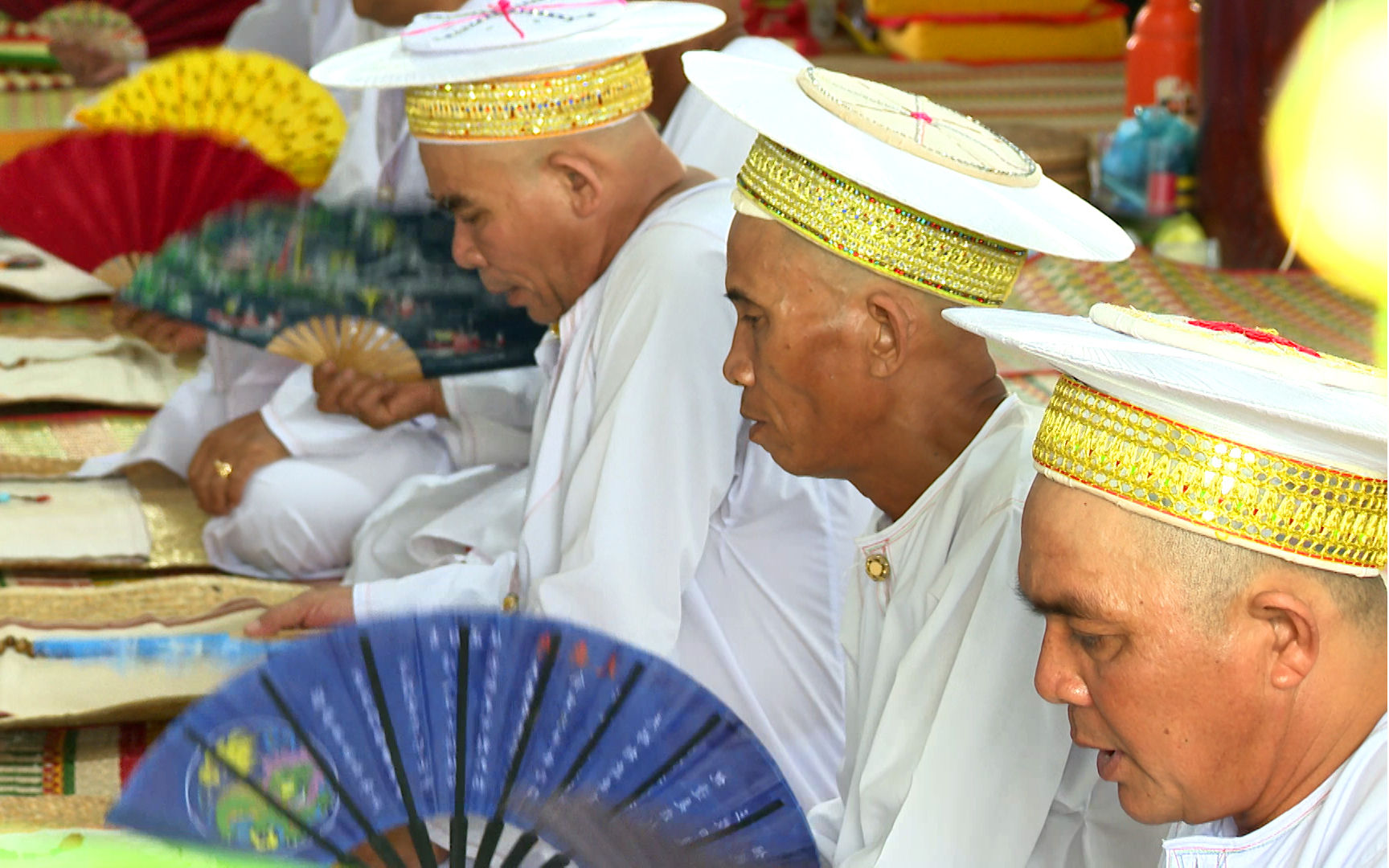
According to Ma Van Thao, a cultural officer in Ham Thuan Bac Commune, local authorities always pay close attention to preserving and promoting traditional cultural values. Young generations are encouraged to learn traditional crafts while creatively adapting them to modern life. This not only helps preserve cultural identity but also creates livelihoods for local people.
It can be said that Cham culture will never be forgotten, because it continues to be preserved and written anew every day through the hands, minds, and hearts of Cham people here. Ceremonial trays, Kalak hats, and Kadung bags will continue to exist within spiritual life, telling stories of devotion, faith, and the aspiration for peace of a culturally rich community. Amid the endless flow of time, those values continue to shine quietly, deeply, and proudly.