

The Central Highlands: Standing Firm on the Nation's Western Frontier
Once known as a remote and war-scarred land marked by poverty and hardship, the Central Highlands has transformed into a thriving, modern region through decades of renewal and development.
Once known as a remote and war-scarred land marked by poverty and hardship, the Central Highlands has transformed into a thriving, modern region through decades of renewal and development.
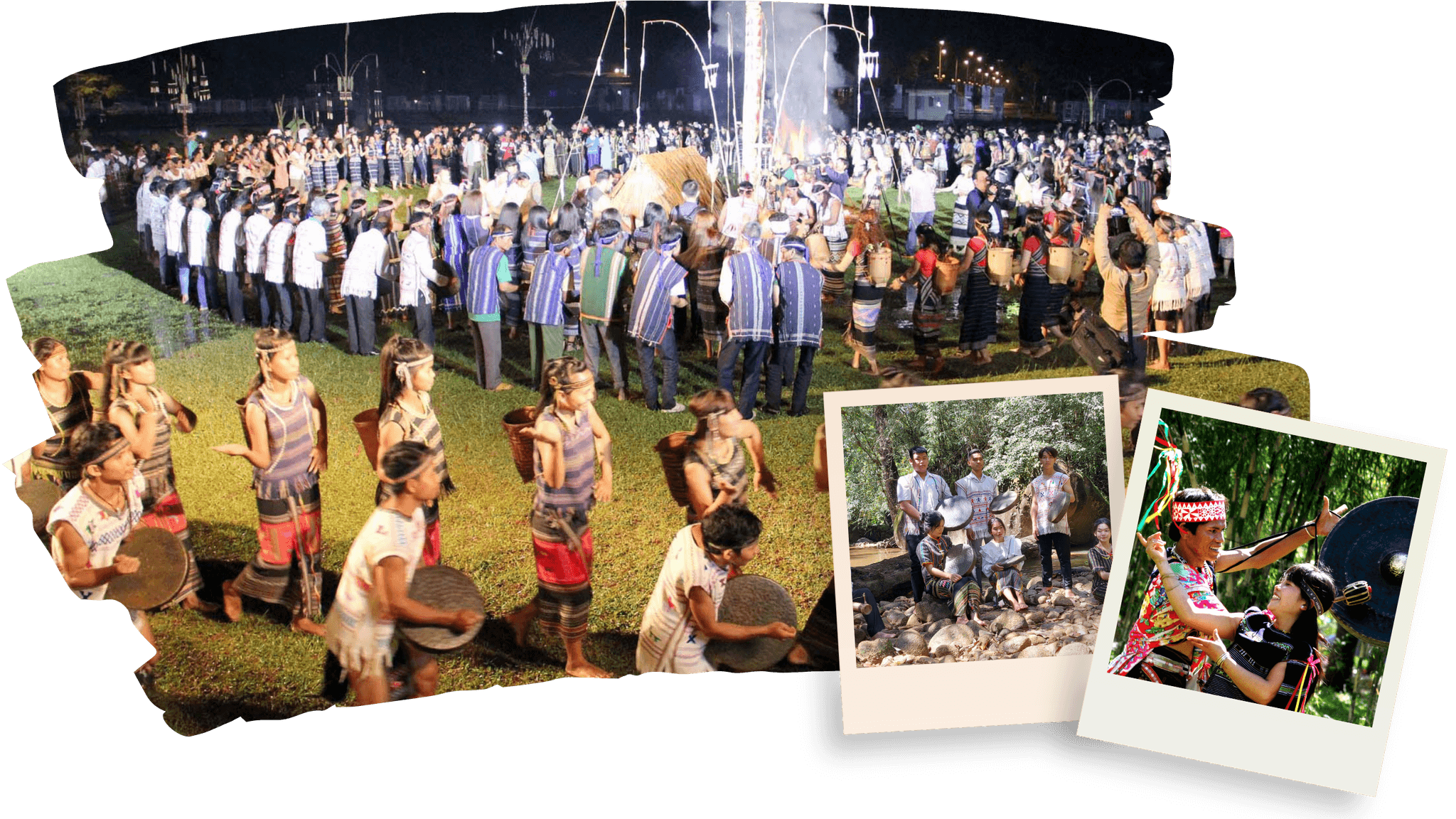

We have traced the collective memories of the region’s ethnic groups through epic stories, folk tales, traditional laws, and songs that have been handed down through generations. These ancient narratives provide important insights into the origins of the individuals who have long lived in the Central Highlands.
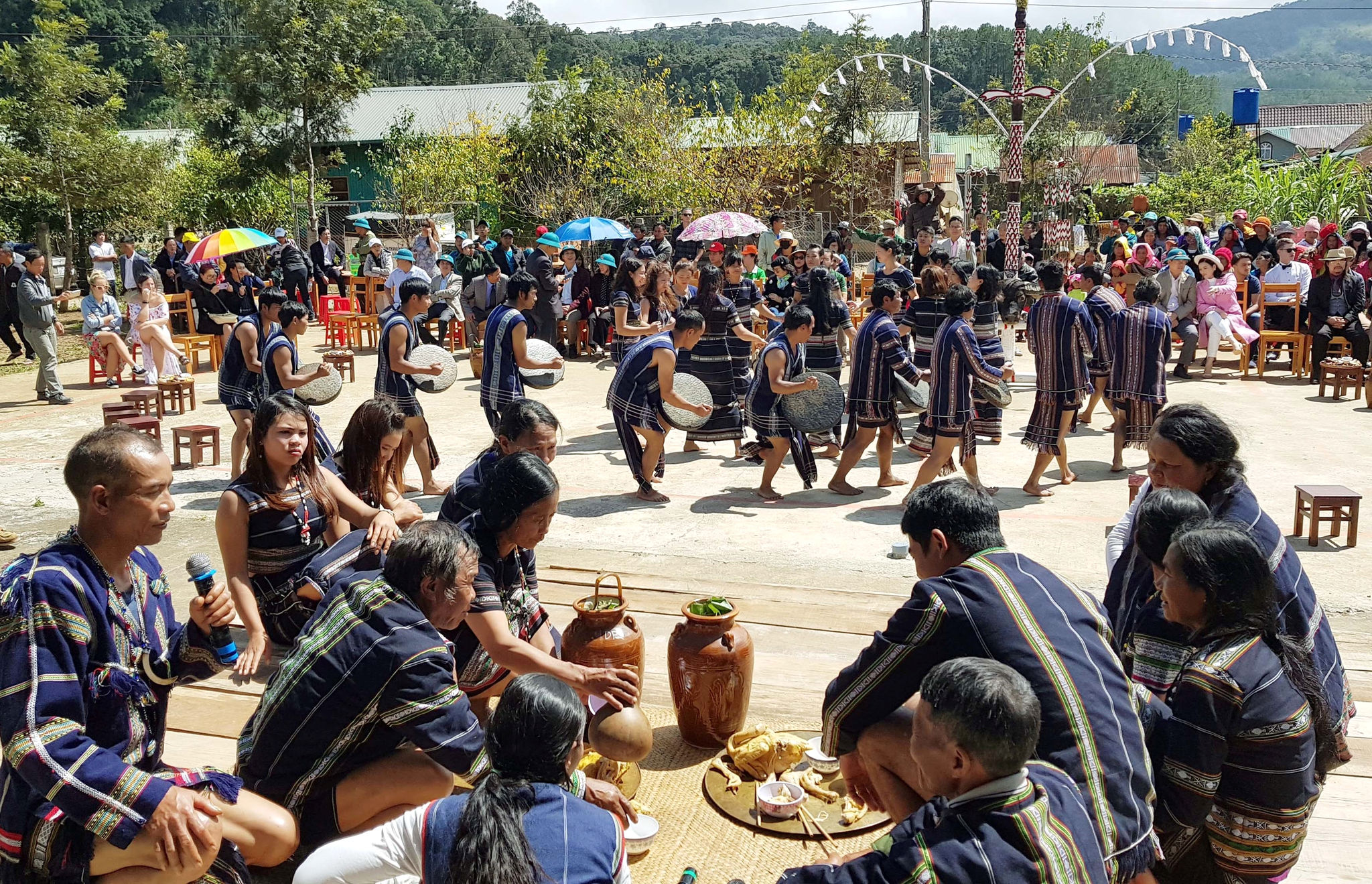
In ancient times, significant waves of migration by groups speaking the Mon–Khmer and Malayo-Polynesian language families traveled in search of new territories to inhabit. Circumstances led them to the expansive forests and mountains of the Central Highlands, where they became the first dwellers and guardians of this land.
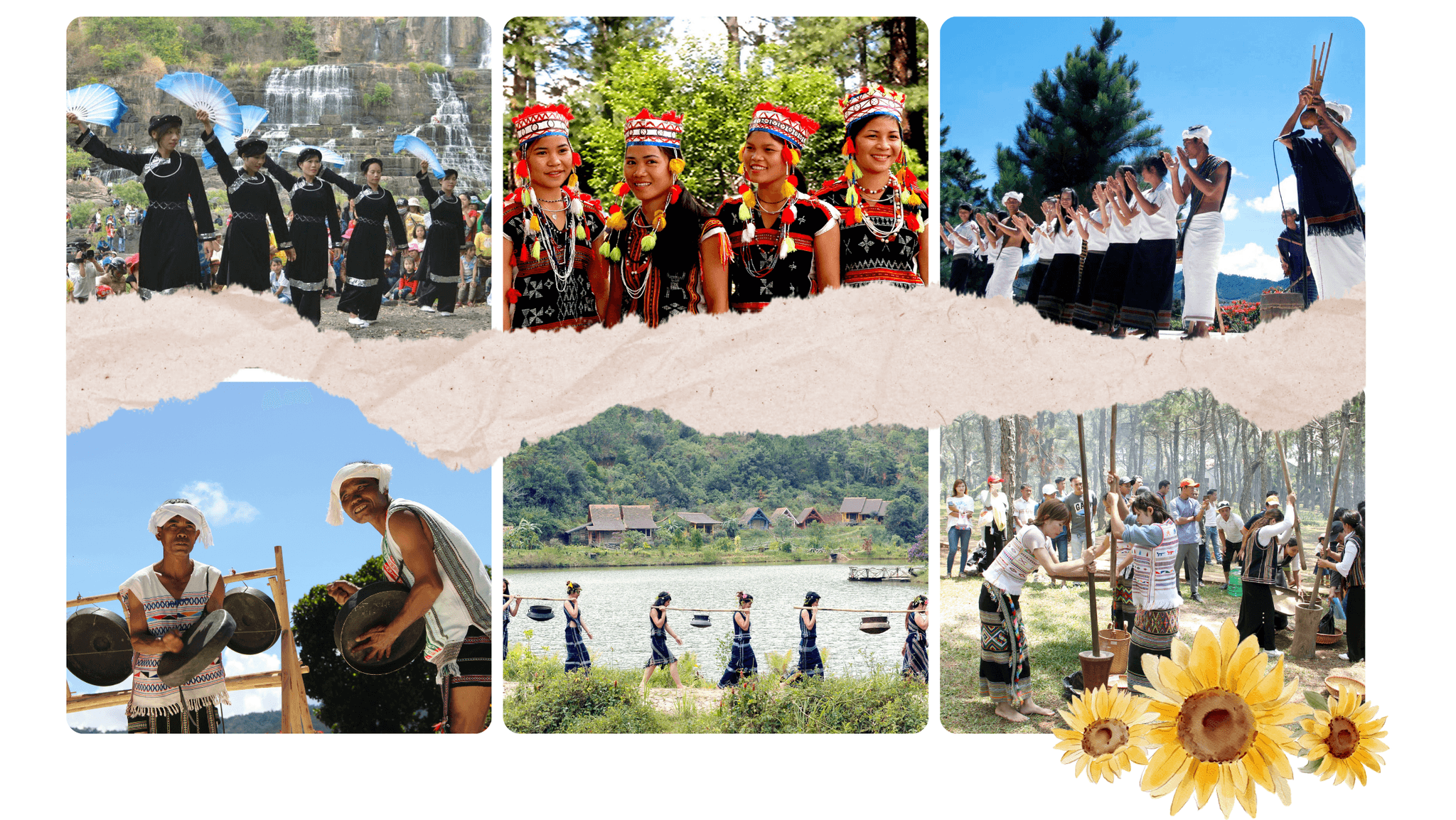
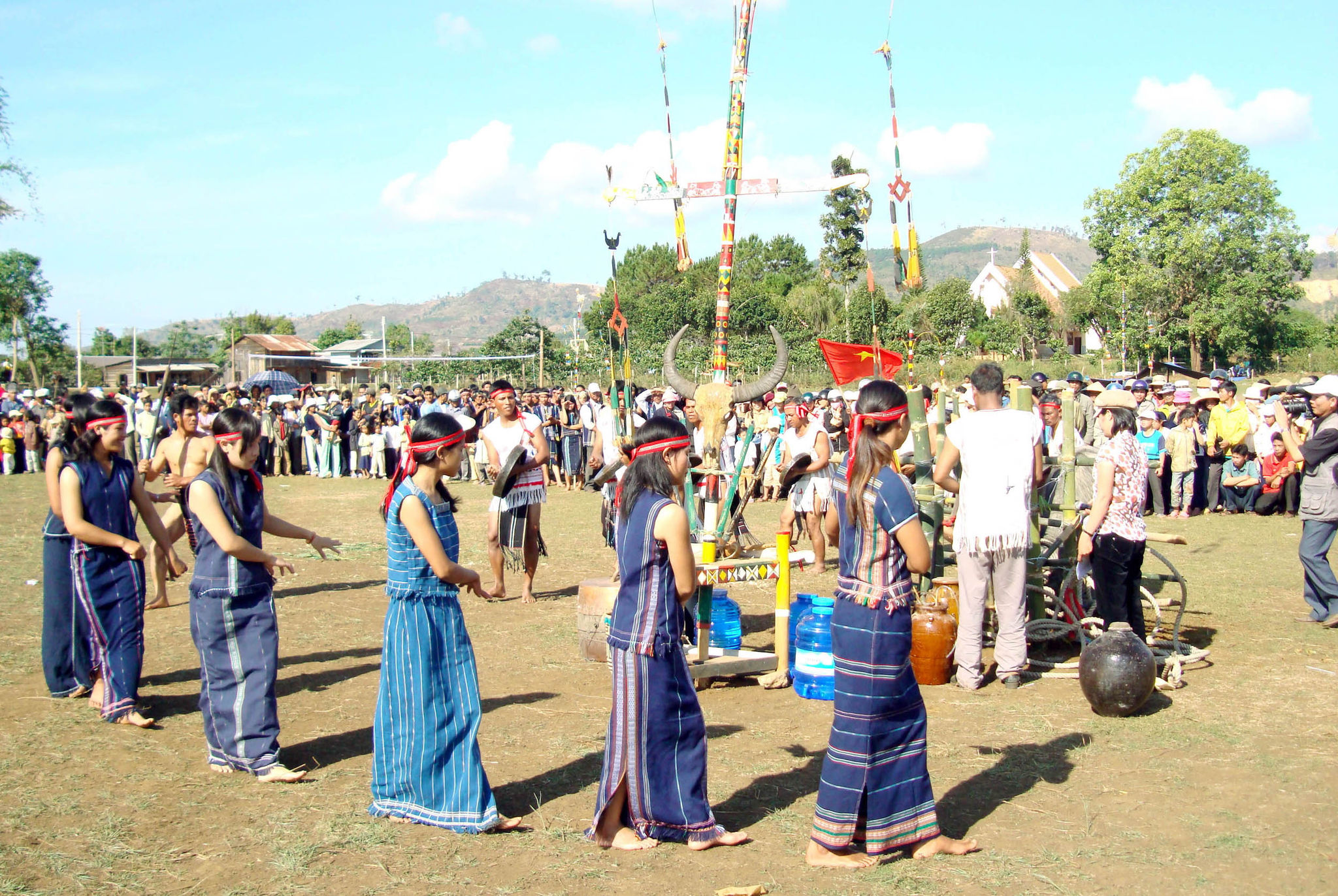
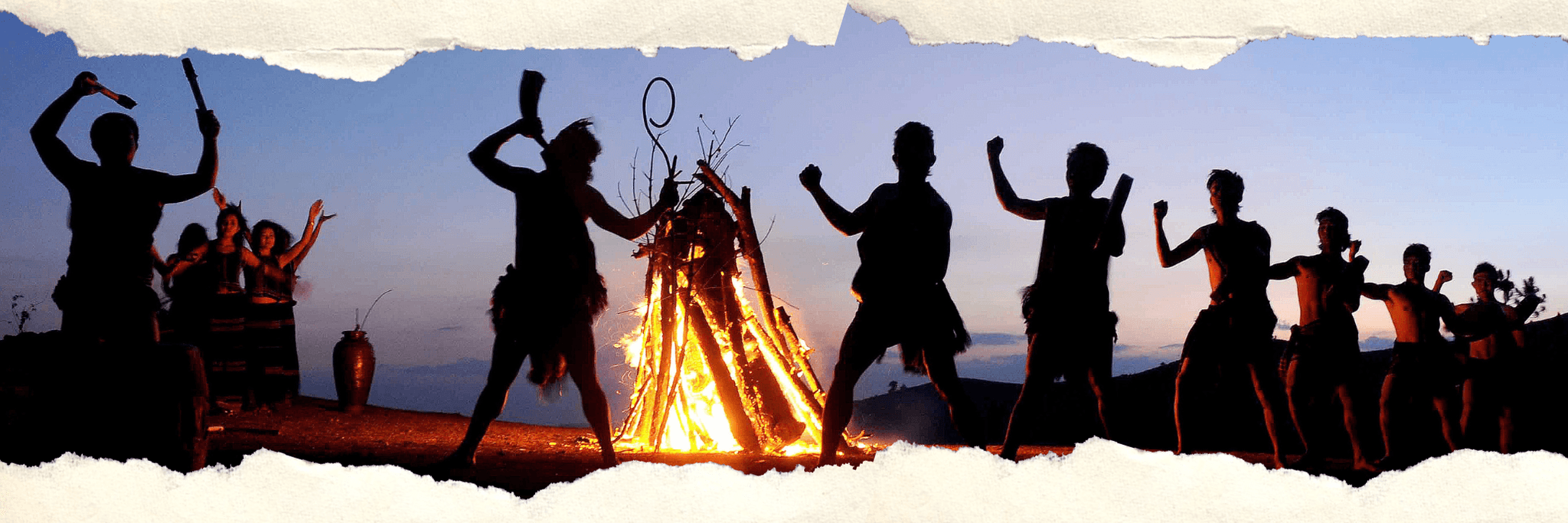
Over time, communities deeply connected to the forest emerged, relying on its resources for their livelihood and developing a distinctive cultural identity and unique system of indigenous knowledge. These communities include the Ede, Ba Na, Xo Dang (Sedang), Gia Rai (Jrai), K’ho, Ma, M’nong, and S’tieng ethnic groups, among others.
Historical documents indicate that by 1470, King Le Thanh Tong of Dai Viet recognized the Central Highlands and labeled it as Nam Ban. During the Nguyen Dynasty, officials were sent to oversee the western mountain regions and collect tribute from local leaders.
Frequently referred to as the “Roof of Indochina,” the Central Highlands has historically been of great strategic significance. Many military planners used to contend that control over the Central Highlands equated to dominance over Indochina. Its significance arises from its strategic worth in political, economic, cultural, and military aspects.
Historically, following the completion of the conquest of southern Vietnam from 1867 to 1883, the French colonial government gradually extended its influence into the Central Highlands.
The French quickly established administrative systems and began to utilize the region’s rich natural resources. Subsequently, the Republic of Vietnam’s government, backed by the United States, transformed the Central Highlands into a critical military area in South Vietnam.
Da Lat was designated as the "summer capital" for high-ranking officials of the Republic of Vietnam. Furthermore, the city housed significant military training facilities, such as the Political Warfare School and the Da Lat Military Academy. The entire Central Highlands formed part of the enemy’s II Corps Tactical Zone, protected by a comprehensive network of military installations and defensive positions spread over a large area.
During the periods of French colonial rule and later American involvement in Vietnam, the people of the Central Highlands endured immense hardship under foreign domination. The blood, sweat, and tears of local communities contributed to the development of plantations and the extraction of valuable mineral resources that enriched colonial and imperial powers.
Countless people lost their lives or suffered severe hardship as a result of forced labor campaigns used to build roads and infrastructure across the Central Highlands, serving the interests of resource exploitation and colonial expansion. Faced with oppression and injustice, the people of the Central Highlands rose in resistance.
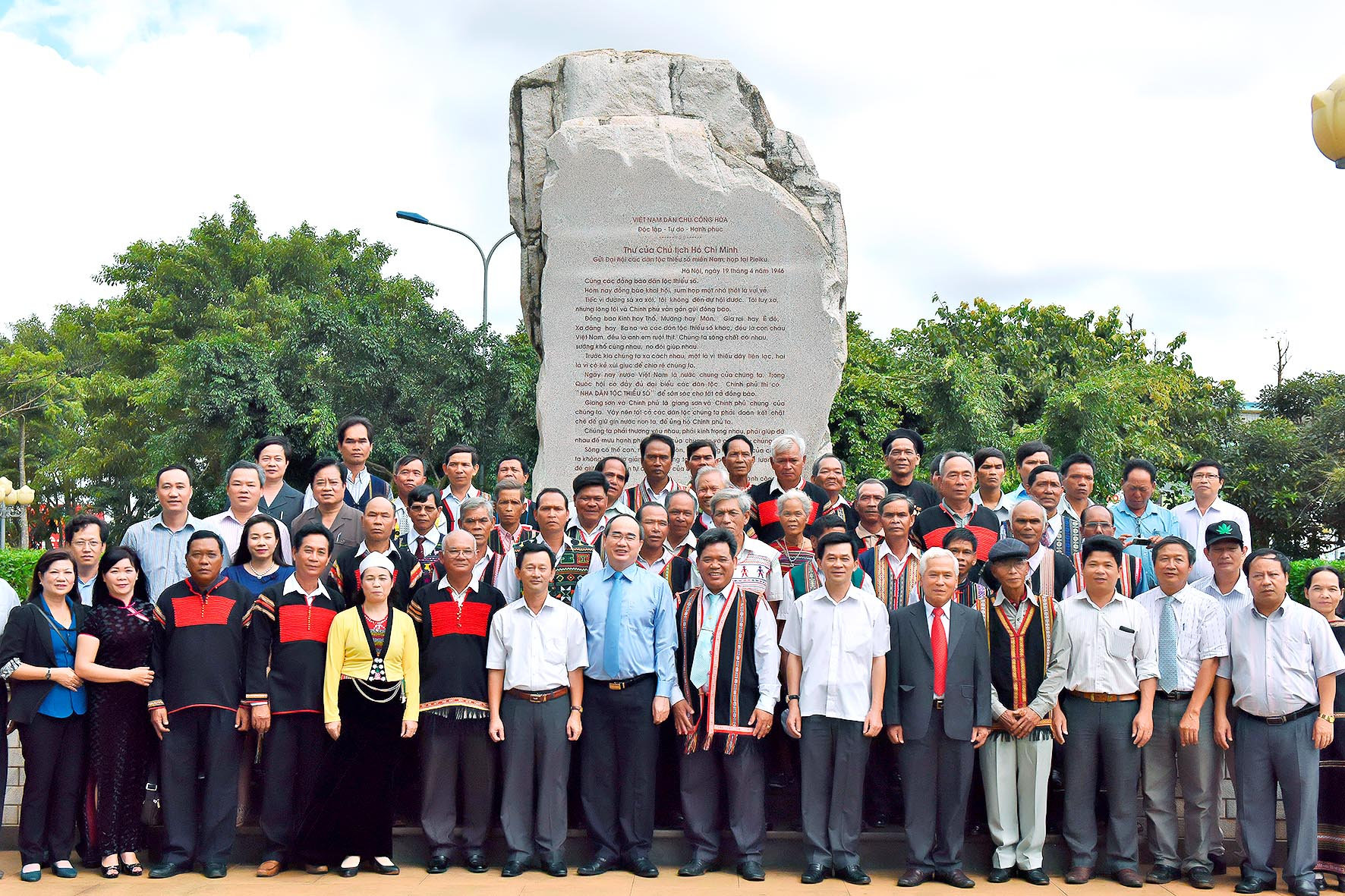
Historical accounts also indicate that prior to the Communist Party's leadership, a variety of patriotic movements spearheaded by leaders from ethnic minorities arose throughout the Central Highlands. These movements included uprisings led by chieftains such as Ama Jhao and N’Trang Guh, educator Y Jut from the Ede community, the Fire King Oi At of the Gia Rai people, the Sam Bram movement among the Cham, and the Mo Co movement of the K’ho.
Most notably, N’Trang Long, a member of the M’nong ethnic group, led a large-scale armed resistance that lasted for several years. Although these grassroots movements presented considerable obstacles to French colonial authority, they ultimately did not achieve victory.
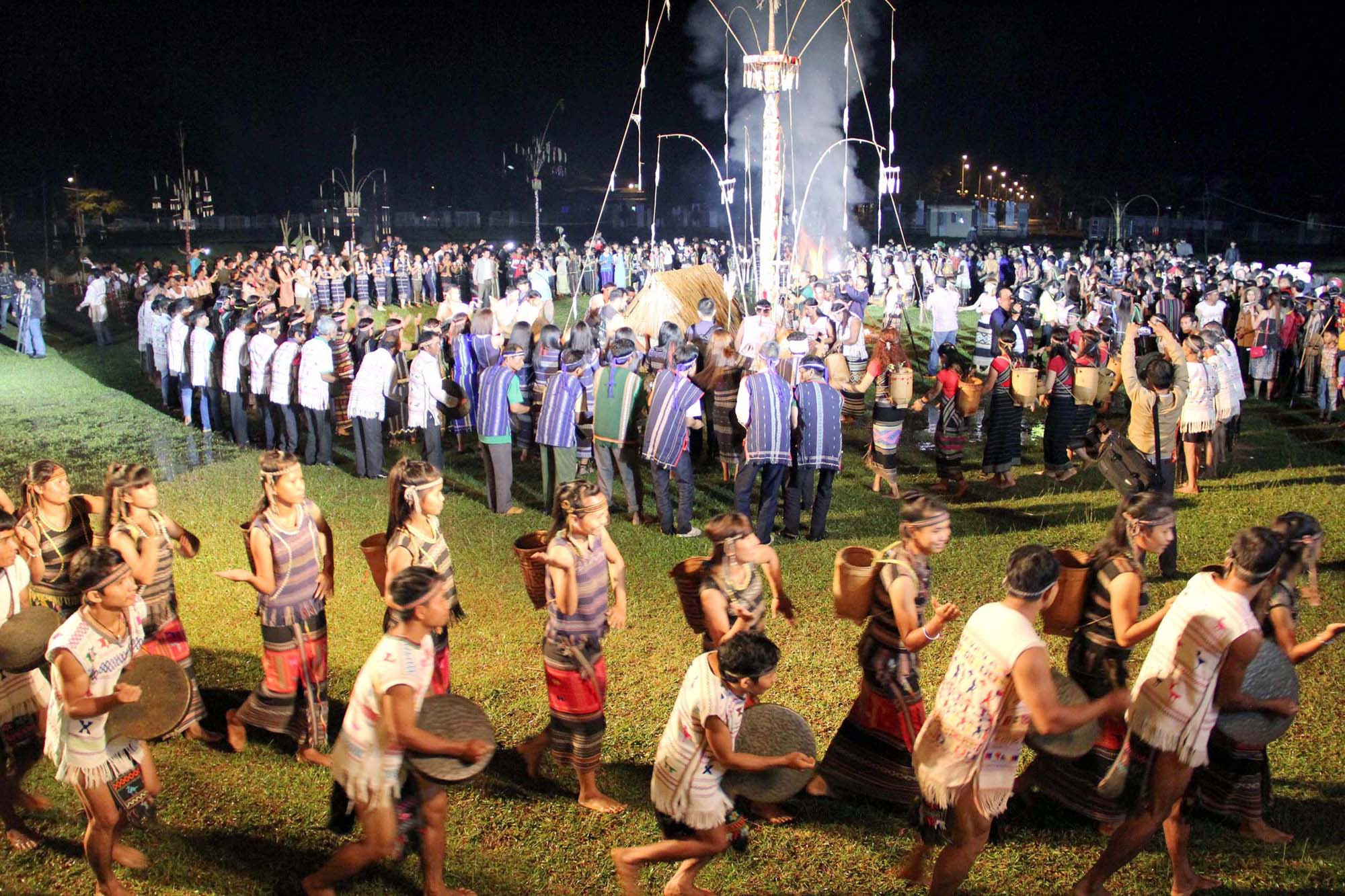
Under the guidance of the Communist Party and President Ho Chi Minh, a fresh revolutionary enthusiasm surged throughout the Central Highlands. The tenacity and resolve ingrained in the area's mountains, rivers, and people were bolstered by revolutionary advocates. The Central Highlands united with the entire country in the fight for national independence.
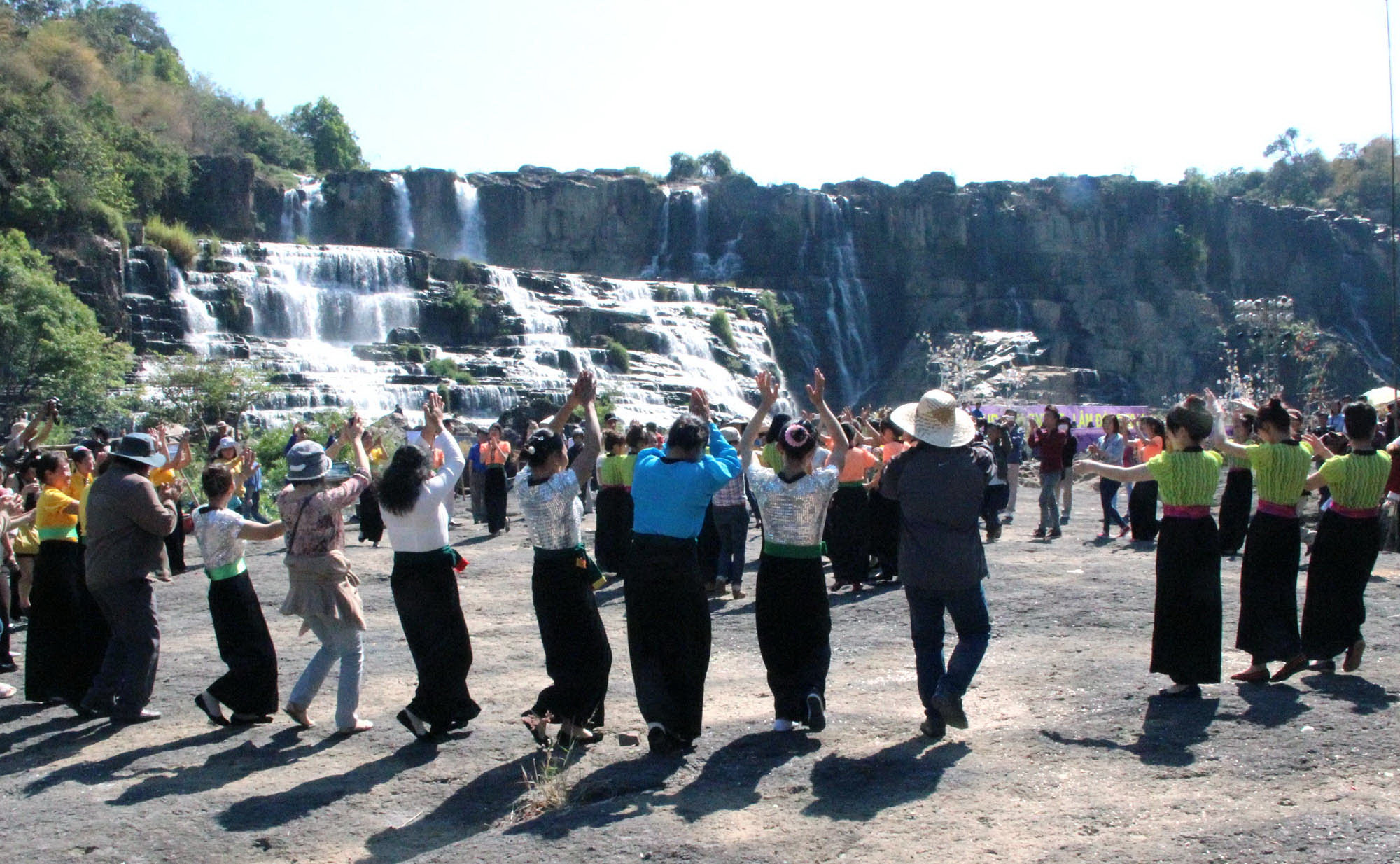
In response to the call from the Party and President Ho Chi Minh, people from different ethnic backgrounds united in their fight against French colonialism and subsequently against the United States, giving rise to many celebrated figures in modern Vietnam, including Dinh Nup, A Sanh, and Bi Nang Tac.
Communities that had previously been remote transformed into strongholds of revolution, like Dak Ui in Quang Ngai Province, Chu Dju in Dak Lak Province, and Nam Nung, Dong Mang–Da Tro, Loc Bac, Loc Lam, and Dong Nai Thuong in Lam Dong Province.
.jpg)
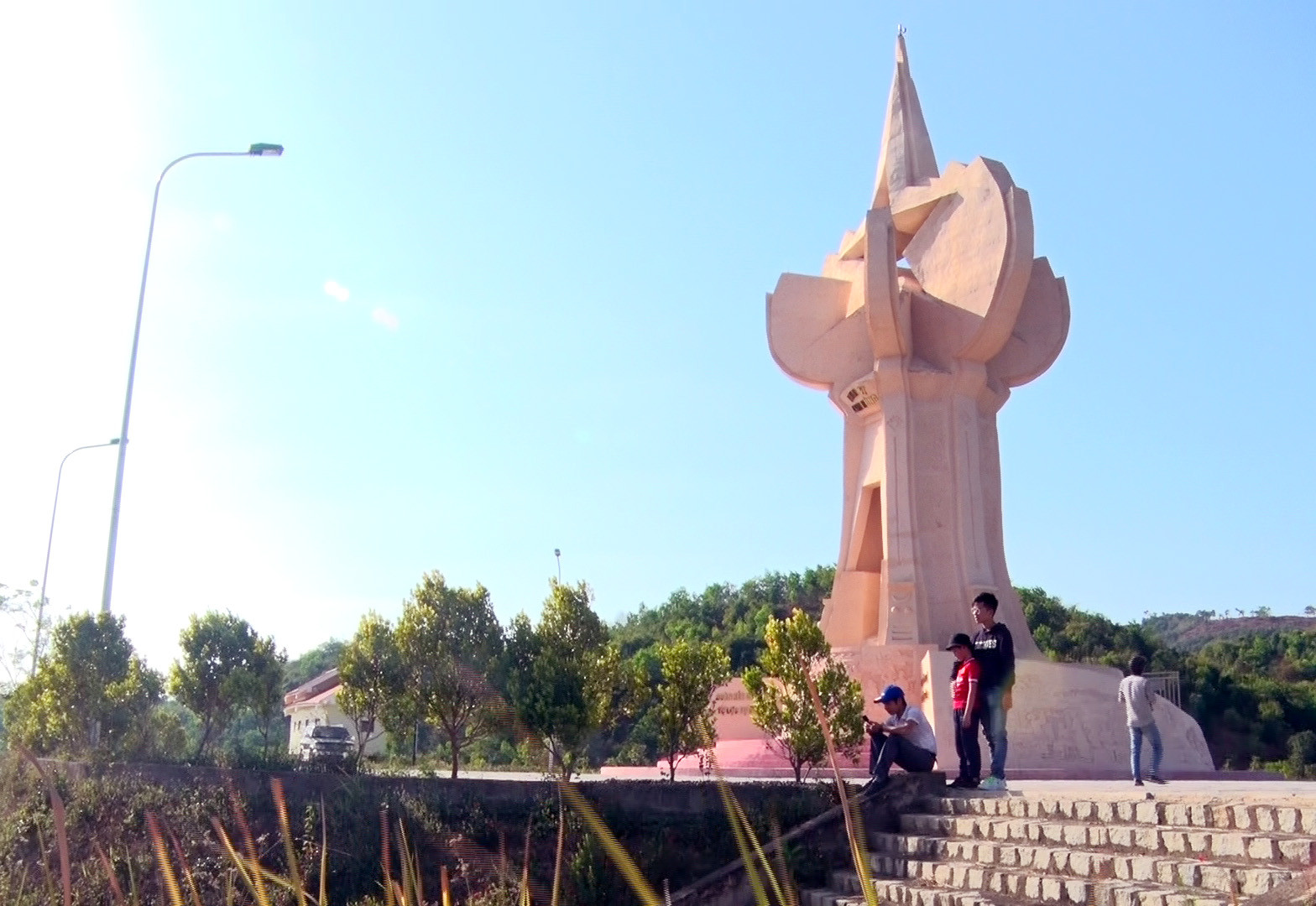
Fifty-one years ago, acknowledging the strategic significance of the region, the Party initiated the 1975 Spring General Offensive and Uprising along with the pivotal Central Highlands Campaign. This campaign marked a crucial turning point in the conflict. The defeat in the Central Highlands significantly undermined the government and military of the Republic of Vietnam, leading to their eventual downfall as revolutionary forces swiftly progressed across the nation. From that point onward, the Central Highlands entered a new chapter in its history.

Following national reunification, the ethnic groups in the Central Highlands have progressively moved beyond poverty and underdevelopment, advancing in line with the rest of the nation toward equitable development.
The Party and the State have implemented various resolutions, development initiatives, and significant investments aimed at tapping into the potential of this resource-abundant area.
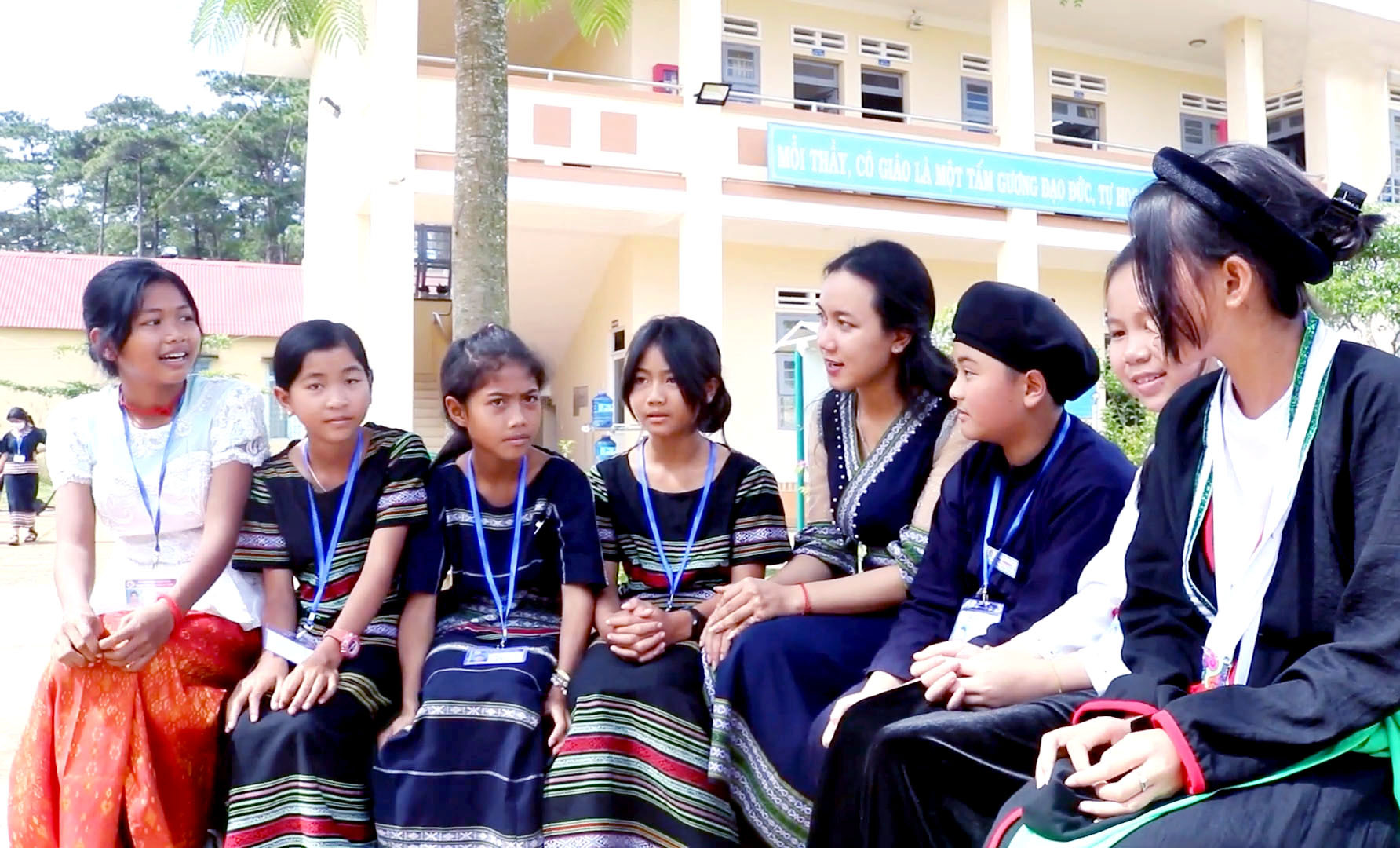
During the period of administrative reorganization, the Central Highlands became a development space encompassing the major provinces of Lam Dong, Dak Lak, Quang Ngai, and Gia Lai. New opportunities for economic growth and cultural exchange emerged, enabling the vast highland region to connect more closely with coastal areas and national development initiatives.
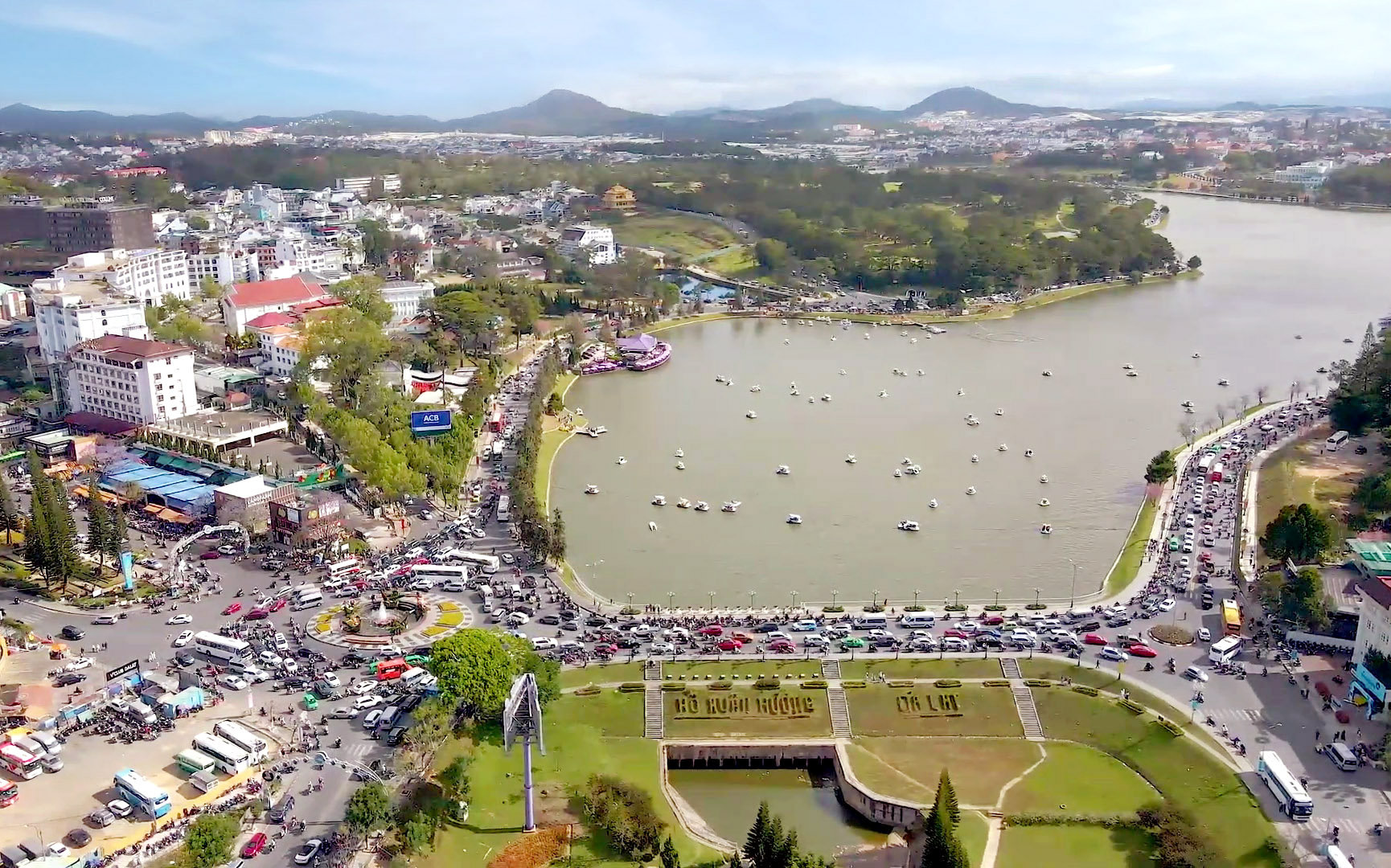
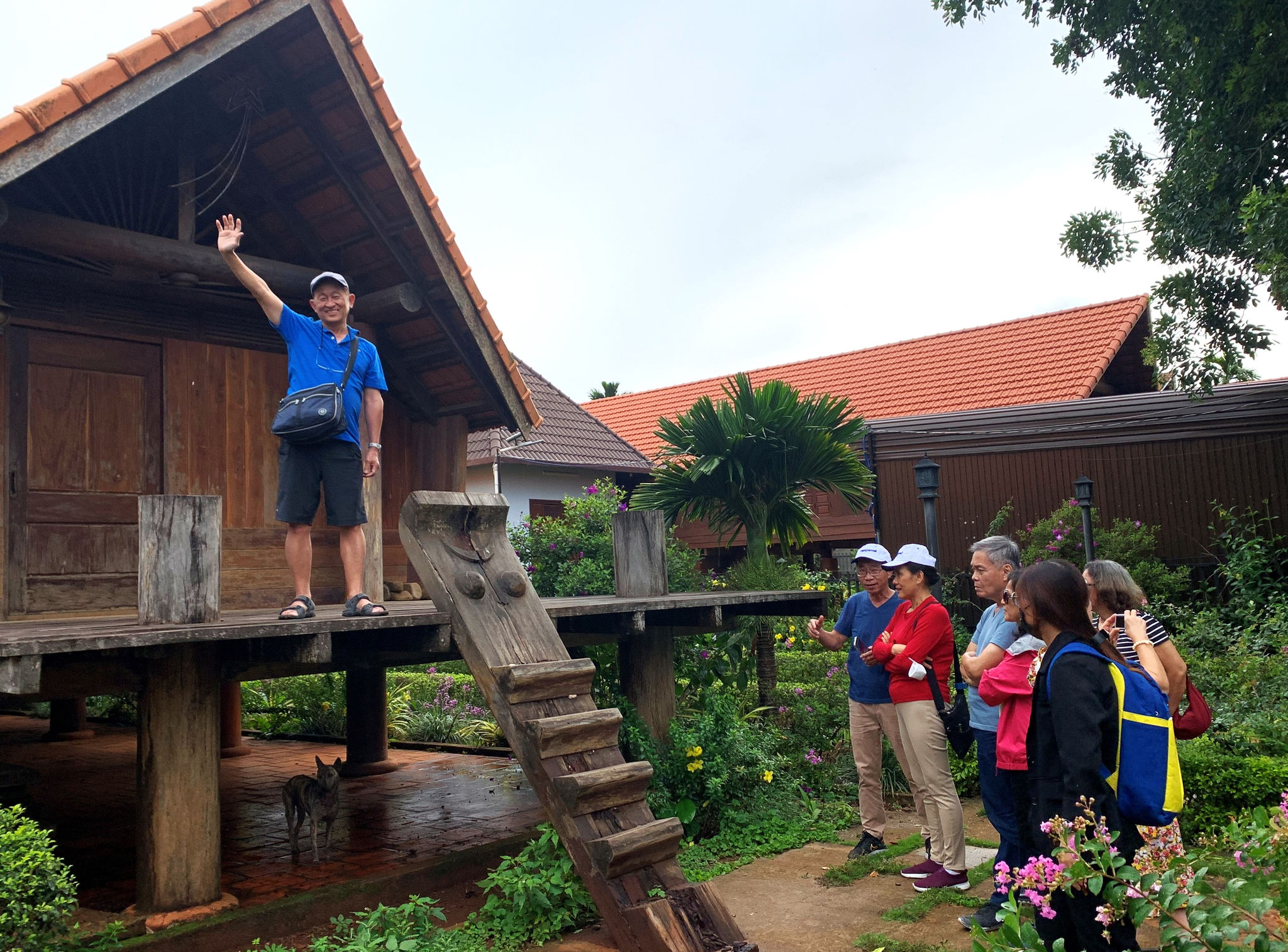
Covering more than 55,000 square kilometers and inhabited by over five million people from 47 different ethnic groups, the Central Highlands is rich in natural resources and cultural diversity. Throughout its villages, towns, and cities, living conditions have steadily improved.
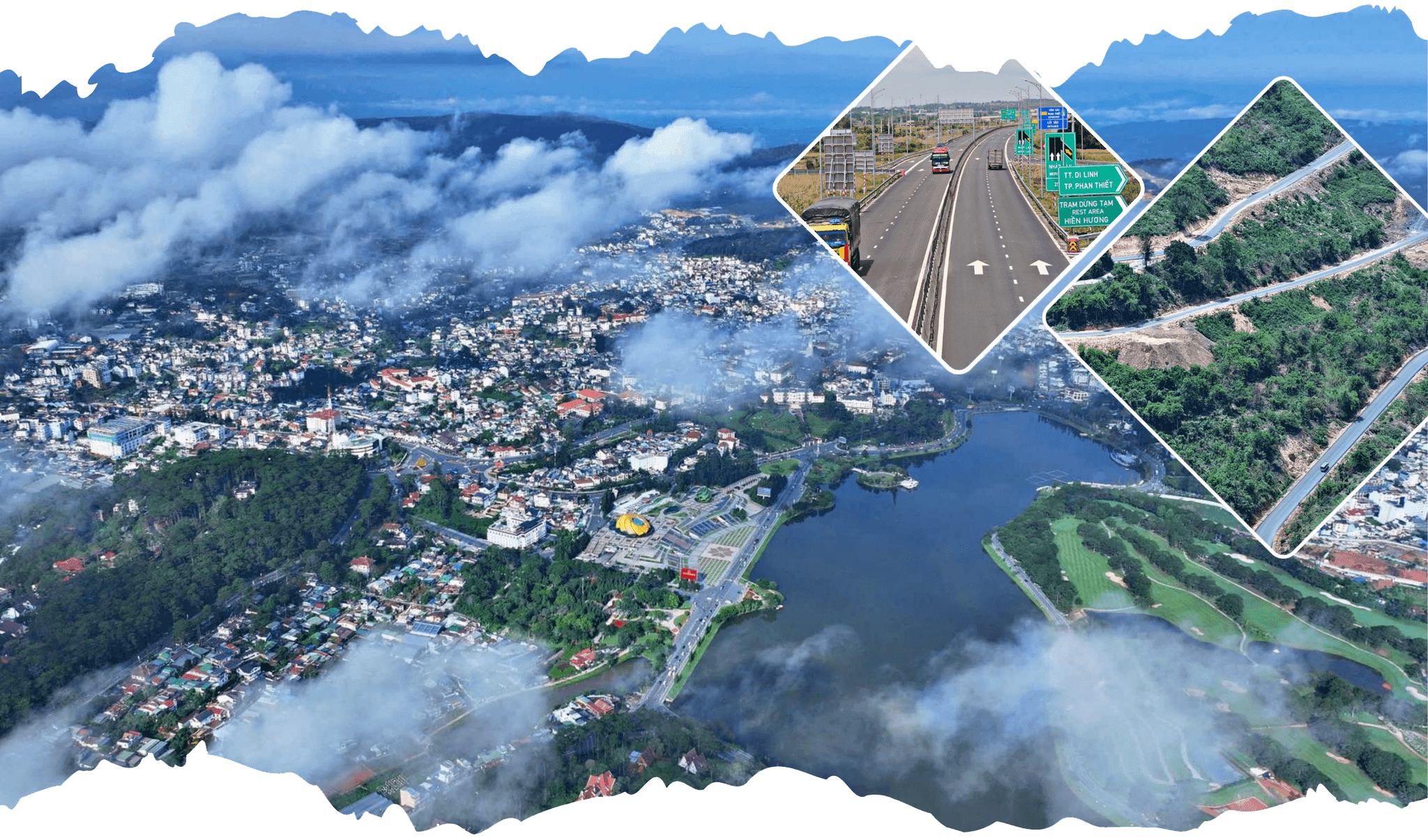
Significant investments in infrastructure and public services have revitalized a region that was once considered remote and isolated. Transportation development has been a key focus, with major transport projects transforming the Central Highlands and unlocking the potential of a land abundant in resources and cultural heritage.
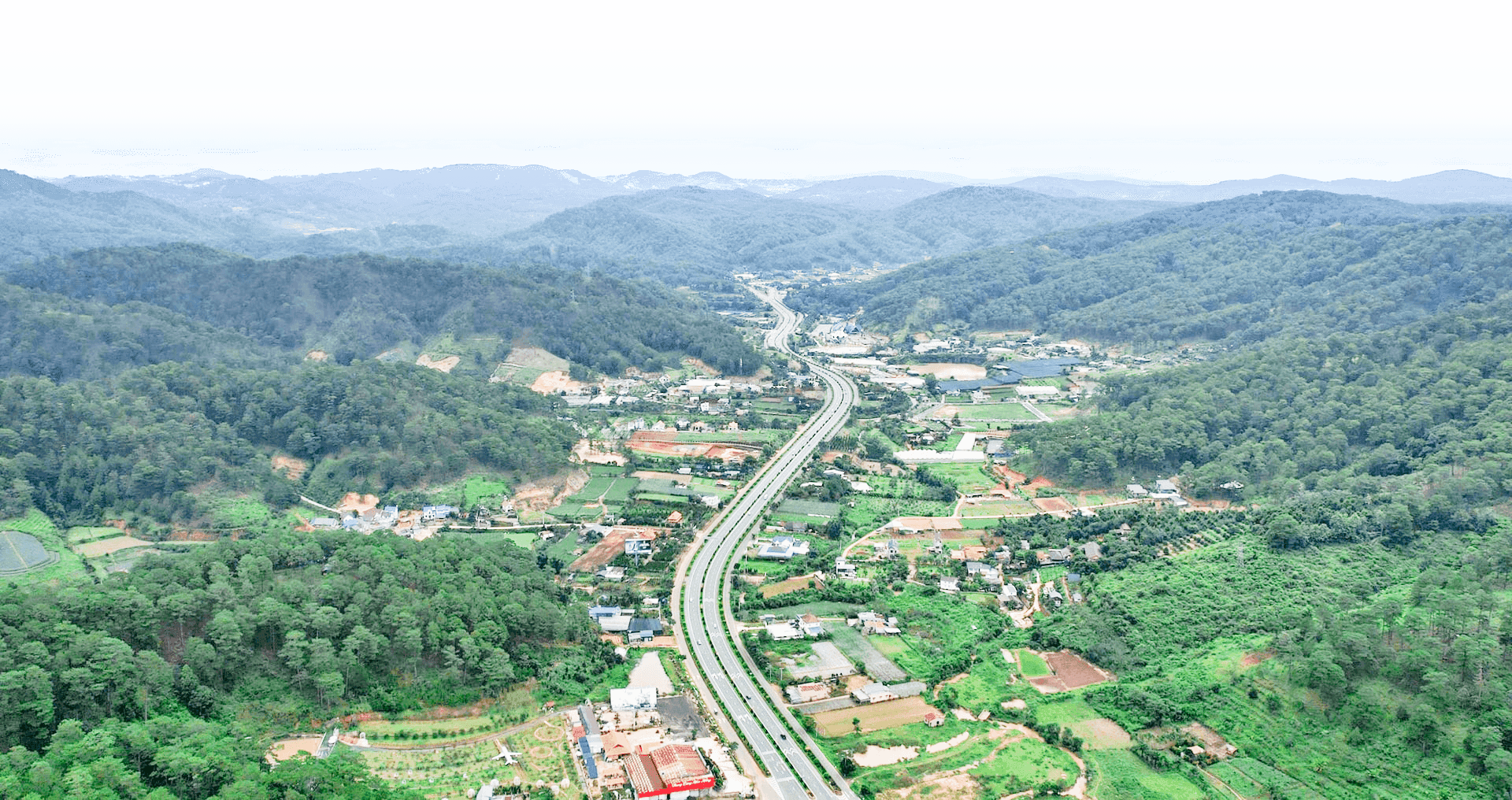
Currently, the road network in the region spans over 40,000 kilometers, linking provinces and enhancing trade with significant economic hubs across Vietnam and neighboring countries. National highways and expressways traversing the Central Highlands cover nearly 3,000 kilometers, while provincial roads exceed 2,000 kilometers in length.
Cross-border transportation networks have bolstered regional connectivity, and both the Ho Chi Minh Highway and the East–West Economic Corridor have significantly improved access to previously isolated communities.

The region's air transport has grown, with three airports in operation: Lien Khuong, Buon Ma Thuot, and Pleiku. There are proposals being evaluated to revive the Da Lat–Thap Cham railway and create new rail connections to support the Nhan Co and Tan Rai alumina projects. In recent years, several expressway projects have been introduced to link the Central Highlands with Ho Chi Minh City, the Southeast, the Mekong Delta, coastal provinces, and northern Vietnam.
The provinces in the Central Highlands are becoming more linked, enabling them to leverage their unique advantages. Dak Lak has positioned itself as the coffee capital of Vietnam and a significant area for fruit production. Lam Dong is recognized as a top tourism spot and a key hub for vegetables, flowers, and industrial crops. The eastern part of Gia Lai is renowned for its pepper, rubber, and agro-forestry processing, while the western area of Quang Ngai is emerging as a specialized region for medicinal herbs.
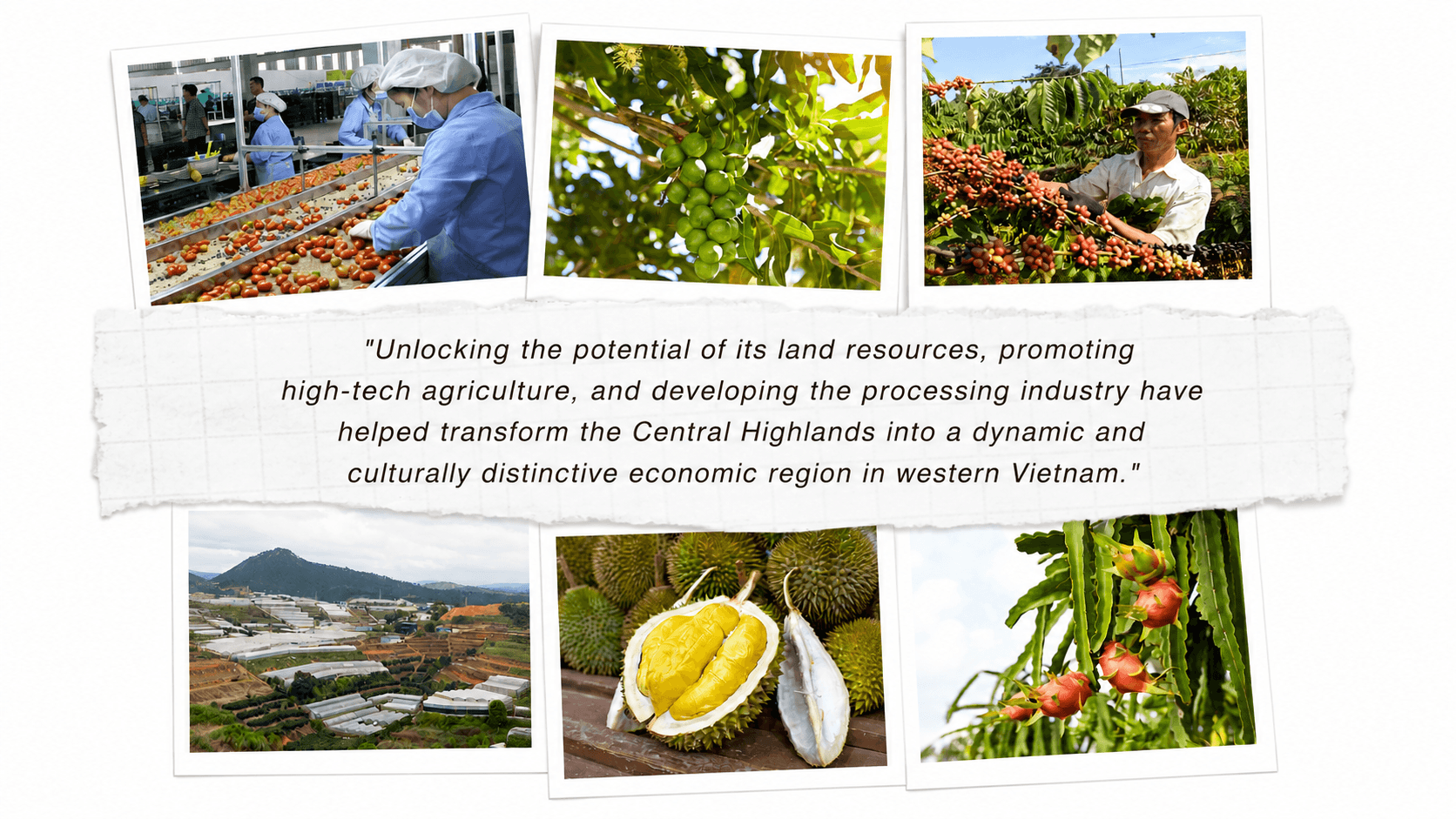
The Central Highlands has become one of Vietnam's key agricultural production areas, with nearly 600,000 hectares of coffee yielding approximately 1.3 million tons annually. The region also cultivates around 72,000 hectares of pepper, producing more than 121,000 tons each year, while rubber, cashew nuts, vegetables, and flowers continue to expand. Average GDP per capita has surpassed VND 40 million per year.
.jpg)
In addition to urban planning and development, local governments have introduced initiatives to promote rural progress, especially within ethnic minority groups. Actions aimed at closing income disparities and enhancing access to social services have been supported by industrial growth and the comprehensive New Rural Development Program. These programs have improved infrastructure, increased public awareness, alleviated poverty, and elevated living conditions in rural areas and communities.
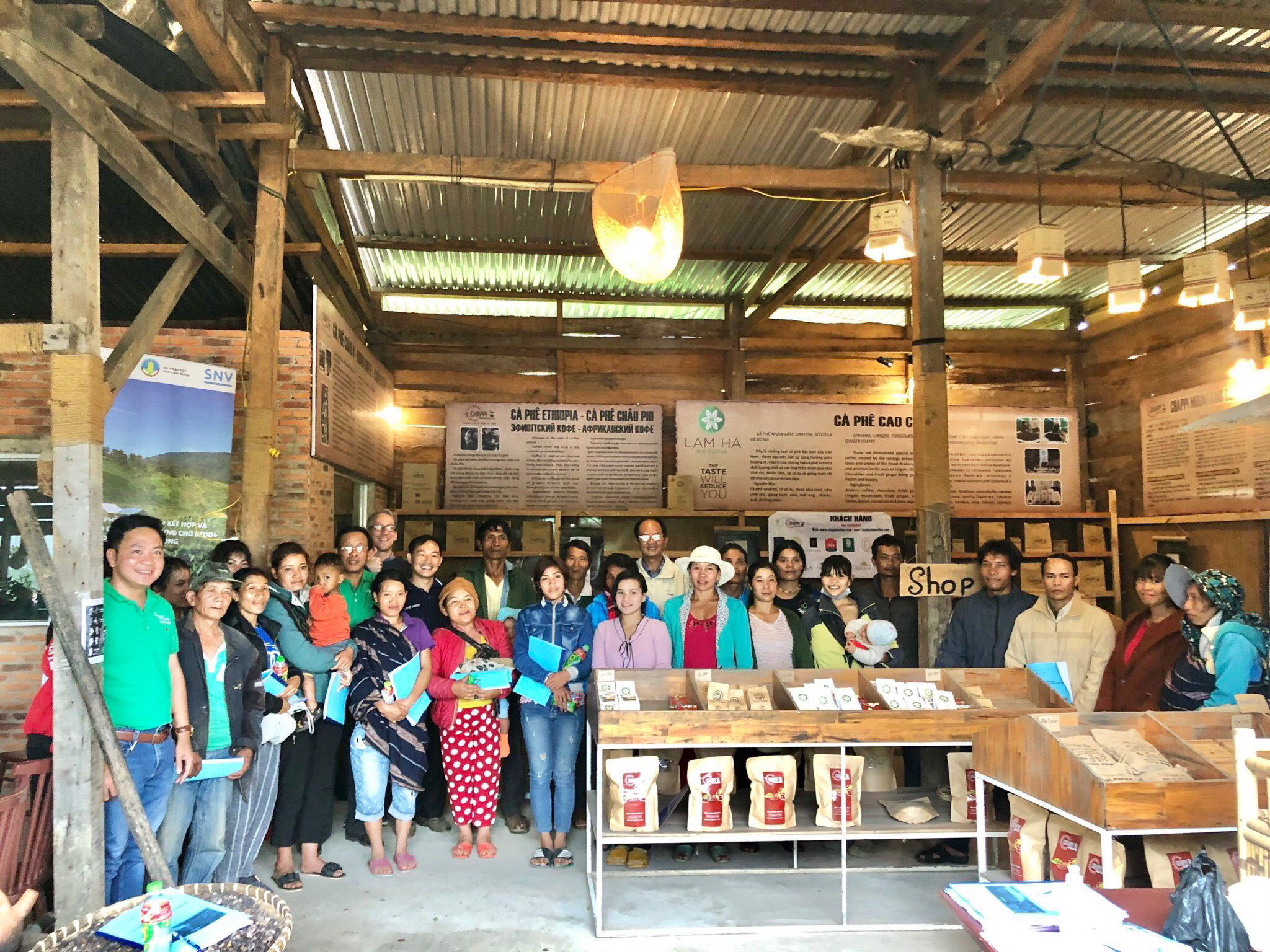
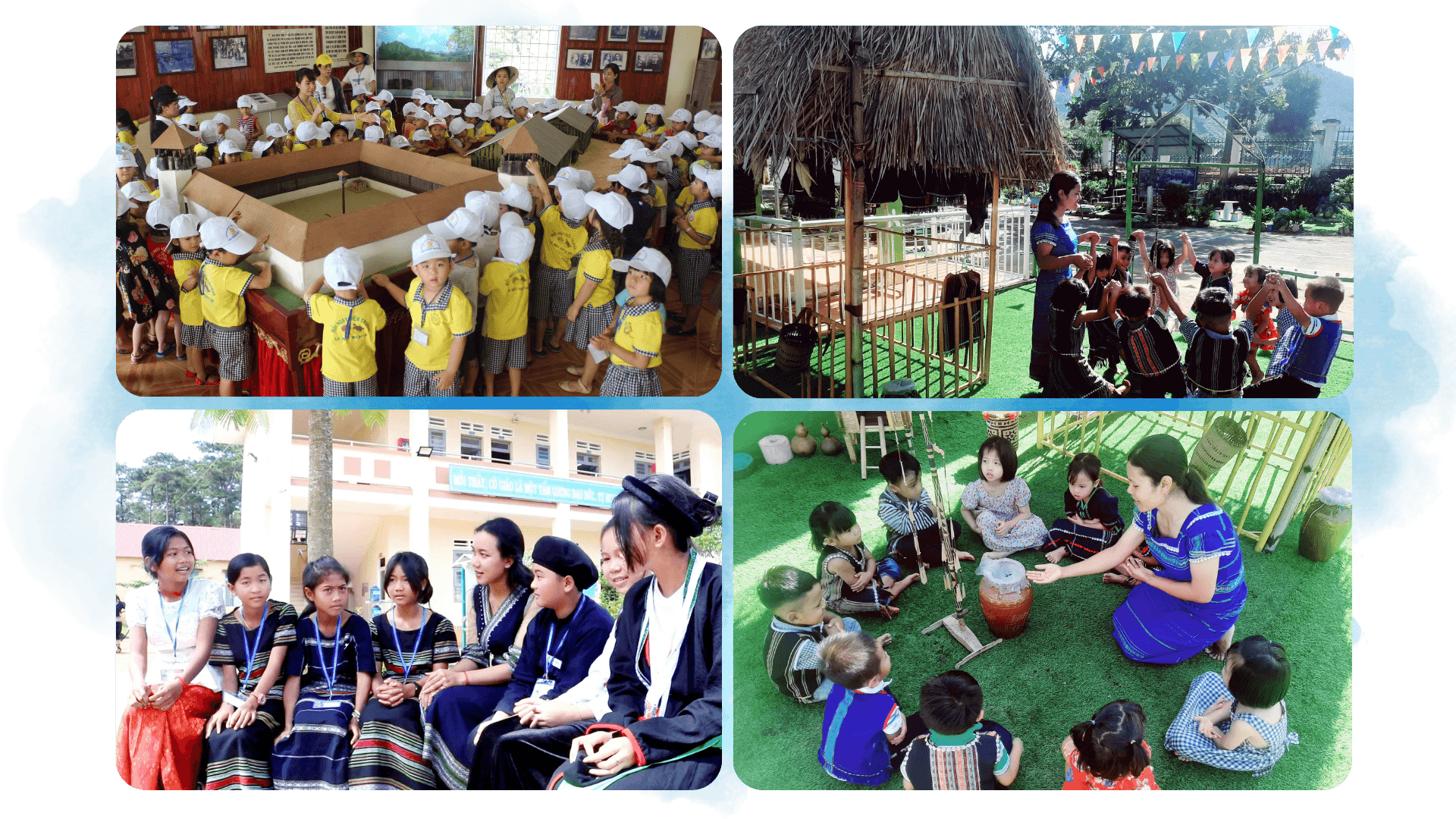
Effective use of land resources and successful integration into the market economy have contributed to the emergence of many successful ethnic minority entrepreneurs. At the same time, ethnic communities continue to benefit from preferential policies in education, healthcare, and social welfare while preserving their cultural identity.
The Central Highlands boasts three significant peaks—Chu Yang Sin, Bidoup, and Ngoc Linh—which rise prominently above the expansive forests of the area. Major rivers like the Krong Ano, Krong Ana, Serepok, Dak Bla, Se San, and Dong Nai begin in these mountain ranges, meandering through woodlands and communities while carrying centuries of history and cultural heritage.
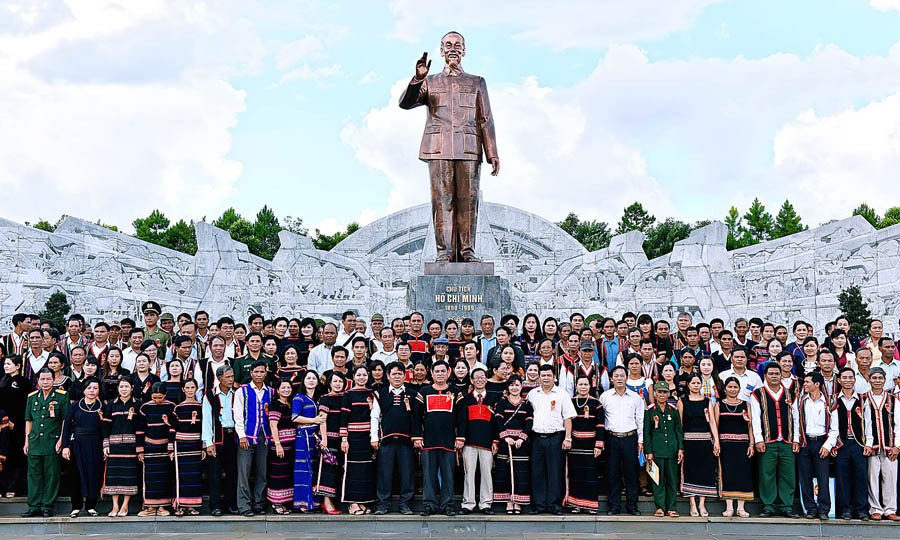
The land, waters, and people of the Central Highlands have forged a strong foundation built on unity, resilience, and pride. This enduring spirit continues to nurture a region that is developing steadily and confidently in Vietnam's western highlands.