


The Gong Culture Festival – Where Cultural Colors converge
Taking place from December 10–12, 2025, the first Lam Dong Provincial Gong Culture Festival not only created a vibrant and distinctive festive space but also spread pride, strengthened community bonds and highlighted the enduring value of traditional cultural heritage.
When cultural colors move to the same rhythm
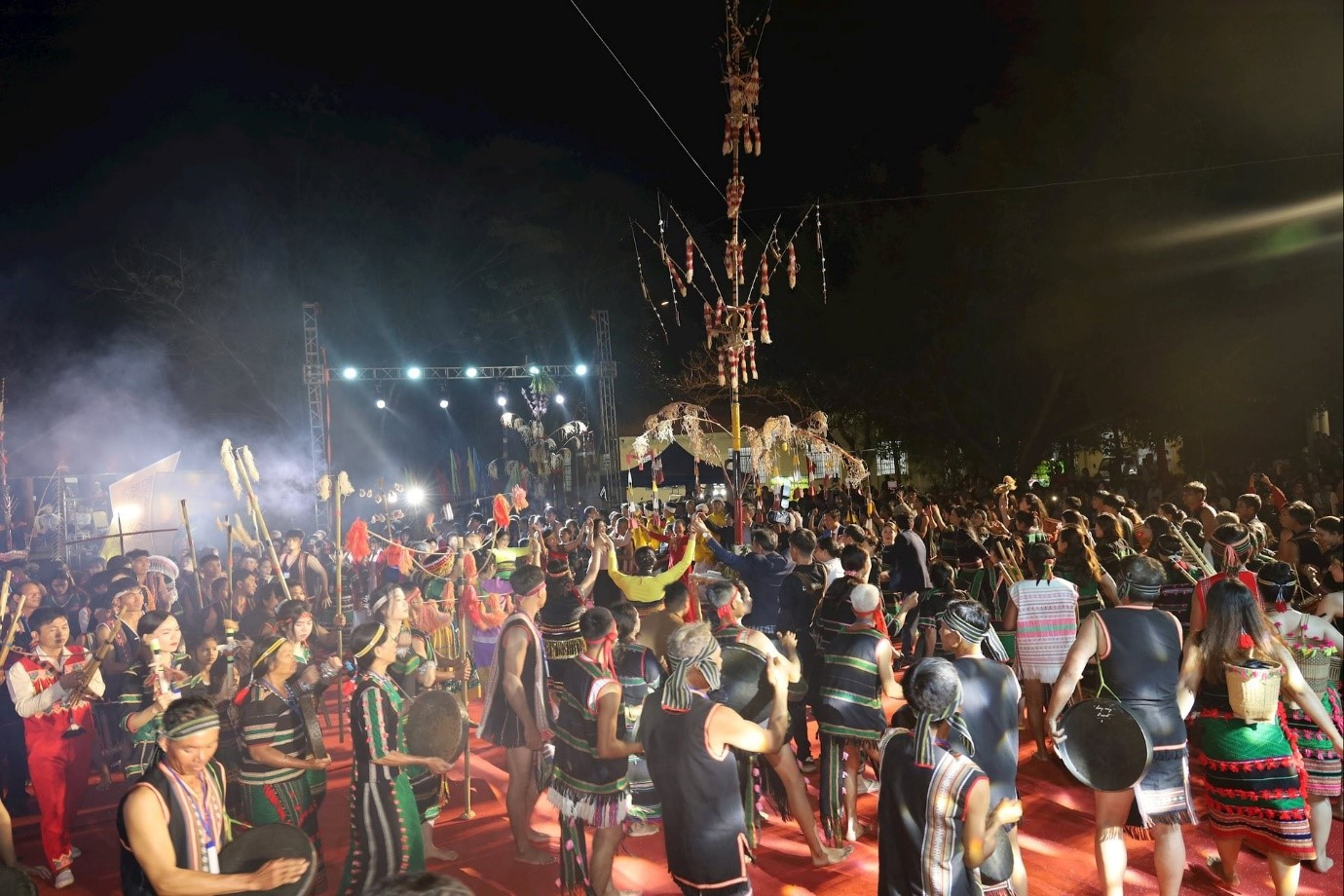
Beneath the traditional ceremonial “neu” tree, participating teams from various villages gathered in the distinctive attire of their respective ethnic groups. The resonant sound of gongs blended with long, flowing melodies. Hands clasped, arms linked over shoulders, people formed interweaving large and small circles around the pole, moving together in song and celebration, as if all distances dissolved in that shared moment of festivity.
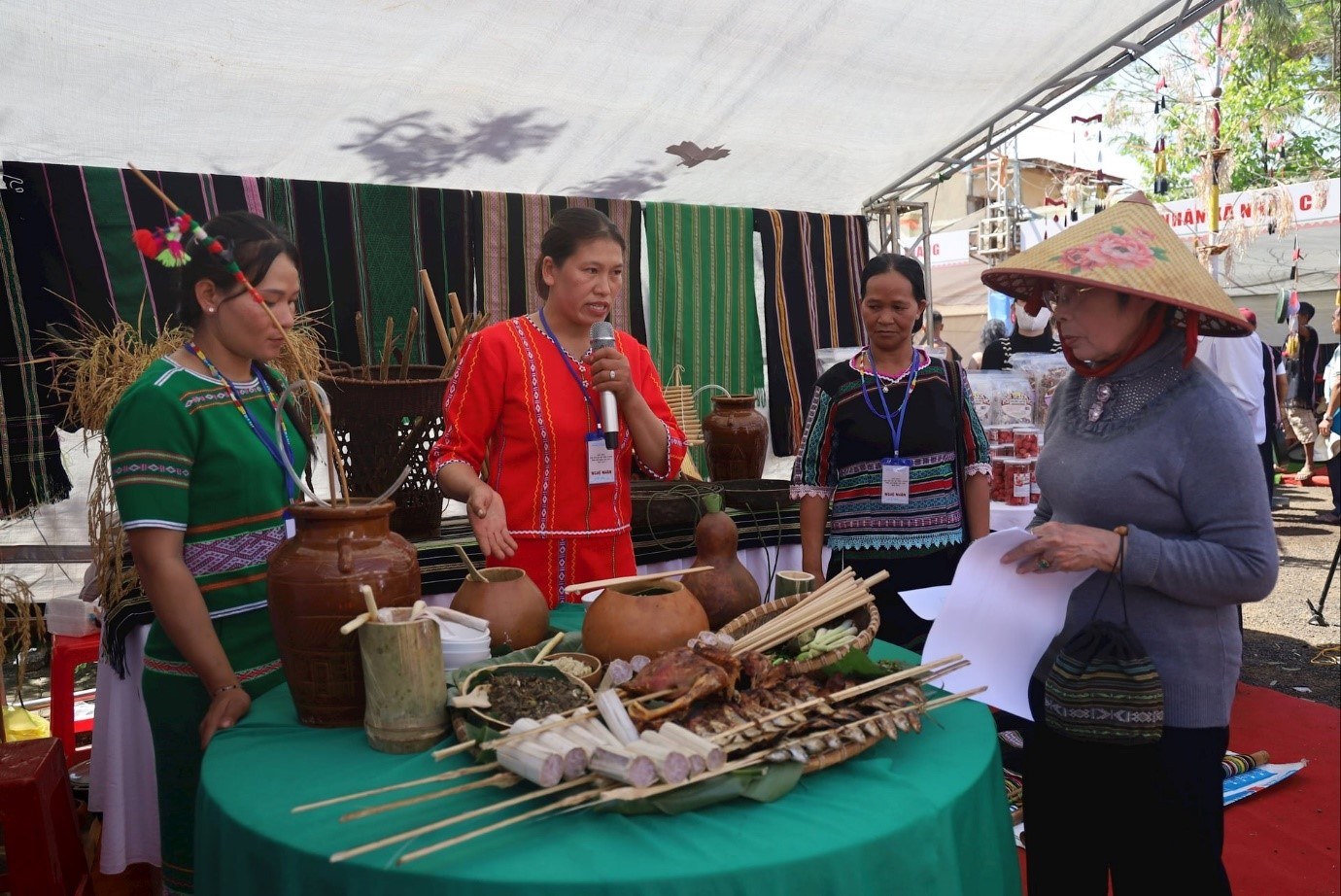
The festival space unfolded into multiple layers of cultural experience, where each team brought its own unique character while sharing a common commitment to preserving and spreading cultural identity. In the exhibition area, booths were carefully arranged, from their visual presentation to the stories introducing cultural and agricultural products from each village. Every artifact and product carried the imprint of daily life, reflecting the close bond between people and nature, and between tradition and everyday practices.
On stage, performances showcasing community-based tourism skills, reenactments of festival scenes and traditional cultural rituals were presented through a simple, approachable artistic language. Free of elaborate staging, each performance conveyed authenticity and stayed true to the spirit of indigenous culture. Dance movements, songs and gong rhythms seemed to retell familiar village stories — where culture is inseparable from life and present in everyday activities.
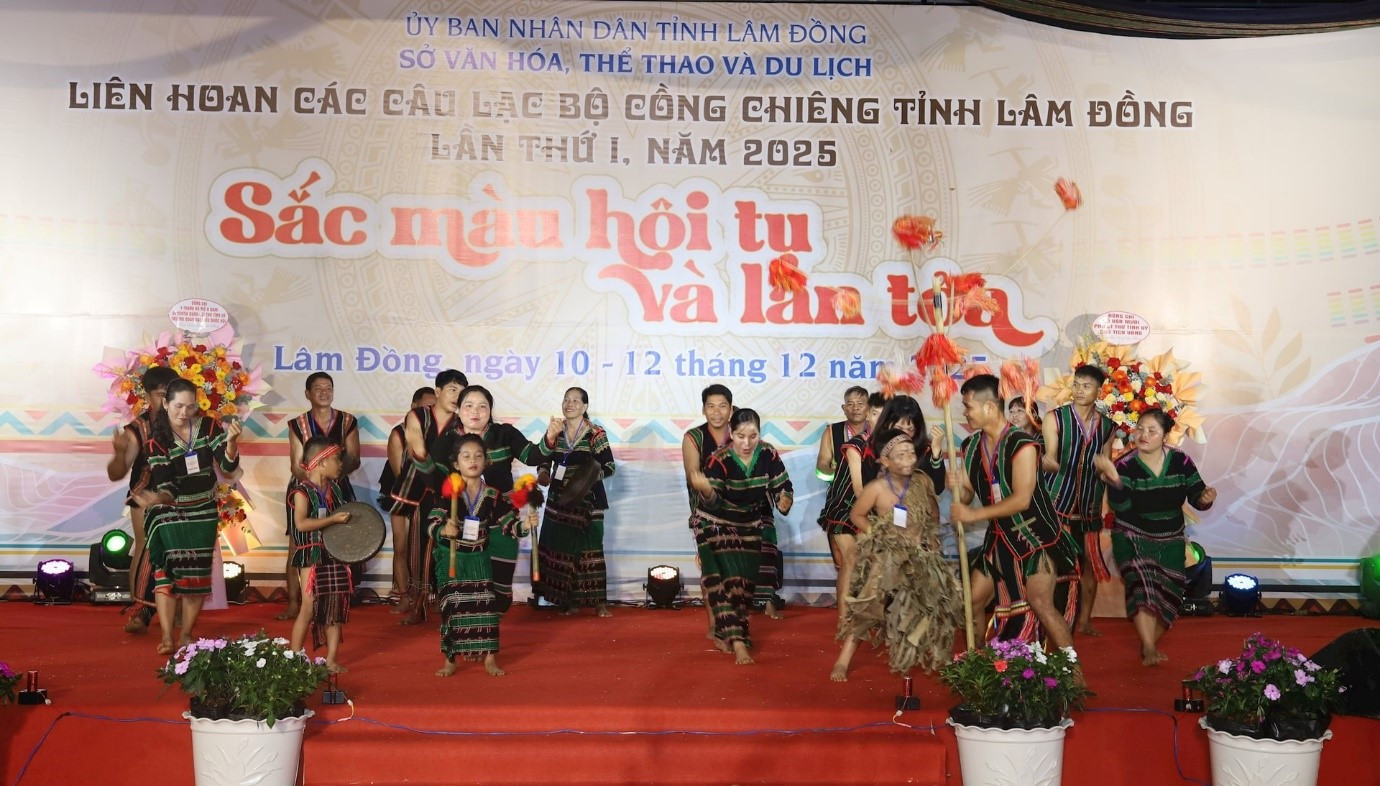
The most striking highlights were the gong performances and traditional costume presentations. Each team offered its own distinct expression, reflecting the cultural characteristics of its ethnic group. Some captivated audiences with lively, decisive gong rhythms, while others impressed with deep, contemplative and unhurried melodies. Traditional brocade costumes, rich in patterns and colors, appeared together on stage, creating a vibrant yet harmonious picture. Each team was a unique color, contributing to the shared beauty of the ethnic communities.
The festive atmosphere thus spread from the stage to every corner of the venue. Audiences did not merely come to watch, but to immerse themselves in the rhythm of the festival, clearly sensing the strong bonds between communities. Three days of participation became three days of living within their own cultural spaces, sharing joy, pride and village stories told through gongs and dances.
Amid the lively crowd, Thi Lixa, a 12th-grade student from N’Trang Lơng Ethnic Boarding High School, shared her emotions with visible excitement. For Lixa, joining the festival was not only a joy but also a journey of discovery. “Through researching the competition pieces and directly immersing myself in the festival space, I understand my own ethnic traditions more deeply. At the same time, I’ve had the chance to connect with and learn about the cultural beauty of other ethnic groups such as the Ede, Mong and Cham. Each group has its own identity, but when we stand together in the gong circle, we all share the same rhythm,” she said.
Spreading heritage values from the festival into daily life
The First Lam Dong Provincial Gong Club Festival 2025 was organized under the theme “Colors Converge and Spread.” This spirit was not only present on stage but also deeply embedded in every activity and interaction among participating teams. The festival became an open space where cultural heritage could “live” in its true form — closely tied to community life and everyday practices.
In addition to performance competitions, the festival also provided an opportunity for teams to introduce traditional cuisine — an important facet of cultural identity. Each team presented a meal rich in the flavors of the highlands, reflecting local customs and the skillfulness of women in family life. When the competition ended, teams naturally gathered together to share the dishes prepared with care and respect. At that moment, the meal was no longer part of a contest but became a bridge connecting people through sharing and community spirit.
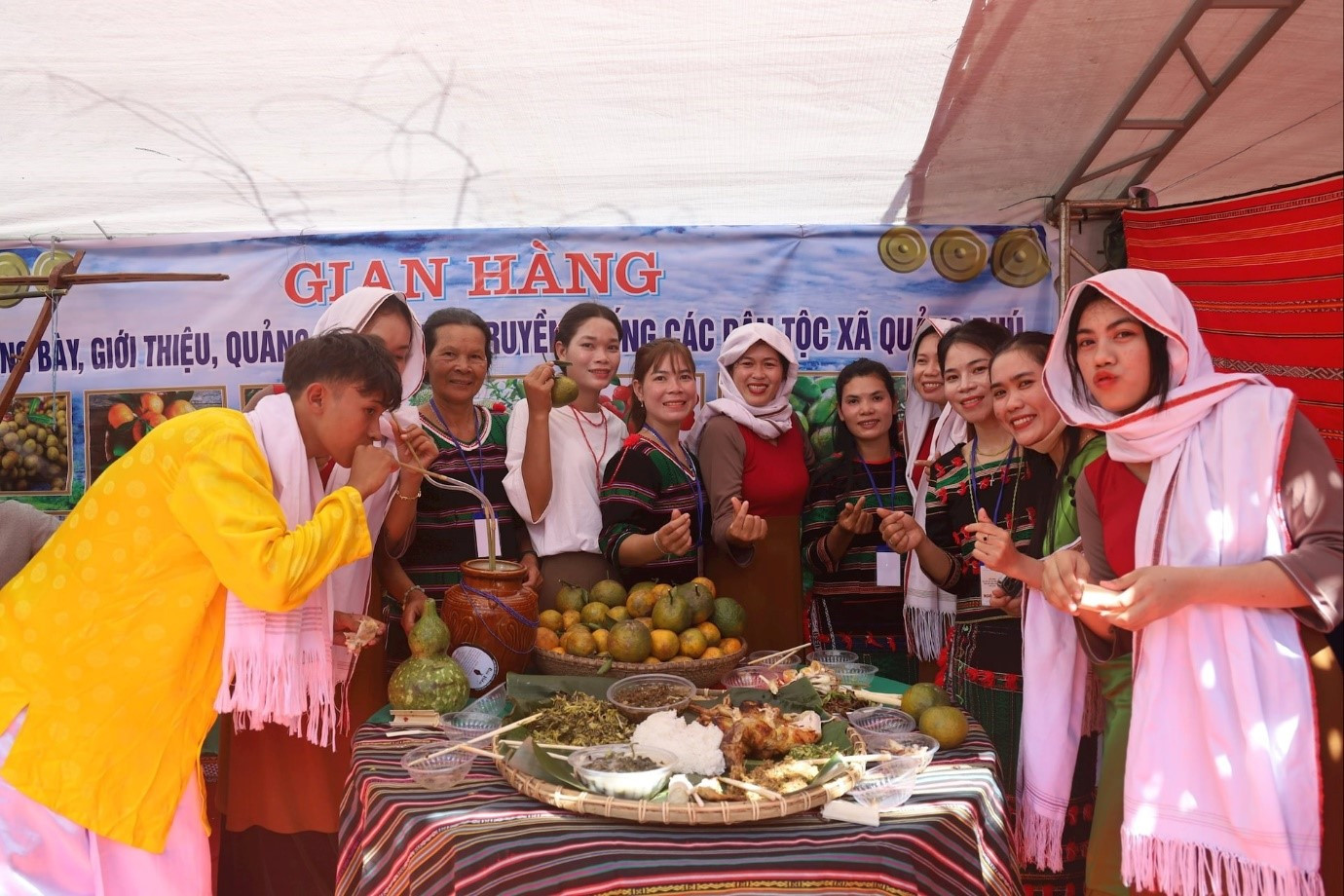
Y Tuyen, a member of the team from Nam Gia Nghia Ward, said he felt proud to participate in the festival. “The festival allows us to relive the traditional festive space of our own ethnic group, while also meeting and interacting with artisans from other villages. Conversations on the sidelines and handshakes after performances help teams understand each other better, grow closer and share the responsibility of preserving our heritage,” Y Tuyen shared.
According to Ms. Le Thi Truc Linh, Deputy Director of the Lam Dong Department of Culture, Sports and Tourism, the festival is not merely a performance event or a movement-based competition. It is an opportunity for ethnic communities to meet, connect and jointly revive and preserve traditional cultural values. At the same time, it creates a space for gong clubs and artisan teams to exchange, learn and share experiences, thereby honoring ethnic cultural identities in a vivid and life-centered manner.
The festival aims to ensure that gong culture continues to be present in village cultural life, especially among younger generations, fostering understanding, pride and sustainable heritage preservation
Ms. Le Thi Truc Linh - Deputy Director of the Lam Dong Department of Culture, Sports and Tourism
According to the Deputy Director, this year’s festival also contributes to linking cultural preservation with community-based tourism development. When traditional values are introduced and experienced in a natural and authentic way, visitors do not simply attend a festival but live within the local cultural space. Through this, gong heritage and the rich cultural values of Lam Dong’s ethnic communities continue to spread, forming a foundation for sustainable development.
As the three-day festival came to a close, its echoes lingered beneath the ceremonial pole — where interwoven circles once moved together. The gongs may have fallen silent, but the rhythm of the festival continues to resonate in the memories of all who took part. From these memories, the spirit of unity and cultural pride is nurtured, ensuring that each time the festival returns, the Gong Culture Festival leaves deep and lasting impressions.