


The “Key” to Sustainable Heritage Preservation
Artisans are the soul of cultural heritage, yet many are aging, lack adequate conditions for knowledge transmission, and have not received commensurate recognition or support. This reality calls for timely mechanisms in support, training and succession to ensure effective cultural preservation today.
Artisans: The Soul of Heritage
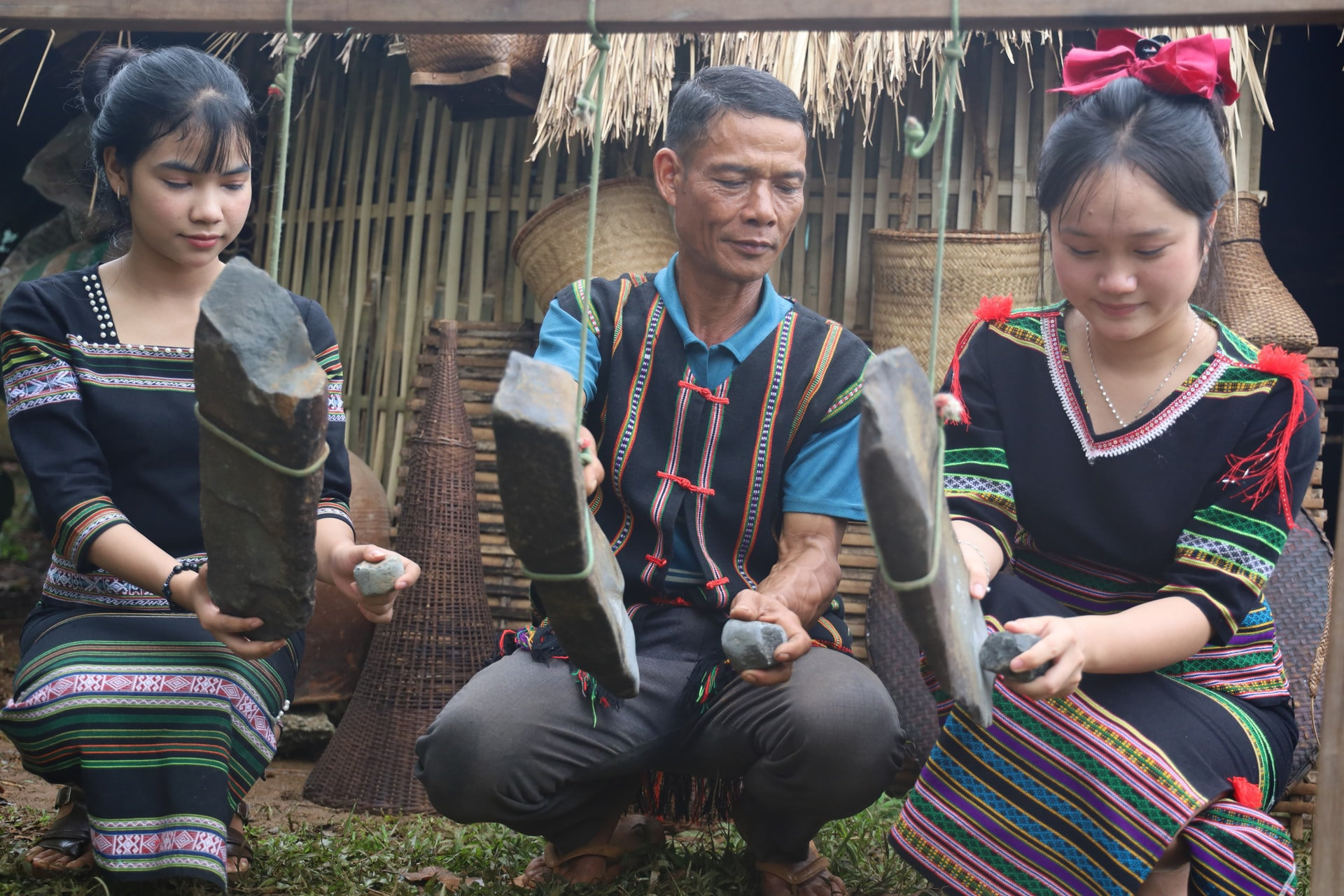
In the cultural life of indigenous communities, artisans are not merely individuals who know how to play a gong piece, weave a brocade cloth, or sing a folk song. They are the community’s “living memory,” the keepers of knowledge, rituals, customs and cultural spirit. Without them, many cultural values cannot be authentically preserved or recreated.
At the First Gong Club Festival, artisan Y Day from R’Cap village in Nam Nung shared that although nearly 100 people in the village know how to play gongs, only 6 can competently perform the full six-gong set. “I still try to pass on the skills to the younger generation, but as I grow older, I fear that when I no longer have the strength, the village may lose the gong traditions handed down by our ancestors,” he said.
This simple yet heartfelt reflection carries both concern and responsibility of the older generation. Many other artisans share similar worries. Thi Bi On, an artisan in Duc An Commune, confided: “The children are very eager to learn, but I do not have the conditions to open proper classes. Many techniques must be taught hands-on, sitting for long hours, while my back now aches constantly.”
Most artisans learned their crafts through informal, hands-on transmission rather than formal training. As they age and weaken, cultural memory itself faces the risk of fading. Although more young people are becoming involved, without the guidance of artisans, heritage cannot be sustained in daily life. The First Gong Club Festival clearly demonstrated the vital role of artisans within the community: they not only perform but also inspire and help build cultural identity among the youth. Yet a closer look reveals that the artisan generation is aging faster than a successor force is being formed. Cultural preservation, therefore, cannot be separated from caring for those who shoulder the responsibility of safeguarding heritage.
A Need for Stronger Policies
According to Le Thi Truc Linh, Deputy Director of the Department of Culture, Sports and Tourism, the province has in recent years paid attention to implementing policies for artisans. Many training classes in gong performance, brocade weaving, folk songs and dances have been organized directly in communes with large ethnic minority populations. Programs to restore traditional festivals, along with financial support for club operations, costumes and musical instruments, have created more opportunities for artisans to practice and pass on their skills.
Some localities have coordinated with the cultural sector to organize training courses on teaching methods, heritage knowledge and performance skills for core artisan groups. Various models reported by Lam Dong Newspaper and Radio-Television have shown proactive grassroots initiatives, such as inviting artisans to teach in schools and maintaining regular cultural activities. These efforts demonstrate that policies are not merely on paper but are gradually taking effect in real life.
While the province’s conservation efforts have achieved encouraging results, stronger and more synchronized measures are still needed to ensure long-term sustainability. Many artisans hope for stable teaching mechanisms, support for equipment and practice spaces, and long-term training programs. Meanwhile, the successor force remains limited, with gaps in skills, cultural knowledge and a sense of community responsibility.
One reality is clear: to preserve heritage, we must preserve those who safeguard it. Although many policies are already in place, as artisans continue to age, greater efforts are needed to support transmission and proactively build a new generation of successors. Culture can only endure when there are people to carry it forward.