


The Lingering Aroma of Liberica Coffee
The Southern Central Highlands is one of Lam Dong Province’s largest coffee-growing regions, known mainly for robusta coffee. However, the area is also home to liberica coffee — locally known as “jackfruit coffee” — a nostalgic variety whose fragrance still drifts across the hillsides.
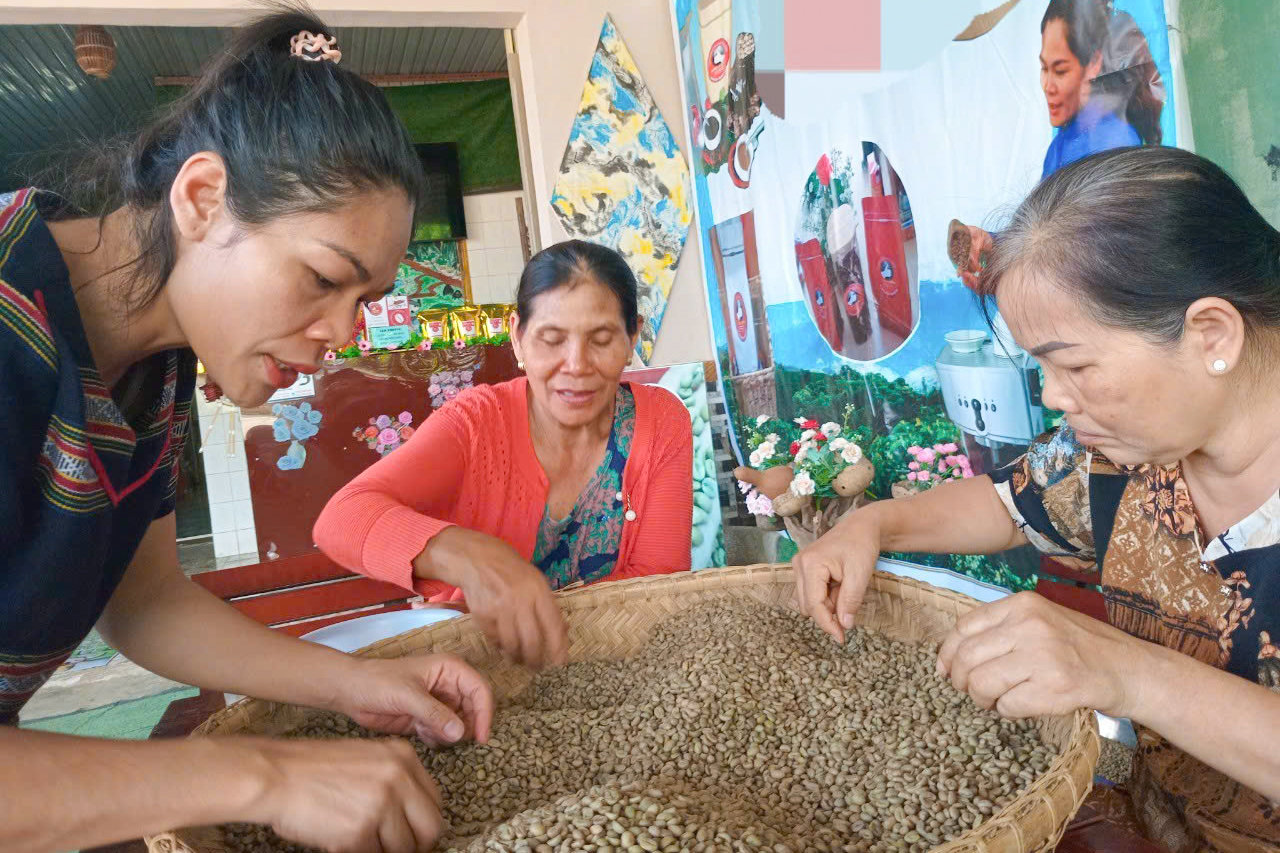
A Coffee Variety of Memories
According to historical records, liberica coffee was first introduced into Vietnam by the French in 1857, though it became more widely cultivated from 1908 onward. Because the tree is tall with thick, glossy leaves resembling those of jackfruit trees, Vietnamese farmers named it “ca phe mit,” or jackfruit coffee.
At this time of year, liberica coffee trees bloom with clusters of white flowers spreading fragrance throughout villages and hillsides. Compared with other coffee varieties, liberica ripens later and yields less, but it is drought-resistant, less vulnerable to pests, and adaptable to various soils and terrains. In many communes across the Southern Central Highlands, only scattered liberica trees remain, often kept by households for sentimental reasons or planted around gardens as windbreaks for other crops.
Elders in the region recall that when the French established coffee plantations in the Di Linh Plateau, Tu Quy Plantation in present-day Bao Lam 2 Commune, and plantations around Bao Loc, they brought various coffee varieties, including liberica coffee. Initially cultivated on plantations, the trees later spread when workers and residents collected seeds or transplanted young seedlings growing beneath mature trees. Over time, liberica coffee became common throughout villages and hillsides.
Today, several households in Bao Lam 3 Commune still preserve this variety. Do Van Hien, a resident of Loc Thanh Hamlet 1, owns a hillside plot dedicated to around 100 liberica trees. His family says liberica coffee is easy to grow, requires little care or irrigation, and only needs harvesting when the season arrives. In many ways, the trees resemble forest plants, thriving naturally with minimal human intervention.
In recent years, rising demand for specialty coffee has renewed interest in liberica, known for its distinctive mild acidity. Some businesses have begun purchasing liberica beans for separate processing or blending with other coffee varieties to create more refined flavors. As a result, traders now buy the beans as soon as they ripen.
K’Bet, a resident of Hoa Ninh Commune, said local farmers still preserve liberica trees, often planting them along field borders to shield crops from strong winds or keeping them near homes as living memories. During harvest season, the trees provide additional income without requiring significant maintenance or watering. Some of the oldest trees in the region have become towering, ancient specimens with thick and rugged trunks.
According to local farmers, mature liberica trees can yield up to 100 kilograms of fresh coffee cherries, while smaller trees produce around 30 to 40 kilograms. Traders purchase fresh liberica coffee directly from farms at prices ranging from VND 13,000 to 17,000 per kilogram for mixed-quality cherries and VND 20,000 to 23,000 per kilogram for selectively harvested ripe cherries. Green coffee beans sell for approximately VND 95,000 to 97,000 per kilogram. Besides generating income, liberica trees help protect crops from strong winds and provide valuable shade.
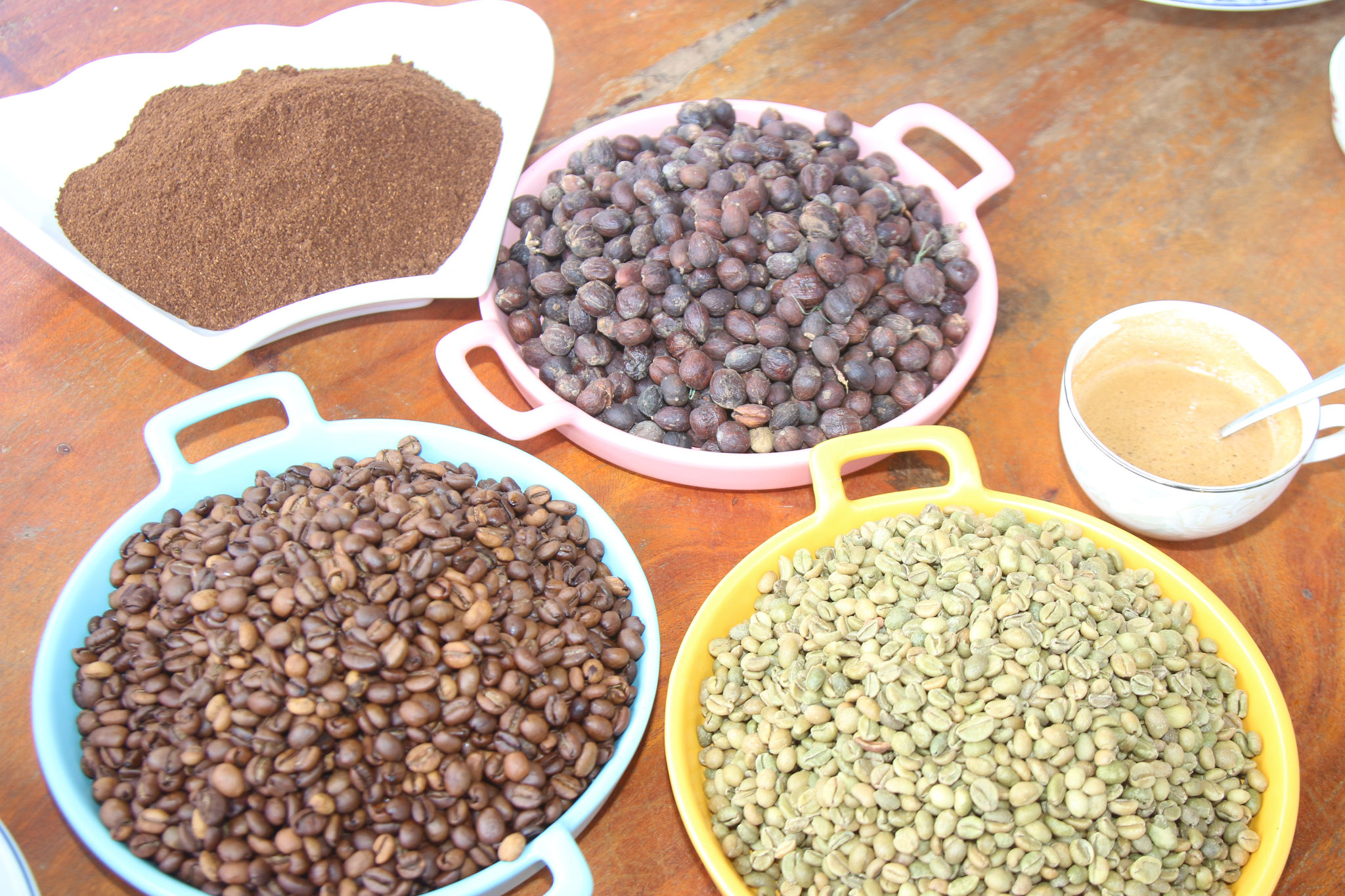
A Fragrance Drifting Through the Highlands
Research and industry information show that liberica coffee carries a mild acidity and subtle aromas reminiscent of tropical fruits. Some coffee growers in the Southern Central Highlands now blend small amounts of liberica with robusta to create more distinctive flavor profiles.
Ka Nhuy, a coffee grower and processor in Bao Lam 3 Commune, shared that her family once cultivated many liberica trees. However, due to pricing and productivity concerns, most were cut down, leaving only a few for blending purposes. To secure raw materials and improve quality control, she has recently planted around 100 seed-grown liberica trees and 3,500 grafted coffee trees using liberica rootstock.
According to research published by coffee experts, liberica coffee contains between 1.2% and 1.8% caffeine, lower than robusta. It is characterized by mild acidity, lingering sweetness, and aromas reminiscent of ripe jackfruit, wood, and tropical fruits.
Ka Nhuy explained that through roasting techniques and individual craftsmanship, liberica coffee can reveal layered aromas ranging from mango, ripe jackfruit, and banana to hints of green apple blended with creamy milk-like notes. Roasters must carefully determine blending ratios to soften acidity and adjust aroma intensity to suit regional coffee styles and consumer preferences.
During a field trip to learn more about liberica coffee still found in the mountain forests, I had the opportunity to visit Ngo Duc Tien, a friend living in the former Loc Thanh Commune, now Bao Lam 3 Commune. He invited me to taste and observe the process of making a cup of liberica coffee. His garden still contains many tall liberica trees that are decades old. He is also cultivating seedlings to plant more trees on his land in hopes of preserving this nostalgic coffee variety.
Agricultural officials in the Di Linh, Bao Loc, and Bao Lam areas said local authorities currently do not have official statistics on liberica coffee acreage, production, or tree numbers. The variety has existed in the region for generations, with residents mainly preserving it for sentimental value or as windbreaks. Beans from remaining trees are still used in coffee blends, while some farmers have begun propagating seedlings for new planting or using liberica as rootstock in hillside coffee plantations.