


The M’nong Communal Meal in Today’s Daily Life
Amid changing times, the communal meal of the M’nong people in Lam Dong quietly preserves the soul of the village. Bamboo-tube rice, wild-leaf soup, and jars of “ruou can” (straw wine) are simple dishes that nourish not only the body but also the community’s cultural identity.
Keeping the Hearth Fire Alive in Moments of Celebration
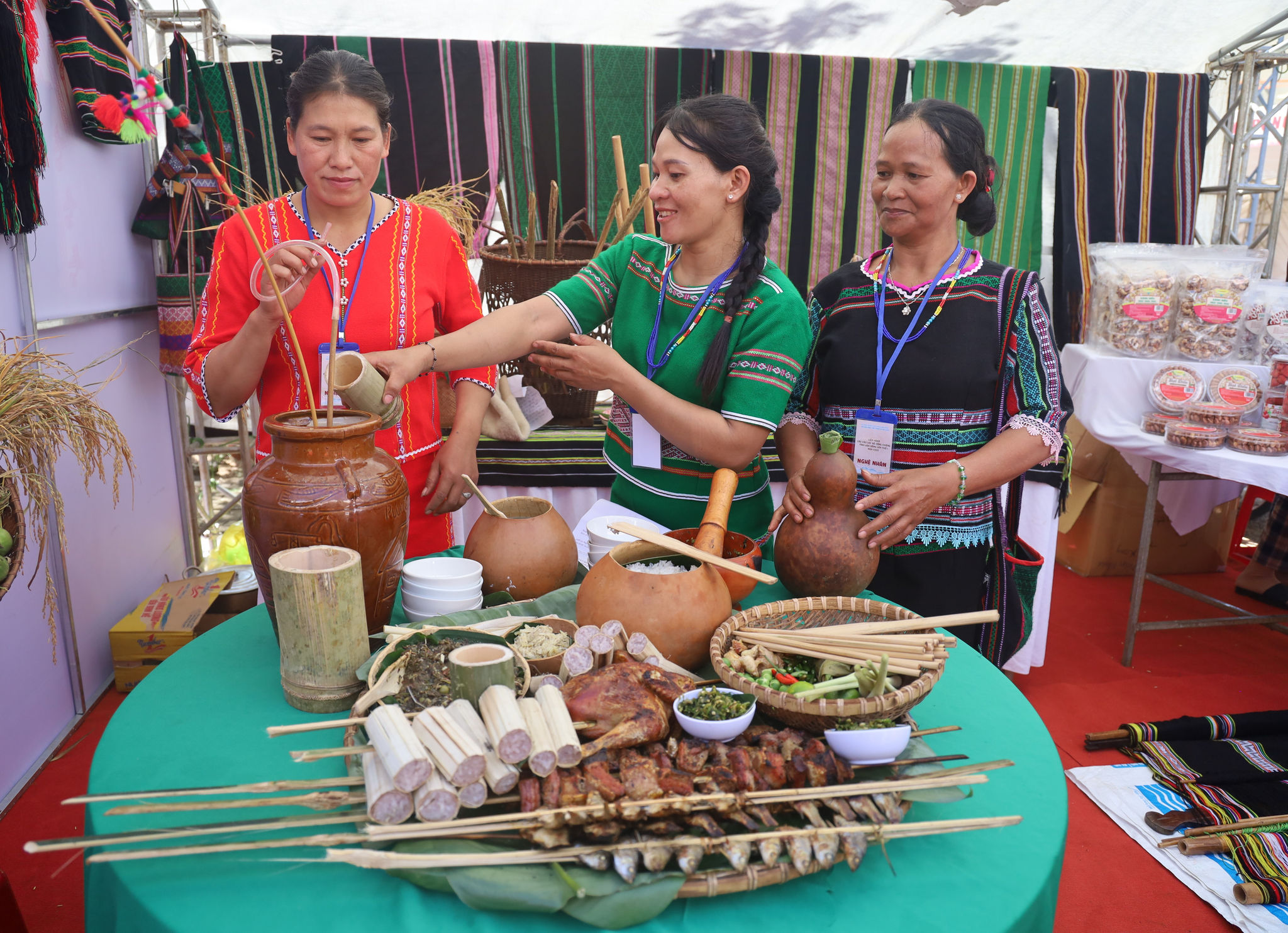
Whenever the M’nong community holds a festival or joyful village event, the atmosphere becomes lively. Some people grill bamboo-tube rice, others roast meat, pound chili salt, or prepare wild-leaf soup. Everyone — young and old, men and women — skillfully contributes to the traditional dishes they have known since childhood.
A traditional M’nong meal is modest yet complete: fragrant bamboo-tube rice, grilled chicken, wild-leaf and rattan-shoot soup, bitter eggplant, chili salt, and a large jar of “ruou can” placed in the center of the house. All ingredients come from the forest and upland fields, from what families raise and grow themselves — carrying the breath of the mountains into every dish.
During festivals, before the meal, the host often sings an invitation in the M’nong language. The simple, heartfelt melody acts as a greeting, a warm welcome, and a sharing of communal joy. Thus, the meal is not merely food; it is a space of connection where people gather, tell stories, and recall their origins.
Ms. H’Bom, from Nam Gia Nghia Ward, shared: “Whenever the village has a ceremony or celebration, everyone cooks together. The children watch the elders, learn, and gradually become familiar.” For her, the traditional meal is not only hospitality but also a way to teach the next generation to maintain family customs and remember their heritage.
The Traditional Meal in Modern Times
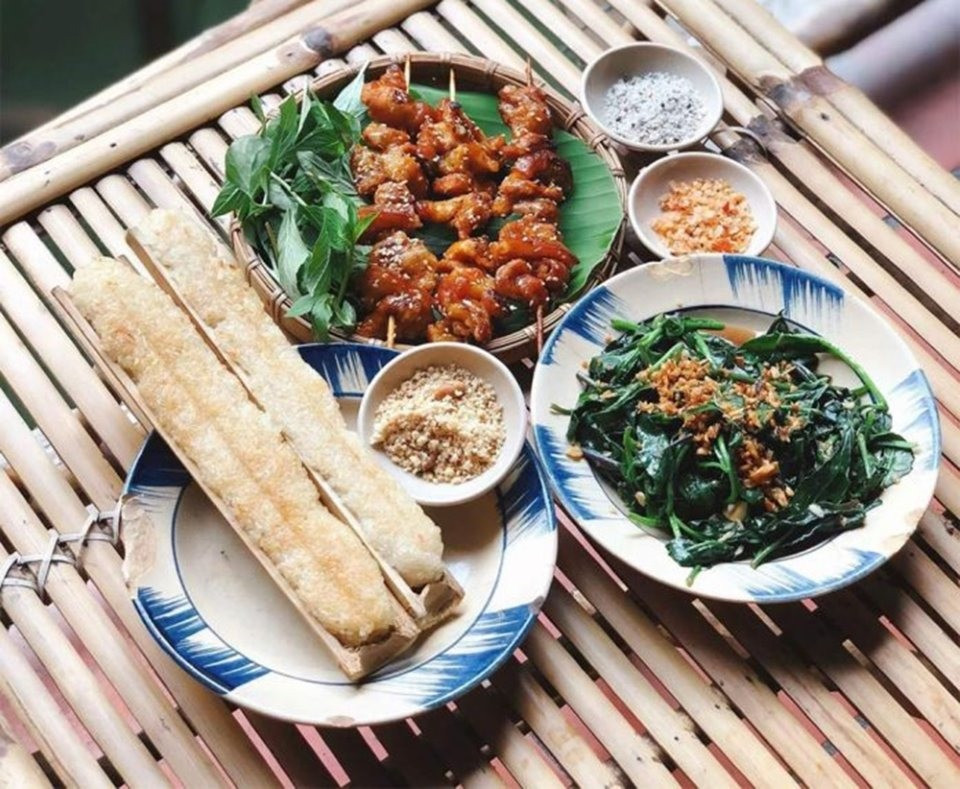
Modern life has brought change, and the M’nong meal has adapted accordingly. Yet these adjustments do not erase its essence; rather, they allow traditions to continue in a sustainable way.
According to Ms. H’Kuit Nie from Dong Gia Nghia Ward, wild-leaf soup was once cooked mainly with dried or canned fish, but today families can use more varied ingredients, including fresh meat and fish. Seasoning remains simple — primarily salt — and sometimes “rnhao” leaves are added to create natural sweetness while preserving the forest’s native flavors. These adjustments make traditional dishes more suitable for everyday meals, not only festivals.
She says: “Even though there are many new foods today, during important occasions my family still prepares traditional dishes so our children know, remember, and respect our culture.”
Deputy Director of the Department of Culture, Sports and Tourism Le Thi Truc Linh, notes that the M’nong communal meal represents more than cuisine. It is a cultural space reflecting community life and the harmonious relationship between people and nature. Therefore, preserving the traditional meal must be part of broader efforts to safeguard the cultural values of ethnic minorities.
She adds that cultural authorities have increasingly integrated cultural-heritage preservation into community events and festivals. At the recent 1st Provincial Gong Club Festival, traditional meals of the M’nong and other ethnic groups became a competition category where participants cooked, presented, and shared the stories behind each dish. This helped remind children, youth, and villagers alike of the beauty of the communal meal and the warmth of the hearth that binds the community together.
In the current context, as traditional cultural values face the risk of fading, such initiatives demonstrate the guiding role of state cultural management — preserving heritage not as something distant, but as a living practice nurtured within each family and every village.