


The Profound and Soulful Melodies of K’ho Folk Songs
As the dry season arrives, the sky becomes vast and crystal clear, granaries are stocked with rice, and the villages of the Central Highlands embrace the festive season. For the K’ho community, traditional songs frequently echo around the fire in stilt houses each night and become even more spirited during the New Rice Festival (Nho Lir Bong or Nho Lir Vong), which typically takes place every December.

Folk Songs Resonating in Festivals and Village Life
After the buffalo-sacrificing ceremony beneath the elaborately decorated ceremonial pole, villagers engage in "xoang" dances to the rhythmic beat of gongs and the soulful melodies of the khen bau. The celebrations can last seven to ten days, as the community gathers at every hearth to share ya yau and nri songs, collectively honoring the blessings of a bountiful harvest.
K’ho folk music is categorized into four primary groups: yal yau, tam pot – lah long, nri, and ritual chants that honor deities. Among these, yal yau—meaning reflections on the past, also referred to as narrative or spoken singing—holds a unique significance. Performances of yal yau can extend from day into night, sometimes lasting for two to three consecutive days and nights, enchanting audiences beside jars of "Can " wine that are kept full. These tunes draw upon a rich collection of folk tales, poetry (tam pla), lengthy narrative poems, and epics, illustrating the dynamic spiritual culture of the K’ho people. Within yal yau, the artistic style termed dos crih combines storytelling and melody, enhancing the vividness and emotional impact of the tales.

Tam pot, lah long singing style of the K'ho people is a lyrical love song typically performed as call-and-response exchanges between men and women, similar to the courtship and antiphonal love singing found among other ethnic groups.
The tam pot verses resemble sincere, genuine expressions taken from folk sayings and rhymes. These romantic songs frequently echo at festivals, in the fields, near peaceful streams, or within stilt houses, as young individuals share their emotions. The lyrics usually intertwine poetry and melody, seamlessly fitting the performance's atmosphere.

In the past, before the advent of writing, the K’ho people maintained their knowledge and culture through oral traditions. Consequently, they created a spoken-singing style that was rich in musicality—easy to memorize and recall while also providing deep moral lessons. In addition to the yal yau and tam pot melodies, customary laws were also conveyed through the nri singing style.
When assessing breaches of customary law, villagers would invoke nri songs—short, memorable verses that embody a worldview closely tied to nature. This oral tradition ensured that customary laws, while not documented, were transmitted from one generation to the next. Each verse serves as a lesson, encapsulating experiences from community life or production, representing practical wisdom and illustrating the harmonious bond between humans and nature.
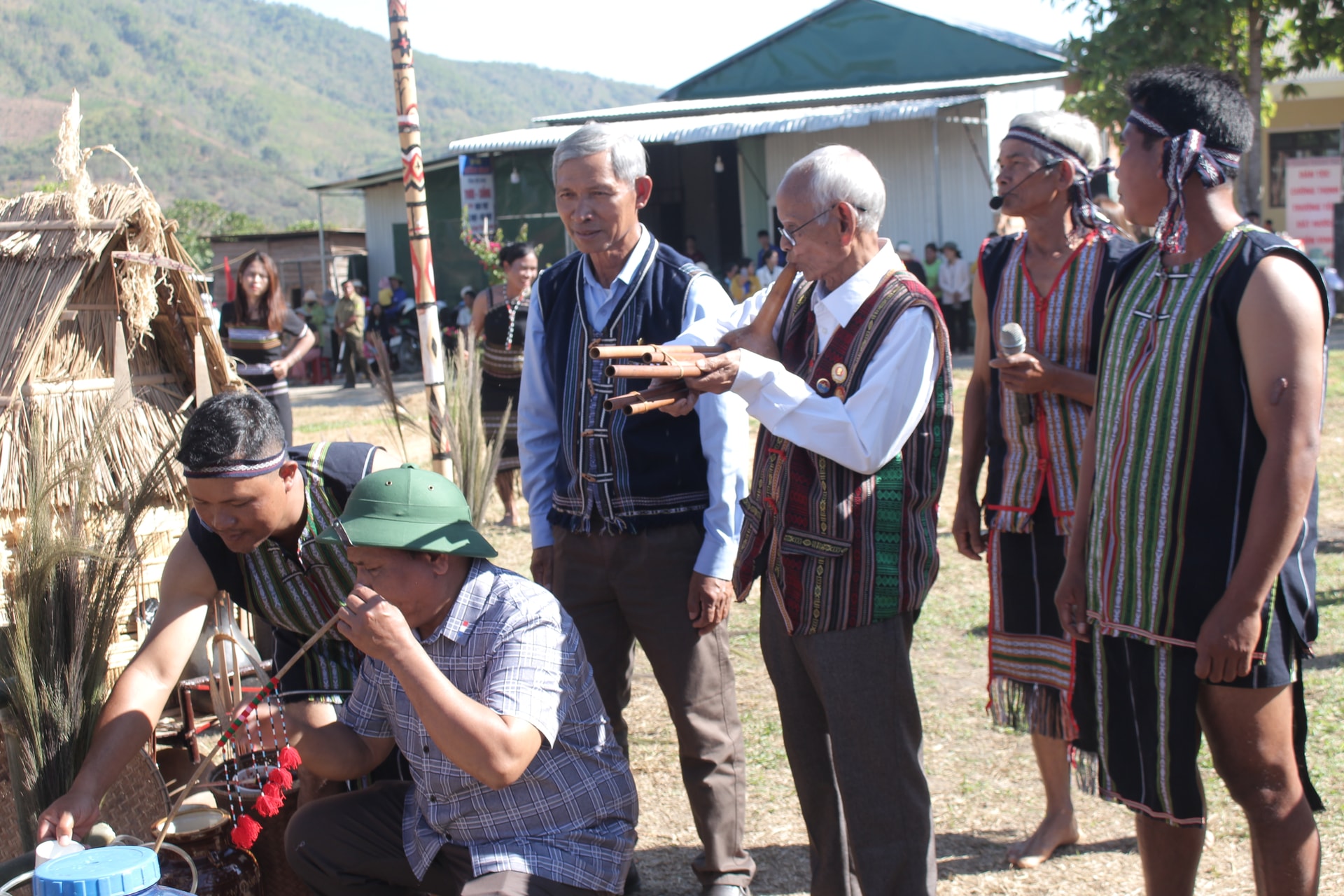
Additionally, the K’ho community engages in ritual chants and ceremonial melodies during ceremonies honoring their deities. These songs feature fluid structures—unbound by a fixed number of lines or syllables—yet remain rich in rhythmic harmony. They serve as prayers to Yang and the divine forces of heaven and earth, appealing for favorable weather, plentiful harvests, and a life filled with warmth, peace, and prosperity.
The folk literary and artistic legacy of the K’ho is exceptionally rich, showcasing lyrical and musical poetry that is closely tied to traditional instruments like the six-gong set, the gourd pipe (kombuat), bamboo tube zither (korla), and drums (sogor), which enhance the singing with their accompaniment and harmonization. Numerous epic poems, spanning thousands of lines, are recited and sung by village elders throughout the night during the buffalo-sacrifice ceremony dedicated to Yang, mirroring the community’s vibrant spiritual life through narratives of love, friendship, communal ties, good versus evil, life and death, and familiar places known to the K’ho people.
Lacking a written form, the K’ho maintain their cultural legacy through oral expressions and songs, elevating everyday communication into an art form in which each verse possesses an epic quality while conveying genuine emotion. Folklorist Tran Thanh Hoai notes that shifts in livelihoods and production methods have led many festivals to become largely reconstructed occasions, resulting in a reduction of traditional venues for folk singing. Nonetheless, initiatives to gather and safeguard this cultural heritage have gained momentum: many traditional melodies are now showcased on stage at competitions and festivals, while lyrics, folktales, epic poems, ballads, and proverbs have been documented and published—ensuring that K’ho folk songs continue to resonate profoundly across generations.