


The Rich Aroma of Lang Biang Can Wine
For generations, the K’ho people living at the foot of Lang Biang Mountain have been closely connected to the craft of making can wine as an integral part of their cultural identity. This traditional craft not only helps improve local livelihoods but also contributes to establishing and strengthening the brand of Lang Biang Can Wine.
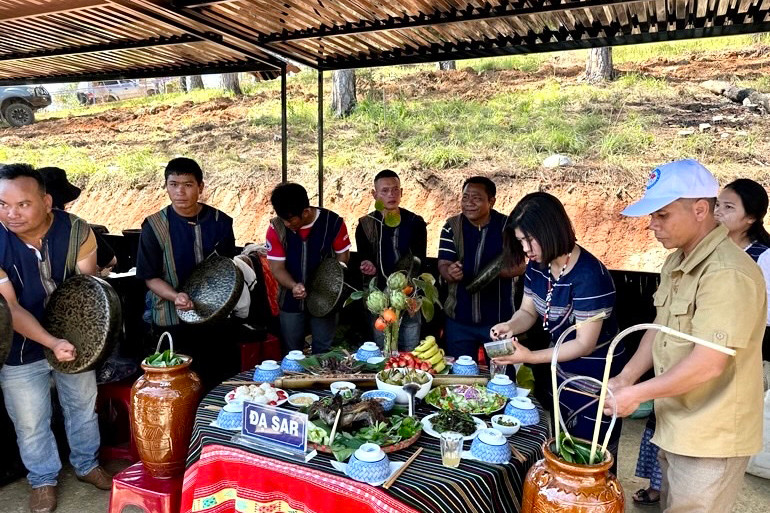
As with other indigenous groups in the Central Highlands, any discussion of K’ho–Lach traditional culture would be incomplete without mentioning can wine, a drink deeply rooted in community life.
For centuries, nearly every household of the K’ho community living at the foot of Lang Biang Mountain (Lang Biang - Da Lat Ward ) has stored multiple jars of well-fermented can wine to greet esteemed visitors or mark significant family celebrations.
In the Bon Dung I residential area, Pang Ting Mok is known as one of the region’s most experienced can wine artisans. She began making can wine at the age of 15, learning the craft from her grandmother and mother. With more than 45 years of experience, she said a delicious jar of can wine requires meticulous preparation.
The ingredients used are completely natural, consisting of rice, rice husks, corn, cassava, and other components, blended with yeast derived from forest leaves, and fermented with dried banana leaves for approximately 1.5 to 2 months until the wine achieves its deep aroma and is ready to be consumed.
According to Mok, the most important element that creates the distinctive flavor and aroma of can wine is the yeast. “In the past, K’ho villagers often went into the forest to collect leaves, bark, and roots of medicinal plants to make yeast for can wine. Nowadays, some plants grown near homes can also be used, so people no longer need to travel far. Some people use yeast purchased from markets, but its flavor cannot compare with yeast made from forest plants,” she said.
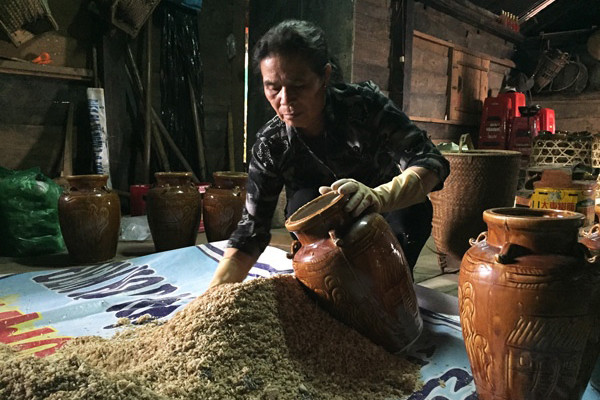
The K’ho people’s traditional craft of making can wine at the foot of Lang Biang Mountain has been preserved and passed down through generations. Traditionally, it was considered a secondary activity during the agricultural off-season, mainly serving family and community gatherings during festivals, Lunar New Year, weddings, and other occasions.
As the tourism sector started to grow in the region, local residents quickly modified the product to serve the tourism market, ensuring a relatively consistent income for the community. Presently, areas with significant ethnic minority populations in Lang Biang - Da Lat Ward consist of about 200 households engaged in the production of can wine, with many operating on a regular basis and storing hundreds of prepared jars in their homes.
Can wine is provided to tourist sites and attractions to offer visitors during cultural exchange activities, gong performances, and campfire gatherings. This has evolved into a distinctive cultural element of the K’ho people that many tourists visiting Lang Biang–Da Lat wish to experience.
To safeguard and promote this unique cultural heritage, Lac Duong District (now known as Lang Biang – Da Lat Ward) formed a cooperative group to create and market can wine products under the brand name “Lang Biang Can Wine,” which has become well-known among both domestic and international tourists.
Lang Biang Can Wine has also gained intellectual property trademark recognition from the Intellectual Property Office. Furthermore, in 2015, the provincial People’s Committee officially recognized Bon Lang Biang as a traditional craft village.
Cil Poh, Vice Chairman of the People’s Committee of Lang Biang – Da Lat Ward, stated that can wine represents a unique cultural feature of the K’ho ethnic community that local authorities continue to preserve and develop. Integrating can wine into tourism activities not only helps preserve and spread traditional cultural values but also creates opportunities for local people to participate in tourism, increase income, and promote sustainable economic development.
In areas with large ethnic minority populations in Lang Biang – Da Lat Ward, around 200 households are involved in can wine production, many of them on a regular basis. The products are mainly supplied to tourist sites to serve visitors during cultural exchanges, gong performances, and campfire activities.