


The Unique Gong Art of the K’ho
The K’ho Sre people of Dinh Van Lam Ha primarily practice wet-rice cultivation, and their gong culture is closely intertwined with the life cycles of both the rice and the community. When the dry season comes and the harvest is safely stored, the villages of Bo Lieng, Sre Nhak, Riong To, and Da Huynh begin their festival.
Gong dueling: A game of creativity
The echo of the gongs rises to call upon Yàng, giving thanks for a bountiful harvest and a year of abundance. Rice wine, grilled meat, singing, and dancing blended with the lively rhythms of the gongs, filling the entire space with a festive atmosphere.”. Amid these joyful festival, everyone looks forward to the most exciting performance: the gong duel (cing yo)—a unique musical competition found only among the K’ho people. In the warmth of rice wine, young men eagerly test their skills, using technique, stamina, and rhythm to force their opponents off-beat, thereby claiming victory.
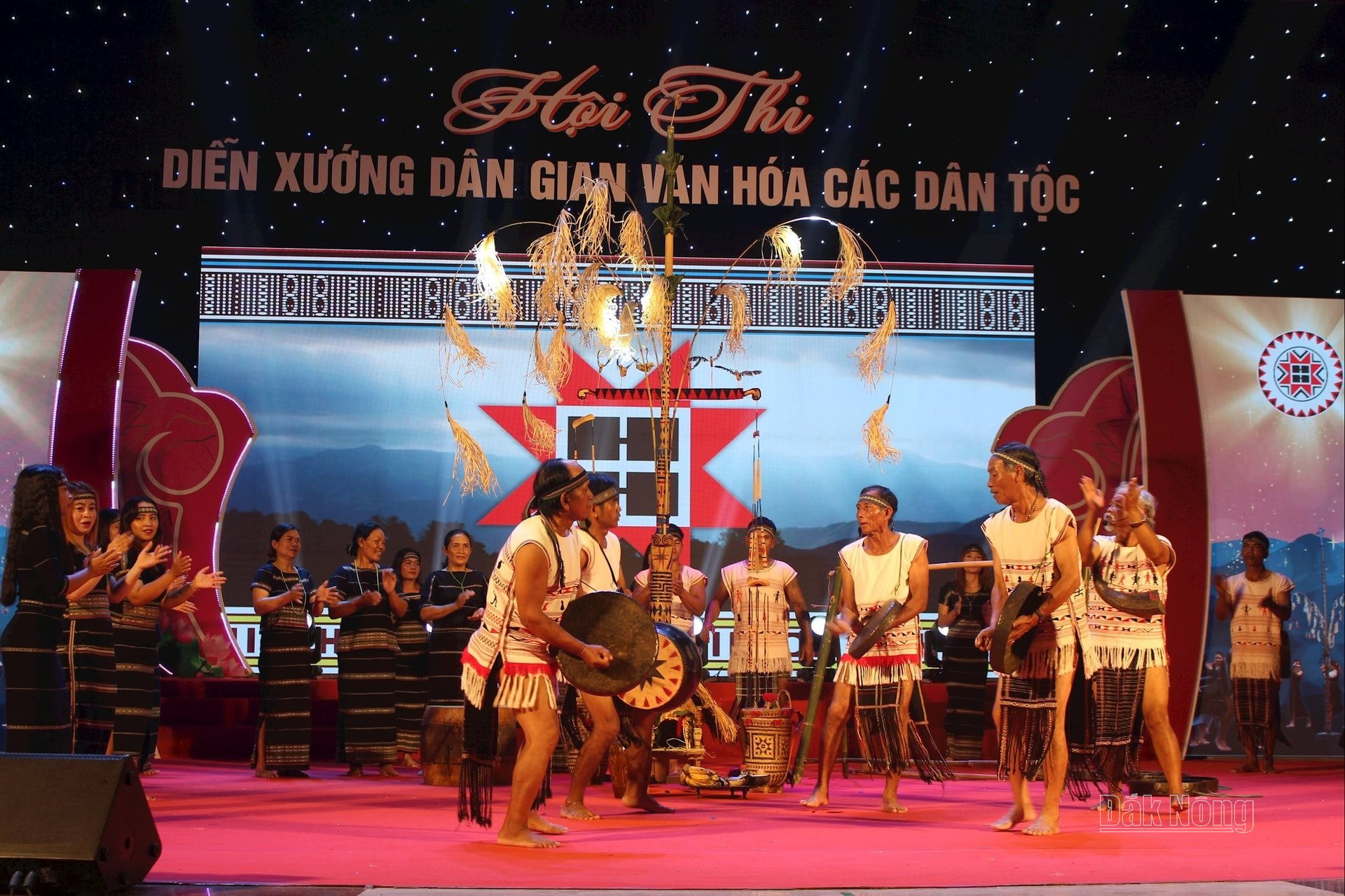
A K’ho gong set consists of six instruments: cing me (rhythm gong) keeps the main rhythm, cing rdơn (support gong) reinforces the rhythm gong, cing ndơn changes the melody, cing thê and cing thi respond to the rhythm gong’s plays.
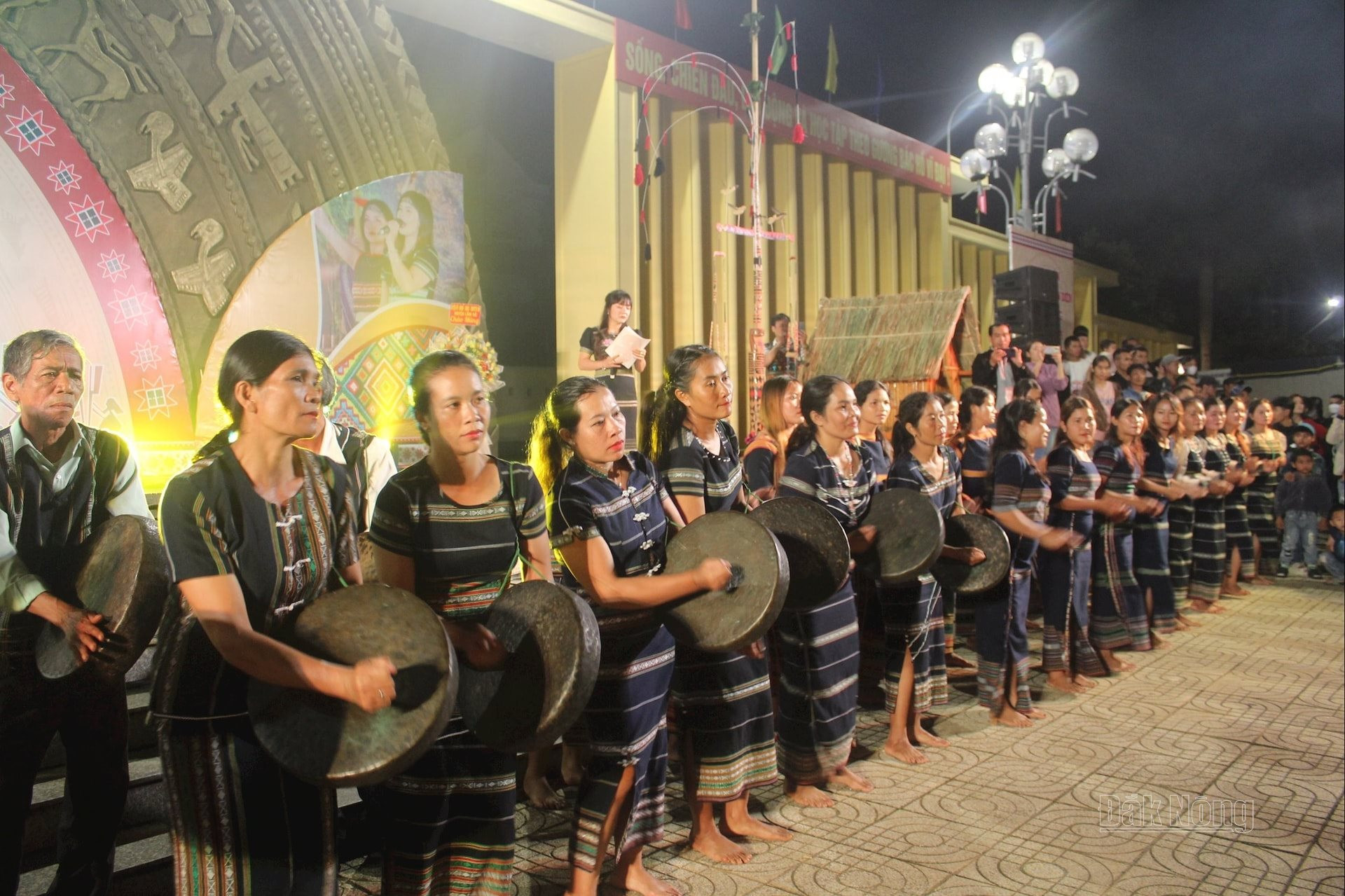
Each gong corresponds to a musical scale and a note, creating a complete harmony. When performing, K’ho musicians arrange themselves in a curved formation in the order listed above, supporting the gong with their left hand and striking with their right. The formation shifts forward and backward, and the rising and falling tones, along with ornamentations, are produced through hand techniques like covering, spreading, or sliding across the gong’s surface.
In Vietnamese, these instruments are called "cồng chiêng". In K’ho, flat gongs are called cing, while boss gongs (or gongs with a cup) are called mồng (in Vietnamese referred to as cồng). A full set can produce up to 36 different beats, expressing the wide range of human emotion—from festivals to funerals, from joy to sorrow.
While a six-gong ensemble performs ritual pieces—welcoming guests, invoking Yàng, or accompanying hunts—the gong duel (cing yo) breaks away from these structured forms. It is an improvisational, highly creative, and competitive performance. Each player holds one gong, striking while simultaneously trying to disrupt the opponent’s rhythm. The one who loses timing or whose gong “falls silent” is defeated.
Originating in the villages, the K’ho gong duel of Dinh Van has reached major stages, winning the First Prize at the National Folk Music Festival in Nghe An and making a strong impression at the 2024 Festival of Folk Performance of Vietnam’s Ethnic Groups in Quang Ngai. Audiences were captivated by the masters from Bo Lieng. The trio K’Bes, K’Ken, and K’Binh became particularly famous for the K’Ho gong duel. Their performances were gentle, flowing tones and intense, energetic rhythms, leaving spectators spellbound.
A Battle of Sound
Master artisan K’Bes, 65, from Bo Lieng Village, is one of the few remaining experts in gong dueling. Taught from a young age by his father, artisan Duôn Dai K’Bát, K’Bes has mastered not only the traditional pieces but also the intricate skills required to counter his opponent’s disruptive rhythms. By staying in sync while creatively shaping the gong’s melodies, his expertise often earns him victory in duels.
Speaking on the origin of the gong duel, K’Bes recalls that it began when two skilled elders argued over rhythm during a festival. To settle the dispute, they challenged each other: whoever missed a beat would lose, and the winner could share a drink with a young woman serving wine.
The duel starts with one player on the cing rdơn and the other on the cing ndơn, their sounds clashing and harmonizing in an improvisational contest. Villagers appointed a drummer as “referee” and another gong player for the rhythm, giving rise to the art of the K’Ho gong duel, passed down through generations.
K’Bes emphasized that gong dueling is far more difficult than ordinary performance, requiring immense patience, deep musical understanding, and years of experience. K’Ken adds that the drummer not only keeps time but guides the duel—the faster the drum beats, the more vigorous and intense the gong strikes must become, revealing any mistakes immediately.
Preserving the Art of Gong Dueling
Gong dueling requires skill, strength, stamina, and a keen sense of rhythm. Today, only a few elderly K’ho artisans can still perform at a high level, with some duels lasting up to 25 minutes—intense, exhausting, and suspenseful. Beyond a game, gong dueling showcases talent, creativity, courage, and community spirit.
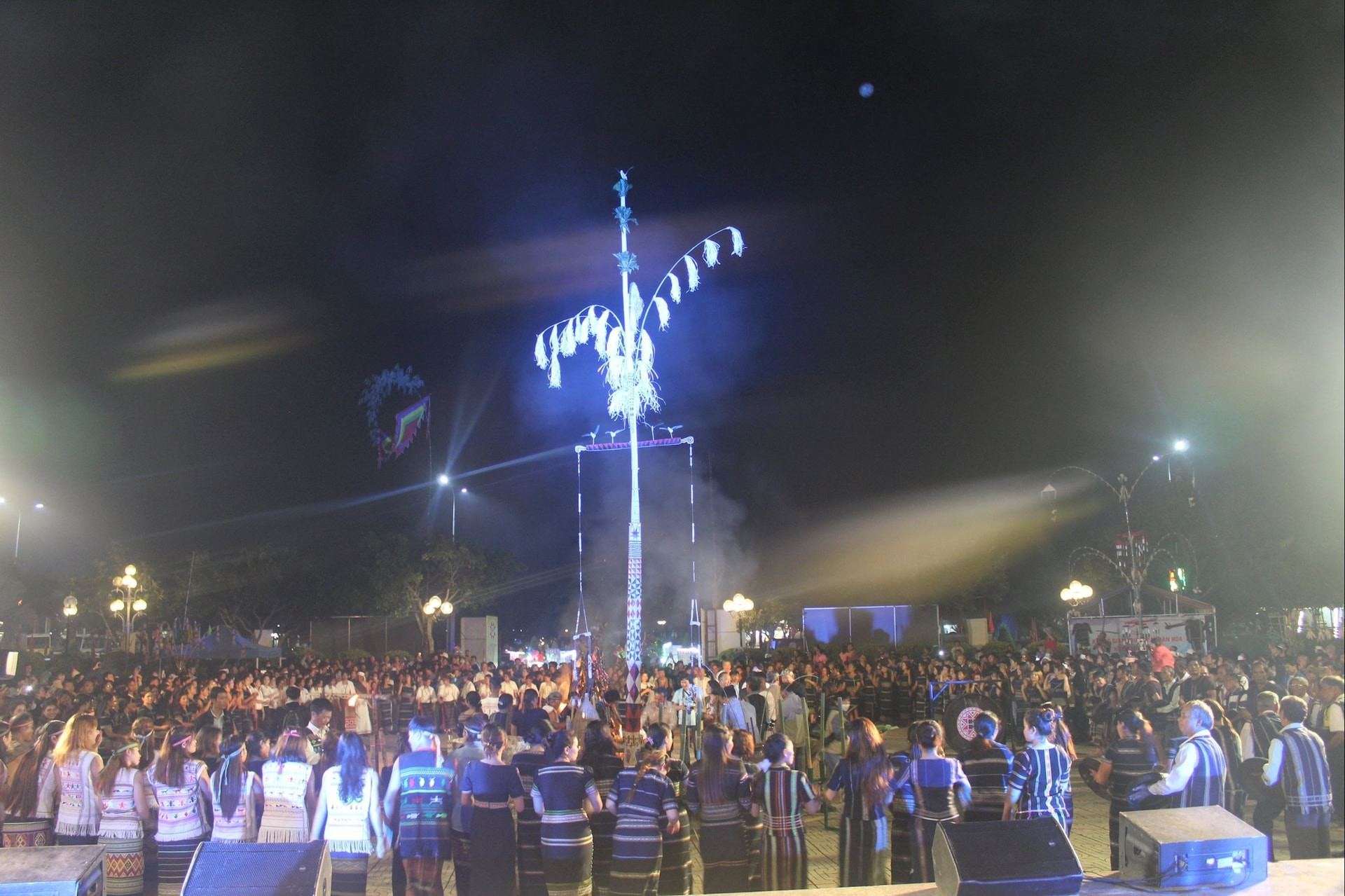
This musical heritage is a source of pride for generations, but it now faces the risk of fading. Young people need passion and years of practice to master it. Preserving gong dueling is essential to safeguarding the Central Highlands Gong Cultural Space and its rich heritage.