
Culture & Entertainment

The vibrant traditional costumes of the Hmong people in Lam Dong

Ho Mai 12/02/2026 06:15

Amid the ever-changing pace of modern life, the Hmong community in Lam Dong continues to steadfastly preserve its rich cultural heritage. Among these treasures, traditional clothing is considered a “silent language” that tells stories of history, worldview, and ethnic identity.
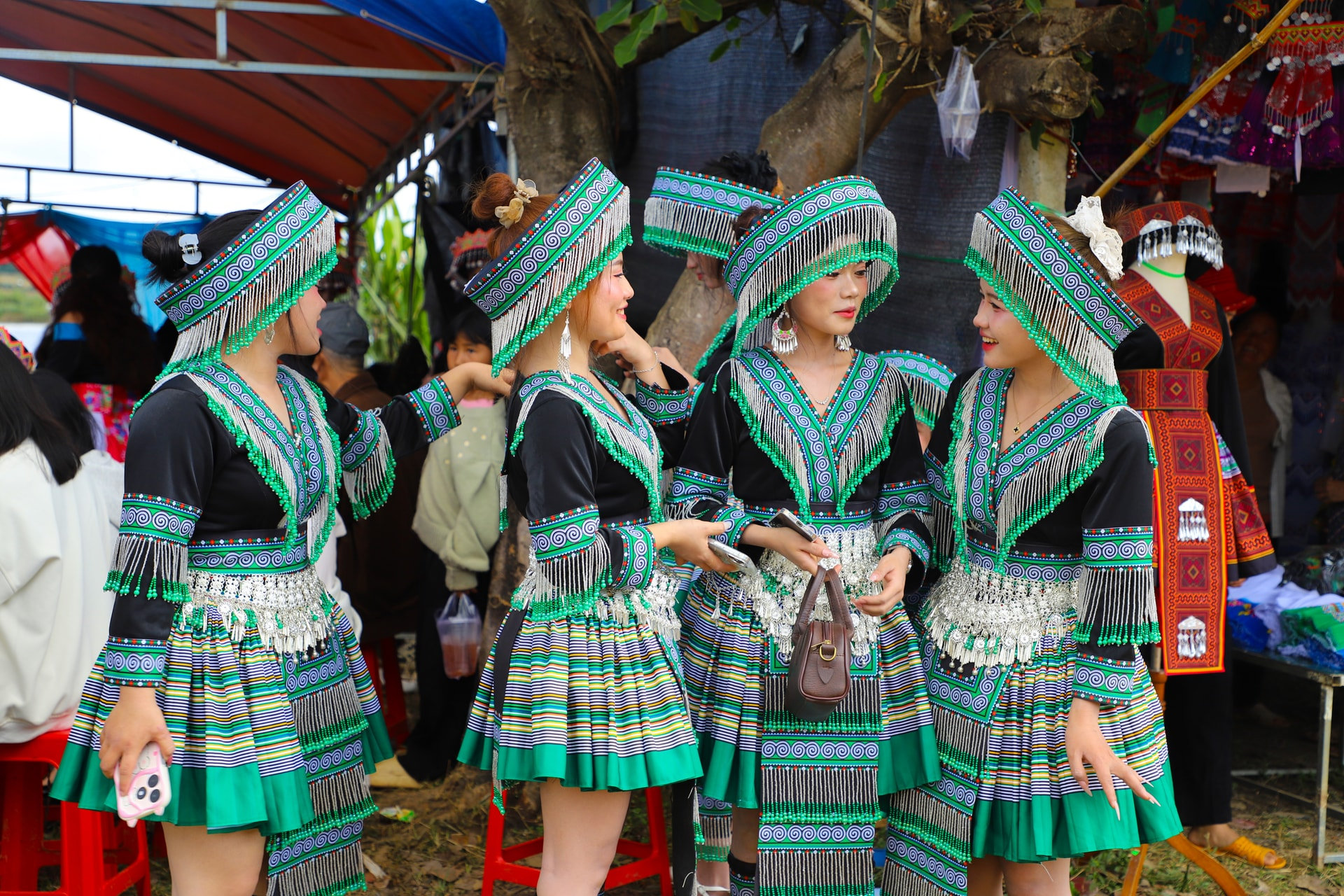
Festivals, market days, and Lunar New Year are occasions when Hmong women proudly wear their brilliantly colored traditional outfits.

Today, the Hmong live in many communes of Lam Dong Province such as Cu Jut, Quang Hoa, Ta Dung, Quang Tan, Dam Rong 2, Bao Lam 3, and others.
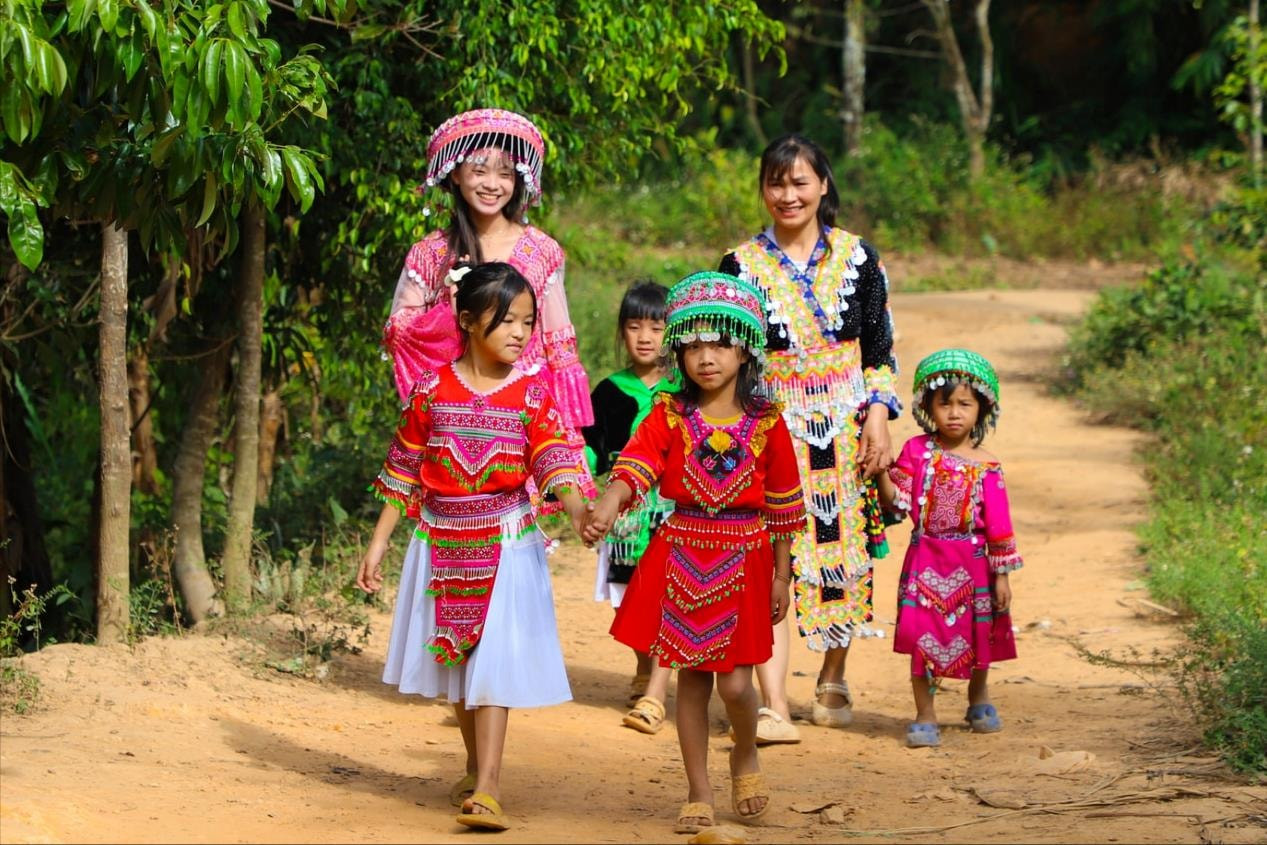
The vibrant colors of Hmong skirts stand out amid the vast highlands of Lam Dong.

The Hmong community in Lam Dong includes several groups such as Hmong Hoa (Flower Hmong), Hmong Trang (White Hmong), and Hmong Xanh (Green Hmong). Each group has its own distinct characteristics in clothing and cultural practices, yet all share a worldview that values harmony between humans, nature, and ancestral roots.
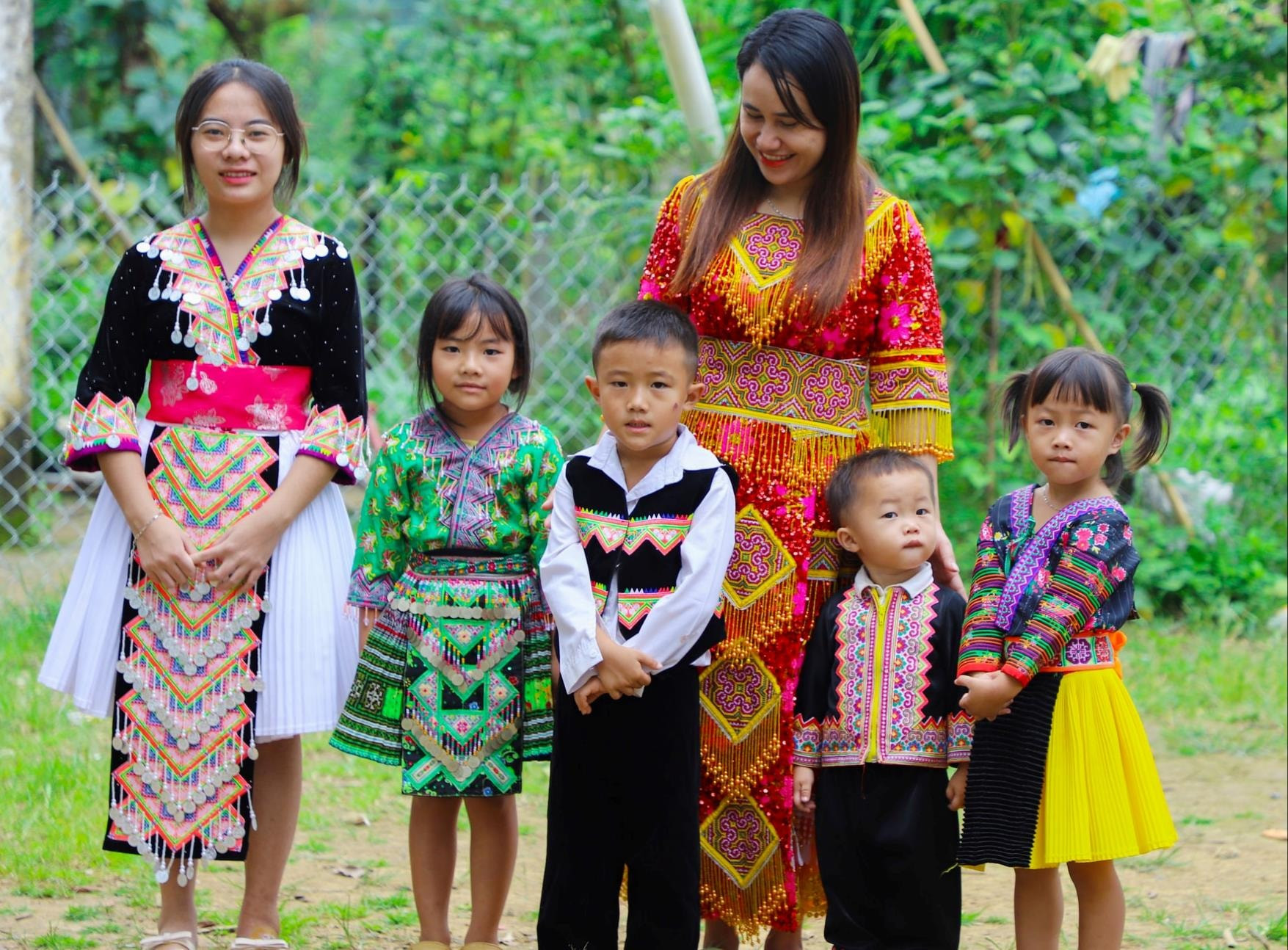
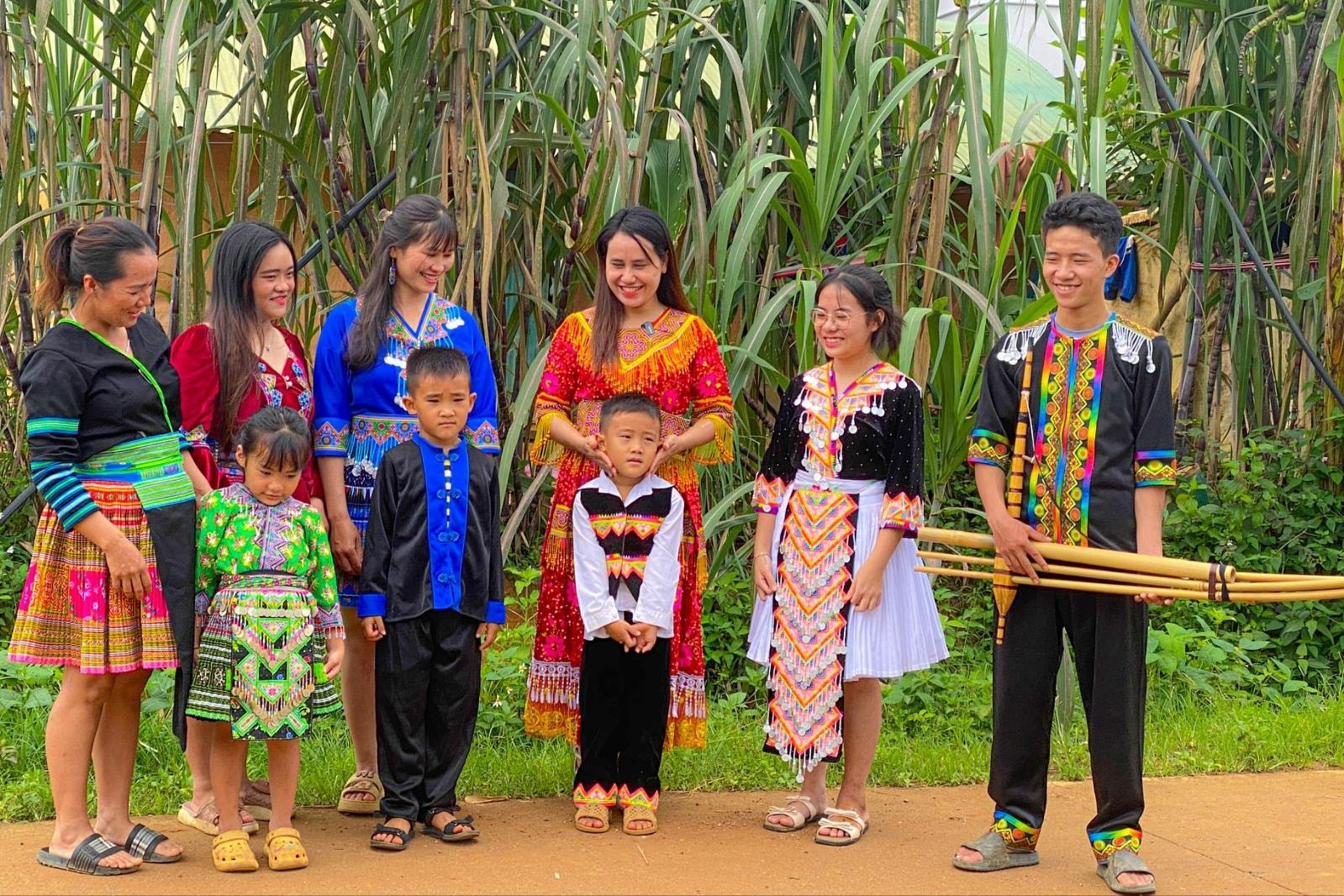
Through changing eras and lifestyles, Hmong traditional dress continues to embody the enduring spirit of their ethnic culture.
The traditional dress of the Hmong people is rich in variety, shaped by the many different Hmong branches.

Hmong traditional attire is diverse and rich, reflecting the history, aesthetic values, and folk knowledge accumulated over generations. For Hmong women, each outfit is a source of pride and a way to preserve their identity in contemporary life.
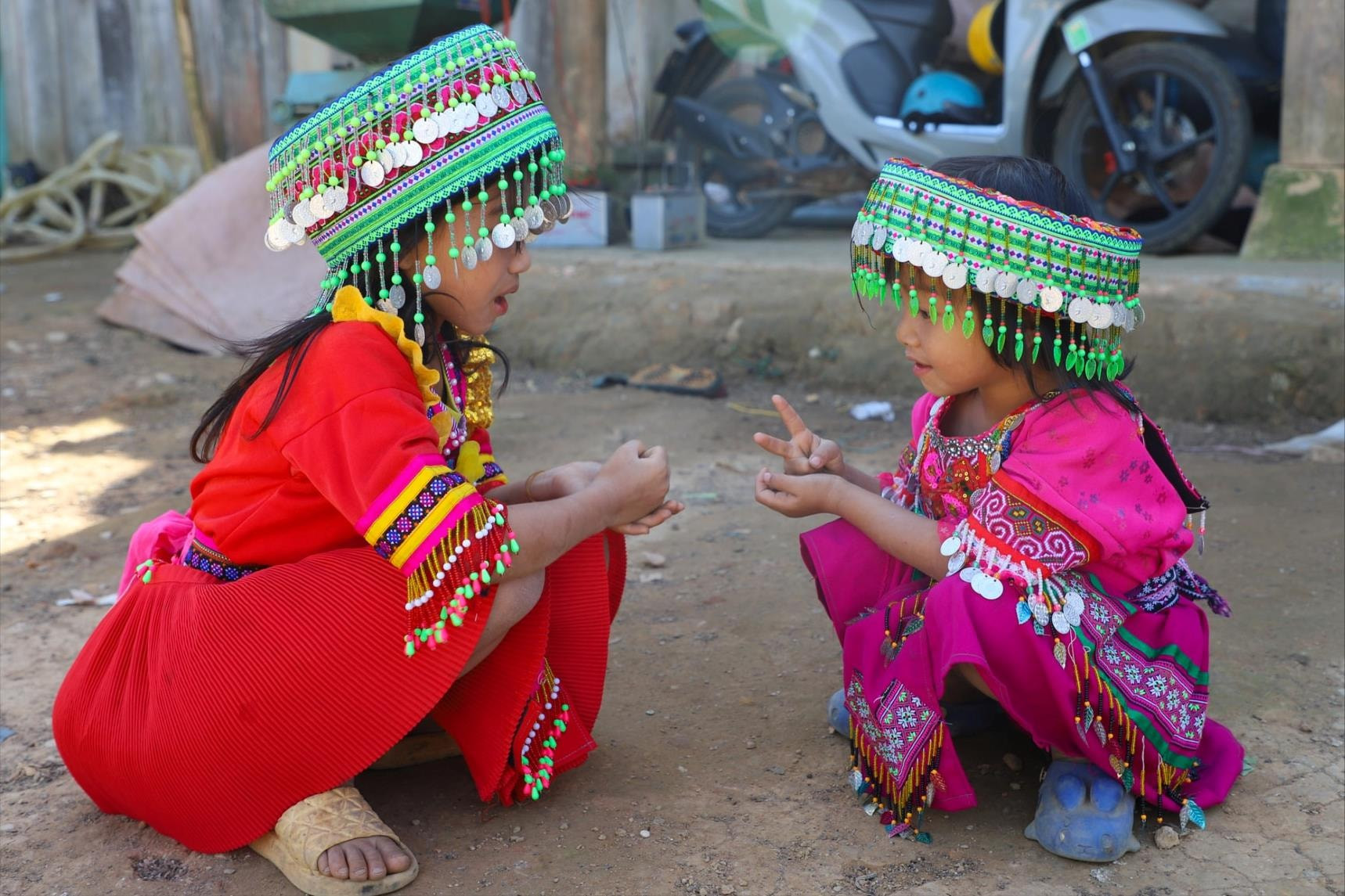
Hmong children in traditional costumes.

Men’s clothing embodies a simple yet strong beauty, suited to a life closely connected to the mountains and forests. Indigo shirts, wide-leg trousers, and fabric belts in dark tones such as indigo, black, and brown reflect the resilience and steadfast character of Hmong men.
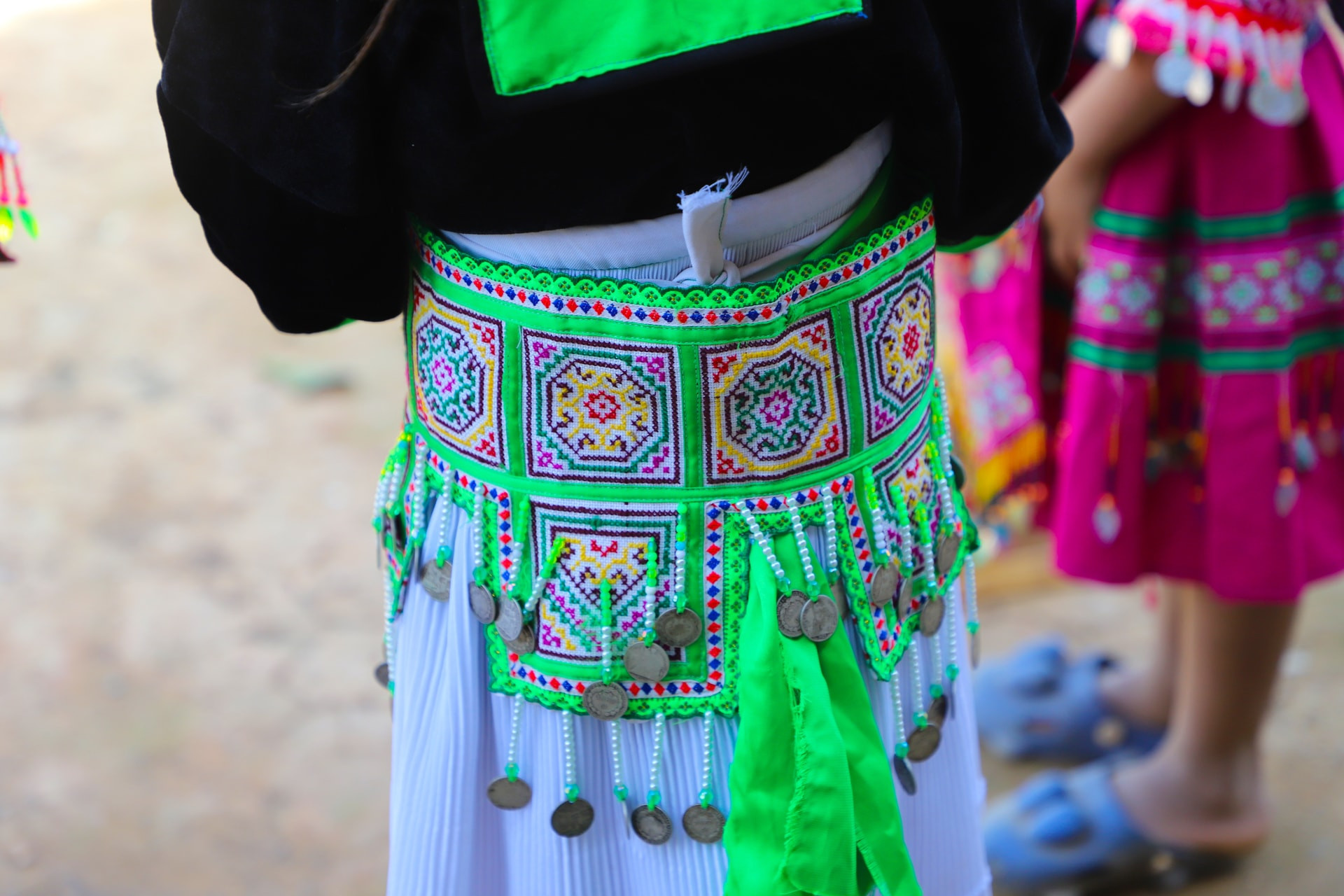
Every pattern and color on the garments carries symbolic meanings related to the universe, nature, and human life.

In contrast, women’s clothing stands out for its vibrancy and intricate craftsmanship. A complete outfit includes a pleated flared skirt, blouse, bodice, belt, headwear, and elaborately crafted silver jewelry. On the traditional indigo fabric background, hand-embroidered motifs and batik wax patterns come alive in red, yellow, green, and white—creating distinctive identities for each Hmong subgroup.

Silver jewelry not only enhances aesthetic appeal but also holds spiritual significance. It is regarded as a symbol of light that wards off evil spirits and brings good fortune and happiness.
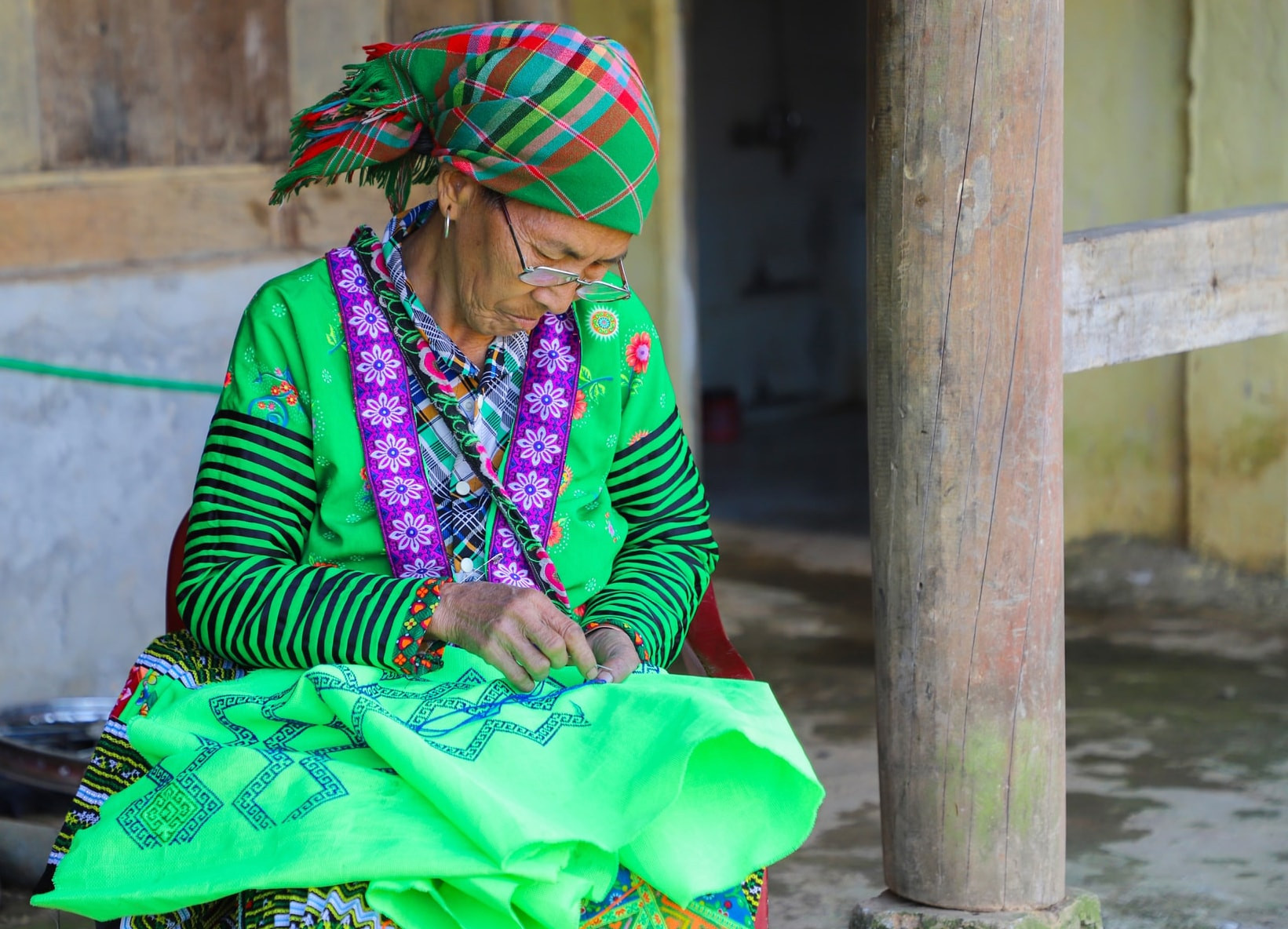
Hmong women in Dak Ha residential area 5, Bac Gia Nghia Ward, carefully embroider patterns on their garments during their leisure time.

Traditional clothing accompanies the Hmong throughout their life cycle—from birth, coming of age, and marriage to returning to their ancestors. Each stage is associated with specific customs and standards, reflecting their views on life, family, and community.

It can be said that each outfit is a “history book made of fabric,” recording the journey of migration, adaptation to new environments, and the aspirations for a peaceful and prosperous life.
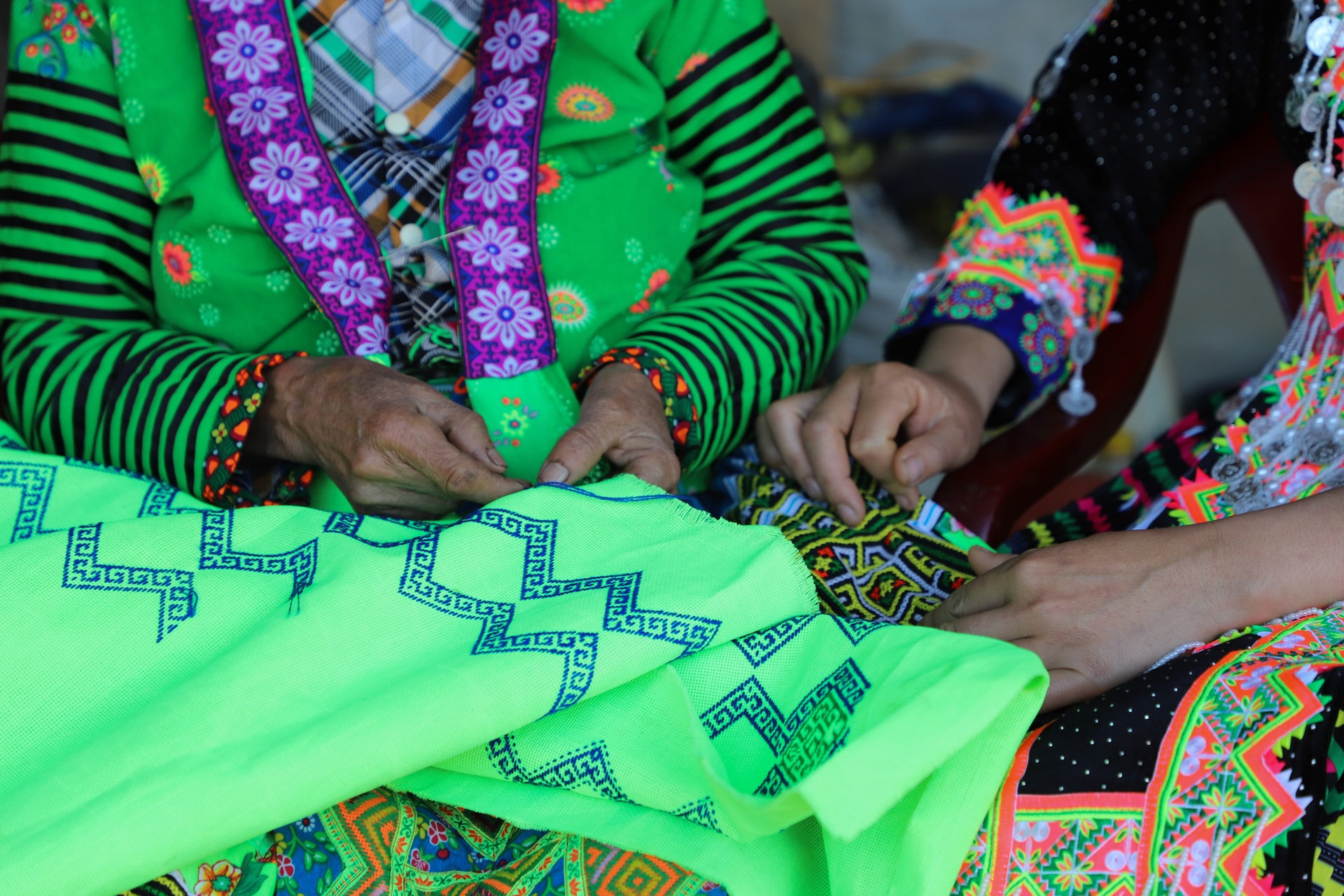
In every stitch and thread, the worldview of harmony with nature, faith in life, and ancestral memories continues to be passed down.

Creating these garments requires an elaborate manual process: growing flax, spinning thread, weaving cloth, dyeing with indigo, applying batik wax, and hand-embroidering intricate details. Today, many Hmong women have boldly turned their traditional embroidery and tailoring into a livelihood in their second homeland.
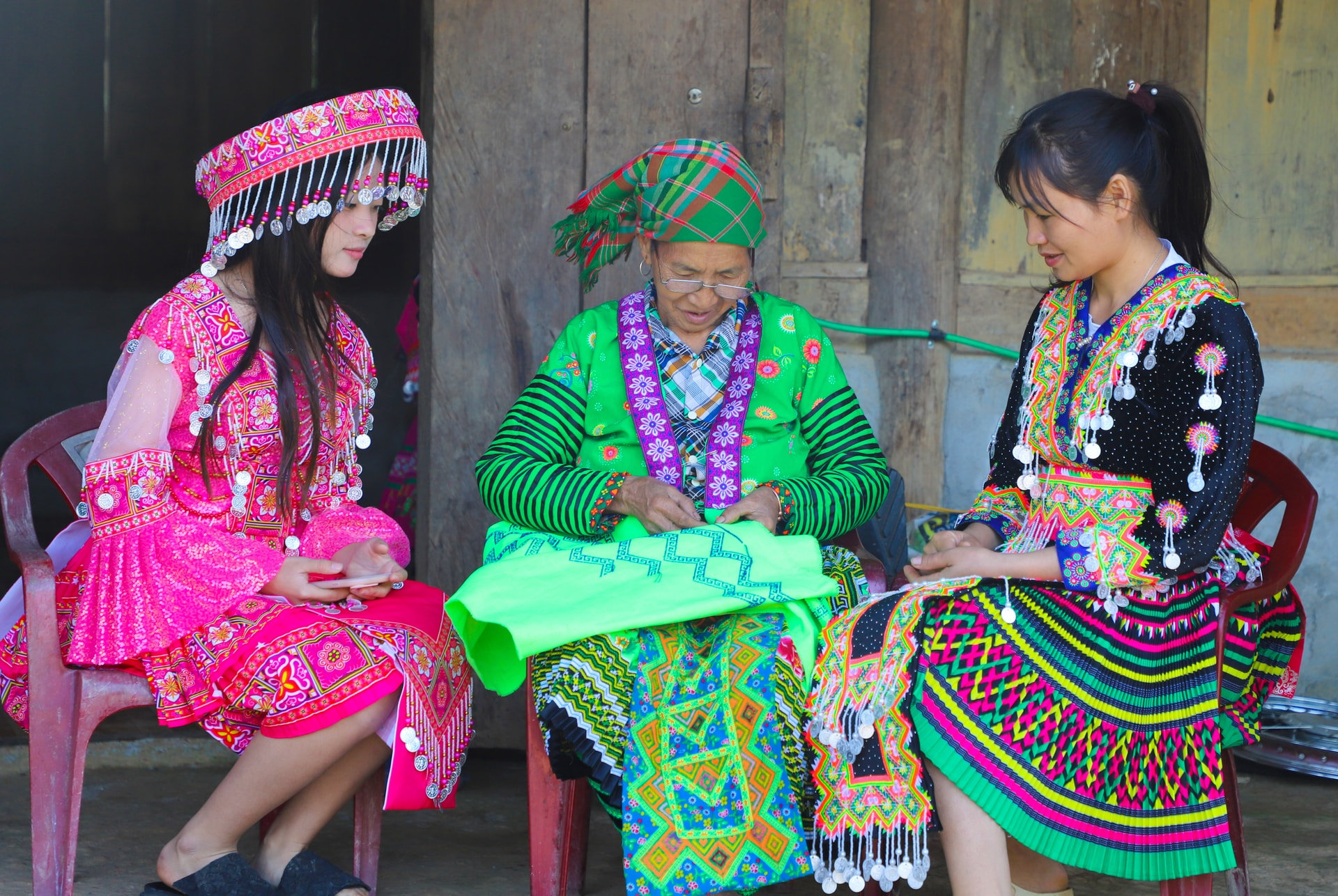
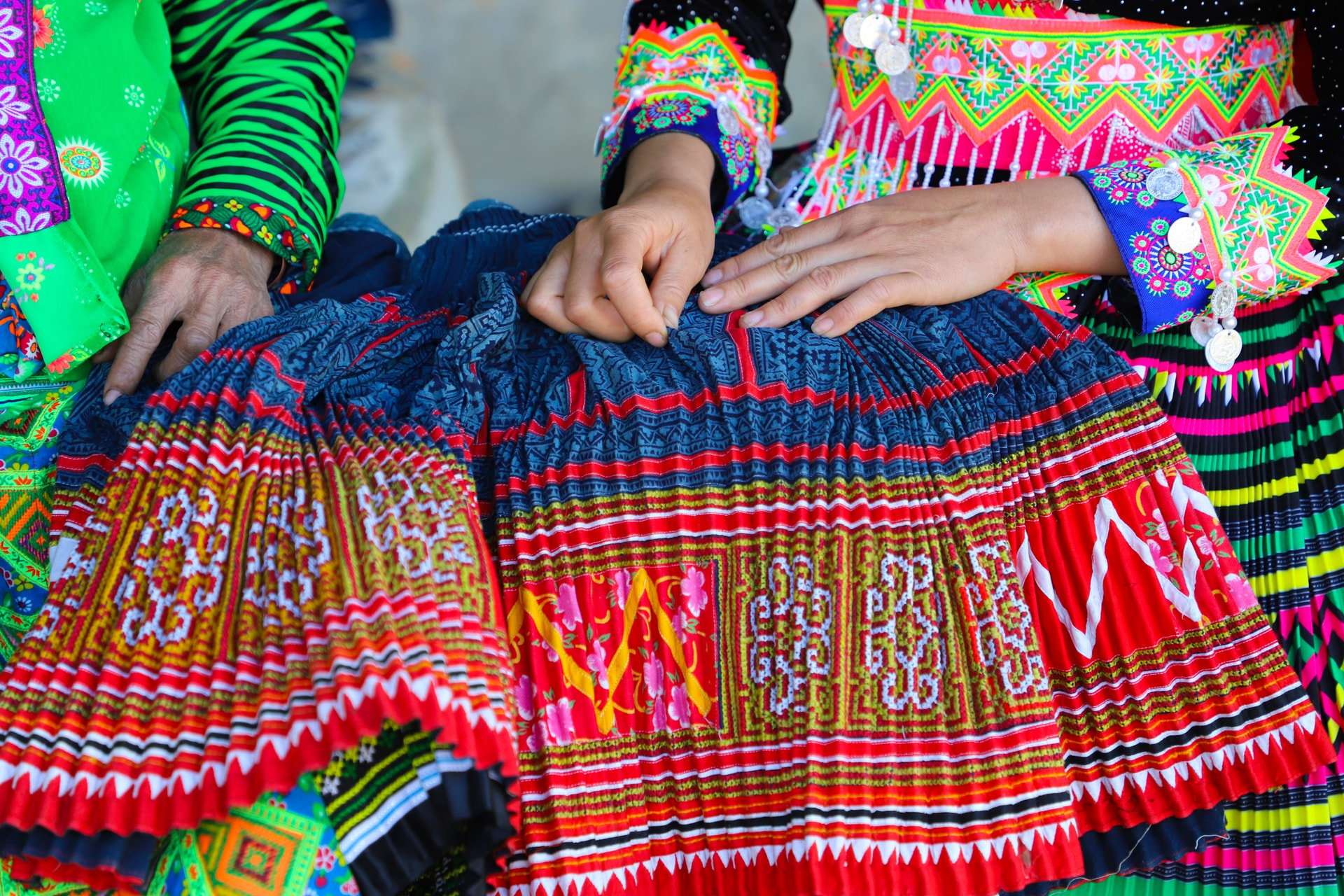
Each stitch is not only a handicraft technique but also cultural knowledge passed down from mother to daughter, from one generation to the next.
The traditional skirt features hand-embroidered patterns and batik wax techniques on traditional flax fabric.
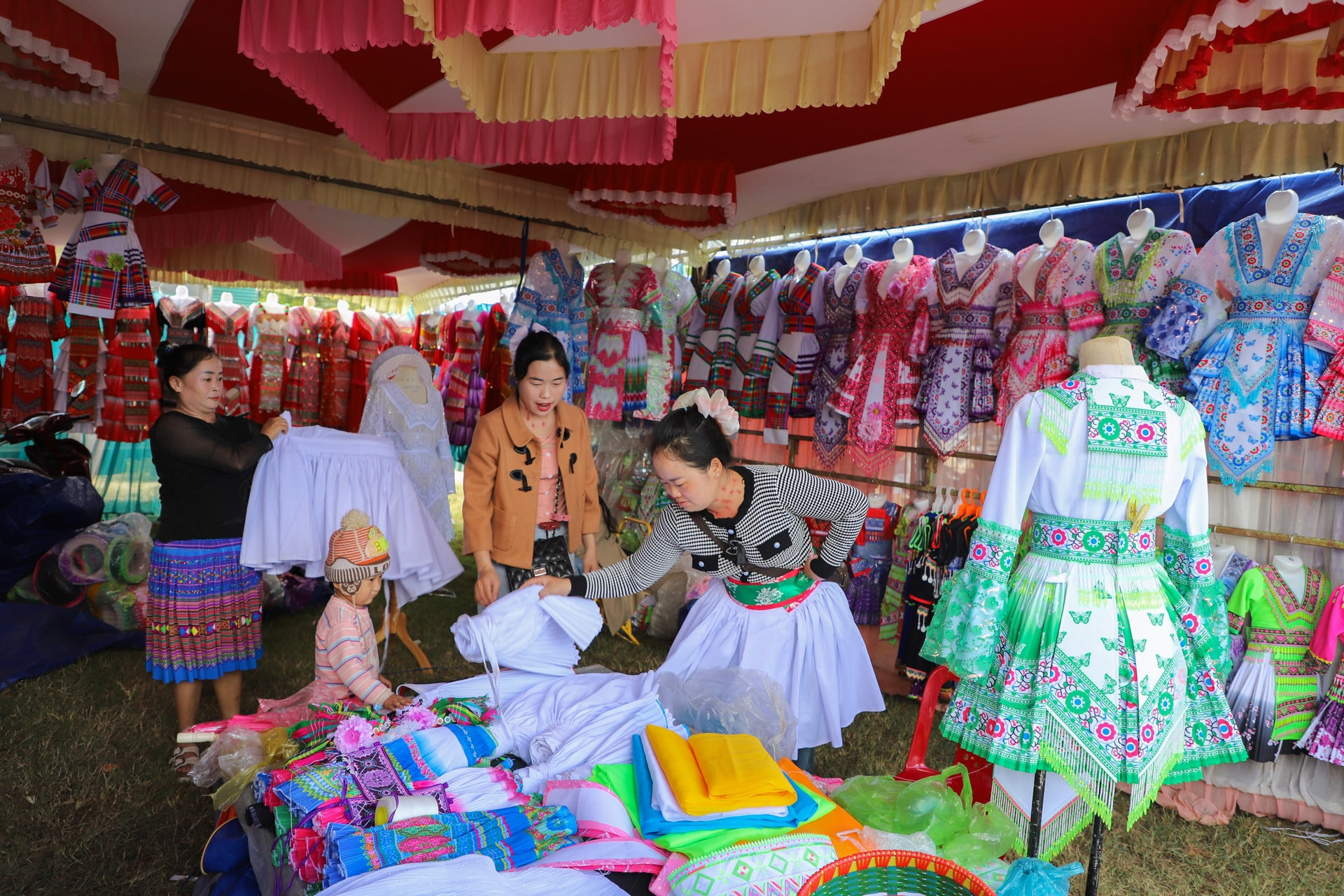
Hmong women sell traditional clothing at local markets, generating income from embroidery and tailoring.
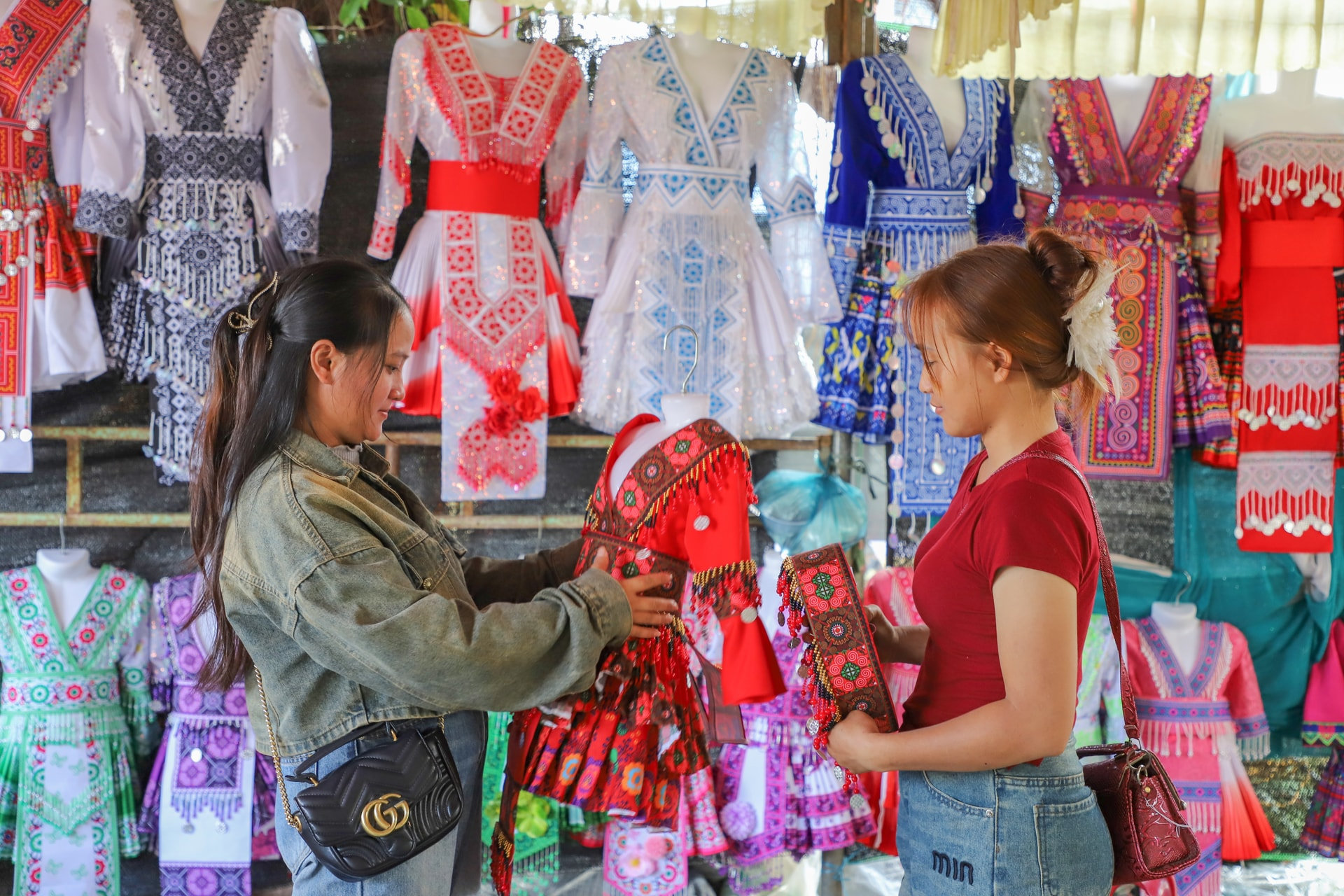
Hmong women shop for new traditional outfits to celebrate the Lunar New Year at the Cu Jut commune market.
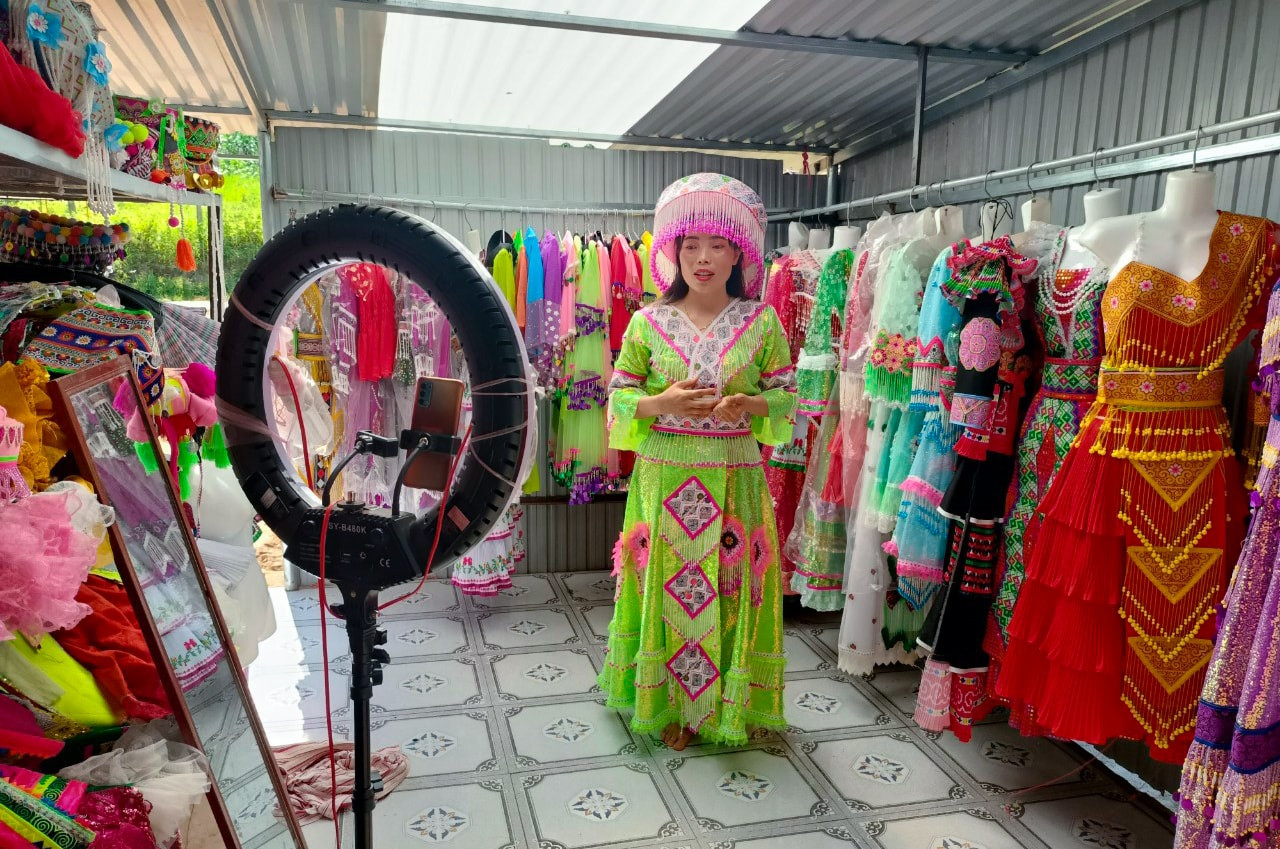
Hmong women in Cu Jut commune selling traditional clothing through livestreaming.

Highlight

    Latest news
    The vibrant traditional costumes of the Hmong people in Lam Dong
    • Default
    POWERED BY ONECMS - A PRODUCT OF NEKO