


Time for Lam Dong to Pursue Sea Reclamation
As coastal urban development enters a new phase, sea reclamation is emerging as one of the most viable directions. To date, Vietnam has recorded approximately 80 sea reclamation projects across coastal provinces and cities...
The adage “Attracting eagles is difficult, but retaining them is even harder” has become a key topic of discussion in Ho Chi Minh City during the historic days of April.
For those involved in investment attraction, the message resonates strongly with the province’s recent proposal to expand its Southern Coastal Economic Zone. Under the former Binh Thuan Provincial Planning for the 2021–2030 period, approved by the Prime Minister, the Southern Coastal Economic Zone was originally designated at 27,000 hectares.
In the newly established province, it has now been proposed for expansion to 55,000 hectares, covering five communes and wards: Son My, Ham Tan, La Gi, Phuoc Hoi, and Tan Hai.
The proposed expansion aims to create long-term development space, in line with the vision of a comprehensive, multi-sectoral economic zone capable of serving as a key growth engine for the province’s southern coastal region.
It is also expected to help shape an integrated development structure that connects industry, urban areas, services, seaports, logistics, tourism, and energy, while ensuring the feasibility of establishing the economic zone under current regulations.
More importantly, the expansion is not merely about scale. It is about creating enough space to develop a complete support ecosystem. “Eagles” cannot thrive in isolation; they need a strong network of supporting suppliers to grow alongside them.
Notably, the proposed 55,000-hectare zone includes 48,586 hectares of mainland and more than 6,413 hectares of sea surface, making sea reclamation an inevitable requirement for implementation.
A field survey conducted by provincial leaders in early April 2026 at the proposed Southern Coastal Economic Zone site, along with their instructions for relevant departments and localities to begin regulatory procedures, has effectively brought an “old” issue back to the table.
The issue is not new. The former Binh Thuan Province had previously explored sea reclamation through only a handful of projects, at a time when the 2013 Land Law merely stated that “the State encourages sea reclamation to create land reserves.”
With the 2024 Land Law now providing clearer regulations, Binh Thuan became more confident in sketching out a 14.6-kilometer coastal road project through the now-wards of Phu Thuy, Phan Thiet, and Tien Thanh.
The project’s highlights include two bridges across the Phu Hai and Ca Ty river mouths and an estimated 84.8 hectares of reclaimed land. This area is expected to host four integrated functional zones—housing, commercial services, green parks, and technical infrastructure—with projected land revenue of VND 16 trillion after infrastructure costs are deducted.
In March and April 2026, Lam Dong provincial leaders conducted field surveys along the proposed route and instructed relevant agencies to accelerate investment preparation procedures. Sources of materials for land leveling and reclamation work have also been carefully assessed.
Once these projects take shape, with sea reclamation successfully carried out, Lam Dong will officially be placed on Vietnam’s map of sea-reclamation projects. Nationwide, approximately 80 sea reclamation projects have been recorded across coastal provinces and cities, including major developments completed or underway in Quang Ninh, Hai Phong, Da Nang, Khanh Hoa, and Ho Chi Minh City.
2. In the past, sea reclamation was often viewed as a relatively new and sensitive issue, largely because of the lack of specific regulations and legal complications linked to reclamation activities in some provinces.
However, since the 2024 Land Law took effect on August 1, 2024, the legal framework has become much clearer and more enabling. Article 190 specifically states that the State encourages organizations and individuals to use capital, expertise, and technology for sea reclamation activities, while providing support policies and incentives for investors.
Such activities must comply with five fundamental principles for sea reclamation. In addition, the Government issued Decree No. 102/2024/ND-CP, also effective from August 1, 2024, to provide detailed guidance on the implementation of the Land Law, including specific provisions on sea reclamation.
This legal framework is further reinforced by Resolution No. 36-NQ/TW, dated October 22, 2018, on the “Strategy for Sustainable Development of Vietnam’s Marine Economy to 2030, with a Vision to 2045.” The resolution reaffirms the strategic role of the marine economy and sets a national direction for Vietnam to become a powerful maritime nation that prospers from the sea.
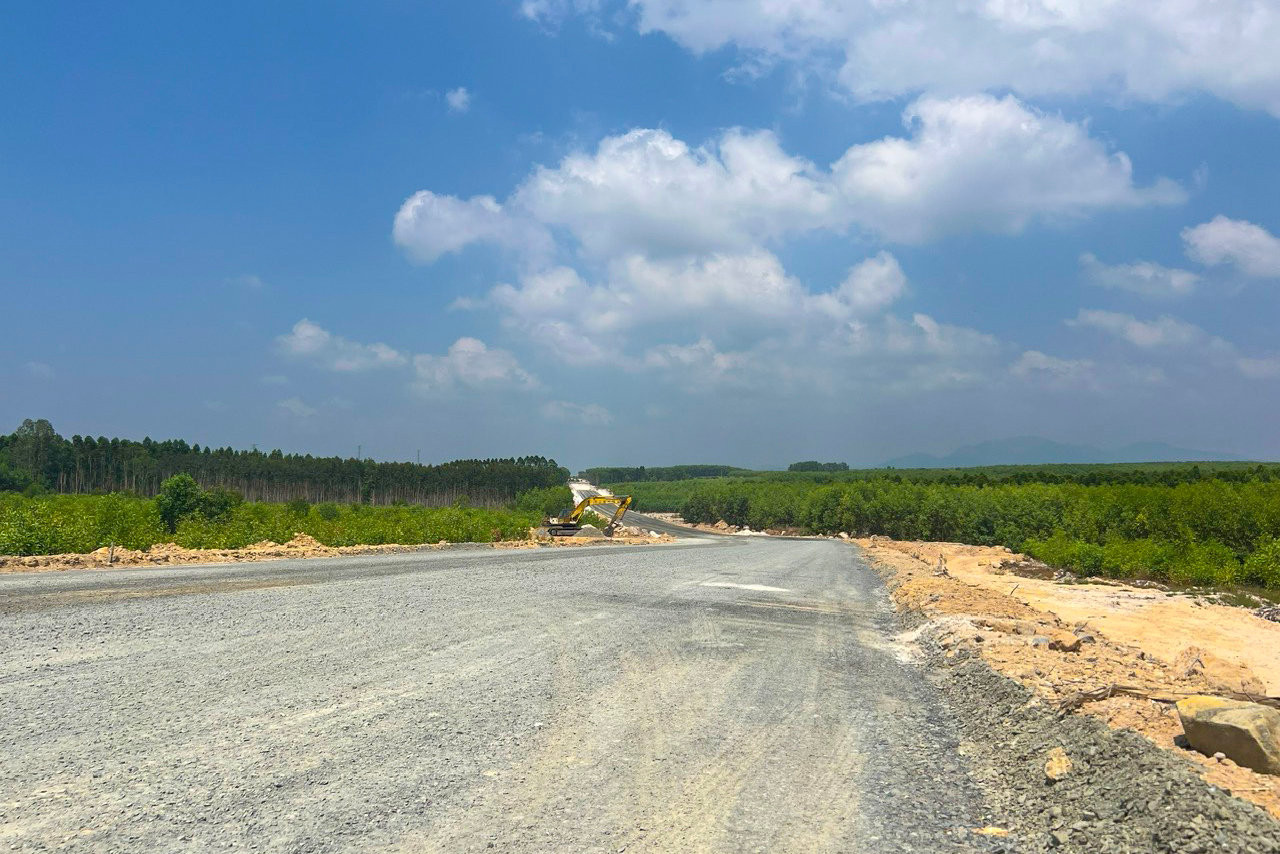
With a clearer legal framework for sea reclamation now in place, visions that once seemed distant are beginning to take shape—especially among officials and investors looking toward the province’s southeastern region. One of the most ambitious ideas is to reclaim land from the sea to expand the Phu Quy Special Zone, with the long-term goal of turning it into a true “Pearl Island.”
As Phu Quy enters its peak tourism season during the 51st anniversary of the Liberation of the South, pressure on the island’s infrastructure is becoming increasingly evident. Visitor numbers are now approaching the size of the local population, while Cu Lao Thu—the main island—is growing more crowded.
Although several nearby islets have become popular excursion destinations, they still lack the infrastructure needed for overnight stays.
Against this backdrop, some travelers have drawn comparisons with Palm Jumeirah in Dubai, the colossal palm-shaped man-made archipelago built through the reclamation of millions of tons of rock and sand. It remains one of the world’s most remarkable engineering achievements.
According to leaders of the Phu Quy Special Zone, local authorities submitted several proposals during a visit by provincial leaders to the island in early April 2026. These included proposals to build a new terminal and upgrade facilities at Phu Quy Port to create a more spacious and welcoming arrival area for visitors.
Regarding sea reclamation, local leaders said the idea has not yet been formally assessed and remains dependent on available resources, but they acknowledged that it is likely to become a necessary direction in the future.
Several officials in the province’s southeastern region believe sea reclamation could become the most viable path for coastal urban expansion, particularly as land-based compensation and site clearance grow more costly, time-consuming, and complicated. With a clearer legal framework now in place, they have proposed that the province soon adopt a formal policy on sea reclamation and integrate such initiatives into provincial and sectoral planning to facilitate future seaward expansion projects.