


Traditional crafts in the turning point of an era
Amid the waves of integration and urbanization, traditional crafts in Vietnam are standing at a turning point: to adapt and revive, or to fade away in silence. Along the South Central Coast and Central Highlands, the question of whether to “keep the craft or move to the city” is not only about livelihood — it is also a deep concern about preserving the soul of culture amid the fast-changing pace of modern life.
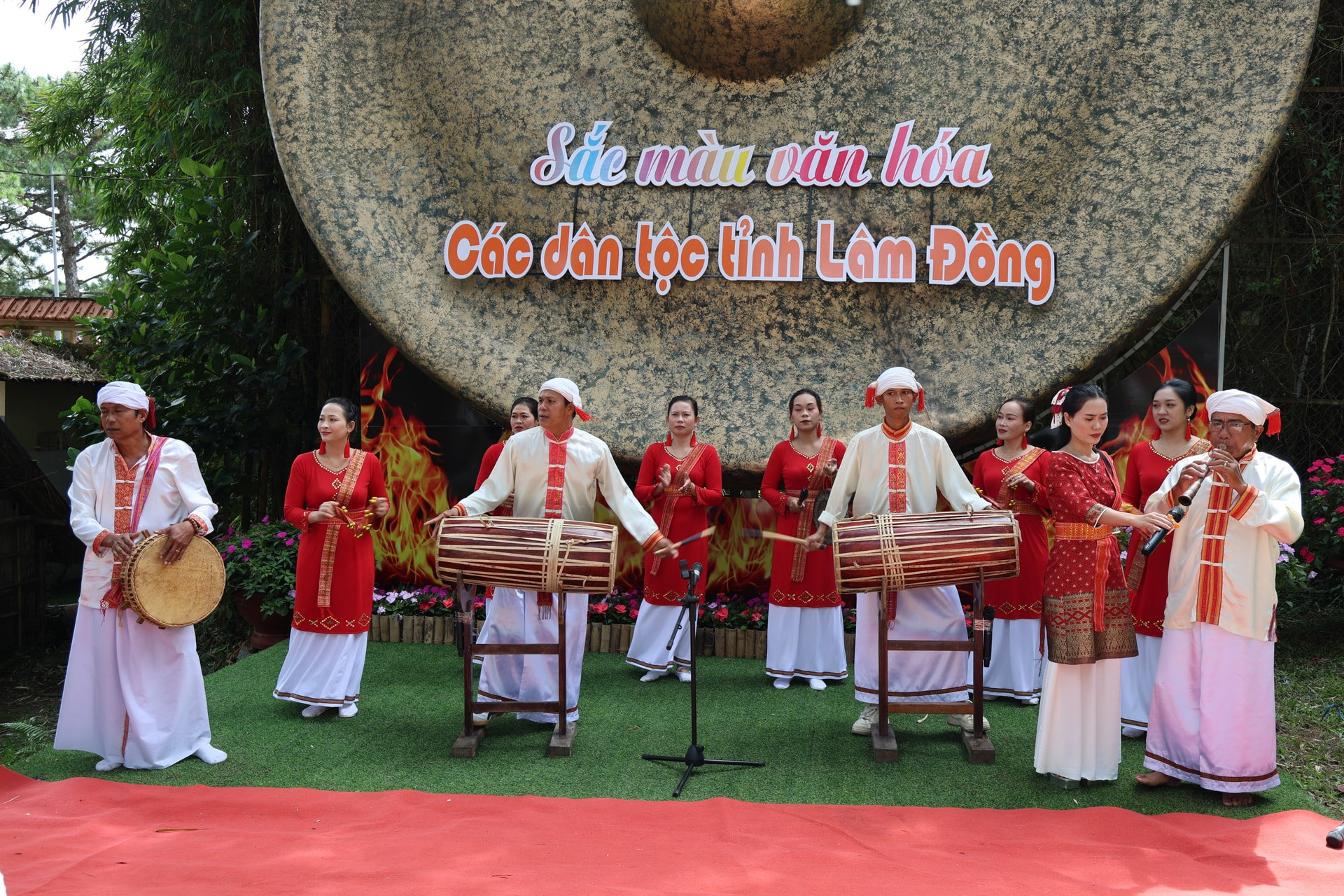
Preserving the Craft Amid the Whirlwind of Change
Lam Dong is transforming rapidly — linking the highlands with the lowlands and the sea, opening vast new markets for agricultural products, handicrafts, and cultural tourism. For traditional crafts, this is a precious opportunity: to expand markets, connect regions, and unlock the potential of craft village tourism.
Under Decision No. 1766/QĐ-UBND issued in 2022, the province aims by 2025 to preserve 17 traditional craft villages, develop 4 new ones, and integrate them with the “One Commune, One Product” (OCOP) program and community tourism, moving toward 39 villages by 2030. Yet, at present, only about 30–35 craft villages remain active, employing some 9,000 workers. Many are on the verge of fading away, lacking successors and stable markets. Urbanization draws the younger generation to cities, leaving behind K’ho looms gathering dust, the sparse sound of Mạ blacksmith hammers, and pottery kilns cooling with time. “Can the craft still feed us?” — a young artisan’s question echoes the deep concern of the highland people.
And yet, along the South Central Coast and Central Highlands, women still sit patiently at their looms, spinning forest fibers into brocades imbued with the spirit of Mother Earth and the breath of the mountains. Each pattern is more than ornament — it is a woven epic, preserving ancestral memories and embodying prayers for good harvests and harmony between people and nature. In pottery workshops, forges, and bamboo-weaving huts, craftsmen still select mature bamboo, knead clay, and temper fire just right to retain the essence of heaven and earth in every piece. To them, craft is not merely a livelihood, but a sacred bond connecting people with their roots.
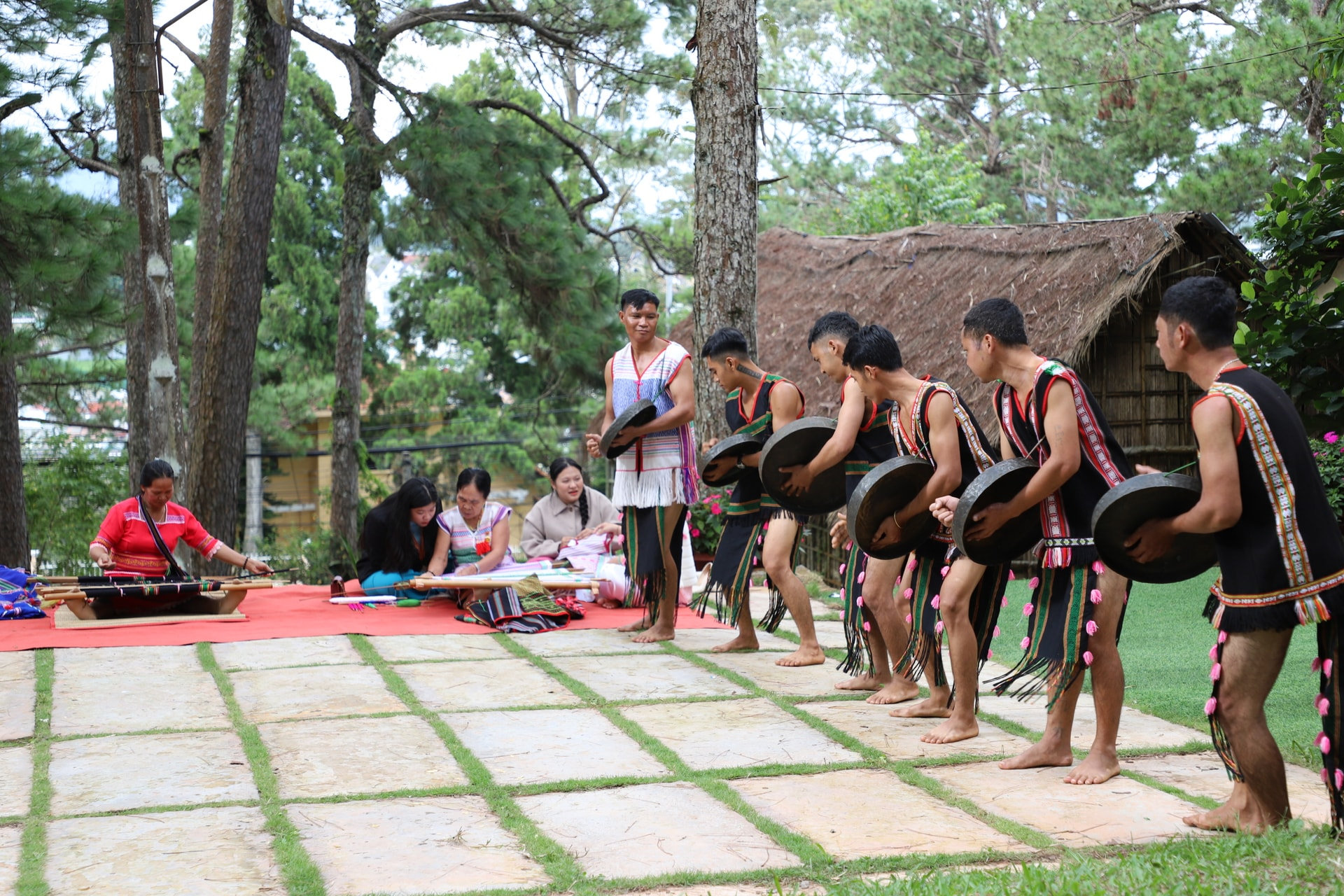
from the South Central Coast and Central Highlands
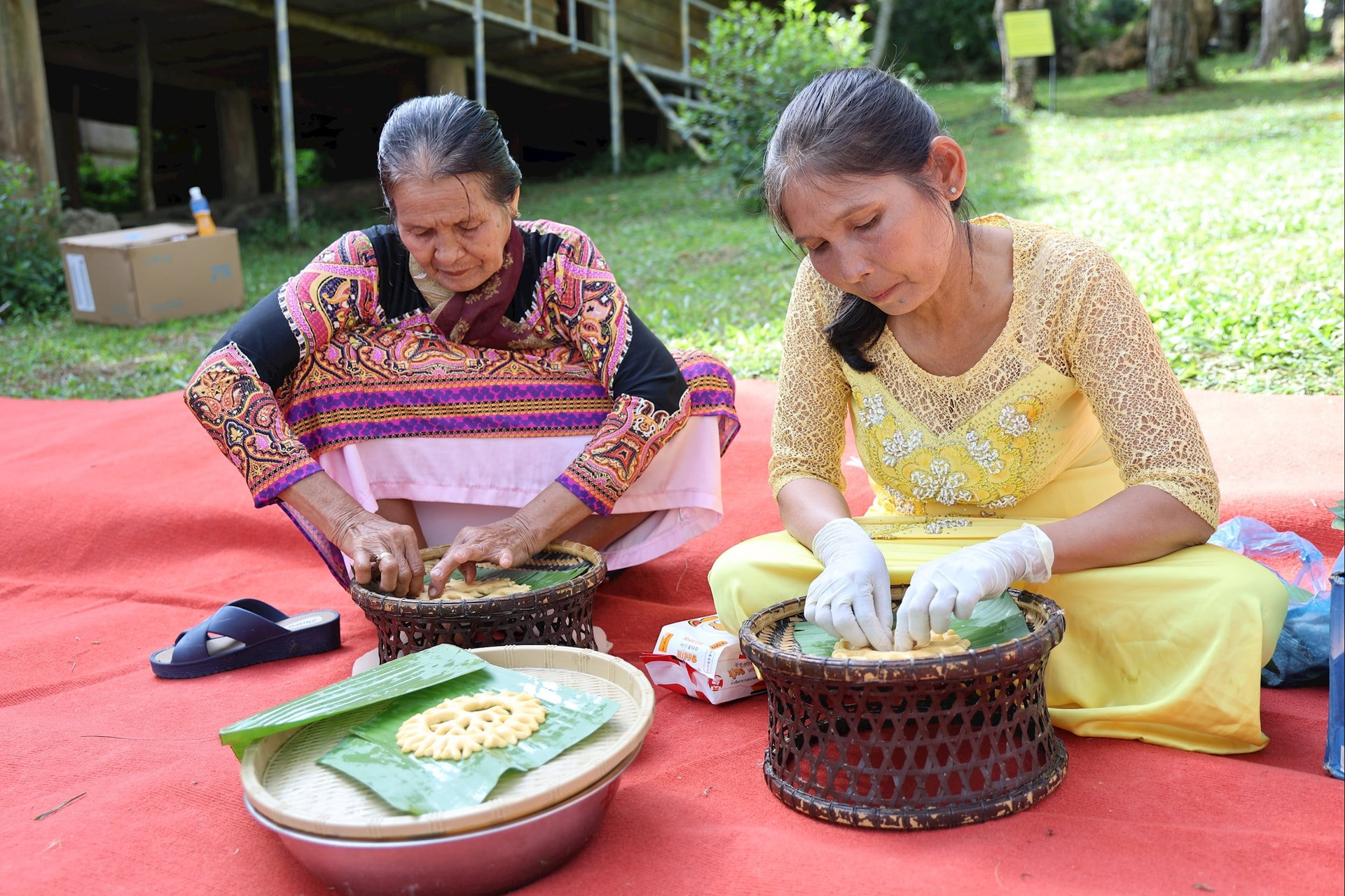
In the intersection of coast and highlands, the Chăm people still handcraft bánh gừng — ginger cakes — as offerings during the annual Katê Festival in October. “This cake is not just food; it’s a memory of our ancestors,” said artisan Dang Thi Ngoc Ha from Bac Binh. But fewer young people now know how to shape them; many have left home, and the traditional ovens grow cold. In 2025, the festival still attracts thousands of visitors eager to mold cakes and hear tales of old crafts — yet amid the bustling crowds, the quiet worry of fading traditions burns on like embers in a cooling hearth.
Technology as the Keeper of Culture
In Duc Trong, a group of K’ho youth have brought their brocades onto e-commerce platforms and created tours like “A Day as a K’ho Weaver.” In Di Linh, bamboo, rattan, and wood workshops are blending craft with experiential tourism. In Gung Ré, artisan Ma Li still tends her earthen kiln, welcoming visitors to mold clay, listen to the stories of her village, and take home a small gift steeped in the soul of the highlands.
Today, K’ho brocade can become modern ao dai designs on fashion stages; Churu pottery has turned into high-end souvenirs; bamboo and rattan weaving has evolved into export furniture. Craftspeople now need not only skillful hands but also a connected mindset — the ability to tell cultural stories through the language of markets and technology.
According to Nguyen Thi Bich Ngoc, Deputy Director of the Lam Dong Department of Culture, Sports and Tourism: “We consider culture a driving force for sustainable development. The province is training artisans in digital skills, offering preferential loans, and linking craft villages with the OCOP program and community tourism. Technology has become a bridge helping artisans reclaim their place in modern life.”
To preserve a craft today does not mean keeping the old ways unchanged, but preserving its essence while adapting to survive. When tradition embraces technology and connection, standing at the crossroads of a new era, what must be preserved is not just the craft — but the soul of the craft. And perhaps, on this ever-changing land of Lam Dong, the sounds of looms, hammers, and pottery wheels will continue to echo — not as nostalgia, but as the heartbeat of the future.