


Traditional culture enriches tourism experiences
The preservation of traditional performance spaces and the inclusion of gong performances at tourist sites are helping breathe new life into cultural heritage in the modern era.
Opportunities for young people to preserve cultural heritage
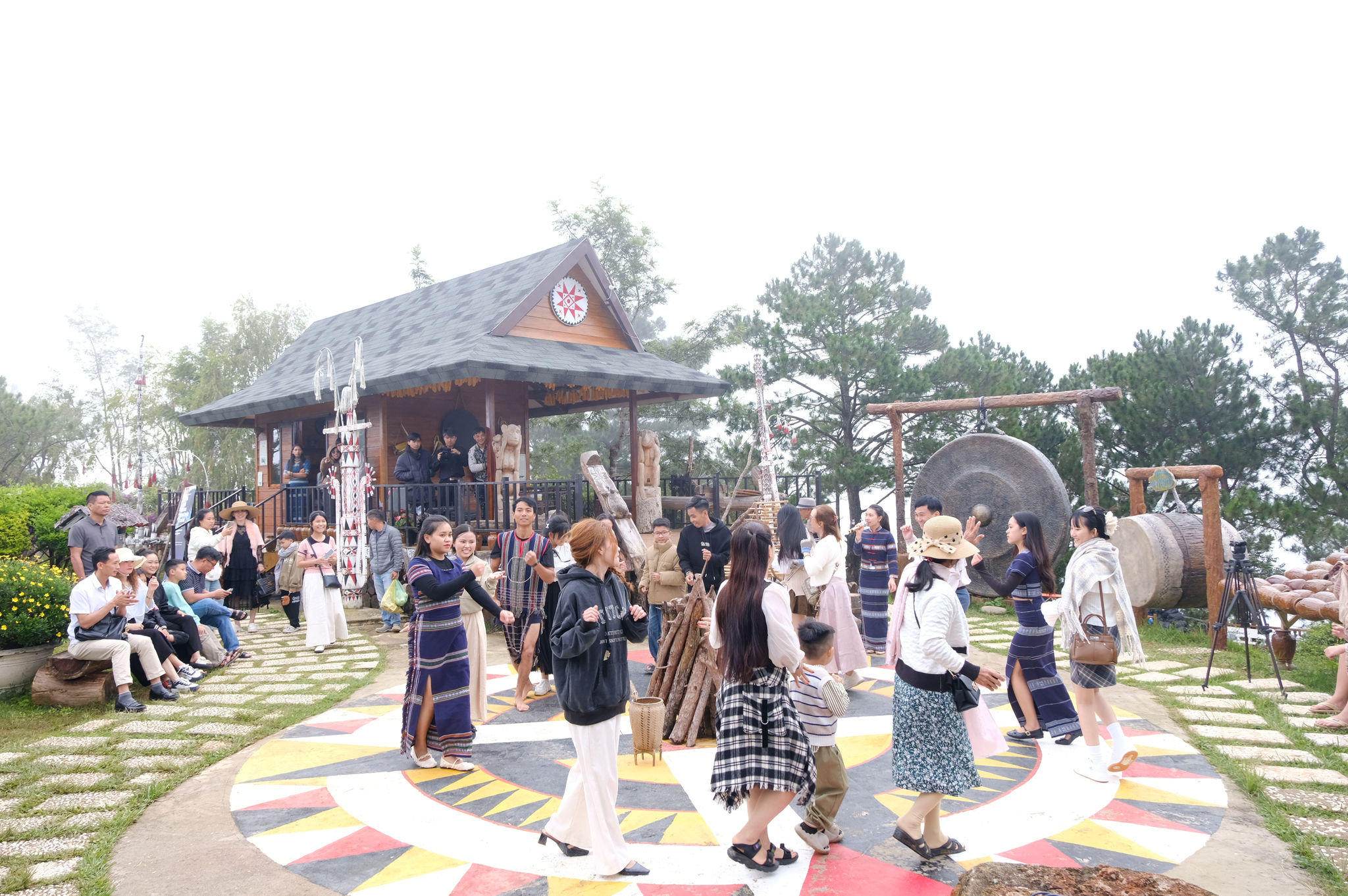
At the foot of Lang Biang Mountain, people gather around a fire as the sound of gongs echoes through the forested highlands. For many first-time travelers to Lam Dong, the performance is more than entertainment, it is a unique cultural experience that enriches their journey.
Gong performances are not only performed at traditional festivals of Central Highlands ethnic communities but are also gradually becoming part of the local tourism experience. From cultural exchange nights beneath Lang Biang Mountain to community cultural spaces in ethnic minority areas, the promotion of gong heritage through tourism is creating new opportunities to preserve traditional culture.
Kran Jan K’Druynhs, a young Cil artist, said he and around 20 other young men and women from the Lang Biang area are currently performing at Langbiang Land tourist site. Passionate about preserving the tradition, he actively seeks out young people with talent and enthusiasm to help maintain the gong troupe.
While the performances remain rooted in traditional gong music and dances, the group has also introduced a few modern elements to make the shows more engaging and accessible to visitors while still preserving the spirit of indigenous culture.
K’Druynhs explained that in the past, many young people had to focus on making a living and supporting their families, making it difficult to gather a full team whenever performances were booked. Today, troupe members are employed under stable contracts at the tourist site and perform three shows each day, providing them with a more reliable source of income. Since the workplace is close to home, many can better balance tourism activities with family responsibilities.
“Everyone is happy. Stable income gives young people the opportunity to pursue their passion while also helping preserve our ethnic culture. It also creates a space where people can work, learn, and continue maintaining these traditions,” K’Druynhs added.
Enhancing the visitor experience
According to K’Druynhs, many traditional rituals associated with gong culture are no longer held as frequently as they once were. At the same time, the number of elderly artisans continues to decline, while relatively few young people remain deeply connected to the tradition.
From a tourism perspective, gong culture is gradually becoming a signature cultural attraction that leaves a lasting impression on visitors to the Central Highlands.
Duong Thi Hien, Deputy Head of the Tourism Management Division under the Department of Culture, Sports and Tourism, said that more tourism operators are turning gong performances into unique cultural products to attract visitors. This is also seen as a way to give the heritage a stronger presence in modern life.
However, promoting gong culture through tourism also raises concerns about authenticity. According to Central Highlands cultural researcher Dang Minh Tam from Xuan Huong - Da Lat Ward , preserving the rustic and authentic nature of gong culture is essential if the traditions of the Central Highlands ethnic communities are to truly resonate with the public.
To ensure gong culture develops into a sustainable tourism product, there must be a balance between tourism development and the preservation of the heritage’s original values. Beyond performing for tourists, artists also share the stories of their villages and convey the spiritual and cultural significance of gongs in community life and local beliefs.
From a cultural preservation perspective, Dang Minh Tam also emphasized the importance of preserving ancient gong melodies and limiting excessive modernization in order to maintain their traditional beauty. This, he said, would allow visitors to more easily immerse themselves in the cultural atmosphere.
Let the stories of ethnic communities' culture in the Southern Central Highlands reach audiences through the most authentic and everyday experiences.
Cultural researcher Dang Minh Tam