


Tu Liem Bamboo Weaving Village Turns to Tourism
A traditional craft village in Nam Ban Lam Ha is undergoing a quiet transformation. From a livelihood rooted in bamboo mat weaving, local artisans are now setting their sights on tourism along the scenic route connecting Da Lat and Elephant Waterfall.
A village shaped by bamboo weaving
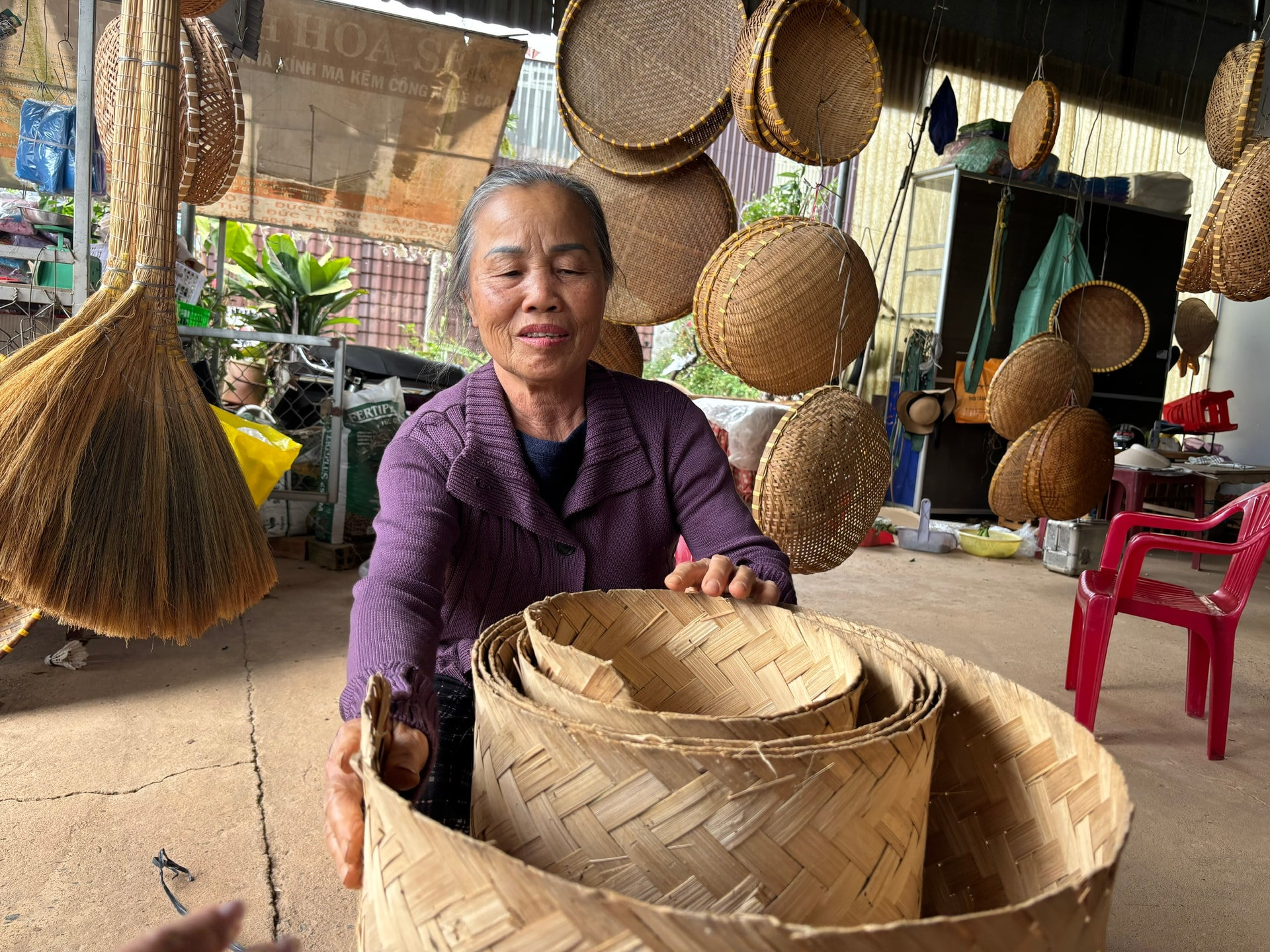
“This hamlet has lived by bamboo mat weaving since 1988. For nearly 40 years, people in Tu Liem 2 hamlet have remained attached to bamboo trays, silkworm frames and mats made from bamboo,” said Nguyen Van Phung, Secretary of the Party Cell of Tu Liem 2 hamlet, Nam Ban Lam Ha commune. Mr. Phung is also among the local residents dedicated to preserving the village’s traditional craft.
Recalling the early days, Mr. Phung said that in 1988, residents from Ha Nam migrated to Nam Ban, bringing with them their hometown weaving skills. “Bamboo mats are flat panels woven from bamboo strips, traditionally used to build walls and roofs. At that time, people were still poor, so mats were widely used for housing. Later, as sericulture developed in Nam Ban and Dong Thanh areas, villagers shifted to making bamboo trays and silkworm frames for mulberry growers,” he explained.
The primary material is “lo o” bamboo, a bamboo species native to Lam Dong Province. The bamboo is harvested in Dam Rong area and purchased fresh by villagers. It is then soaked to prevent termites, dried in the sun, and processed according to purpose: cut into sections for frames, bent into rings for tray rims, or split into strips for weaving mats, trays and silkworm tools. Once dried, the products are ready for use.
At its peak, the “bamboo mat village” supplied tens of thousands of products annually, including trays, silkworm frames and mulberry enclosures. Today, however, changes in sericulture technology have reduced demand for traditional bamboo frames. Many households now produce bamboo mats mainly for mulberry fencing, which are still favored for ease of use and their ability to keep leaves fresh. Some silkworm breeders continue to use the village’s large, thin and lightweight trays.
According to Mr. Phung, during its most prosperous period, the village had more than 70 weaving households. Currently, production has scaled down significantly compared to those years.
Weaving tradition meets tourism
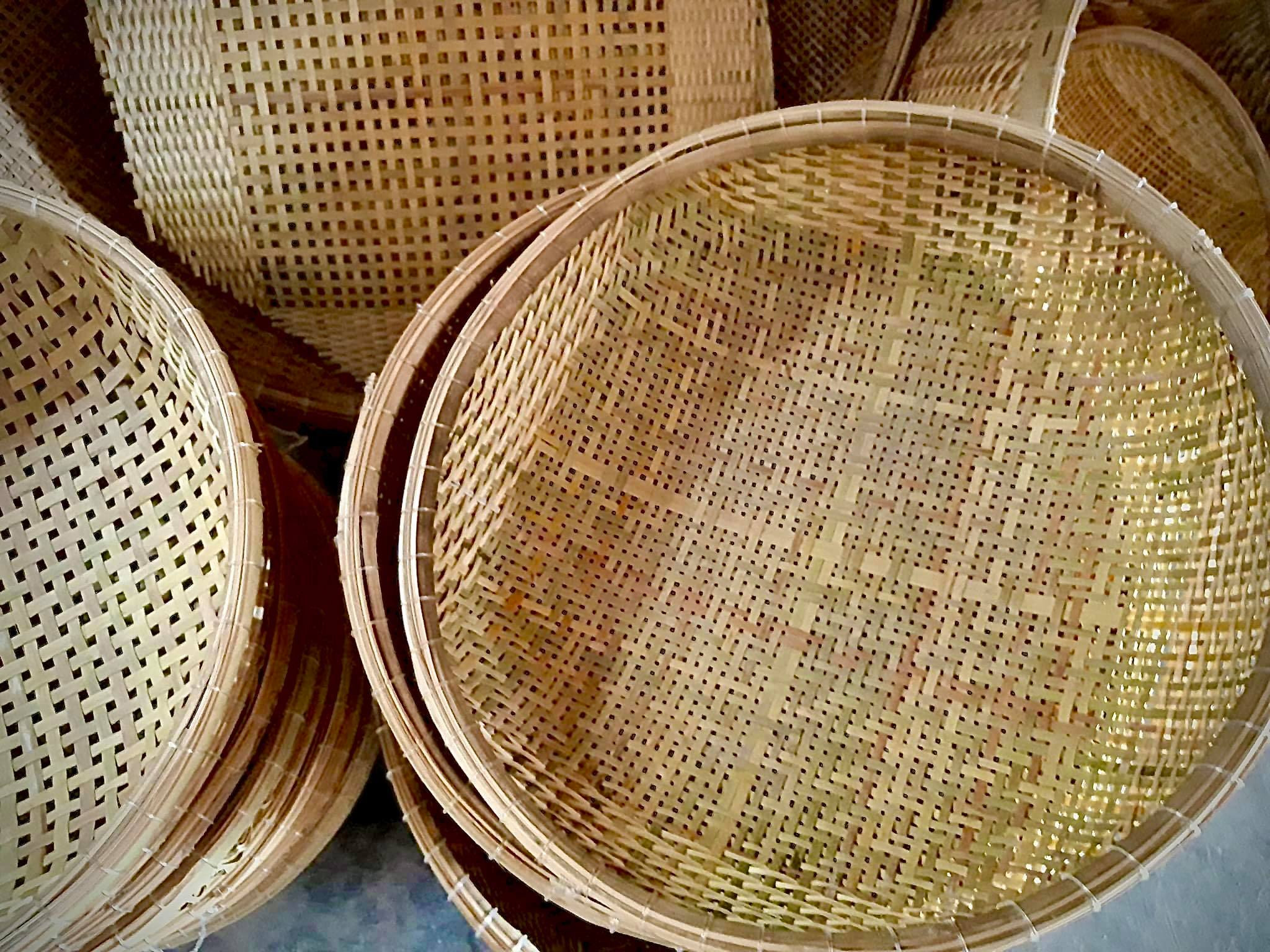
Nguyen Thi Cong, a long-time bamboo weaver, said production remains seasonal. “During the rainy season, we focus on weaving mats and trays because mulberry leaves and silkworm farming increase. In the dry season, we mainly sell household items and products for tourism, such as baskets, sieves, fish traps and backpacks,” she said.
Ms. Cong noted that after years of reliance on plastic and metal items, local residents are gradually returning to everyday tools made from natural materials like bamboo, reminiscent of earlier generations.
Beyond household goods, the village is now expanding into specialty products, including conical hats, bamboo decorative items, miniature baskets, fishing traps and traditional backpacks used by ethnic communities in the Central Highlands.
Nguyen Thi Tam, who has practiced bamboo weaving since the age of 10, said the village’s location offers strong tourism potential.
“Tu Liem 2 hamlet lies right along the road from Da Lat to Elephant Waterfall, a route many tourists enjoy traveling by motorbike. Villagers make products not only for local use, but also for visitors, tourist sites and cafés looking for bamboo décor,” she said.
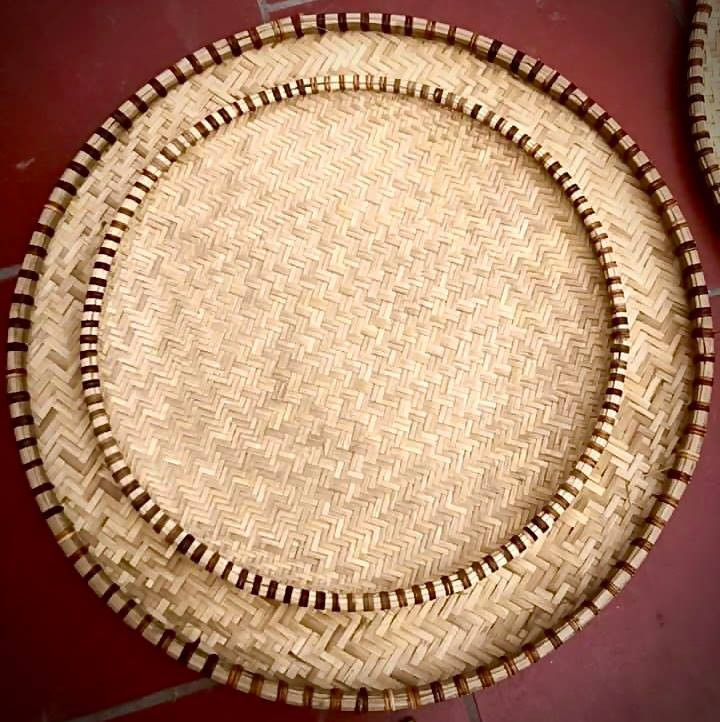
Ms. Tam added that the village has diversified its production beyond traditional mats and trays. “For specific items like backpacks (gui) used for farming, we source products from ethnic craft villages in Da Huoai and Di Linh. After a long period of decline, bamboo weaving here is showing signs of revival, becoming more diverse and better aligned with market demand and tourism,” she said.
From a craft once tied solely to subsistence, Tu Liem’s bamboo weaving tradition is gradually finding new life—woven into the growing fabric of community-based tourism on Lam Dong’s highland routes.