


Turning Financial Support into an Effective Rabbit-Raising Model
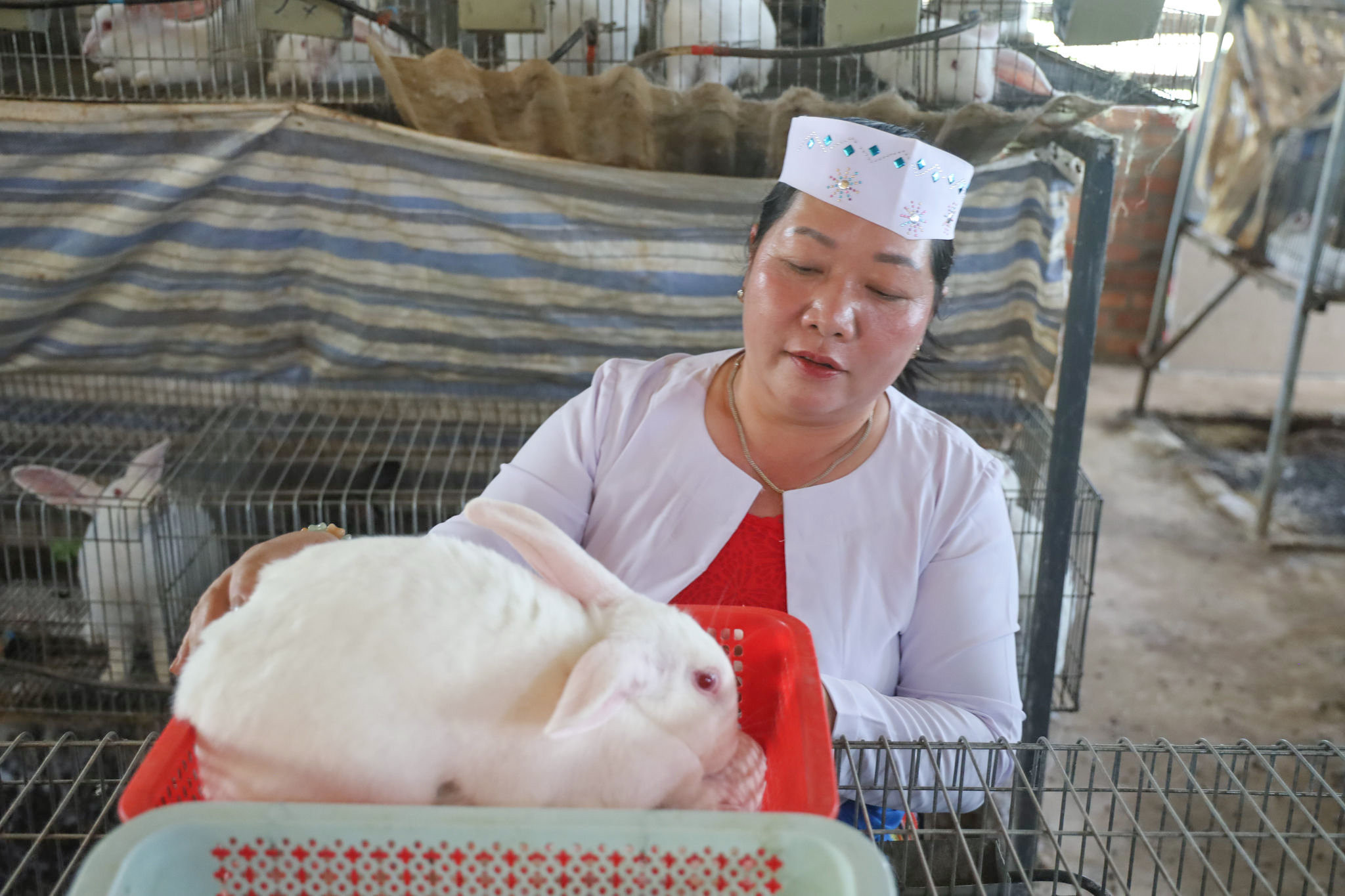
With financial support and a strong willingness to learn, Bui Thi Tuyet, a Muong woman in Quang Khe Commune, has developed an effective rabbit-raising model that provides her family with a stable income and helps promote sustainable livelihoods in the local community.
A Persistent Search for the Right Path
For years, Bui Thi Tuyet struggled to find a suitable livelihood for her family. Initially, using a loan under a national target program, her family invested in goat raising. However, the model proved unsuitable and affected neighboring households. Refusing to give up, she decisively shifted direction.
Realizing that rabbit raising was better suited to her family’s conditions, she sold the goats and started over with just seven breeding rabbits and a few young ones. Despite facing many early setbacks due to limited experience, she actively looked for ways to improve. Although she could not read or write and her husband had completed only Grade 6, she asked her children to find instructional videos online and gradually applied what she learned to refine her rabbit-raising model.
Through practical experience gained in each breeding cycle, she learned to keep feed clean and dry, diversify the rabbits’ diet with vegetables, tubers, fruit, and local grasses, and maintain clean, well-ventilated cages to prevent disease outbreaks. From early setbacks, she gradually came to understand their growth patterns, identify disease symptoms, and apply effective prevention methods.
Thanks to her persistence, her rabbit herd has grown steadily over the past eight years. It now totals more than 500 rabbits, including over 100 breeding rabbits. In addition to raising rabbits for meat, she maintains her own breeding stock to ensure quality and keep diseases under control.
Expanding Livelihood Opportunities
From a small-scale livelihood model, rabbit raising has become a stable source of income for her family. She now supplies meat rabbits to restaurants and sells breeding rabbits to residents both inside and outside the commune. Meat rabbit prices range from VND 90,000 to VND 100,000 per kilogram, while breeding rabbits sell for about VND 120,000 per pair. On average, the family earns more than VND 10 million a month from rabbit raising, with income rising further during holidays and Tet as demand grows.
In 2024, her family was officially recognized as having escaped poverty, marking a major milestone after years of effort. The rabbit-raising model has since gained traction in the community, with many residents visiting to learn from her experience and replicate the model. This has helped create a local network for sharing breeding stock, techniques, and market outlets, contributing to more sustainable livelihoods in ethnic minority communities.
She said rabbit raising becomes relatively manageable once farmers master the proper techniques. Feed can largely be sourced from nature, helping reduce costs, while regular cage cleaning and disease monitoring remain essential.
According to Vice Chairman of the Quang Khe Commune People’s Committee Nguyen Tien Duan, the locality has implemented various livelihood models under the National Target Program for socio-economic development in ethnic minority and mountainous areas, including rabbit breeding. He described the model as a promising approach that helps poor and near-poor households improve their income and stabilize their lives.
This story shows that with timely support, persistence, and a willingness to learn, local residents can build sustainable livelihoods and contribute to socio-economic development in their communities.