


Two Students Develop Beeswax Wraps as a Green Alternative
Nguyen Tran Khanh Linh and Nguyen Ngoc Bao Trang, 12th-grade students at Di Linh High School in Di Linh Commune, have chosen beeswax fabric as the starting point for Biobee Product - a small scientific initiative driven by a big ambition to change everyday plastic consumption habits.
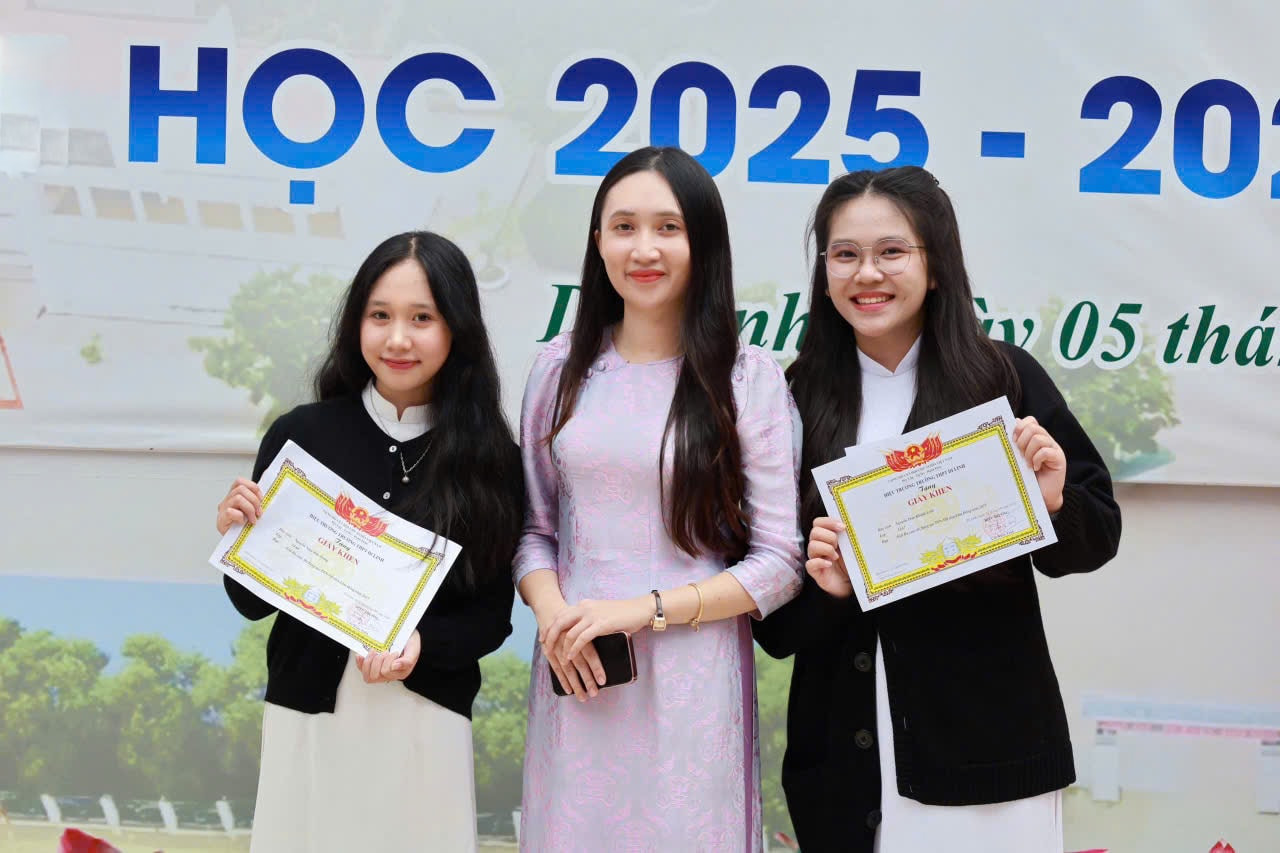
at a provincial-level innovation contest
An Idea Rooted in Everyday Life
The idea for Biobee Product emerged from the most familiar spaces of daily life, from the school canteen to the family kitchen, where plastic bags and cling film appear at nearly every meal.
“We noticed that plastic wrap is used and thrown away every day. It may seem insignificant, but when accumulated, the amount of waste is enormous,” Khanh Linh shared.
According to the research team, single-use plastic wrap, especially when used to cover hot food, poses potential risks of releasing microplastics and chemicals harmful to human health. These concerns, combined with their environmental studies, prompted Linh and Trang to wonder if there could be a safer, longer-lasting alternative for everyday use. From that question, the idea of beeswax wraps gradually took shape.
“We didn’t want to create something overly complicated. What mattered most was that it felt familiar enough for people to use daily without feeling forced to change their habits,” Bao Trang explained.
The research process involved a series of experiments, with the biggest challenge being the precise balance between beeswax and coconut oil. After five rounds of testing, the team found that using pure beeswax alone made the fabric stiff and difficult to handle. Conversely, an unsuitable ratio of coconut oil caused the wax layer to melt easily, adhere unevenly and lack stability during use. Only after achieving the right balance did the beeswax fabric reach the necessary softness, adhesion and durability to effectively wrap food.
In Line with the Green Consumption Trend
According to Bao Trang, the final Biobee Product is made from 100% cotton fabric coated with an optimal blend of beeswax and coconut oil. This creates a protective layer that is sufficiently sealed yet breathable, helping food stay fresh without trapping moisture. Thanks to these properties, the beeswax wrap can be reused for 6 months to 1 year, is easy to clean, generate no microplastics and is biodegradable at the end of its lifecycle.
To verify these advantages, the team conducted experiments preserving cucumbers and carrots over a five-day period. The results showed that food wrapped in beeswax fabric retained moisture, color and texture nearly comparable to samples wrapped in plastic film, while unwrapped samples quickly became dry and wilted. These findings demonstrated that natural materials can fully meet household food preservation needs.
Beyond its practical benefits, the project also highlights its potential impact within school communities. Khánh Linh noted that in a school of around 1,000 students, replacing plastic wrap with beeswax fabric could reduce approximately 1.5 tons of plastic waste per year, equivalent to nearly 300,000 small plastic bags. Such figures underscore how changing consumption habits at the school level can create tangible environmental benefits.
Biobee Product was awarded Third Prize at the 2025 Lam Dong Provincial Youth and Children’s Innovation Contest. Building on this initial success, Khanh Linh and Bao Trang plan to further develop the idea by diversifying product sizes and integrating it with STEM activities and hands-on experiences, allowing Biobee Product to continue accompanying green choices in everyday life.