


Unique Fermented “Choe” Jar Coffee By A K’ho woman
From ordinary coffee beans, Ka Nhuỵ - a young K’ho woman living at the foot of Dai Binh Mountain - has created a unique brewing method that captures the true essence of Vietnam’s Central Highlands.
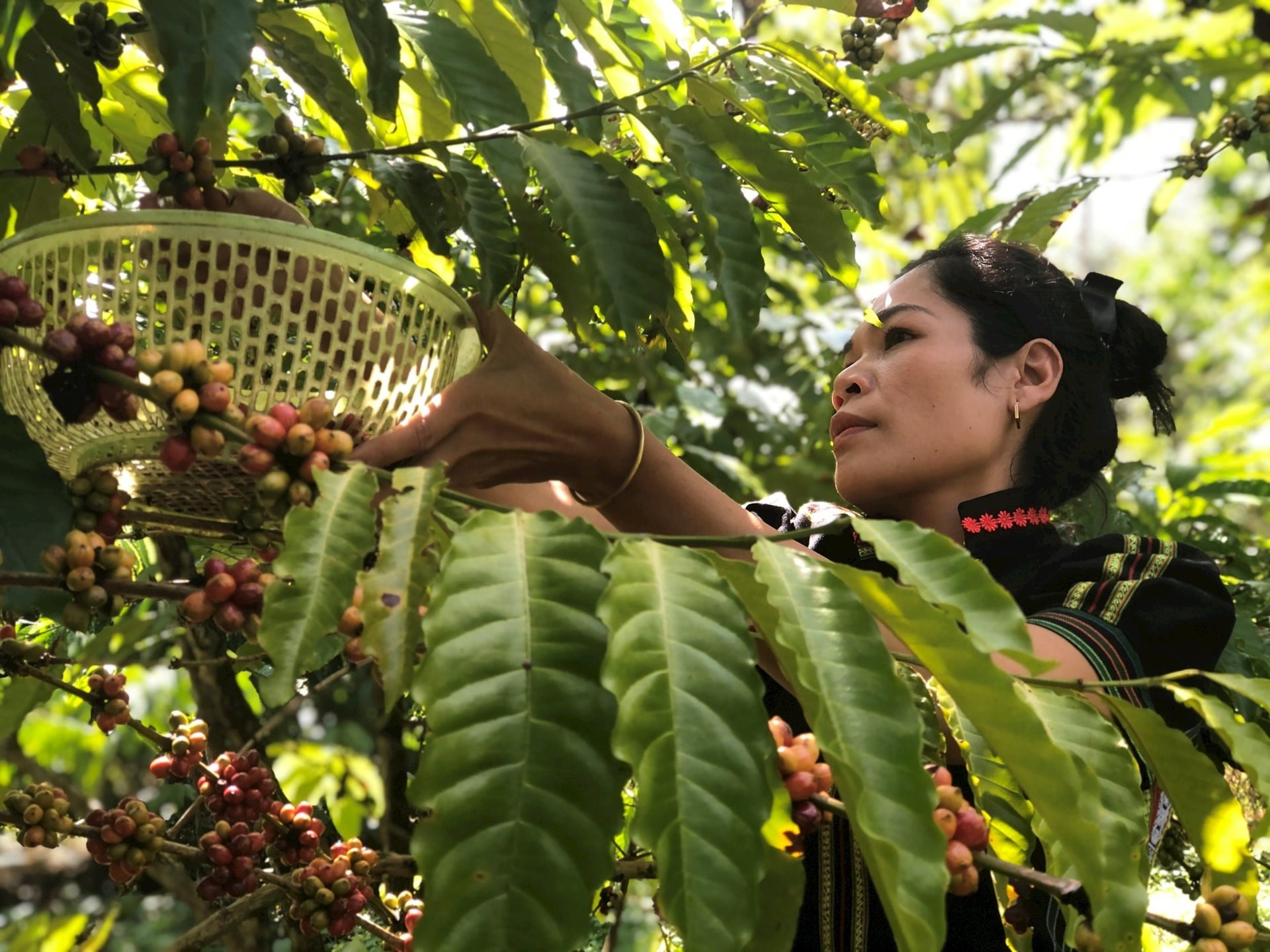
“People in Bao Lam have always grown coffee. Like everyone else here, I’ve been surrounded by coffee since childhood. Its aroma is as familiar to me as the scent of cooked rice by the fire,” said Ka Nhuỵ, a K’ho farmer from Hamlet 15, Bao Lam 3 Commune (Lam Dong Province).
At first, Ka Nhuỵ followed the same path as most local farmers - harvesting and selling fresh coffee beans in bulk to traders. But soon, she realized that bulk selling limited farmers’ income. Encouraged by her family, she began small-scale coffee roasting and grinding.
“In the beginning, I roasted coffee manually, mostly supplying friends and relatives in Can Tho City, where my husband works. Gradually, as demand grew, I founded the Lek Coffee brand - and to my surprise, it was warmly received by customers,” she recalled.
Today, Lek Coffee has earned a strong reputation among the Bao Lam coffee community for its deep local roots and cultural connection to the southern Central Highlands, as well as its close ties with local coffee growers.
But Ka Nhuỵ didn’t stop there. Inspired by the region’s famous Can wine (fermented rice wine drunk through bamboo straws) — known for its herbal yeast and distinct mountain flavor — she wondered: What if coffee beans could be fermented in the same traditional jars used for Can wine, similar to how locals brew tea in Bao Lam and Bao Loc? So, in 2022, she began experimenting in her own garden.
During harvest season, Ka Nhuỵ picked fully ripe red cherries and sun-dried them until the beans inside retained a moisture level of 12–13%. After removing the outer husk, she carefully sorted out broken or black beans, stripped off the remaining parchment layer, and pre-roasted the green beans for 3–5 minutes to reduce moisture. Then came the key step: fermenting the beans in traditional "choe" jars for six months.
These "choe" jars were previously used to age Can wine — already imbued with its distinct aroma. Ka Nhuỵ cleaned them, sun-dried them, then fired them over a wood flame before cooling. The green coffee beans were filled to the brim and left to ferment naturally for half a year. Afterward, they were roasted, ground, and packaged — resulting in coffee infused with the fragrant yeast of Can wine. At first, Ka Nhuỵ made only a few jars for friends and family to sample. But the result exceeded expectations — her Can wine-scented coffee quickly found a niche in the market. By 2024, she had fermented over 200 jars, equivalent to around 500 kilograms of coffee. For the 2025 season, she plans to expand to 1,000 jars to meet growing demand.
Ka Nhuỵ emphasizes that to ensure the best flavor, the fresh cherries must be of high quality, carefully tended, harvested at peak ripeness, and dried well in sunlight and breeze. Additionally, the jars must be of the traditional K’ho style, with a thickness of 1.5-2 cm, ensuring they absorb the wine's essence deeply.
Good coffee beans and the right jars create a product with a warm, captivating fragrance
Ka Nhuỵ
Mr. Truong Van Tung, Chairman of the Provincial Farmers' Union, commended that “Ka Nhuỵ’s method of fermenting coffee with Can wine yeast is a creative and meaningful approach. It not only helps preserve and promote local cultural identity but also opens the door to larger-scale production, adding value to local goods and enhancing competitiveness.”
With her groundbreaking idea, Ka Nhuỵ - the young K’ho woman from Bao Lam - earned a Encouragement Prize at the 8th Provincial Farmers’ Technical Innovation Contest (2024–2025).