


Unique Traditional M'nong Dishes
Wild vegetables, rattan shoots, cassava leaves and bitter eggplant—simple ingredients from the forests and mountains—have created a distinctive identity in M’nong culinary culture.
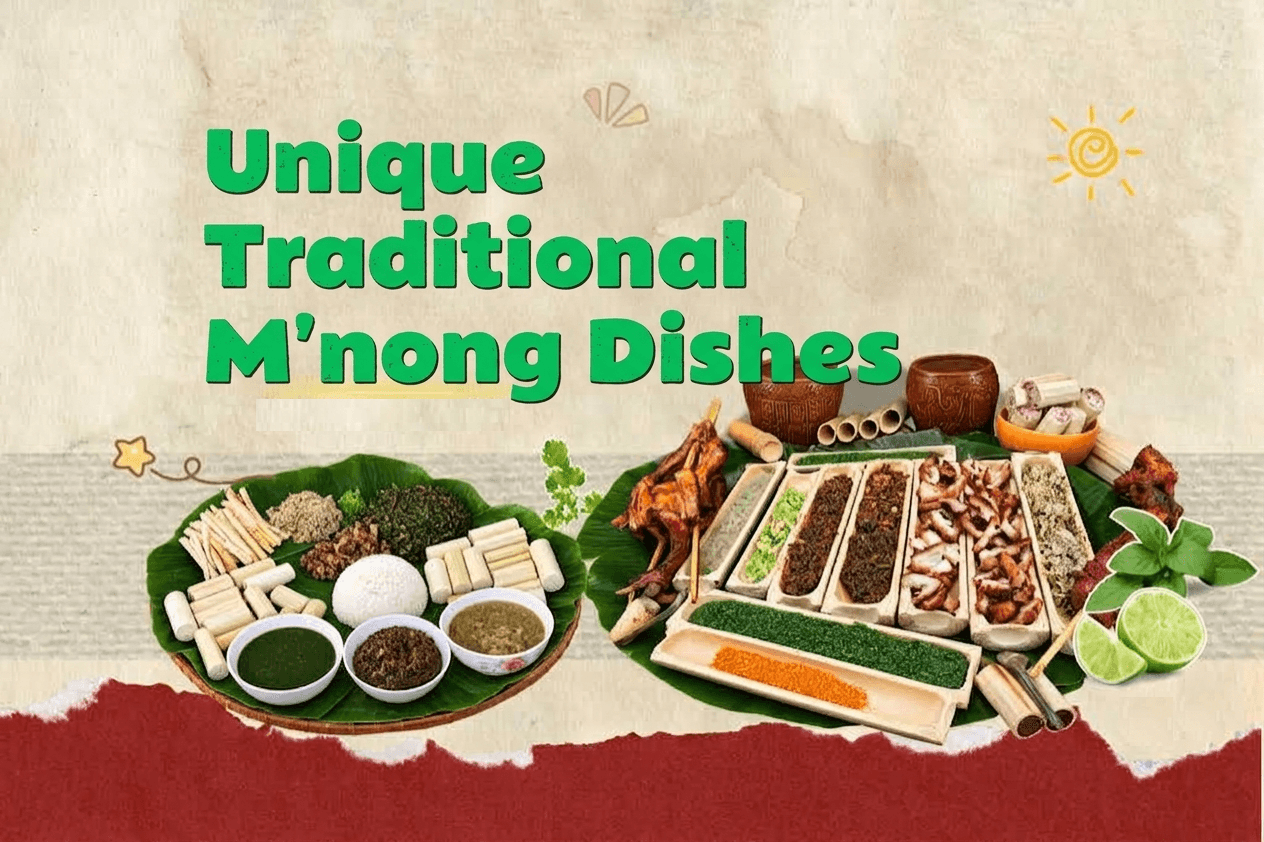
Wild vegetables (rau bep), rattan shoots, cassava leaves and bitter eggplant... simple ingredients from the forests and mountains, have created a distinctive identity in M’nong culinary culture.
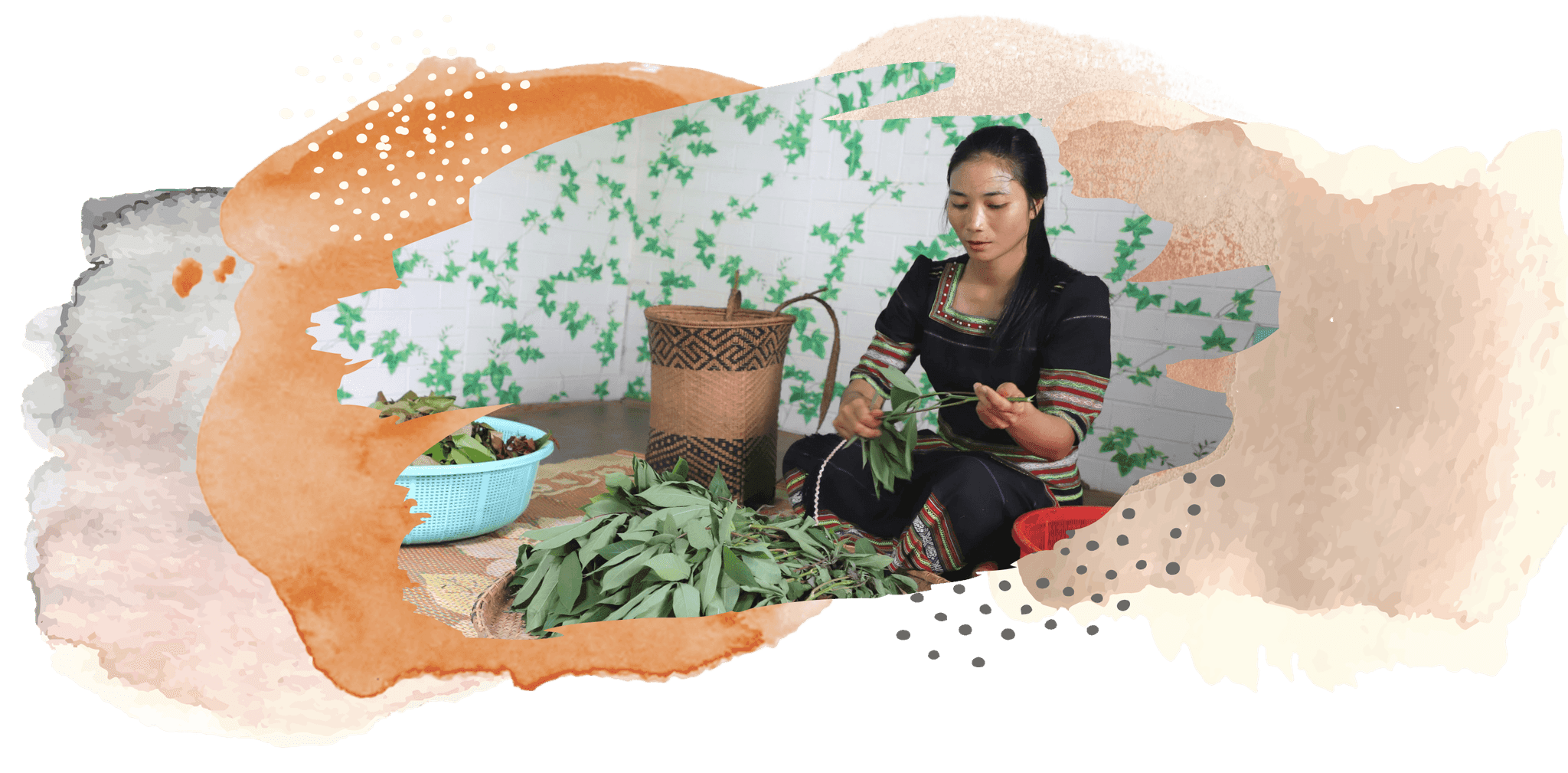
From family meals to community festivals, these flavors continue to be preserved and passed down in simple ways. As natural ingredients become increasingly scarce, preserving a dish also means preserving memories of the forest, the community, and the way of life handed down by their ancestors.
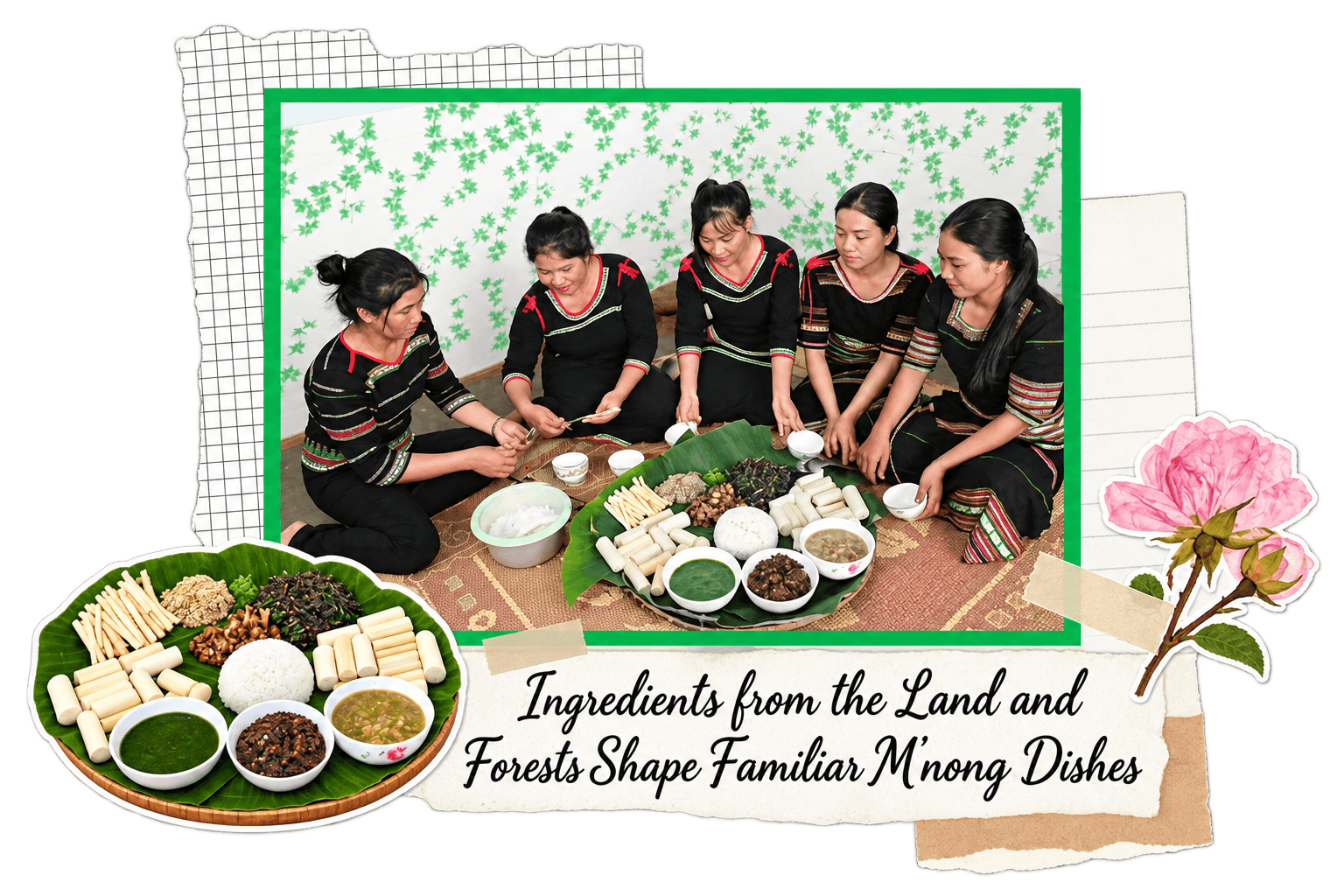
Every ethnic community has its own distinctive dishes and flavors, shaped by its living environment, customs and knowledge passed down through generations. For the M’nong people, dishes made from rau bep ( paddy oats) , rattan shoots, wild bamboo shoots, cassava leaves and bitter eggplant are not merely familiar foods, but are also closely tied to memories of the mountains and forests and the community’s way of life.
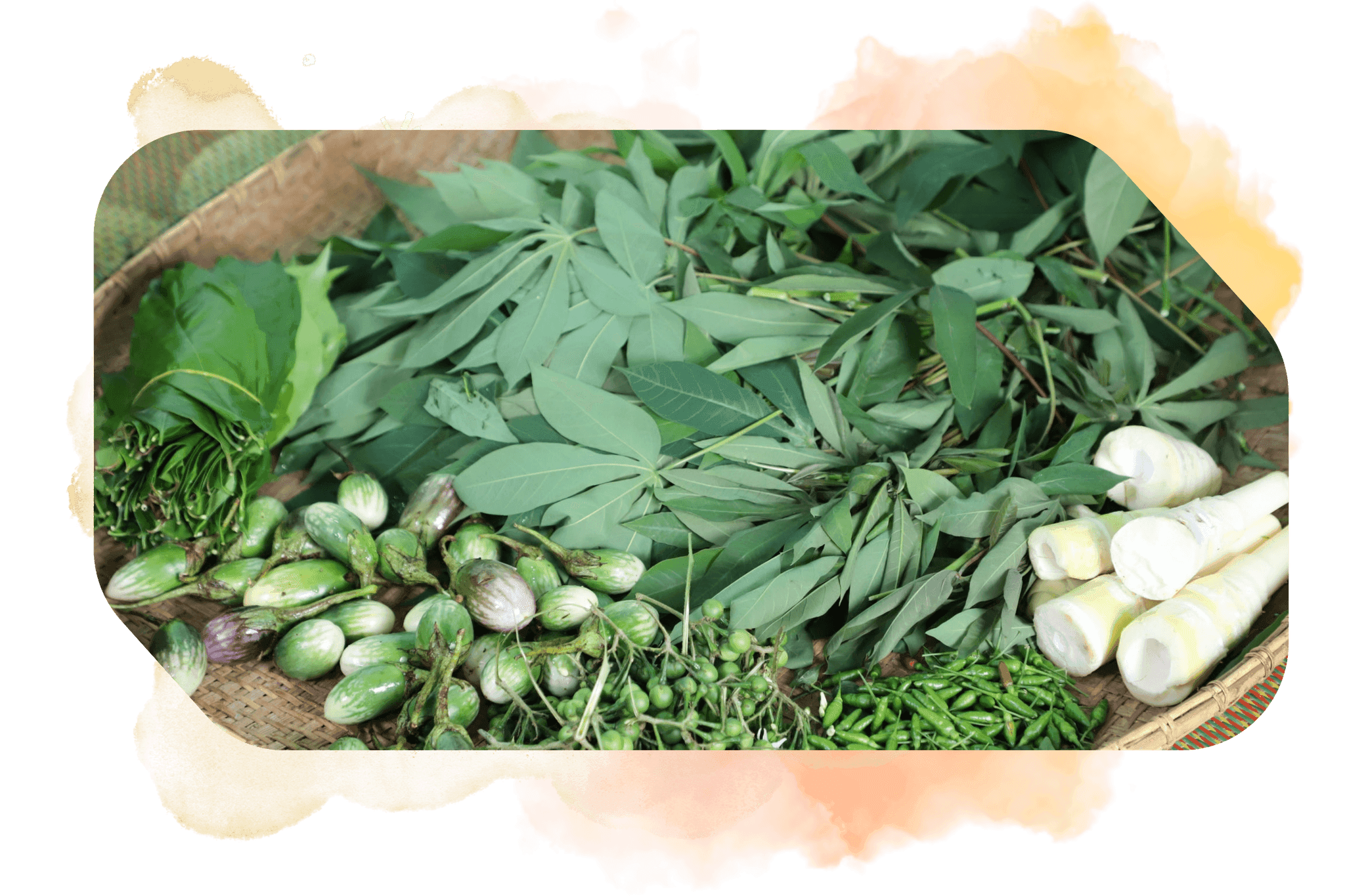
In Nghia Thuan residential area, Dong Gia Nghia Ward, the small gardens of M’nong families still feature the green paddy oats leaves , cassava and bitter eggplant as a familiar part of everyday life.
In the past, people would go into the forest to gather wild vegetables. As these natural ingredients have become less abundant, many families have brought familiar plants home and grown them in their own gardens. This approach not only provides a more reliable source of food but also helps preserve traditional flavors in everyday family meals.
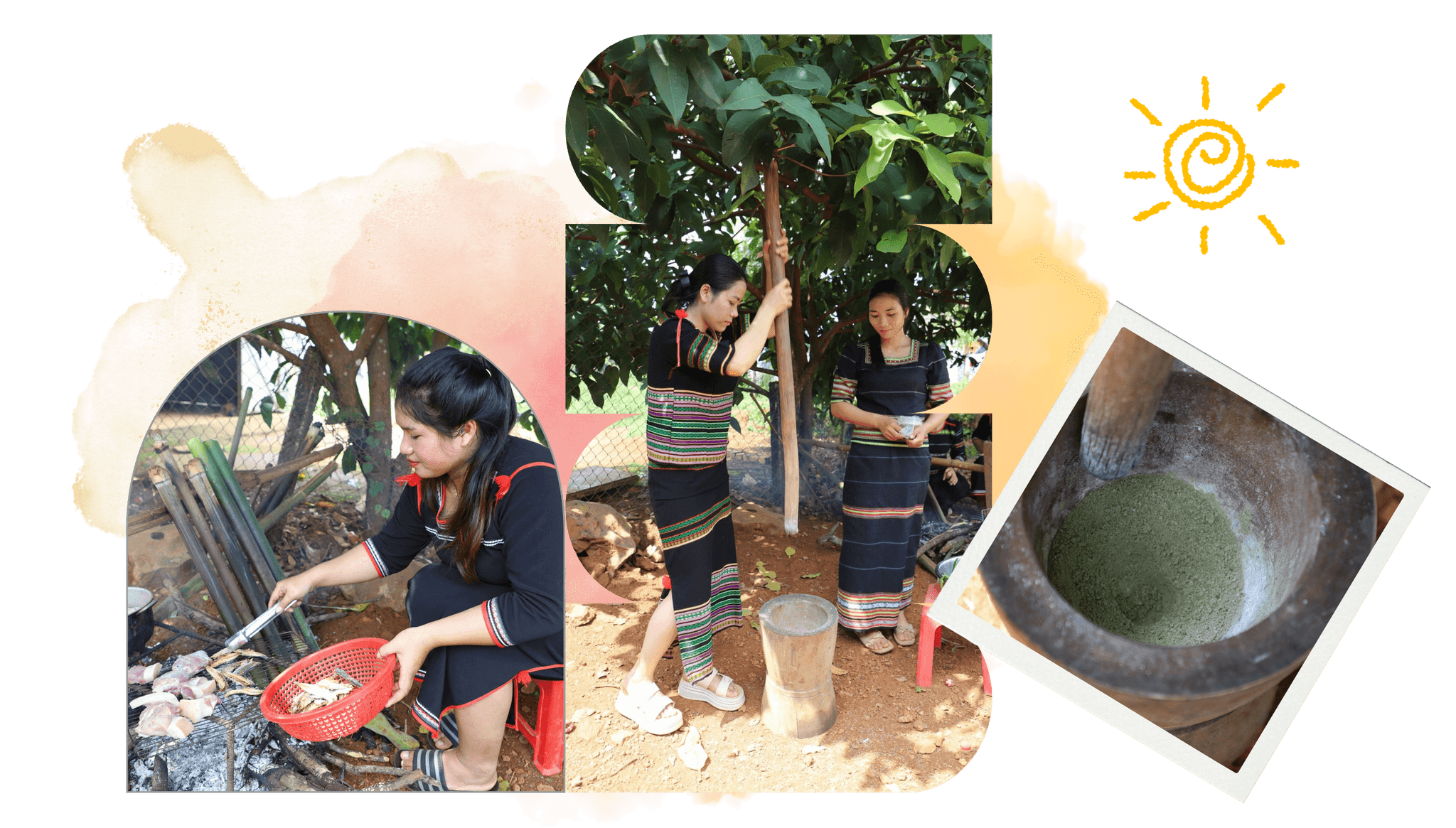
“To preserve M’nong culture, we have to start with the things closest to everyday life. For my family, that means traditional dishes. Rau bep, wild bamboo shoots, rattan shoots and cassava leaves… these ingredients used to be gathered from the forest, but now we grow them in our garden so they are always available for cooking,” said H’Hang, a resident of Nghia Thuan residential area, Dong Gia Nghia Ward.
Keeping traditional dishes in every family is a way to preserve M'nong culture.
H'Hang, Nghia Thuan residential area, Dong Gia Nghia Ward
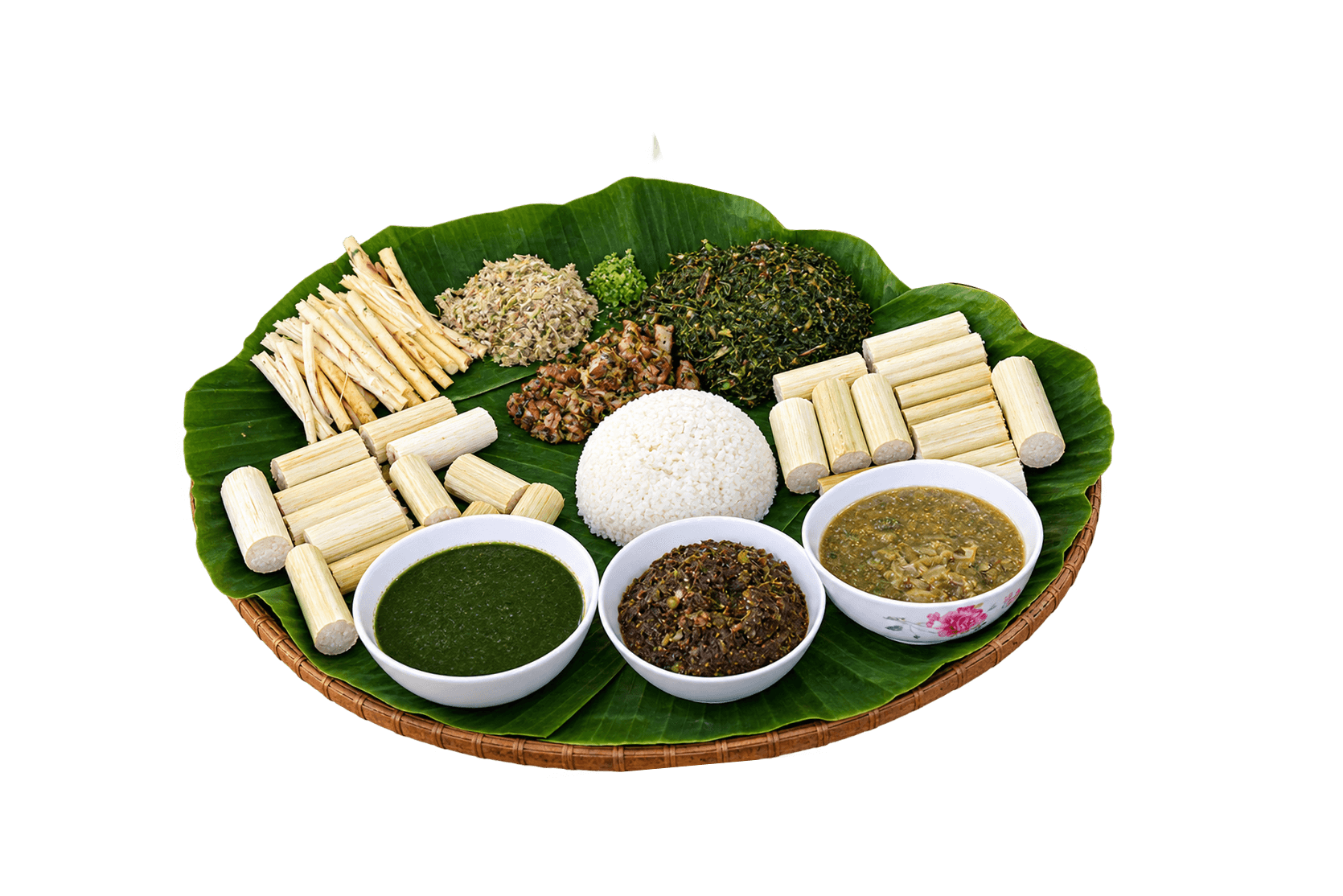
From these simple ingredients, the M’nong people create dishes such as canh thut, canh boi and stir-fried cassava leaves. Each dish has its own preparation method, blending bitter, spicy, sweet and nutty flavors.
These dishes are not merely a reflection of diverse tastes but also carry memories preserved through family meals.
Today, preserving traditional cuisine has taken on new forms. Many young M’nong people are actively documenting traditional dishes, cooking methods and family meals and sharing them on social media. As a result, traditions once centered around the family kitchen are now reaching a much wider community.
H’Hoang, from Nghia Thuan Residential Area, Dong Gia Nghia Ward, often posts photos and videos of traditional dishes on Facebook, hoping that more people will learn about her ethnic culture.
“I want to preserve the M’nong cultural identity so that future generations will still know and remember it. Sharing photos and videos of traditional dishes is also a way to help more people learn about our ethnic culture”, H’Hoang said with a smile.
Today, we share a dish and a glimpse of our culture; one day, they may become cherished memories for our children and grandchildren to remember their M’nong heritage.
H'Hoang, Nghia Thuan Residential Area, Dong Gia Nghia Ward
According to H’Thanh Ken, head of Nghia Thuan Residential Group, M’nong culture here is shaped by many values, including gongs, cuisine, weaving and bamboo handicrafts. Simple dishes made from wild betel leaves, rattan shoots and cassava leaves therefore remain a natural part of daily life today. Quietly, through gardens and kitchens, part of the community’s cultural memory continues to be preserved and passed on.
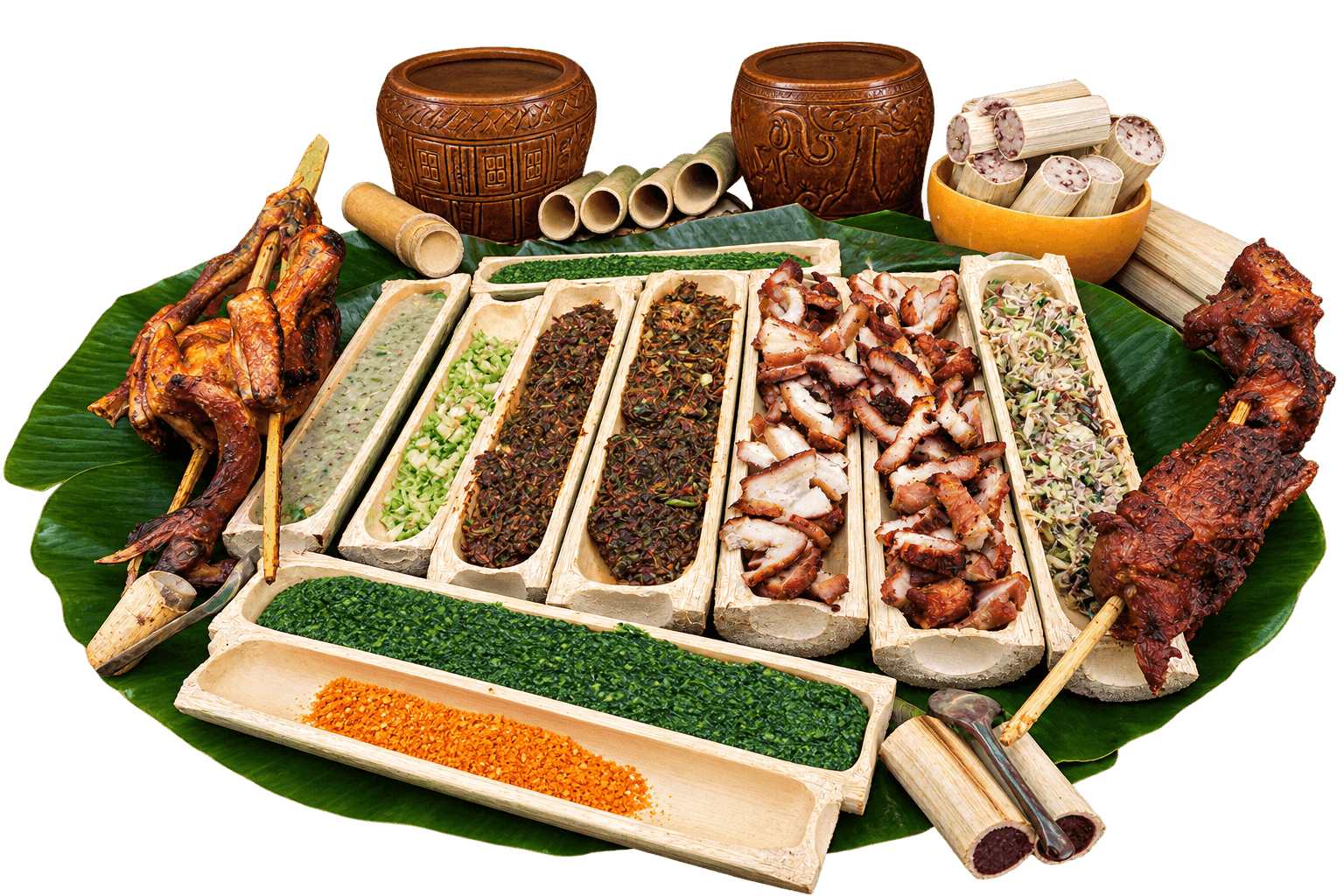
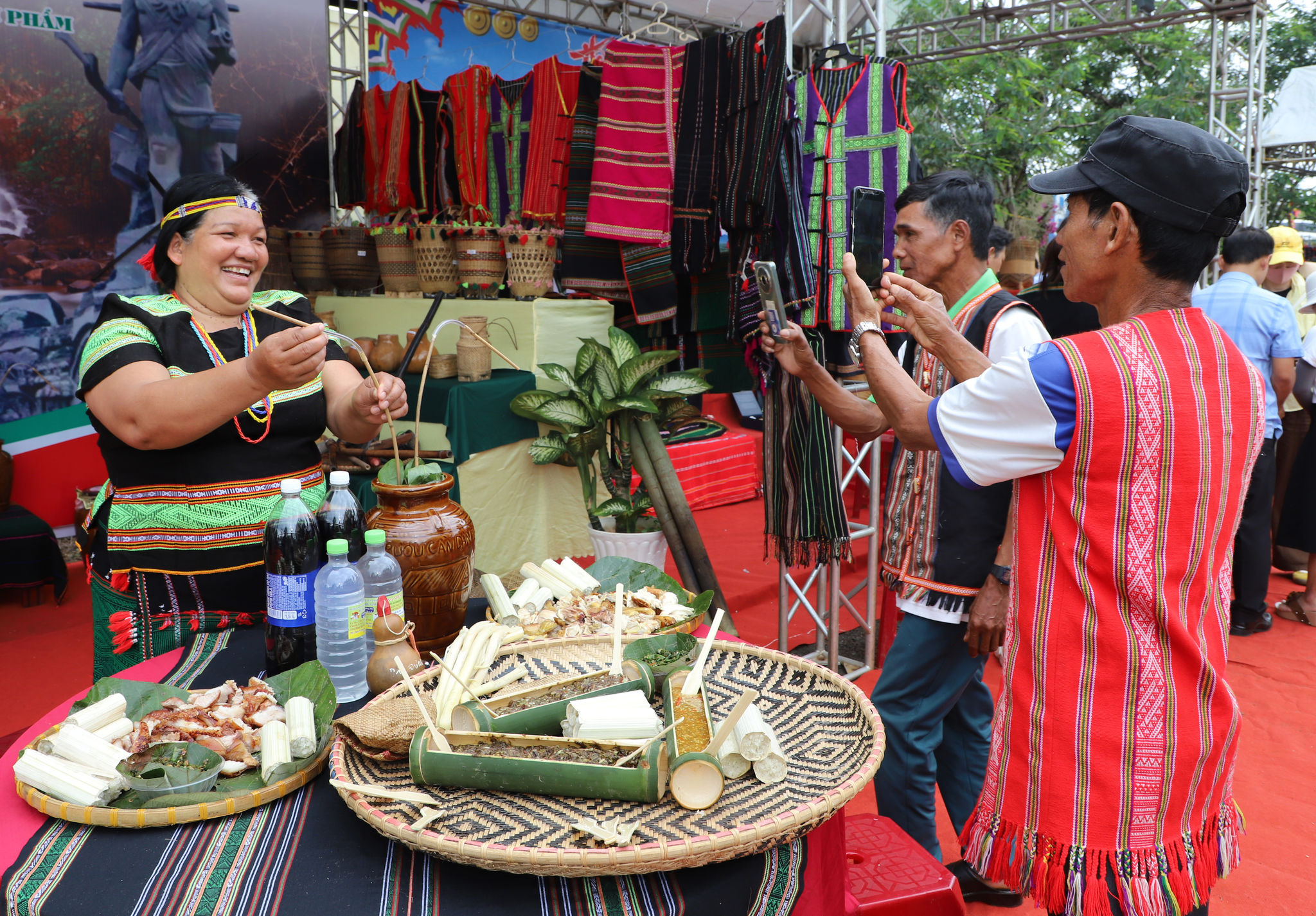
During festivals in M’nong bon villages, alongside rituals, gong performances and folk cultural activities are kitchens filled with the enticing aromas of bamboo-cooked rice, grilled pork, grilled chicken, canh boi, canh thut, grilled rattan shoots and wild betel leaves.
These dishes are prepared with familiar ingredients from the land and forests, creating distinctive flavors for the festive occasions.
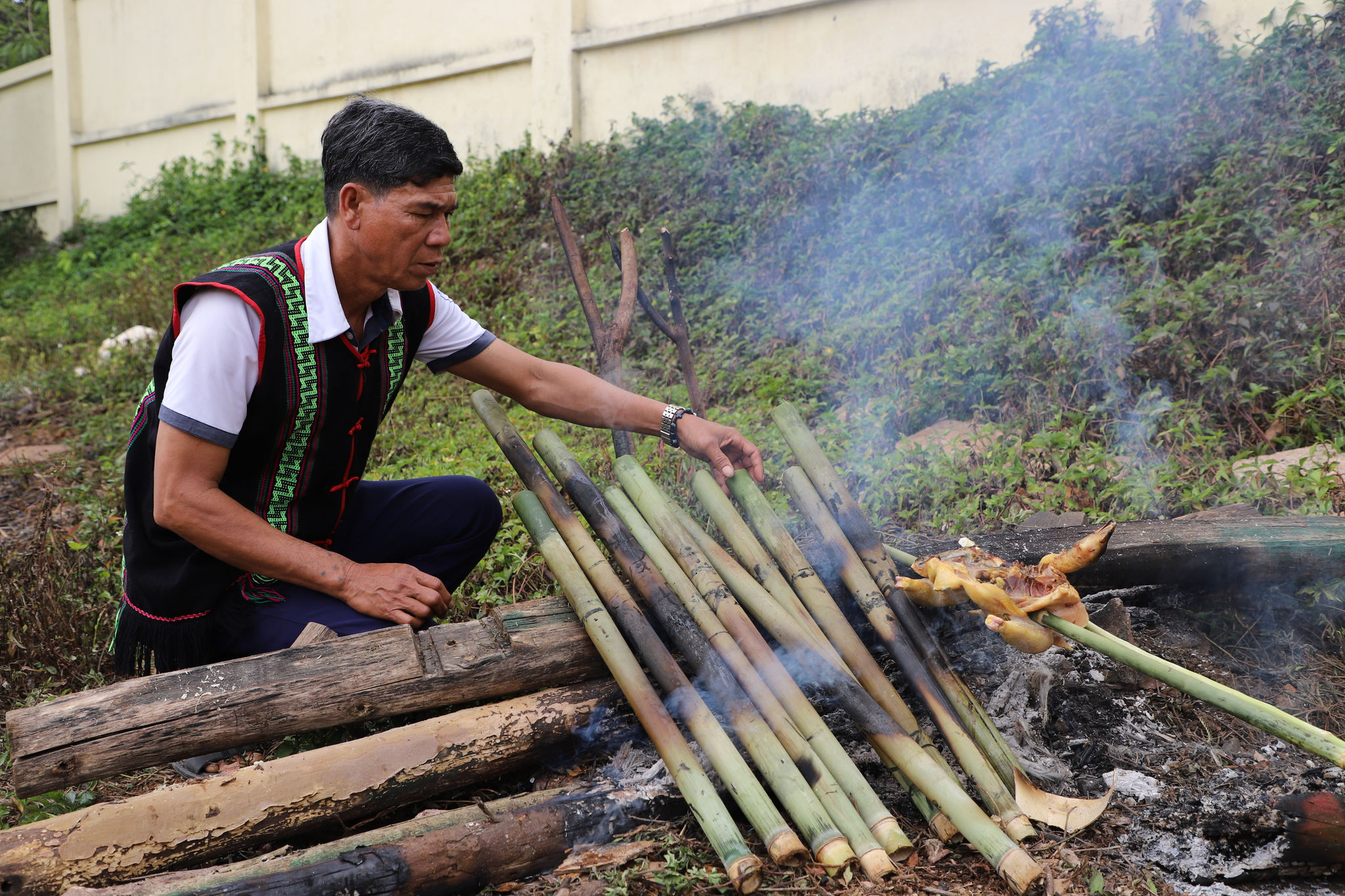
At traditional M’nong festivals, such as new rice ceremonies, thanksgiving ceremonies, kinship ceremonies and water-source worship rituals, residents prepare traditional dishes while taking part in cultural activities. Together, these create a communal space where cuisine comes alive alongside gong and panpipe performances and social gatherings.
Y Hoan, from Phu Loi Village, Quang Phu Commune, said: “Whenever our bon and the local authorities organize festivals, I take part in preparing traditional dishes such as bamboo-cooked rice and canh thut, as well as performing gong music and playing the gourd panpipe. I am happy to contribute to preserving and promoting our cultural identity so that it can continue to be passed down to future generations.”
For first-time festivalgoers, food offers an accessible way to explore the local culture.
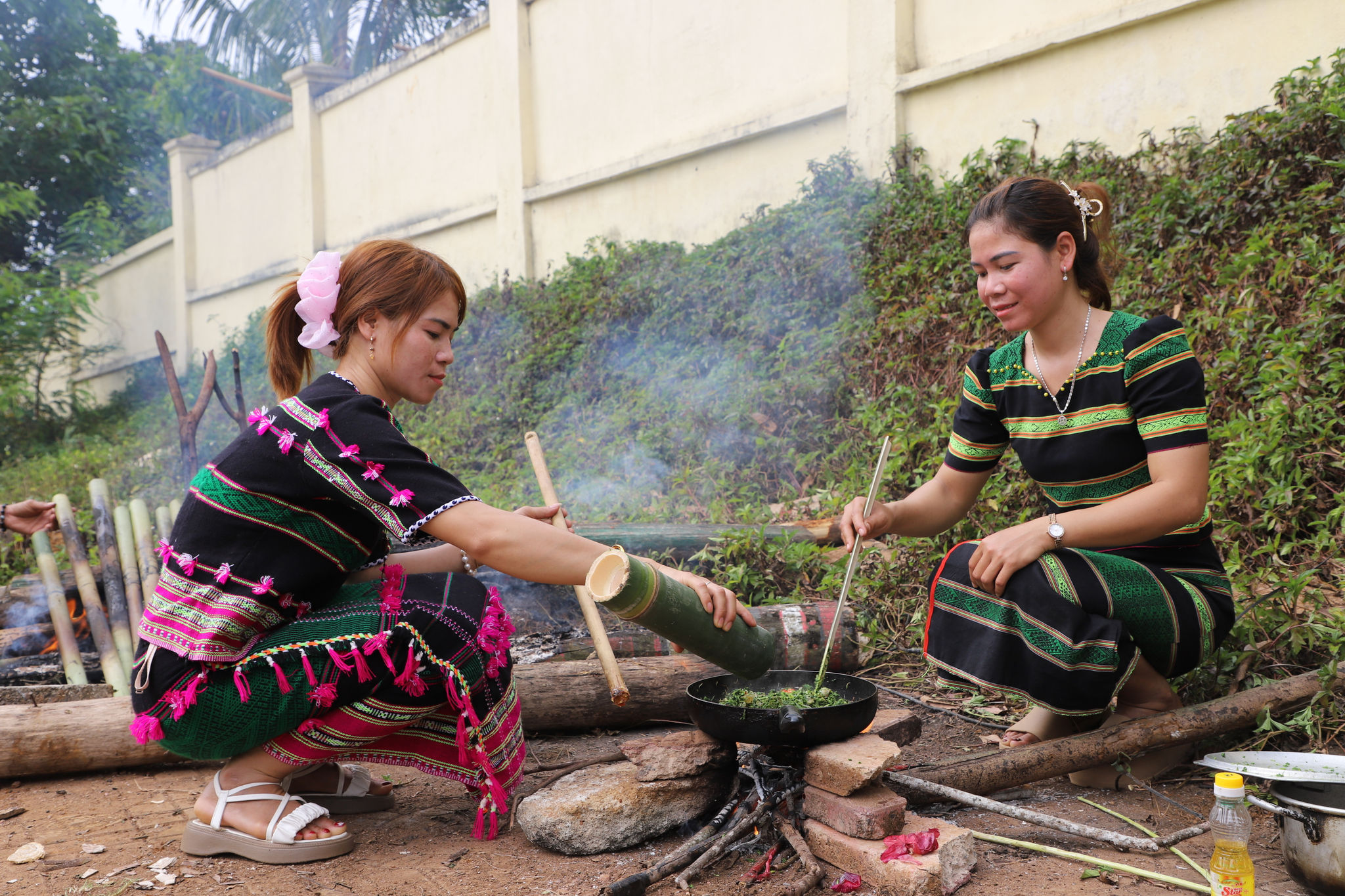
Pham Thi Hoa Phuong, from Phu Hung Village, Quang Phu Commune, shared her joy at enjoying traditional dishes with her family: “Through the music, cuisine, bamboo-cooked rice and buffalo meat prepared by the local people, I can better appreciate the culture here. I hope festivals like these will be held more often so that both residents and visitors can experience them together.”
The culinary space at these festivals is therefore more than a place to enjoy food. Each dish also embodies traditional knowledge, from selecting ingredients to preparation techniques passed down through generations.
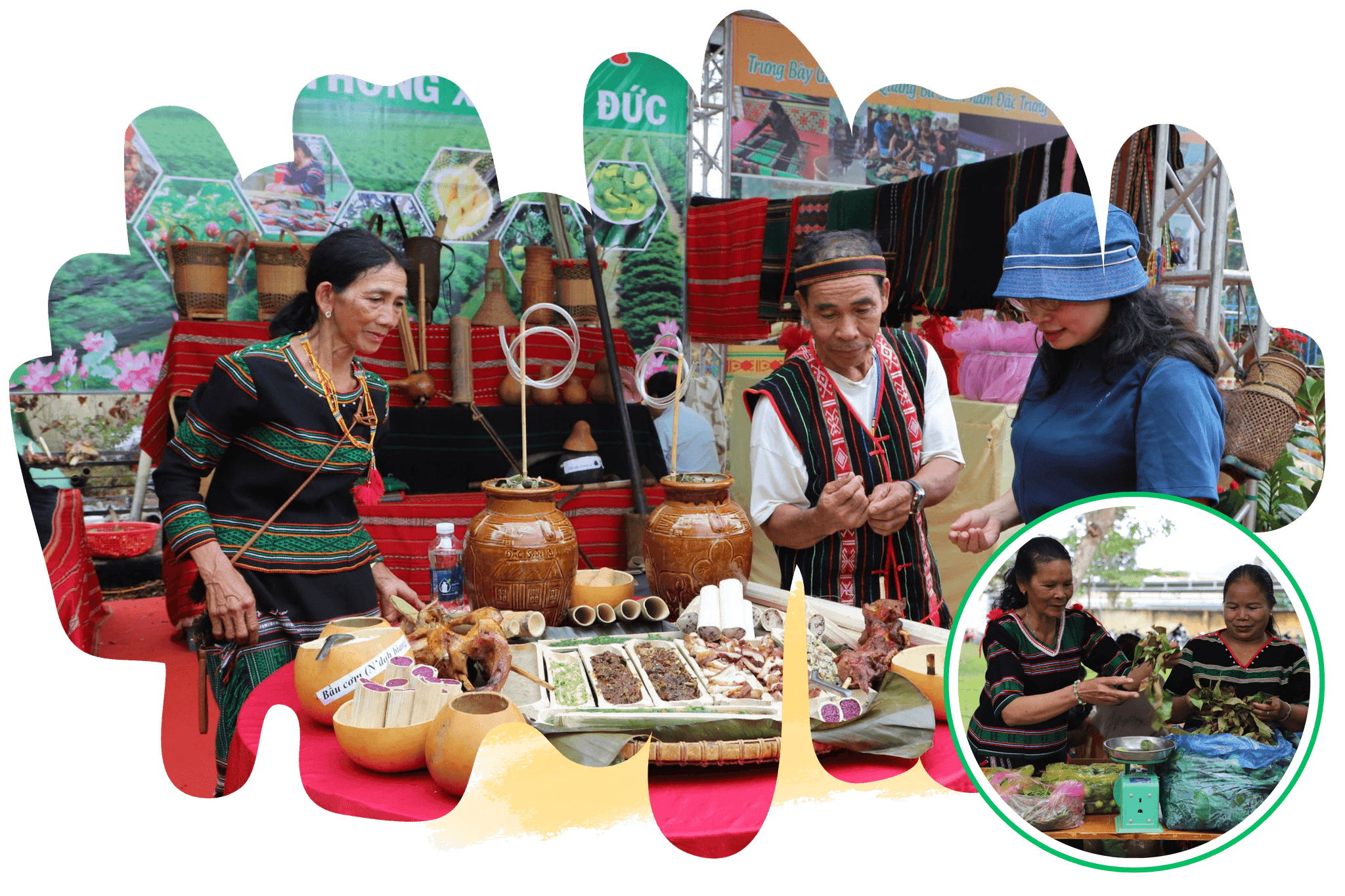
For those well-versed in M’nong culture, such as Meritorious Artisan Thi Ai from Bu Koh bon, Tuy Duc Commune, the cook’s experience plays an important role in creating the distinctive flavors of traditional dishes.
Preserving a dish means more than preserving the way it is prepared. It also means preserving its ingredients, traditional knowledge and memories — and, more importantly, keeping the connection between generations alive.
Meritorious Artisan Thi Ai, Bu Koh bon, Tuy Duc Commune
The ingredients may be simple and the cooking methods rustic, but creating a delicious dish while preserving its distinctive flavor requires skill, experience, and knowledge accumulated over time.
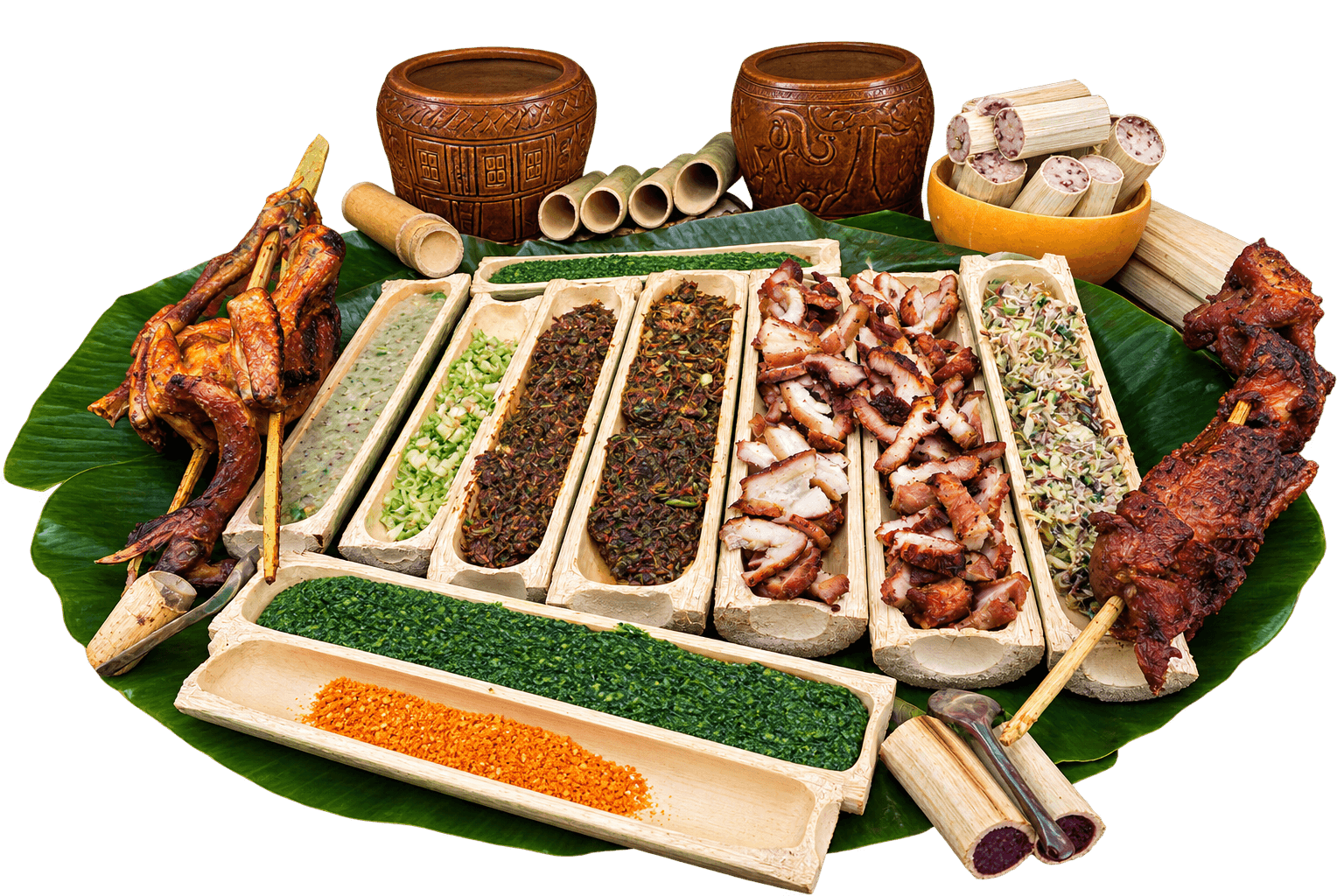
After trying traditional dishes at the festival, Vu Thi Mai from Nam Gia Nghia Ward clearly felt the connection between cuisine and the cultural setting.
“Dishes such as bamboo shoots, bép leaves, bamboo-tube rice and grilled meat have rustic yet distinctive flavors. Through these dishes, I could better experience the atmosphere of the mountains and forests and the warmth and closeness of the local people,” Vu Thi Mai shared.
For H’Dlang from Phu Loi Village, Quang Phu Commune, preparing traditional dishes for the festival is also an opportunity to teach younger generations and fellow villagers how to make use of familiar local ingredients.
Preserving the ingredients from the mountains and forests is also one way for the M’nong people to protect the forest.
H’Dlang, Phu Loi Village, Quang Phu Commune
“I bring natural ingredients to the festival, such as bép leaves, bitter eggplant, chili peppers and shallots, all of which are grown by my family. I show the younger generations and other villagers how to prepare them. Preserving these ingredients is also a reminder to M’nong people that they should value and protect the forests,” H’Dlang shared.
From a single dish, a cultural story thus expands further. It is a story about people and their connection with the land and forests; about how a community preserves values that have been part of its life for generations.
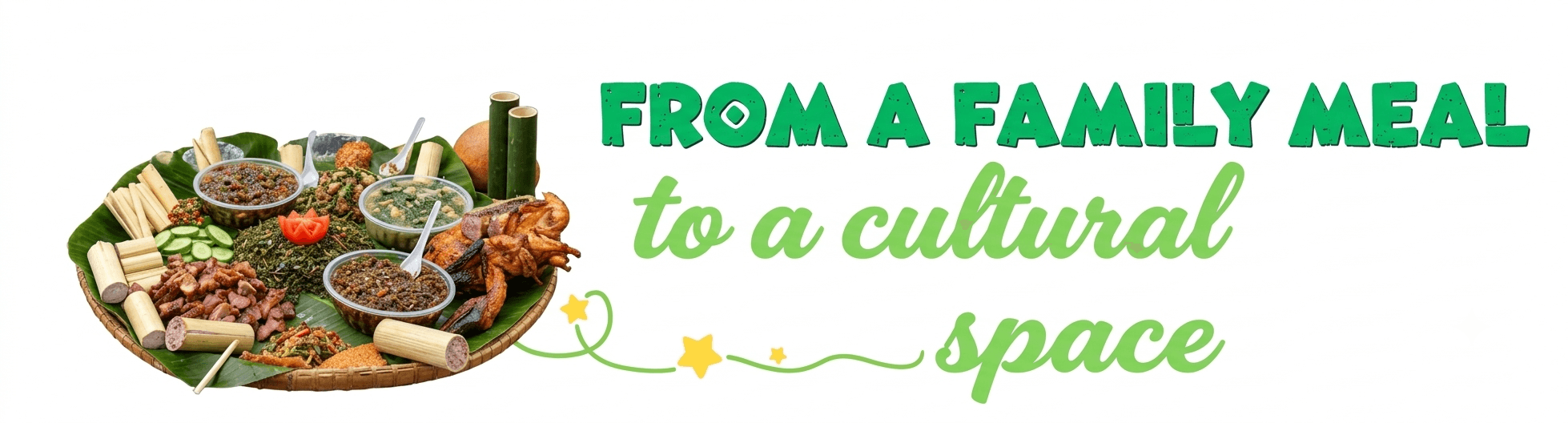
Today, as traditional dishes appear at festivals, are shared by young people on social media and experienced by visitors, M’nong flavors are finding new spaces in which to live on.
Through these simple, traditional dishes, I can better experience the flavors of the mountains and forests, as well as the warmth and closeness of the people here during the festival.
Vu Thi Mai, Nam Gia Nghia Ward
From a patch of vegetables in a home garden to a kitchen at a festival or a family meal shared around the table, the flavors of the mountains and forests continue to quietly tell the story of M’nong culture — simple, familiar, yet taking on a special significance in life today.
Content and photos: Ho Mai
Layout: Pham Luong