


Unlocking Land Potential in Dam Rong
Alongside restructuring low-efficiency gardens, expanding concentrated production areas and promoting high-tech farming, the agricultural sector is exploring new pathways to increase production value and improve livelihoods in the communes of Dam Rong 1 and Dam Rong 2.
Revitalising Existing Farmland
According to Dam Rong 2 Commune authorities, the locality has 8,973.8 hectares of agricultural land, including 539 hectares for annual crops and 8,434.8 hectares for perennial crops, with coffee accounting for nearly 7,000 hectares. In recent years, the commune has stepped up efforts to restructure crop and livestock production while mobilising financial and credit support to improve output and boost residents’ incomes.
Although some areas have yet to realise their full potential, Dam Rong 2 Vice Chairman Nguyen Van Chinh said a recent review found more than 2,250 hectares of ageing, low-yield coffee plantations in the commune. The locality also has around 150 hectares of riparian farmland and single-crop rice fields in need of conversion. Most of these areas belong to ethnic minority households, where traditional farming practices and limited capital have made land improvement and crop conversion particularly difficult.
To address the situation, Dam Rong 2 Commune has drawn up a roadmap to revive underperforming gardens and shift low-efficiency land to higher-value crops, with the aim of improving land-use efficiency. The commune is prioritising the replanting of ageing coffee plantations and the conversion of single-crop rice fields and riparian land to suitable crops such as coffee, durian and mulberry.
This change is carried out in accordance with the local terrain, soil characteristics, and the investment capacity of each household, while also aligning with the growth of concentrated raw material zones and the value chain from production to processing and consumption.
The locality has strengthened technical training and guidance, helping farmers shift from traditional agricultural production to an agricultural economy mindset, while promoting the application of science and technology, mechanization, and digital transformation. Support policies prioritize poor and near-poor households as well as ethnic minorities, enabling them to improve garden productivity and efficiency.
Promoting High-Tech Agriculture
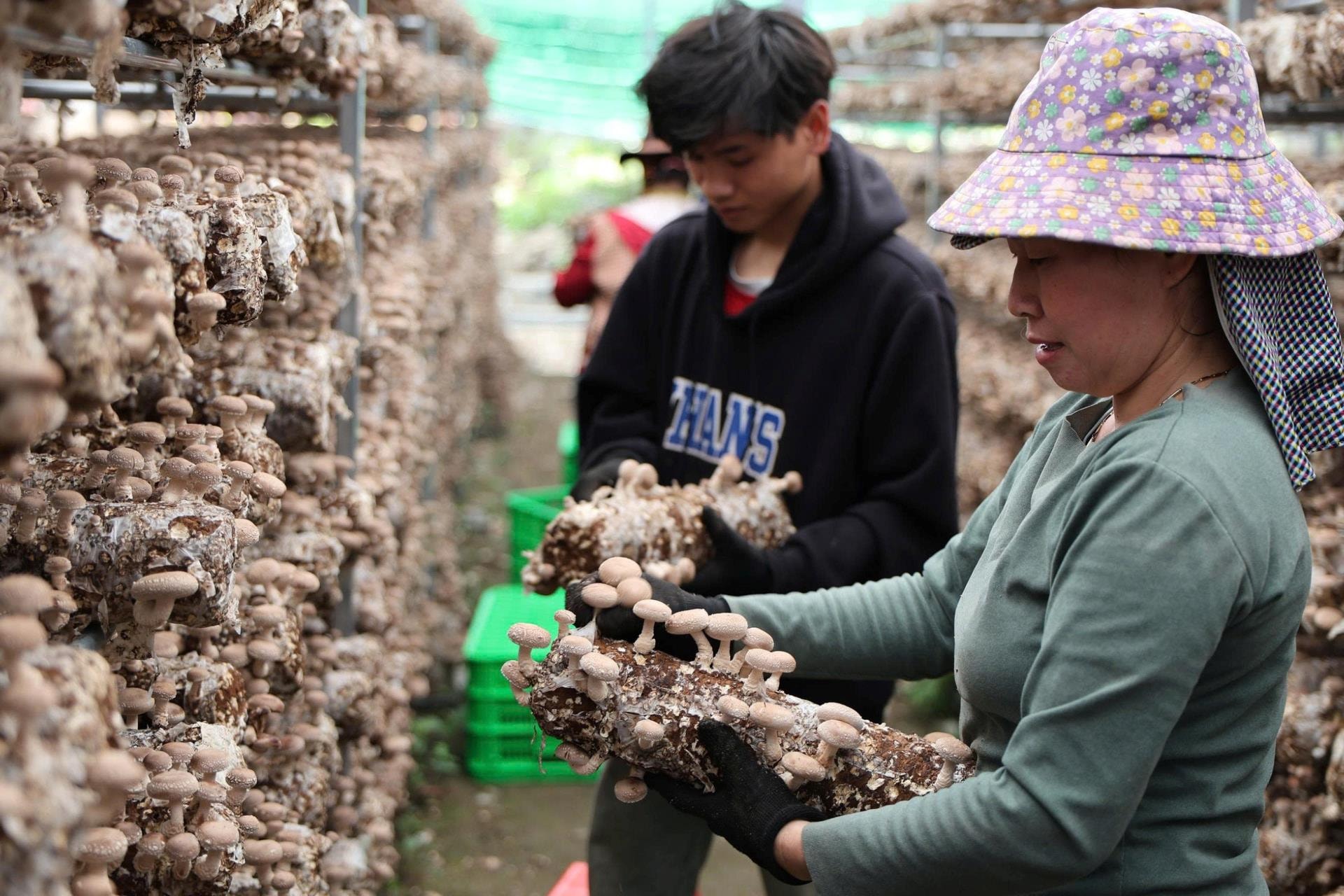
Alongside improving low-efficiency production areas, Dam Rong 1 and Dam Rong 2 communes are gradually leveraging their advantages in climate and soil conditions to develop commodity-based and high-tech agriculture.
In Dam Rong 1 Commune, specialized areas for industrial crops, advanced farming techniques, and fruit orchards—like avocado, macadamia, banana, and mulberry—are gradually being developed, resulting in noticeable economic advantages. At present, high-tech agricultural activities span almost 99 hectares, which includes over 31 hectares dedicated to greenhouse farming for vegetables and flowers—nearly twice the area compared to 2019. Water-efficient irrigation systems, such as drip and sprinkler irrigation, are broadly implemented, aiding in cost reduction and enhancing productivity.
Similarly, in Dam Rong 2 Commune, agricultural practices are transitioning towards modernization. Major crops like coffee, durian, various fruit trees, and mulberry are on the rise, in addition to livestock and aquaculture initiatives that create economic value.
Several products, such as sturgeon, durian, and honey pineapple, have established their brands and are progressively carving out a niche in the market. With favorable natural conditions, plentiful water resources, and extensive agricultural land, the region has significant potential to develop concentrated raw material zones connected to value chains in production, processing, and distribution.
In the coming period, the localities aim to build a modern, integrated agricultural sector by promoting smart farming models suited to local conditions. Suitable areas will be selected to pilot high-tech agricultural models, allowing farmers to directly observe, learn and apply new techniques. Successful models will then be replicated to raise agricultural value and improve livelihoods.