


Vietnamese Melodies Resonate Along Lam Dong's Coast
For the first time, art troupes from Vietnam’s three regions — the North, Central and South — have gathered in Phan Thiet Ward, Lam Dong Province, for the 2026 Vietnamese Traditional Musical Instrument Solo and Ensemble Competition. The event highlights how traditional music continues to be preserved through the passion, creativity and dedication of generations of artists.
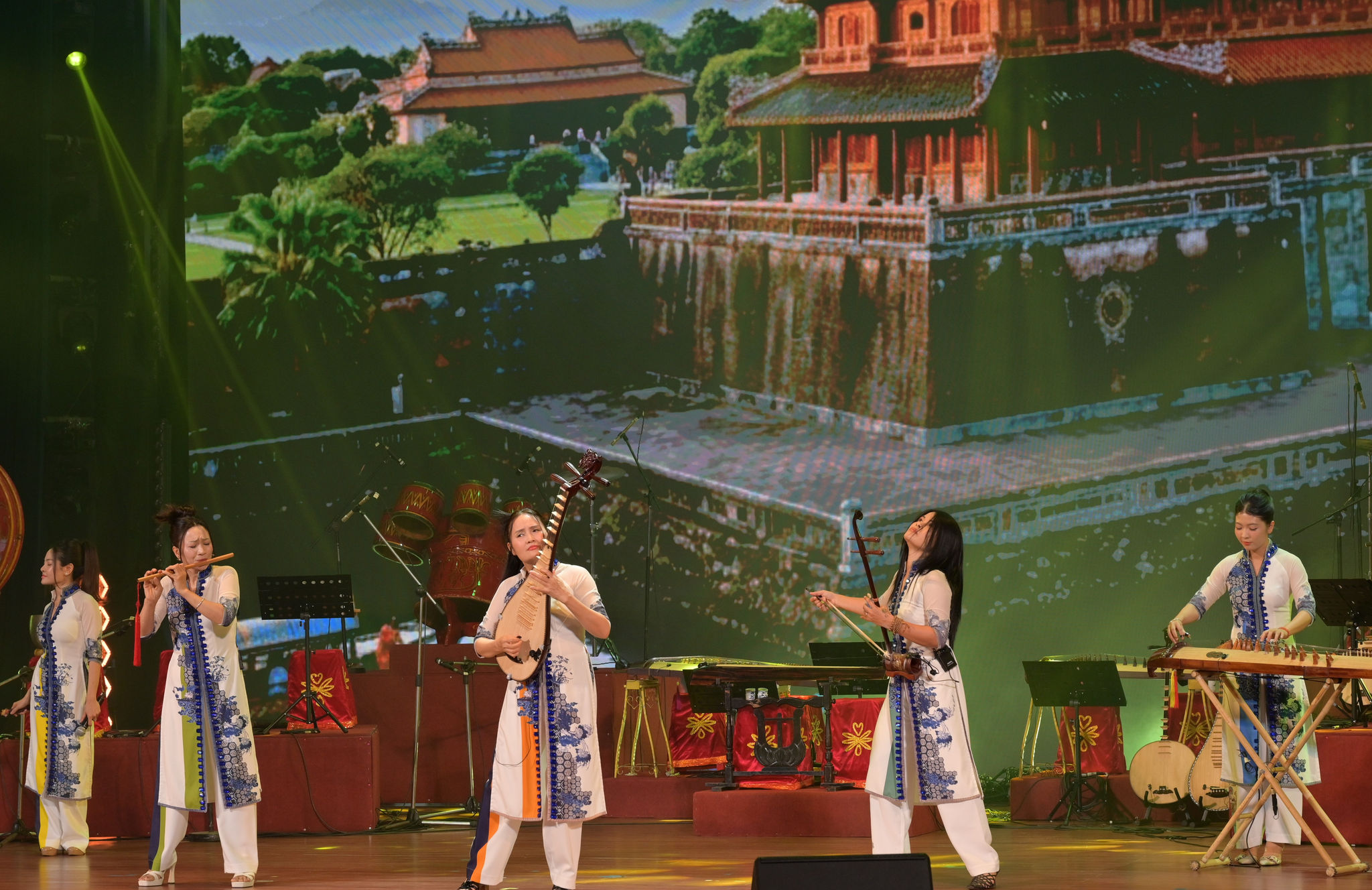
A Colorful Musical Tapestry Woven from Vietnam’s Three Regions
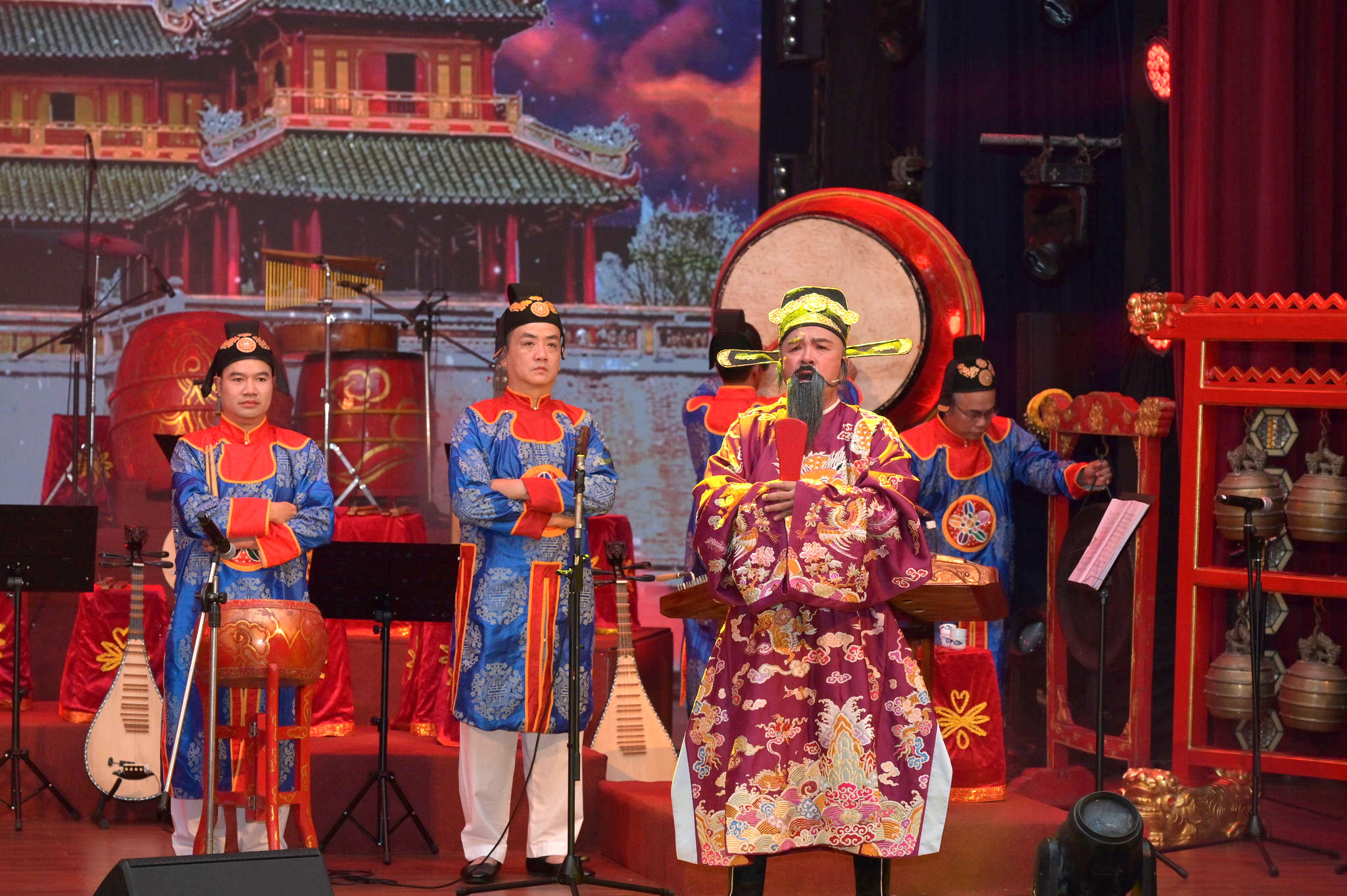
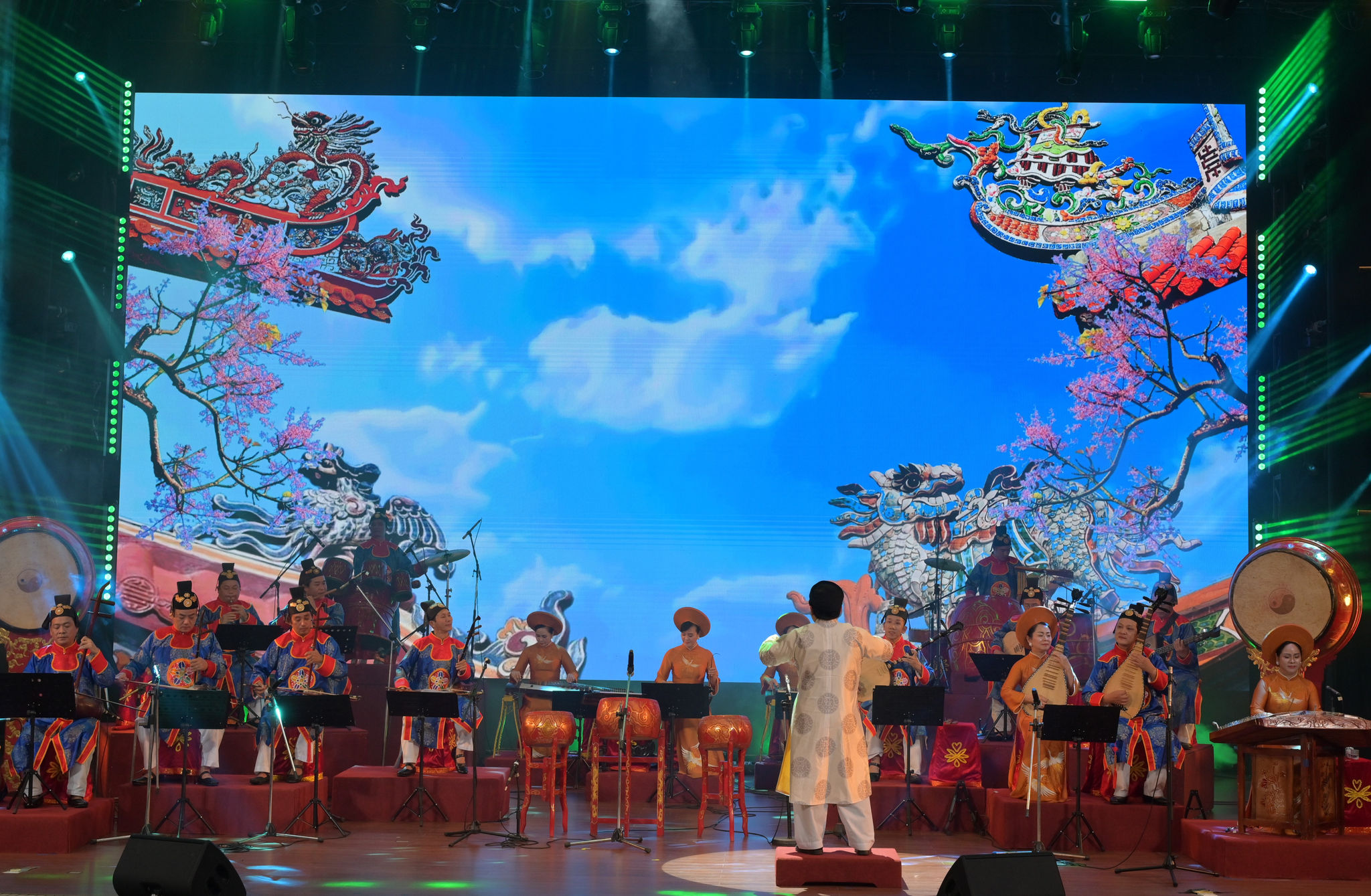
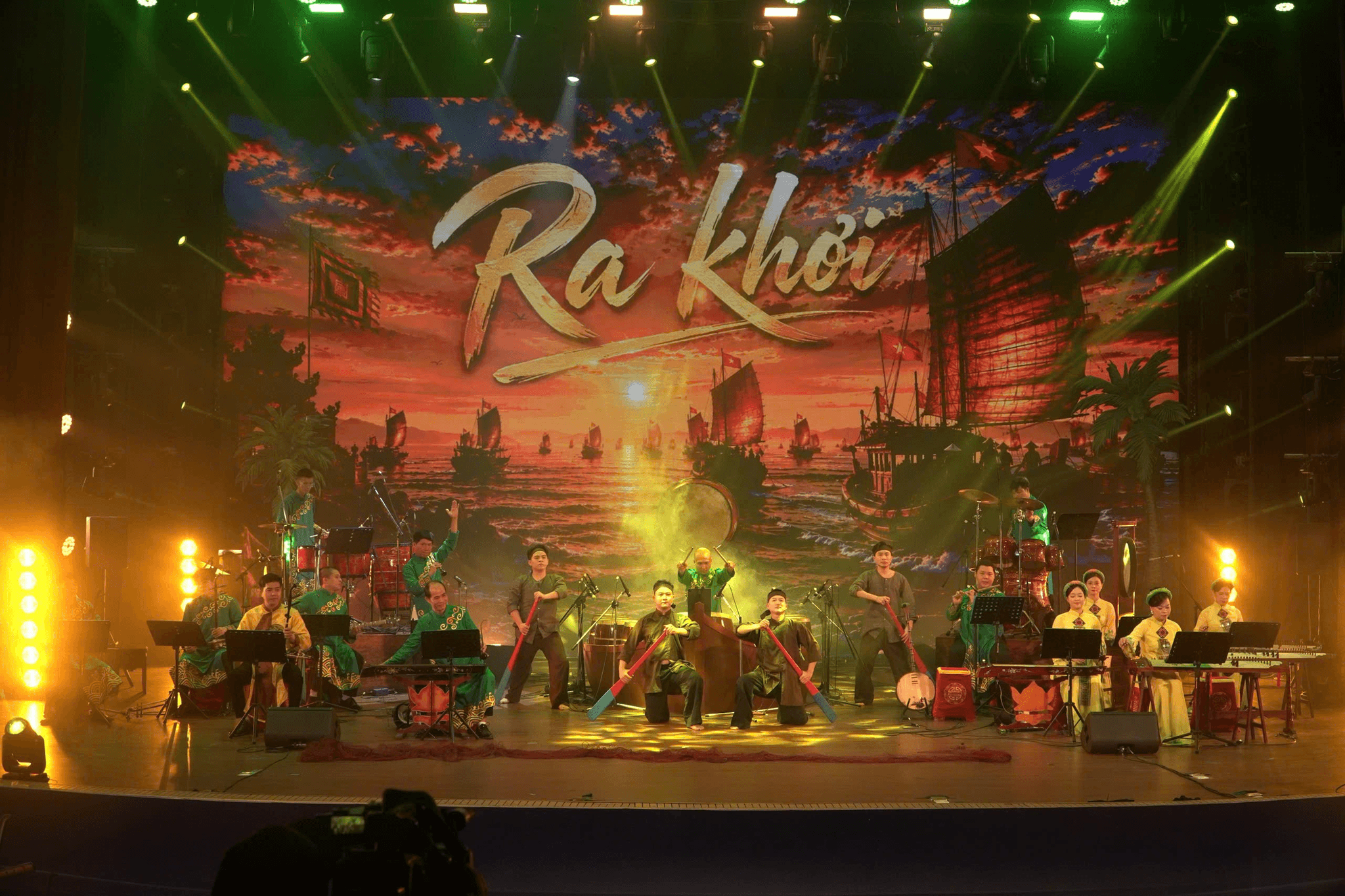
The opening performances vividly showcased the cultural traditions of Central Vietnam and the historical imperial city of Hue, merging the dignified grace of royal court music with the lively, spontaneous spirit of Bai choi folk performances.
High and low notes, brimming with emotion, brought traditional musical pieces to life through ethnic instruments, expressing the deepest feelings of the artists.
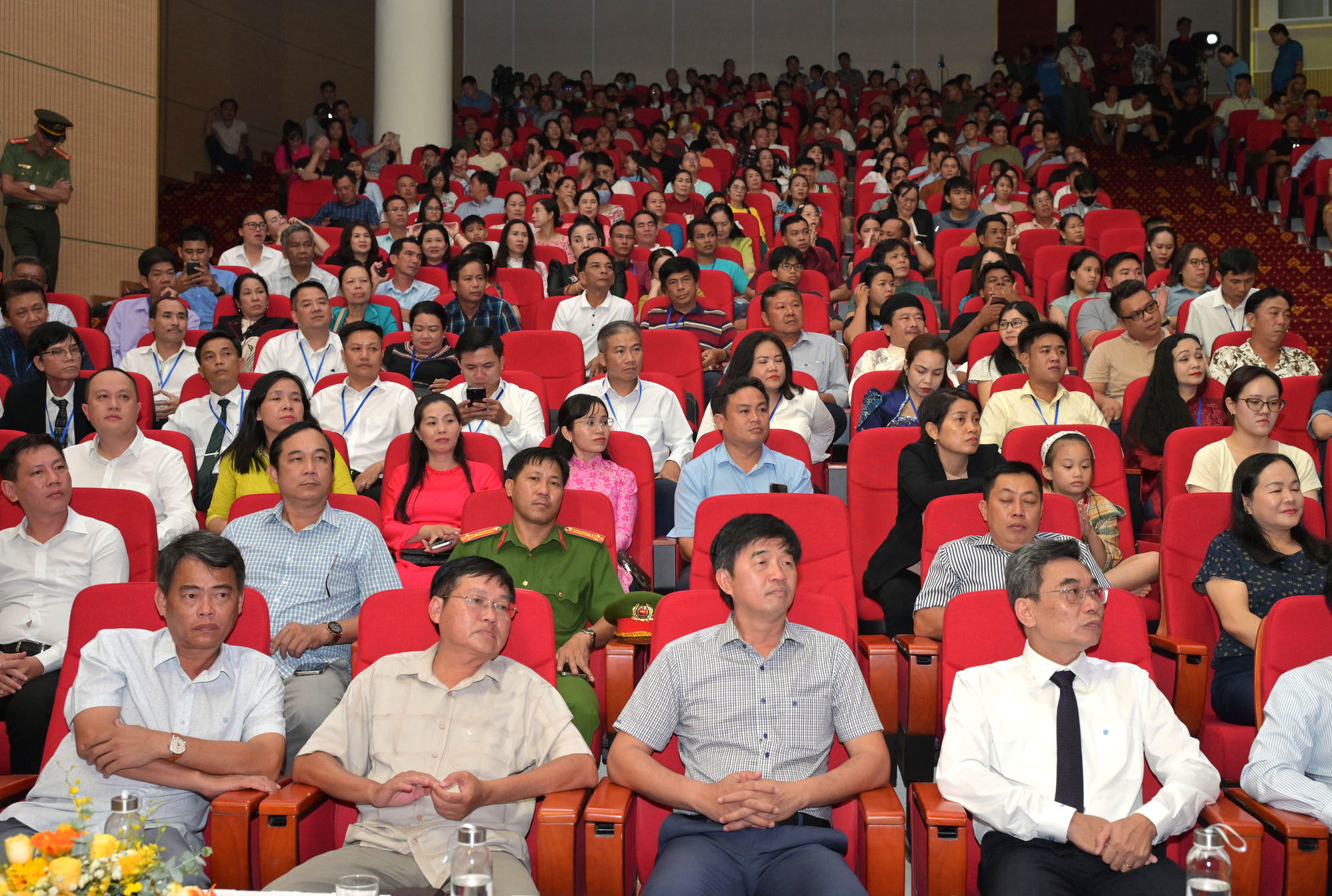
The performances enchanted audiences in Phan Thiet, providing an opportunity for them to fully experience the essence of Vietnam's traditional music.
The competition serves as a representation of the country's rich musical heritage, where royal court tunes, Bai choi, the gong music from the Central Highlands, and the art of Don ca tai tu music and song come together, highlighting the lasting vibrancy of traditional Vietnamese music in modern society.
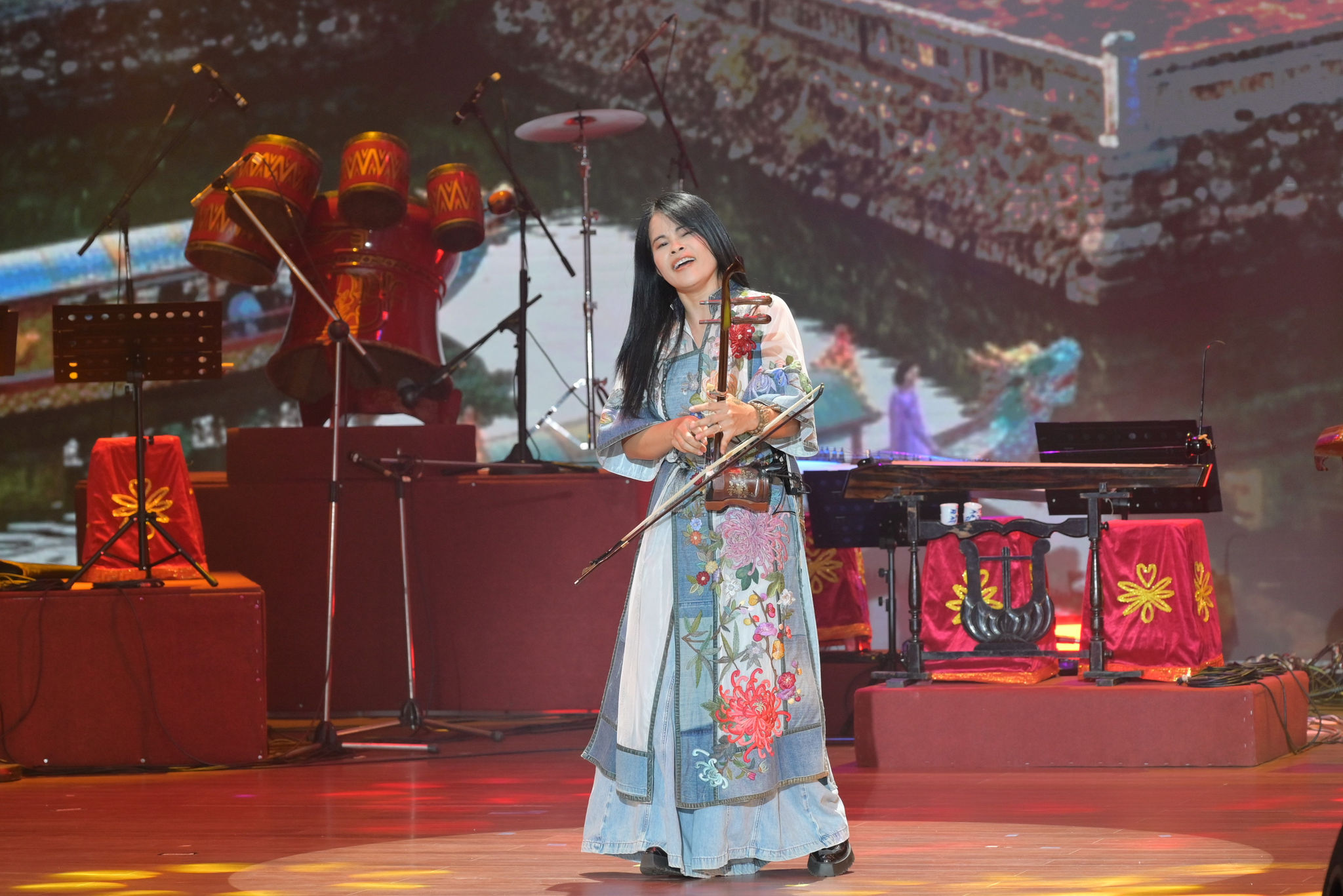
The audience experienced a wide array of emotions, starting with the soulful sounds of the monochord, moving to the clear tunes of the zither, and the lyrical notes of the moon-shaped lute from the lowlands, before transitioning to the lively and unrestrained rhythms of traditional instruments from the Central Highlands and southern Vietnam.
Every performance conveyed a cultural narrative, embodying the sounds, essence, and unique identity of its region, while merging into the cohesive flow of Vietnamese traditional music.
Kicking off the competition, the Hue Royal Traditional Arts Theater showcased three ensemble pieces performed by its orchestra. The first piece, “Hoang Cung Huyen Ao” (Mystical Royal Palace), transported the audience through a portal in time to the grandeur of ancient imperial citadels, palaces, and royal tombs.
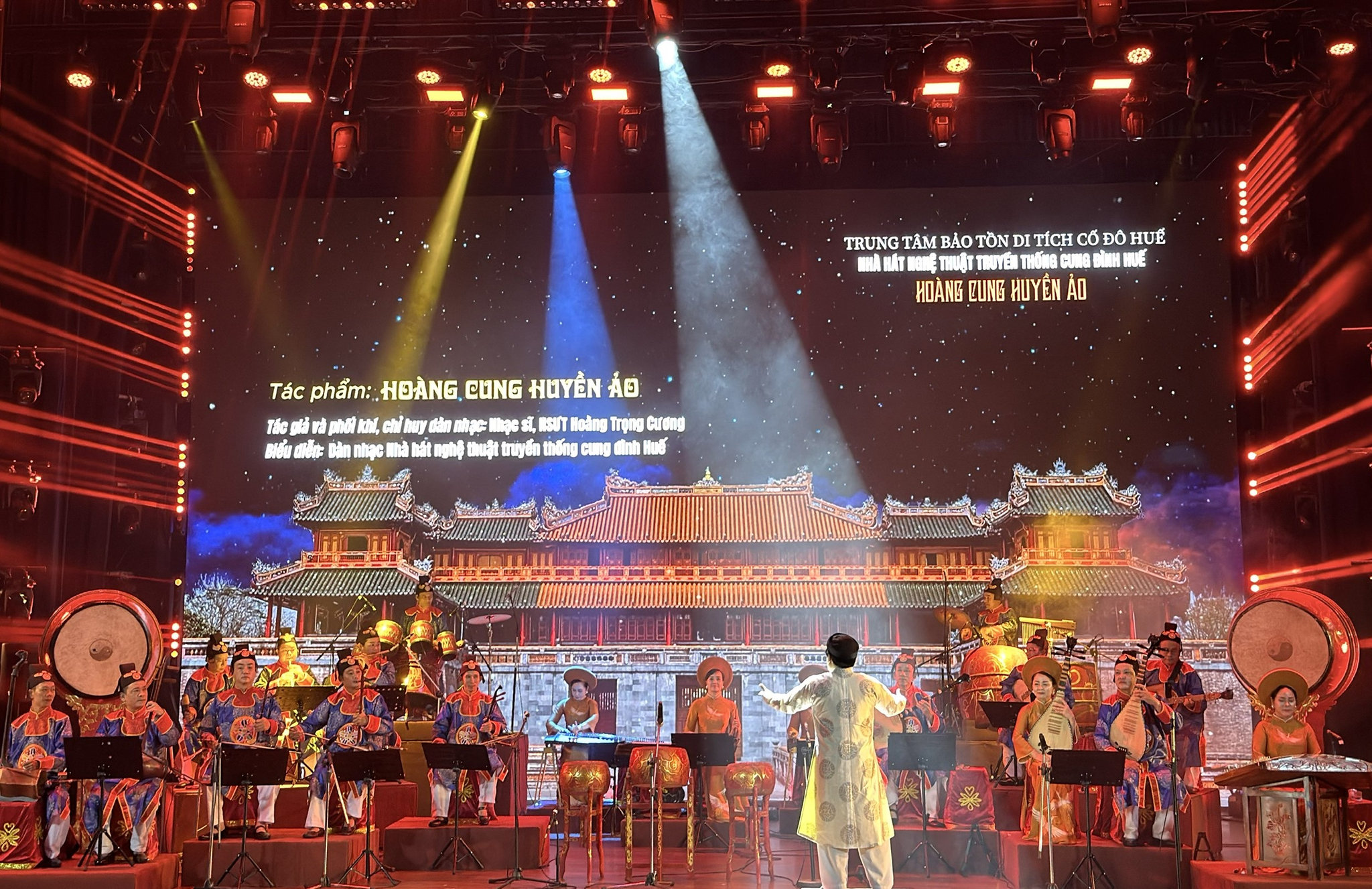
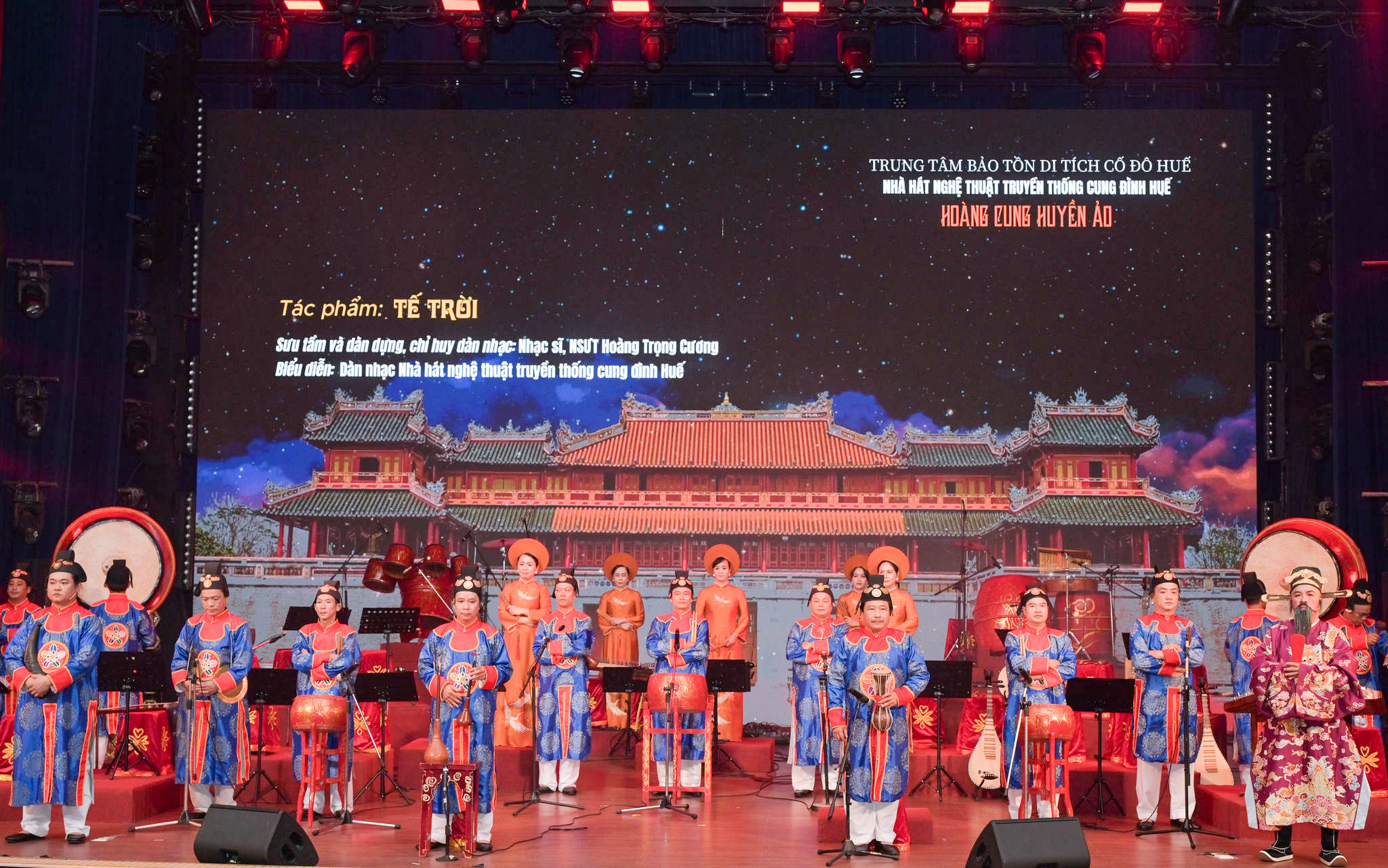
The following piece, “Te Troi” (Heaven Worship), is part of Hue royal court music and is linked to ceremonies that honor Heaven and Earth while praying for national well-being and prosperity.
The dynamic finale, “Tu Linh Nhac Hoi” (Festival of the Four Sacred Creatures), brought the royal court dance to life through intricate musical expression, illustrating the exceptional synergy between musicians and performers.
The artists' careful preparation and exceptional instrumental skills not only provided an engaging and visually striking performance but also honored the heritage recognized by UNESCO as a Masterpiece of the Oral and Intangible Heritage of Humanity.
Tran Thi Kim Thoa, a resident of Phan Thiet Ward, said: “This is the first time I have had the opportunity to attend a traditional music competition featuring professional artists from across the country. The troupes have clearly invested great effort in staging their performances, showcasing distinctive cultural values. Each region has its own strengths in instruments and melodies, but ultimately, they all belong to the flow of Vietnamese culture, which must be inherited and passed down to younger generations.”
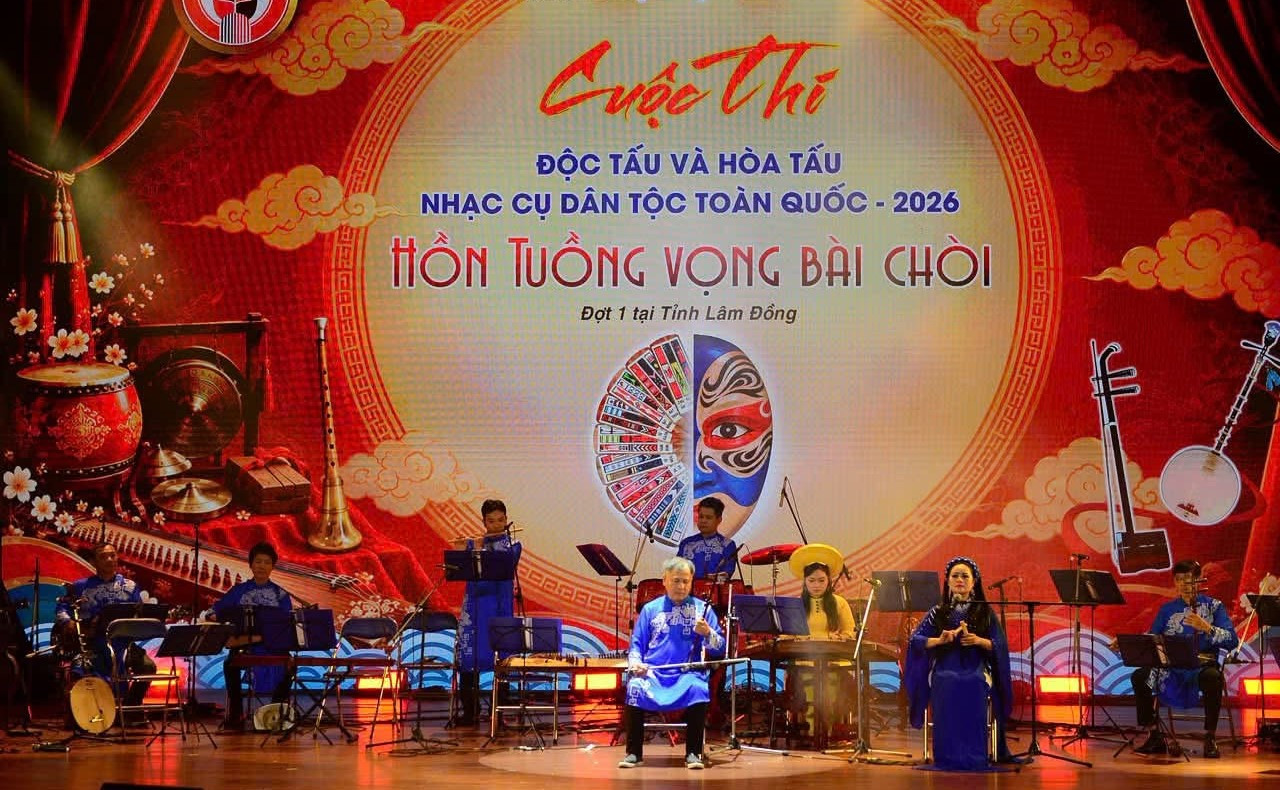
Continuing the exploration of Vietnam's rich musical tradition, audiences were treated to “Hon Tuong Vong Bai Choi”, presented by the Gia Lai Provincial Arts Troupe. The performance created a vibrant and lively atmosphere that reflects the essence of the South Central Coast.
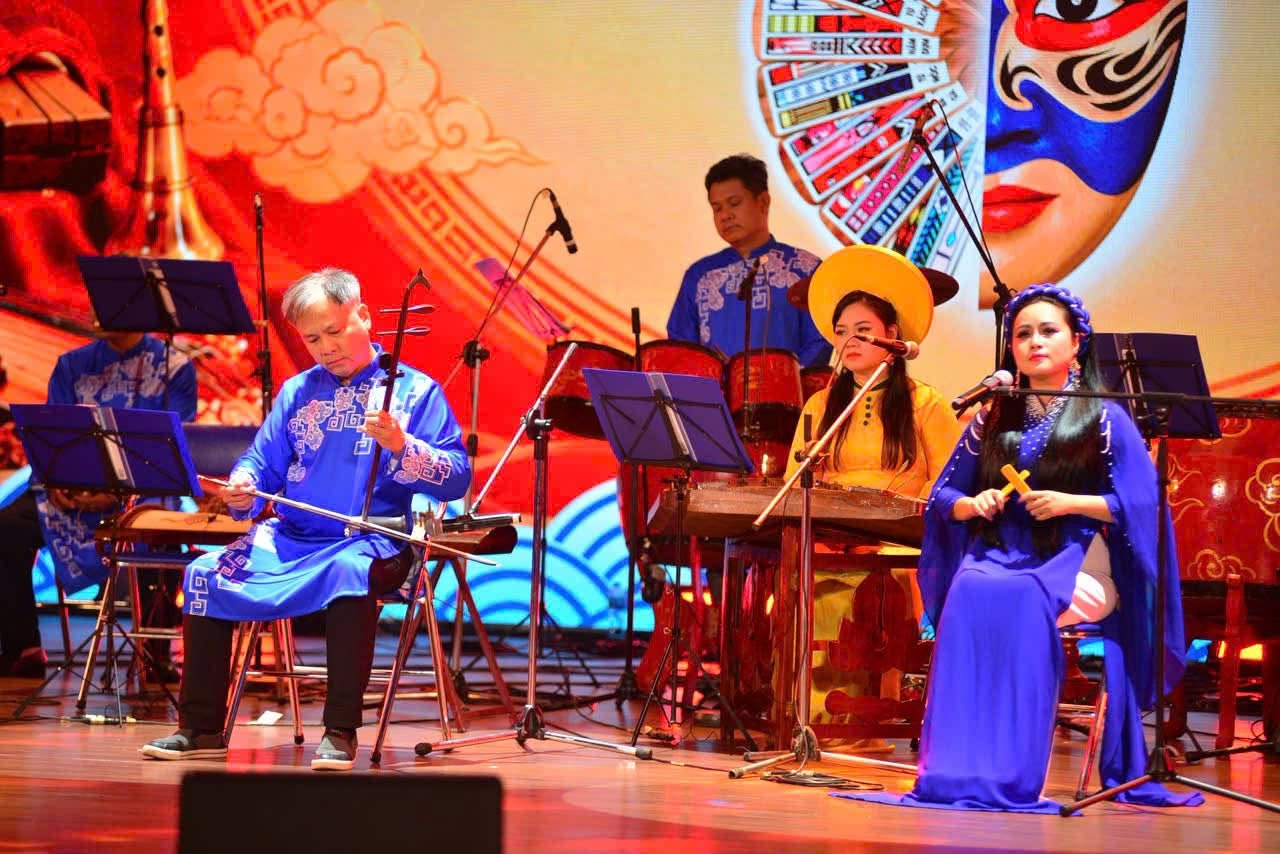
The stage sprang to life with the initial high and low notes of a solo performance on the two-string fiddle. Traditional Bai choi musical styles, such as Doan Truong, Nam Xuan, and Ho Quang, filled the air with profound emotion before merging into the new piece “Khat Vong Non Song”.
Audiences were captivated by the ensemble piece “Vo Ngua Ngay Xuan”, which portrayed a Vietnam advancing confidently into a new era.
The opening night concluded with “Khuc Trang Ca Dat Vo” , whose stirring melodies rekindled deep pride in the cultural roots of Gia Lai, a land renowned for its martial traditions.
Artist Duong Nu Thuy Dung from the Gia Lai Provincial Traditional Arts Theater, who supported the orchestra, expressed: “This competition brings together artists from the North, Central, and South, inspiring performers, actors, and musicians to follow their passions and forge connections. It also serves as a platform for mutual learning and the exchange of professional insights.”
In the coming days, audiences will continue to be captivated by the sounds of the zither, moon-shaped lute, two-string fiddle, drums, and monochord, brought to life by the artists’ expertise, instrumental skill, and musical narratives.
Passing Vietnam’s Cultural Heritage Down Through Generations
According to the organizing committee, the competition aims to honor and promote folk and traditional music, highlighting the distinctive value of Vietnamese traditional music.
Through solo and ensemble performances, it introduces the public to the rich diversity of traditional musical instruments and performance genres.
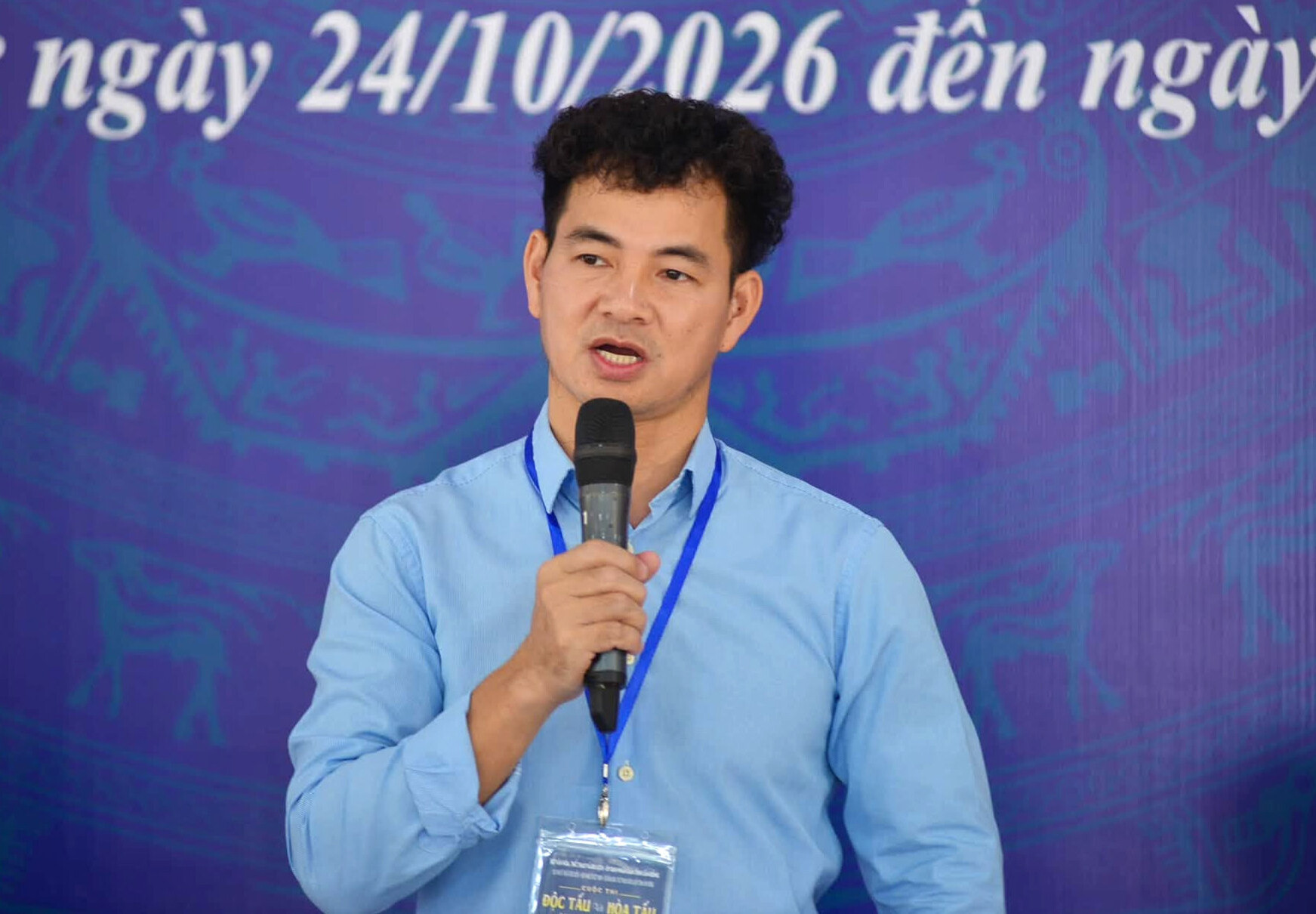
People’s Artist Nguyen Xuan Bac, Director of the Department of Performing Arts and Head of the Organizing Committee, emphasized: “With the spirit of ‘Vietnamese Melodies Converge and Shine,’ the competition seeks to create an artistic space where every traditional sound is cherished, every cultural region is represented, and every talent has the opportunity to shine. It also aims to ensure that the enduring values of Vietnamese traditional music continue to be passed down, nurtured and creatively developed in contemporary cultural life.”
The competition has drawn 33 arts organizations and almost 800 artists and performers, highlighting its popularity and status as a nationally recognized professional event.
This also showcases the unwavering dedication and sense of responsibility of local authorities, arts organizations, and educational institutions, along with their commitment to conserving, passing on, and promoting traditional musical heritage. These initiatives aim to make Vietnamese traditional music more accessible to the public and support the development of future artists.
The competition is currently taking place at the Lam Dong Provincial Theater, Exhibition and Arts and Culture Center in Phan Thiet Ward, featuring a variety of performances by 16 arts organizations in the first phase. It will run through October 28, 2026. Performances are scheduled daily in the morning, starting at 9 a.m., and in the evening, starting at 8 p.m
The 2026 National Traditional Musical Instrument Solo and Ensemble Competition is also one of the major events held in response to and in celebration of the 11th Dalat Flower Festival, scheduled for December 2026. The competition adds a distinctive highlight to the festival’s theme, “Dalat – A Symphony of Flowers and Music.
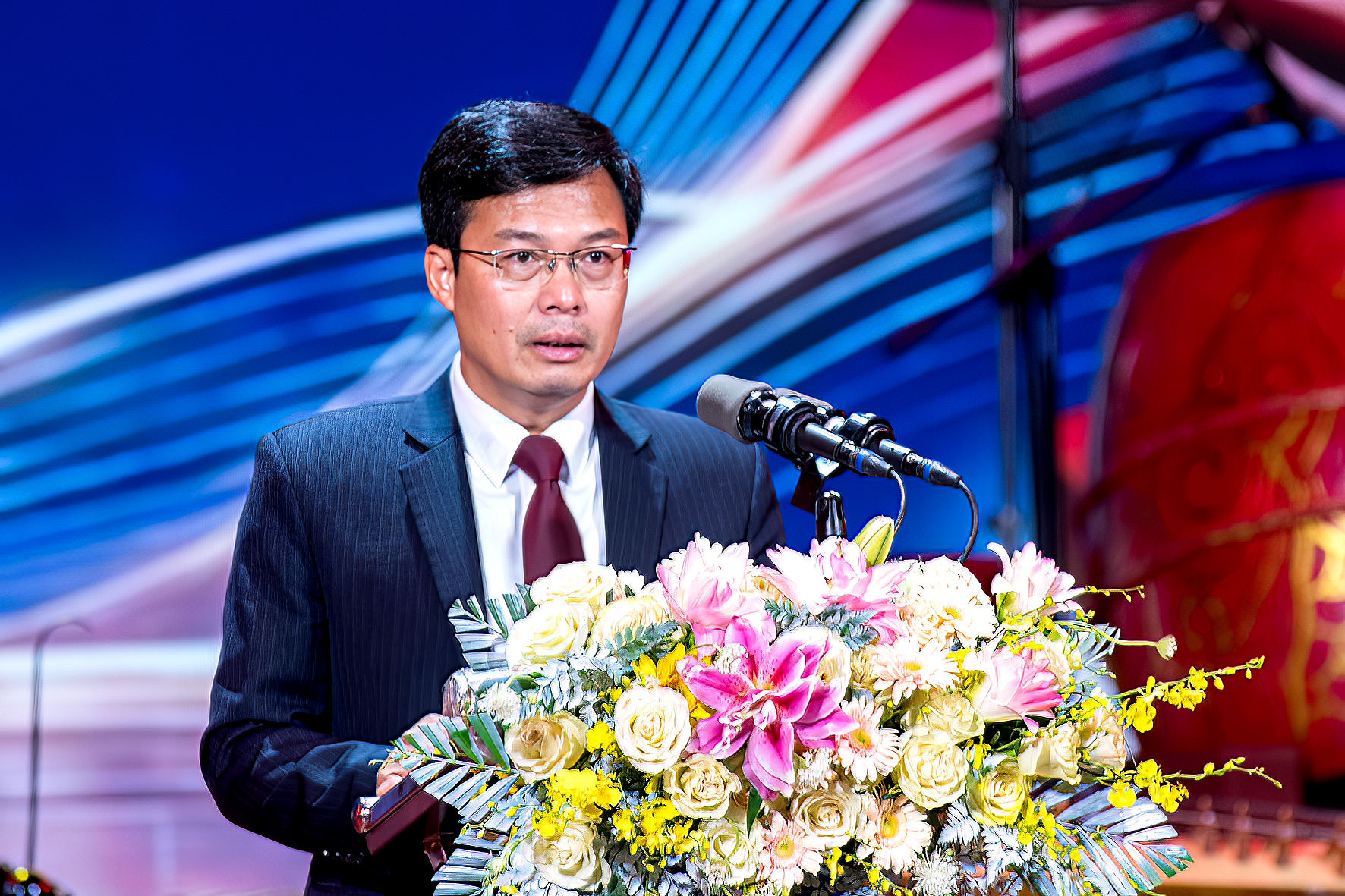
This is a meaningful event that honors and promotes folk and traditional music while highlighting the distinctive value of Vietnamese traditional music. It also provides an opportunity for the province to showcase its unique cultural features and promote the land and people of Lam Dong to audiences across the country
Dinh Van Tuan, Vice Chairman of the Lam Dong Provincial People’s Committee
The competition also provides chances for professional traditional instrumentalists, musical ensembles, and orchestras to network, share ideas, and learn from one another, enhance their skills, and uncover emerging talent.
Featuring melodies that reflect royal court music and the sounds of Tuong, Cheo, Cai luong, and the art of Don ca tai tu music and song, along with the unique sounds of various ethnic communities across Vietnam, the competition embarks on a journey that bridges the past and the present.
In this journey, every artist acts as a guardian of heritage and a source of creativity, revitalizing traditional sounds for today’s audience.
Preserving and promoting the value of traditional musical instruments is not merely about safeguarding the heritage of the past; it is also a responsibility to pass it on to the present and future generations. Amid international integration and digital transformation, we must preserve our traditional identity while renewing approaches to creativity, performance and promotion so that traditional arts can reach wider audiences, particularly younger generations
Ta Quang Dong, Deputy Minister of Culture, Sports and Tourism and Head of the Competition Steering Committee