


Water-Smart Irrigation: A Strategic Solution for Climate-Resilient Agriculture
Climate change is no longer a distant forecast — it is already taking place on the farmlands. In this context, investing in water-efficient irrigation has become a strategic solution to secure production, adapt to increasingly harsh weather conditions, and transition toward green and sustainable agriculture.
Advanced irrigation systems gaining ground
In the past, most agricultural land in Lam Dong relied on traditional flood or sprinkler irrigation — methods that led to 30–40% water loss, nutrient leaching, rising production costs, and soil erosion.
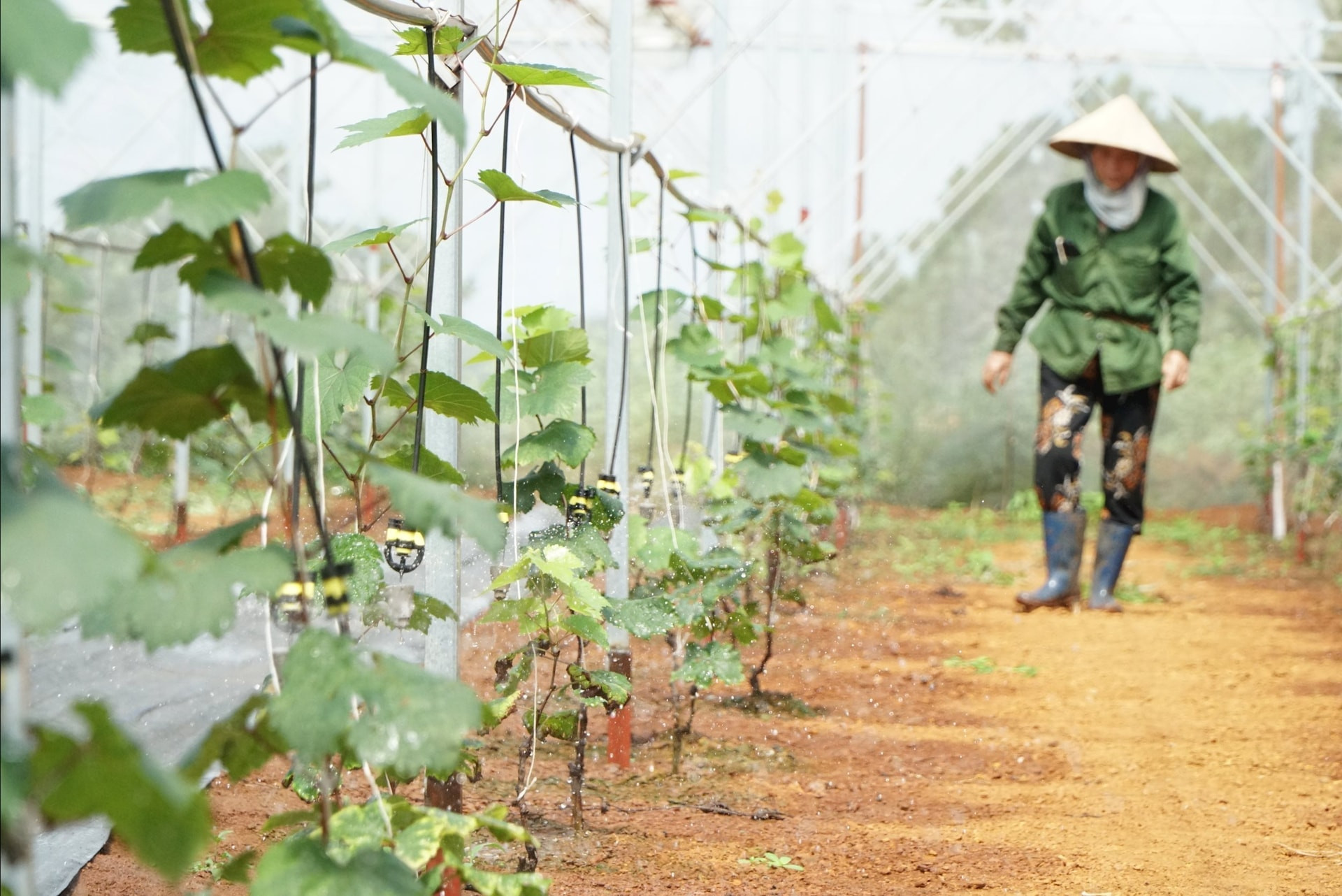
to secure agricultural production and adapt to climate change.
In recent years, farmers have begun adopting drip irrigation and smart fertigation systems, many of which are fully automated and controlled via smartphone.
In Nhan Co commune, farmer Phan Viet Cuong installed a drip irrigation system for over 500 Monthong durian trees. Located on sloping terrain, the system is tailored to the topography and allows zoning-based control — irrigating up to 1 hectare in a single session.
“Durian is extremely sensitive to moisture,” Mr. Cuong shared. “With automated drip irrigation and fertigation, I can ensure consistent nutrition for the trees while significantly cutting labor and input costs.” His farm is now certified for export and operates under VietGAP standards.
Similar systems are being widely deployed across coffee plantations and vegetable-flower farming zones — allowing farmers to irrigate an entire hectare in one go, instead of spending an entire day as before.
Strong results: Less water, higher productivity
According to the provincial Department of Agriculture and Environment, over 97,202 hectares in Lam Dong are now using water-efficient irrigation for crops such as coffee, vegetables, flowers, and fruit trees. These systems have helped:
- Save 30–50% of water usage
- Cut 20–30% of labor costs
- Increase yields by 10–25% per crop cycle
Modern systems are also integrated with soil moisture and temperature sensors, enabling farmers to adjust water and nutrients with precision — minimizing waste, protecting groundwater, and improving long-term soil health.
Toward smart and sustainable agriculture
Lam Dong is currently restructuring its water resources, developing new reservoirs, upgrading irrigation canals, and helping farmers access technology suited to both household and commercial scales.
The province targets that by 2030:
- 100% of key crops will use advanced, water-saving irrigation
- At least 50% will be fully automated with sensor-based systems
- Renewable-energy-powered irrigation models will be expanded — linked with production traceability and export-oriented growing zone codes
Water-efficient irrigation is not only the key to surviving drought seasons — it is an essential step toward building a modern, climate-resilient, and sustainable agricultural future.