


When Agriculture Meets Tourism in Da Lat
On the Lang Biang–Da Lat plateau, farms are becoming tourist attractions, where experience-based tourism boosts farm value and creates new income streams for locals.
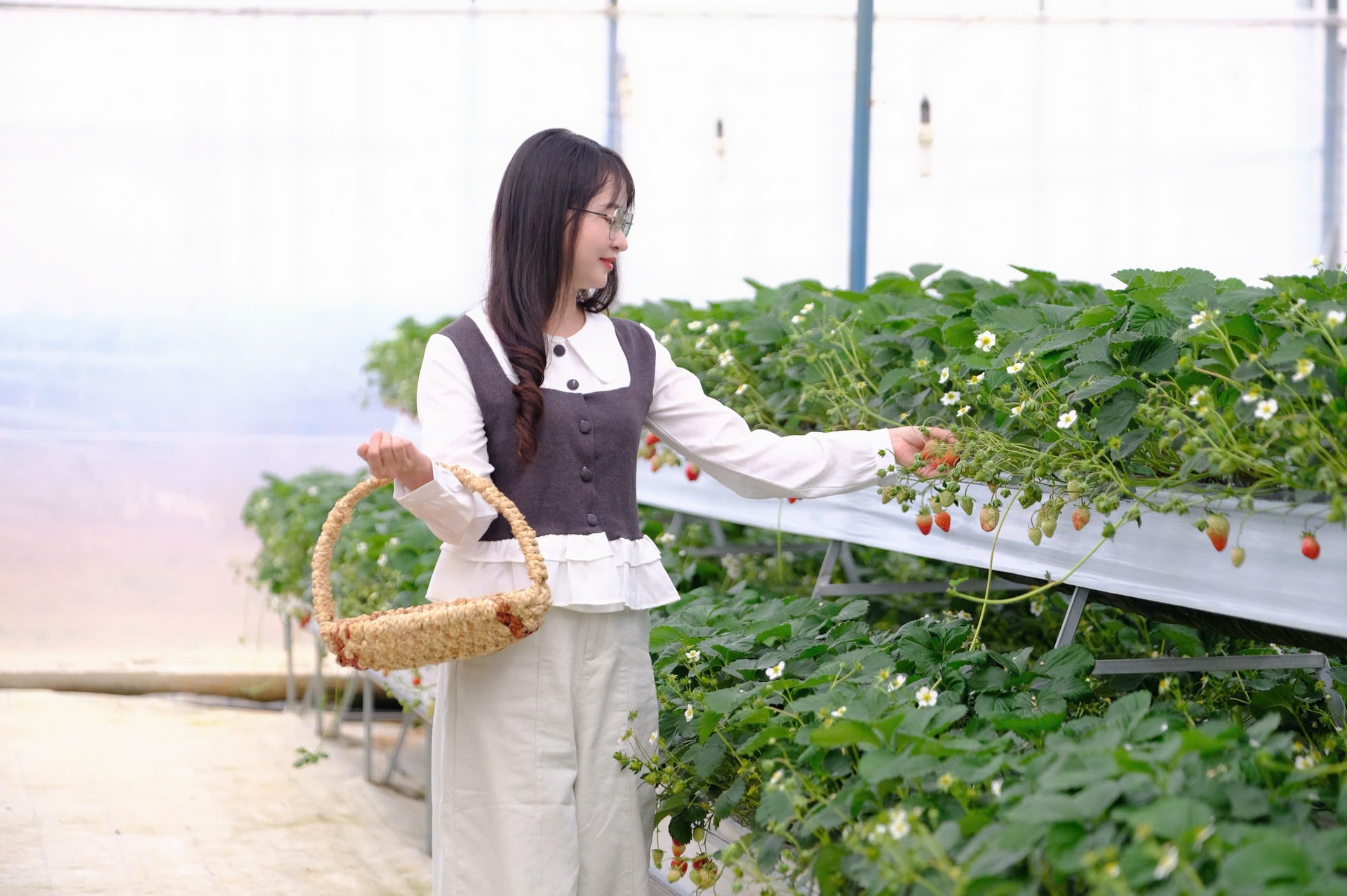
Farms turn into tourist destinations
Following its expansion, Lang Biang- Da Lat Ward has gained favorable conditions for developing agro-tourism. With its advantageous location, mild climate, rich natural landscapes, and major cultural facilities, the area has attracted increasing investment, fostering a diverse range of tourism sites and services.
As agro-tourism proves its advantages, many farmers have shifted their production models to align with this trend. Pham Van Vinh, a local farmer, invested in greenhouses and converted 1.5 hectares of land into high-tech strawberry cultivation after a large tourism site was developed near his farm.
Through cooperation with the tourism operator, his strawberry farm has become a popular destination. Visitors can enter free of charge, pick strawberries themselves, and purchase products on-site. By applying staggered planting techniques, he ensures a year-round supply. Currently, direct sales to tourists account for 40–50% of total output, helping stabilize production and increase income after nearly two years of implementation.
Toward professional and sustainable agro-tourism
According to local authorities, agro-tourism in Lang Biang-Da Lat Ward has yet to fully realize its potential. To address this, the area has introduced policies to promote high-tech, ecological, and circular agriculture, while restructuring the agricultural sector toward sustainability and higher added value.
Under this orientation, the locality aims to expand models that combine agriculture with tourism experiences. Visitors will not only sightsee but also participate in activities such as planting, caring for, and harvesting crops, as well as learning about high-tech and organic farming processes.
The plan also includes zoning key production areas in harmony with tourism services, ensuring a balance between farming and visitor experiences. Models such as greenhouses, organic gardens, eco-farms, and agricultural craft villages will be encouraged.
At the same time, experiential tourism products will be piloted, allowing visitors to engage directly in the full cycle from cultivation to processing. These activities also help promote awareness of green agriculture and environmental protection.
To support sustainable development, investments will be made in infrastructure such as rural roads, parking areas, sanitation facilities, and reception points. Participating farms and households will also be assisted in building display areas, experience zones, and eco-friendly check-in spaces to promote OCOP products, local specialties, and processed agricultural goods.
In the long-term plan, Lang Biang- Da Lat Ward aims to welcome 10,000–20,000 visitors annually, diversifying local livelihoods and helping position Lang Biang–Da Lat as an attractive destination for eco-and agro-tourism.