


When Local Specialties Become Tourism Ambassadors
From wind-dried persimmons and premium tea to coastal seafood, each specialty of Lam Dong is more than a delicacy. Every product carries the story of the land and its people, quietly becoming an “ambassador” that helps local tourism go farther.
More than just a taste
Following the administrative merger, Lam Dong has become known as one of Vietnam’s most agriculturally diverse regions, home to a wide range of signature products such as vegetables, flowers, artichoke tea, coffee, silk, wind-dried persimmons, macadamia nuts, durian, dragon fruit, Phan Thiet fish sauce, and various seafood products. The province currently boasts 858 brands under the collective label “Da Lat – A Miraculous Crystallization from Fertile Land,” along with more than 1,000 OCOP-certified products.
Agriculture has increasingly become a powerful springboard for tourism. Gift specialties and tourism activities form a mutually reinforcing relationship in which each enhances the value of the other.
Holding a box of wind-dried persimmons, Ms. Nguyen Thu Van from Ho Chi Minh City recalled visiting Da Lat during harvest season. Her family toured a production facility, learned how Japanese technology is combined with local know-how, and listened to stories about farmers’ painstaking work. The visit transformed a simple specialty into a meaningful experience.
In reality, after each sightseeing or experiential journey at destinations across the province, many visitors choose to buy souvenirs or make a point of tasting local specialties rich in regional identity. While artichoke flowers in Da Lat have inspired a long list of unique dishes that leave visitors impressed, those traveling to the coastal areas of Lam Dong are also encouraged to try dishes made from dragon fruit flowers.
Beyond familiar processed products, dishes made from dragon fruit flowers are attracting curiosity. Ms. Nguyen Thanh Tuyen, owner of Hoa Ba Vuong Restaurant in Phan Thiet Ward, shared that the restaurant has developed dragon-fruit-flower soup and chicken hotpot stewed with dragon-fruit flowers. This innovation both diversifies local cuisine and increases the value of agricultural by-products.
When specialties learn to “tell their stories”
The province’s distinctive coastal cuisine is also emerging as a competitive advantage. Lam Dong’s unique combination of sea, mountains, and highlands creates diverse destinations accompanied by a culinary culture that is rich, authentic, and difficult to replicate.
According to Dr Vo Thi Kim Sa, Vice Rector of the School of Public Policy and Rural Development, speaking at a community tourism training course in Phan Thiet, cuisine is increasingly becoming an essential cultural experience for travelers.
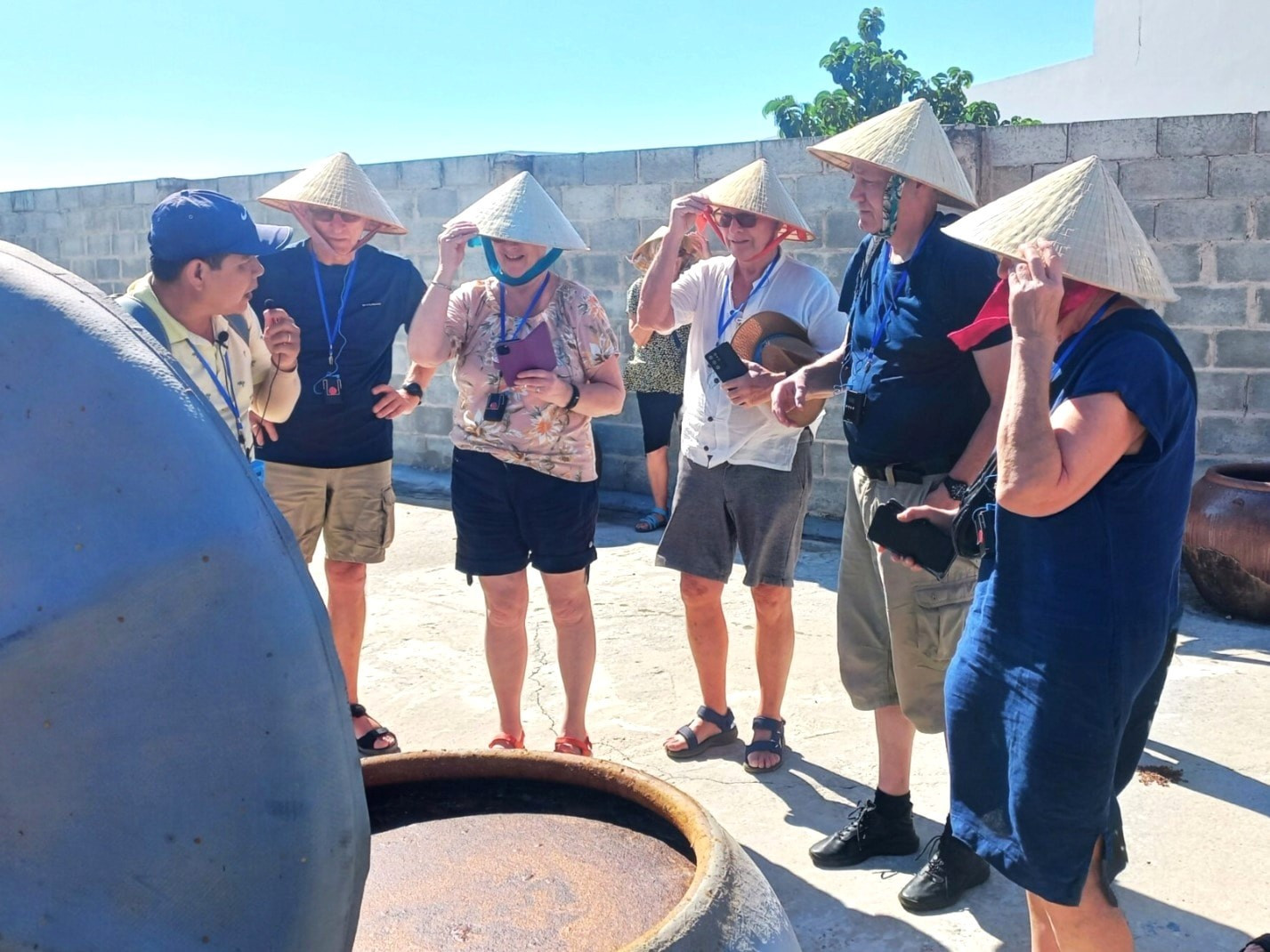
Beyond tasting the food, visitors want to hear the stories behind its origins and preparation to better understand regional identity. As a result, many localities and cooperatives with specialties linked to agricultural tourism have strengthened partnerships with travel companies to bring visitors to experience their products.
Dr Vo Thi Kim Sa, Vice Rector of the School of Public Policy and Rural Development
It is evident that tourism is playing the role of an effective promotional channel, creating space for interaction, connection, and consumption of local specialties. With more than 1,000 OCOP products across the province, Lam Dong is gradually addressing the challenge of tourism souvenirs while enriching visitors’ journeys of discovery and experience.
These specialties not only enhance the attractiveness of destinations but also help shape a distinct brand identity, creating momentum for Lam Dong tourism to reach further.
Typical dishes and products include sun-dried squid, dried seafood, lau tha hotpot, imperial crab, oily ponyfish, Phan Thiet fish sauce, banh re, milk rice flakes, Laba bananas, Lam Dong coffee, specialty teas, macadamia nuts, cashews, avocados, and more. By sharing the stories behind every dish, each resident of Lam Dong can ensure that their culinary value lies not only in taste, but also in cultural depth.